
Field Report from the 2026 Dolomites Signature Photography Workshop
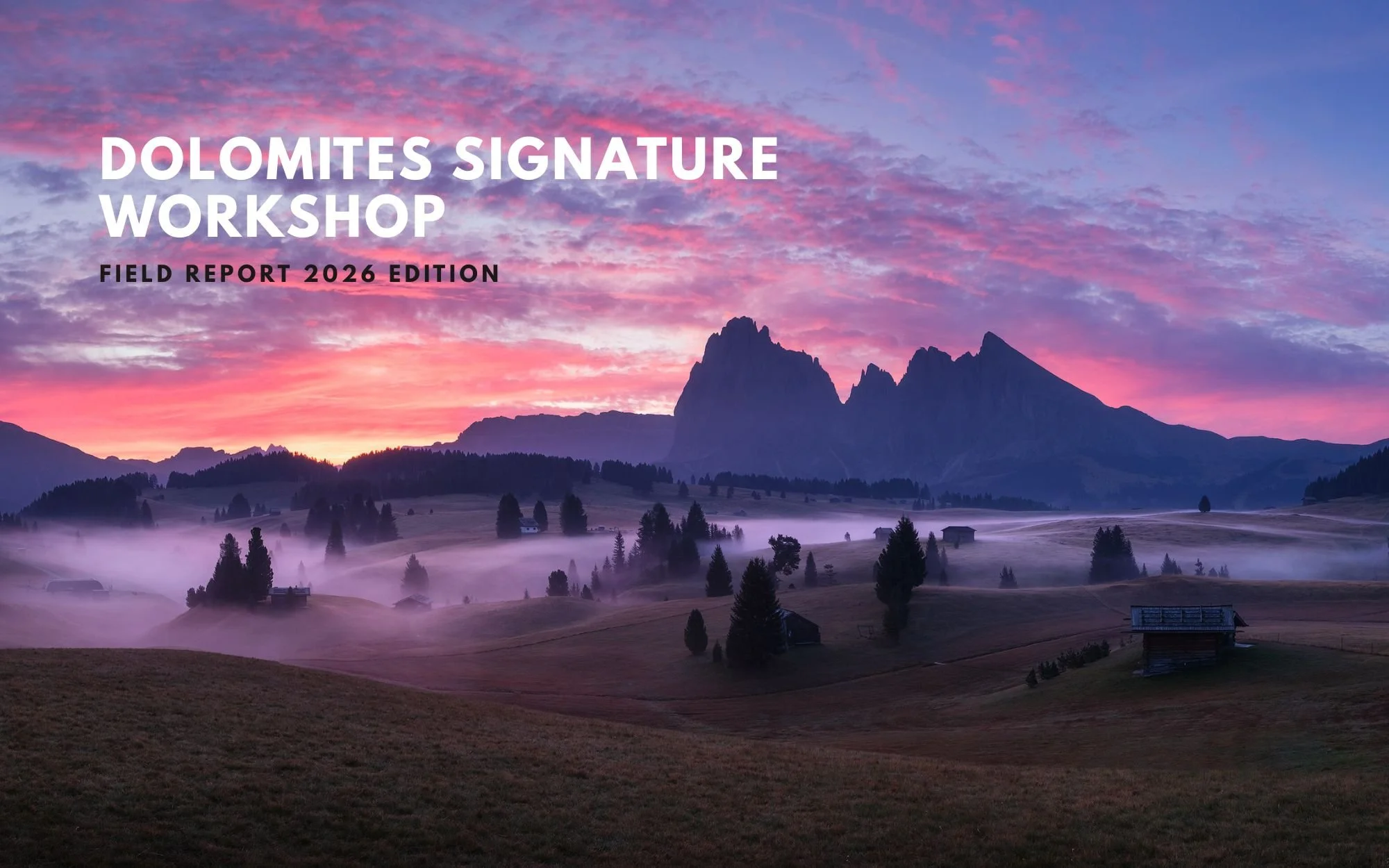
There wasn’t a cloud above Passo Giau. For most people arriving in the Dolomites, that would be excellent news. For a group of landscape photographers, it required a little more thought.
It was the opening afternoon of our Dolomites Signature Workshop, which ran from September 26 to October 3, 2026, the second of two quite different weeks Sabrina and I had planned in these mountains.
For the first time, we’d given our Immersive and Signature workshops distinctly different itineraries. Some places belonged in both, of course, along with the walking that comes with photographing in the mountains. Both weeks also drew on the places and people we’ve come to know over the years, with time indoors for editing and image reviews, and plenty of local mountain and Tyrolean food.
With this second group, we walked, photographed, ate, and laughed a great deal. The weather treated us well throughout the week, although that didn’t mean every photograph came easily. There were frustrating moments too, and times when the encouragement of the people around you mattered as much as anything happening in the landscape.
Trip at a Glance
- Guides in the field
- 2
- Photographers per group
- 6
- Workshop length
- 8 Days
- My camera system
- Fujifilm
- Dolomites transport
- 9-Seat Van
- 1-8 October
- 2027
Locations
Gear Used
Camera Bodies
- Fujifilm X-T4
- Fujifilm X-T30
Lenses
- Fujinon XF 10–24mm F4 R OIS
- Fujinon XF 50–140mm F2.8 R LM OIS WR
Passo Giau: Our First Photography Session Under Clear Skies
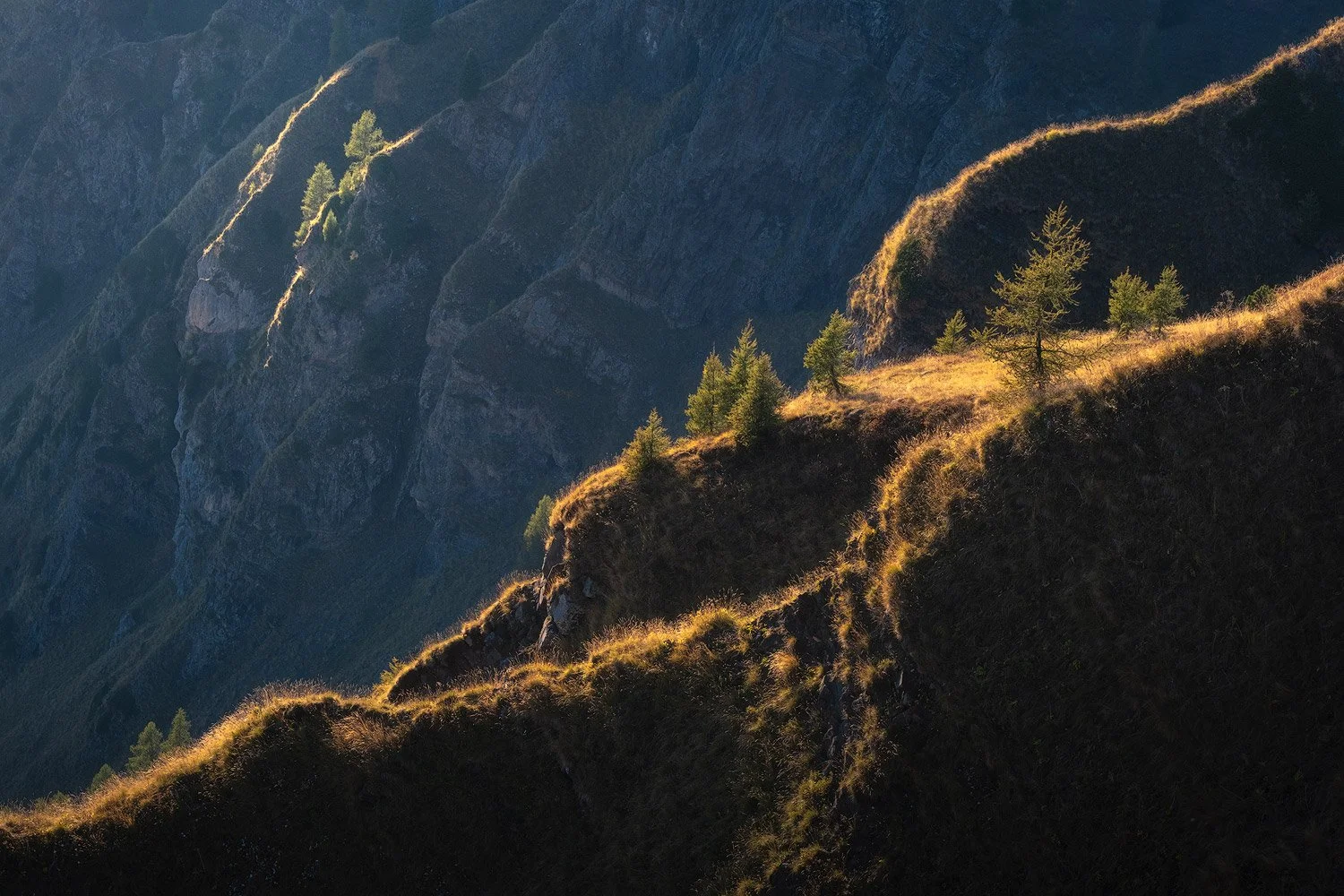
But first, we had a cloudless sky to work with.
Choosing where to begin involves more than checking the forecast. Many of our guests travel from overseas, and I want to give everyone time to adjust to the altitude and find their feet. Jet lag usually has its own ideas about the schedule.
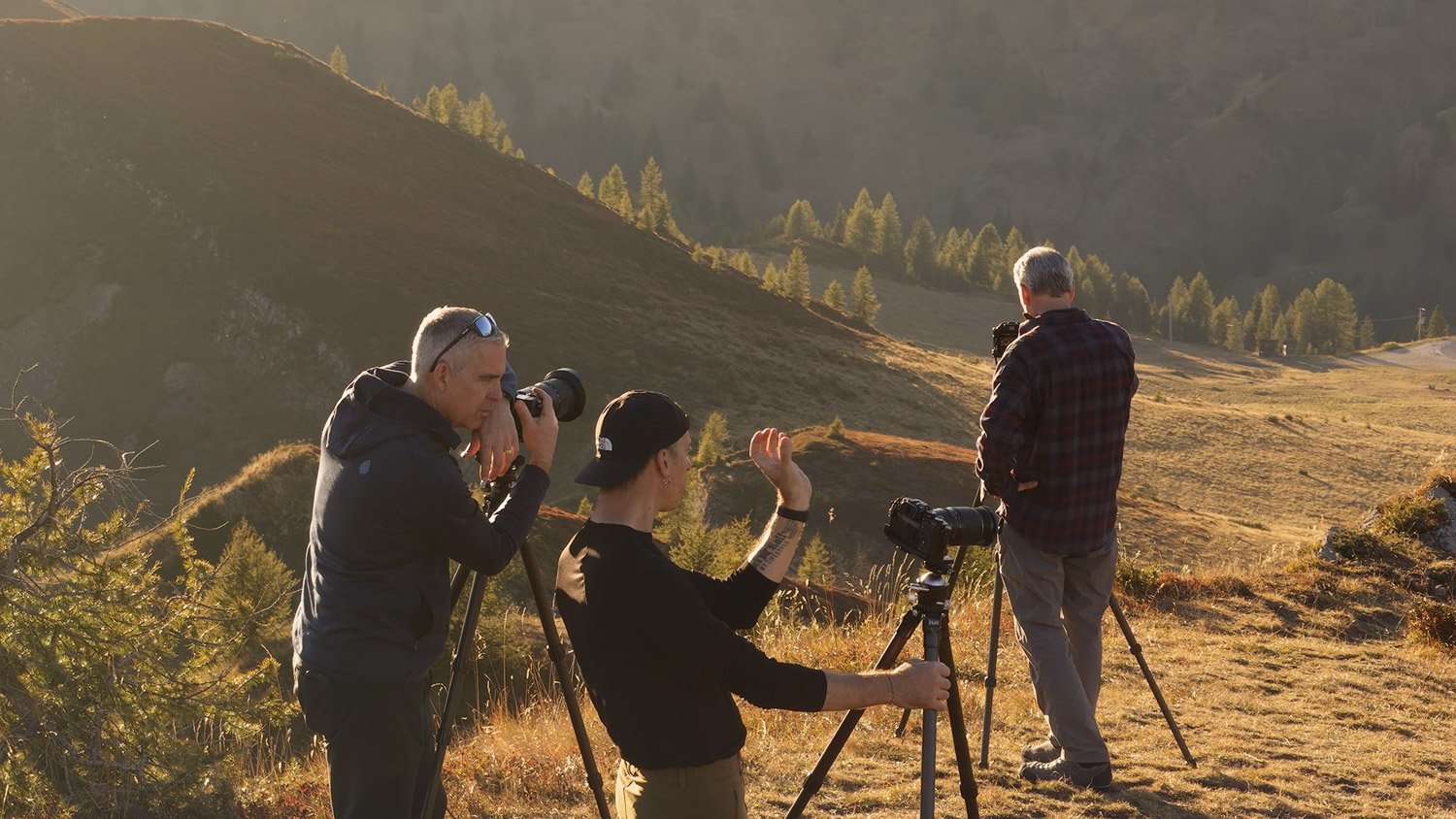
Passo Giau made sense for this group, just as it had for the previous one. Calling it a convenient starting point hardly does it justice, though. It’s one of my favorite areas in the Dolomites: there’s so much room to explore different compositions, and you get that wonderful feeling of being properly up in the mountains.
The previous group had arrived under a mostly overcast sky. This time, there wasn’t even a hopeful little cloud on the horizon.
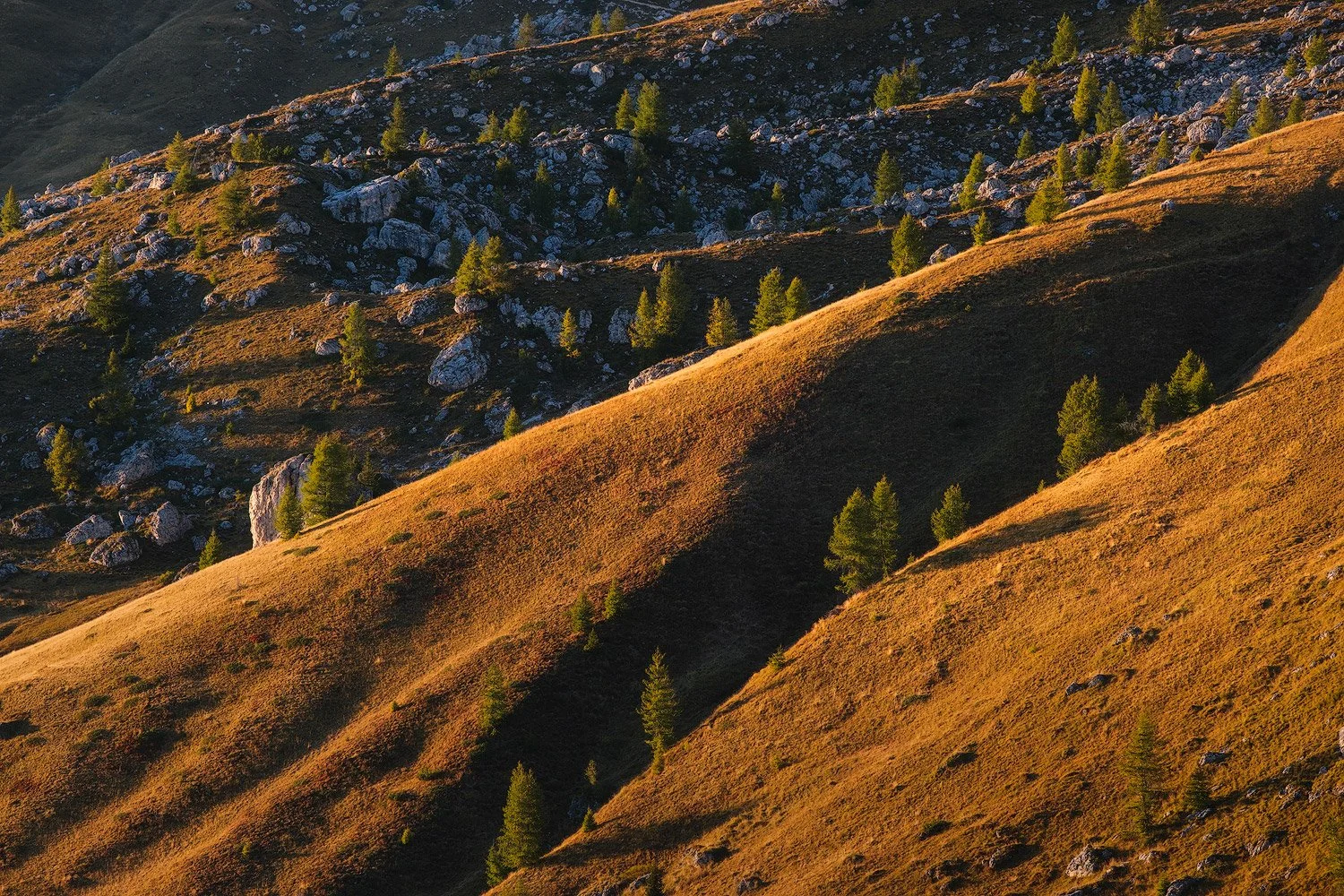
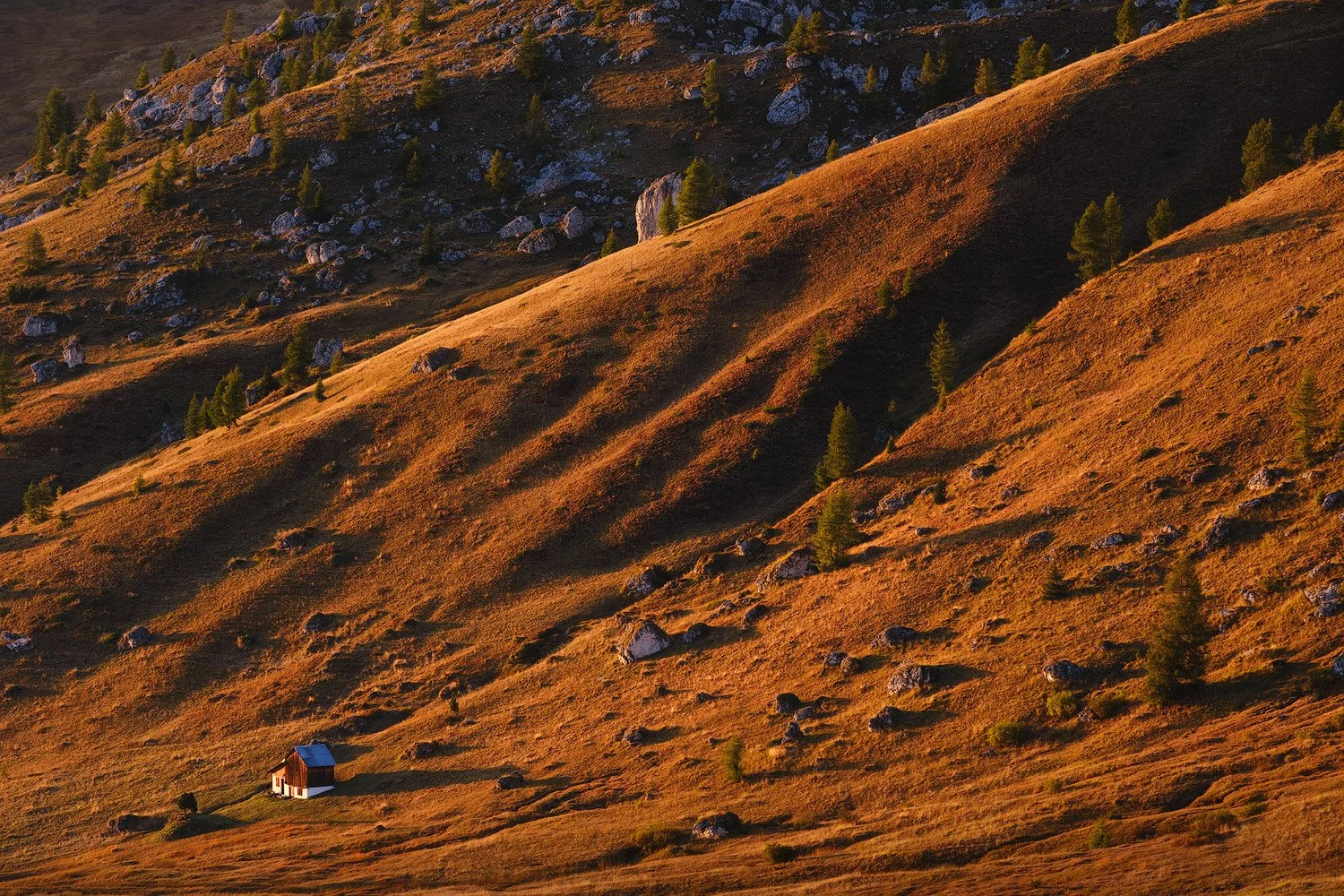
Slightly different framing, about fifteen minutes after the previous shot. Notice how the color relationships and overall contrast have changed.
We gave more attention to smaller sections of the landscape, where the shapes, light, and relationships between the mountains could carry the photograph without needing much sky. At times, the warm tones of the land against the blue above worked beautifully together, giving us a reason to go wider too. (ish!)
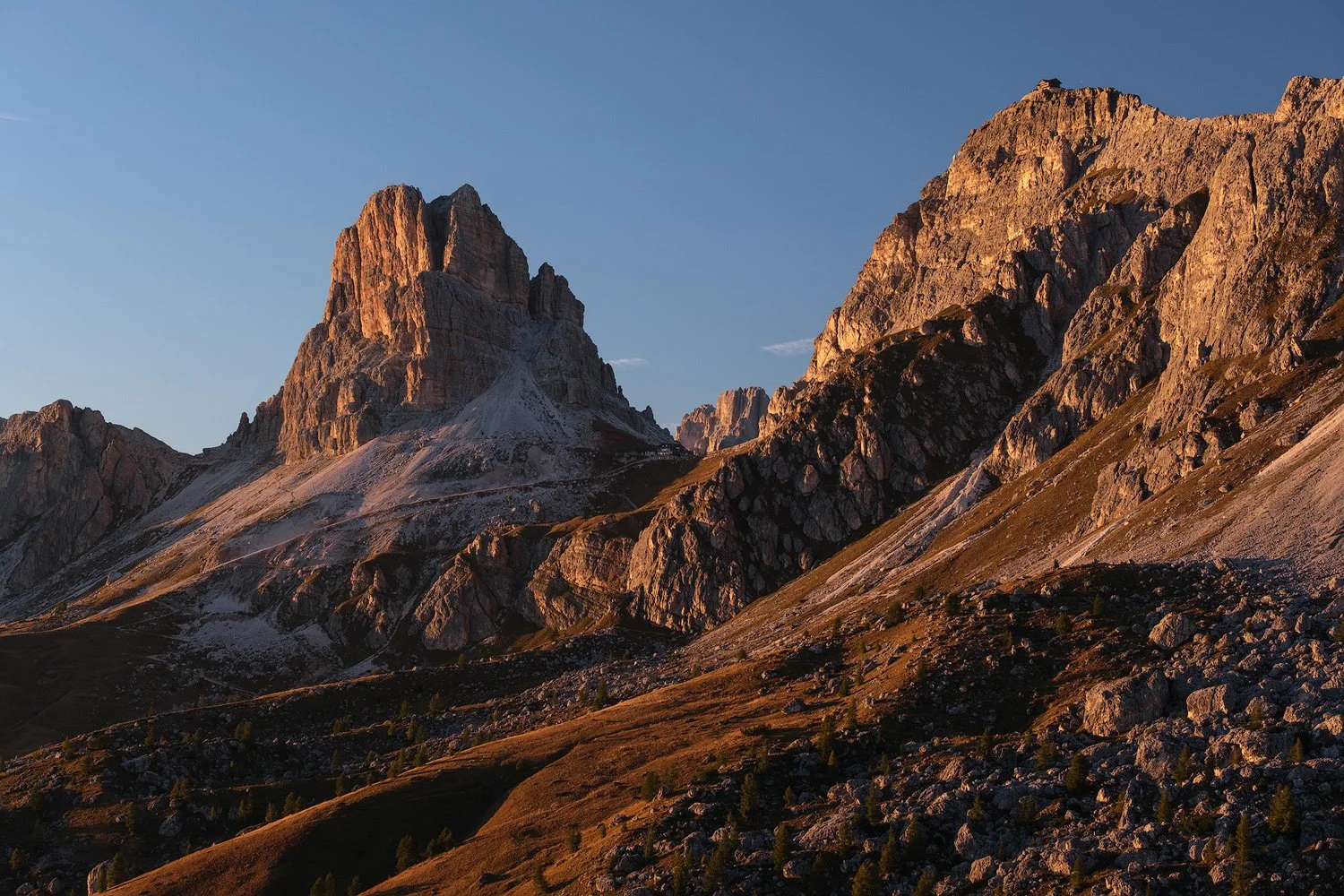
The warm evening light against the blue sky made this wider view at Passo Giau worth photographing. For my taste, though, the clear sky leaves the composition feeling a little static. Some cloud would have added interest above the peaks and helped balance the detail in the land below.
Everyone soon spread out to explore. Even during that opening session, I began to get a feel for how differently each person approached a composition: what caught their attention, how much they included, and what they chose to leave out. We were standing in the same area, but their photographs were already heading in different directions.
Later, we gathered around a table for the first of many pizzas. The conversations carried on, and I began (again!) my own thorough investigation of the local pizza options.
An Alpine Lake at Sunrise: Following the Light
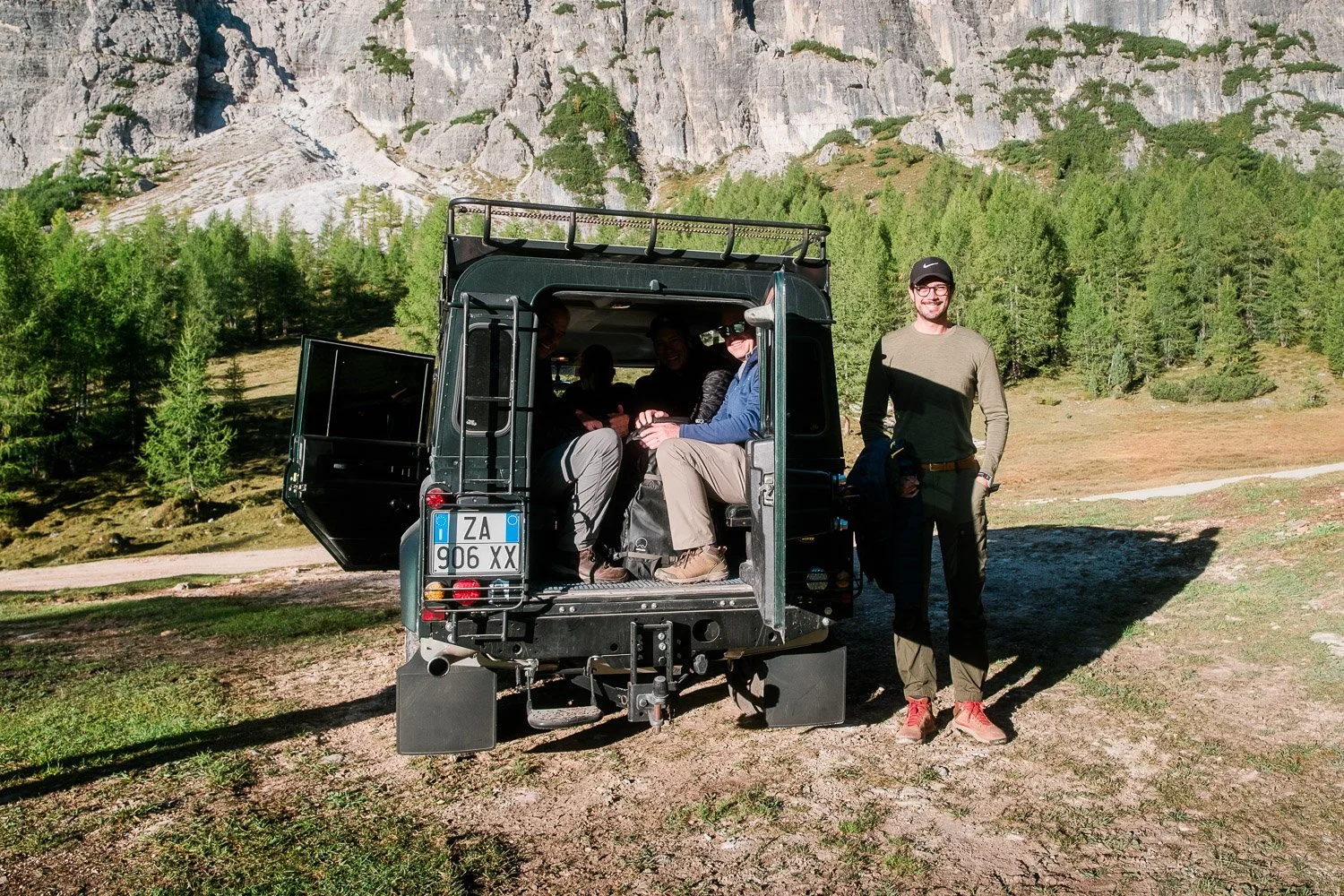
The following morning’s alarm felt considerably less welcoming.
We were heading to one of the Dolomites’ best-known alpine lakes, arriving before the sun had reached the trees. Walking through the quiet forest, following the rocky path along the shore in the cold morning air, made leaving a warm bed feel like a reasonable decision.
There were still no clouds.
Here, that meant giving the light time to reach the landscape. The lake sits in a mountain basin, and before sunrise much of the scene remained in deep shade. Without illuminated clouds adding warmth and reflected light from above, we weren’t getting the separation and changing patterns of light we were looking for.
So we waited for the sun to reach the larches.
As it did, the morning became a much busier affair behind the cameras. Birdsong and the occasional distant bellow of a deer were joined by clicking shutters and little bursts of excitement as someone noticed another change in the scene.
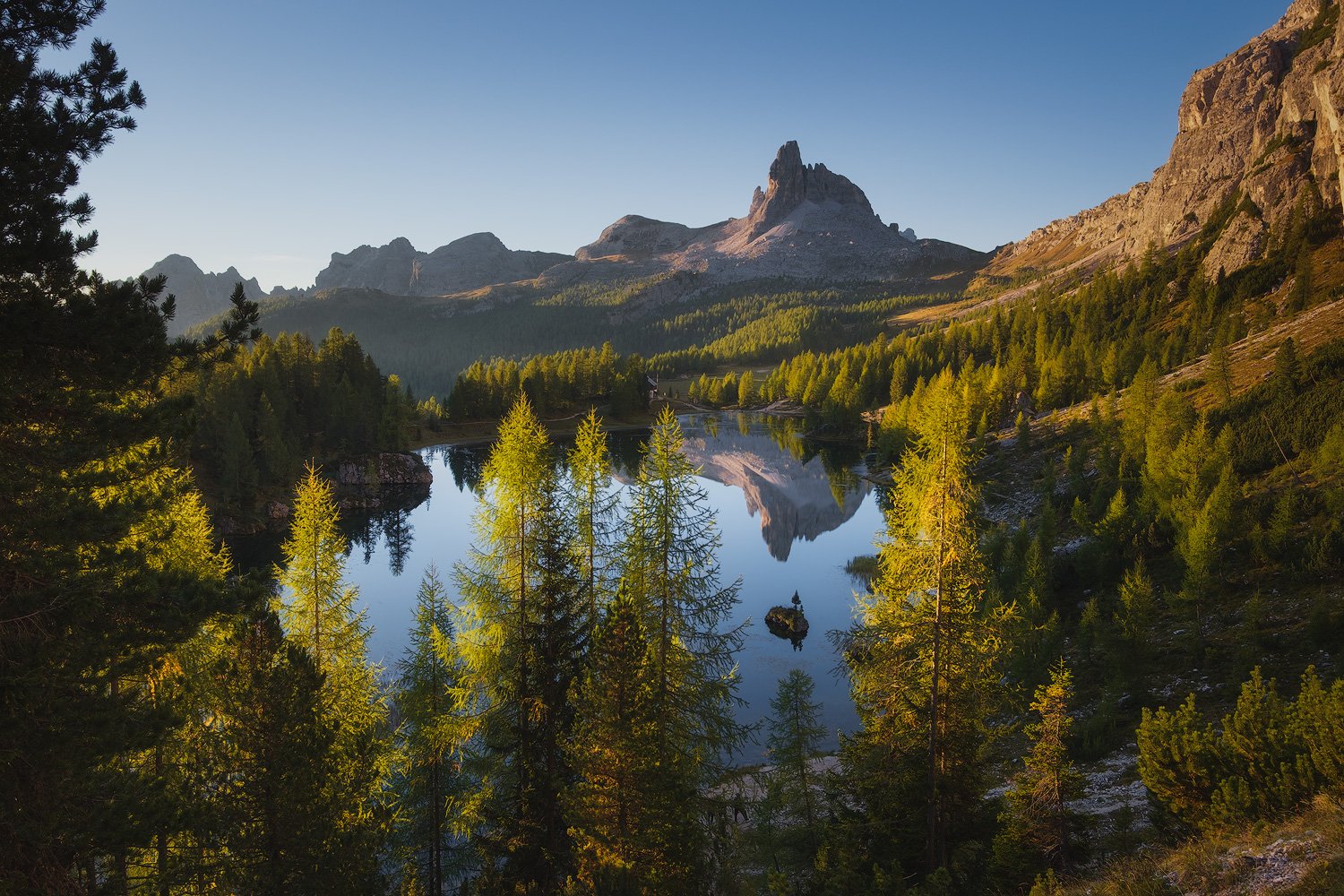
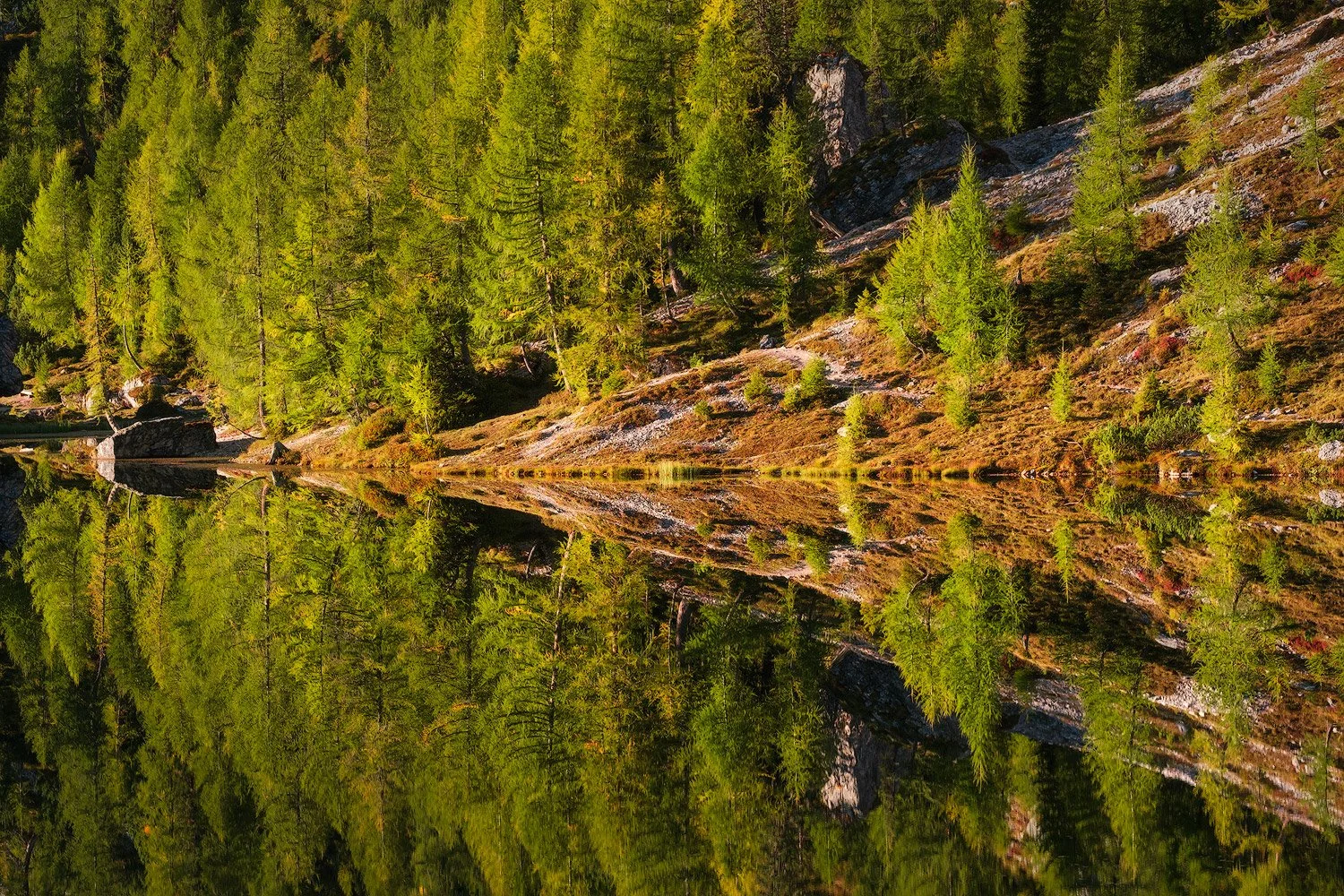
We began with wider compositions, bringing the lake and its surroundings into the frame. Then, as the light moved, our attention shifted toward smaller discoveries: reflections, patches of color, and details that had barely stood out a few minutes earlier. The telephoto lenses came out, and the same stretch of shoreline kept giving us more to work with.
It was a beautiful morning to watch unfold. You could stay in roughly the same place and still find yourself making a very different photograph as the light reached another part of the scene.
Eventually, with the sun higher and the smell of coffee drifting over from the nearby mountain hut, we packed our bags and headed back to the hotel for breakfast.
Breakfast is my favorite meal during these Dolomites workshops. I take it seriously enough that lunch often becomes unnecessary, which is a convenient arrangement when there are photographs to make.
After that, I run mostly on water until dinner.
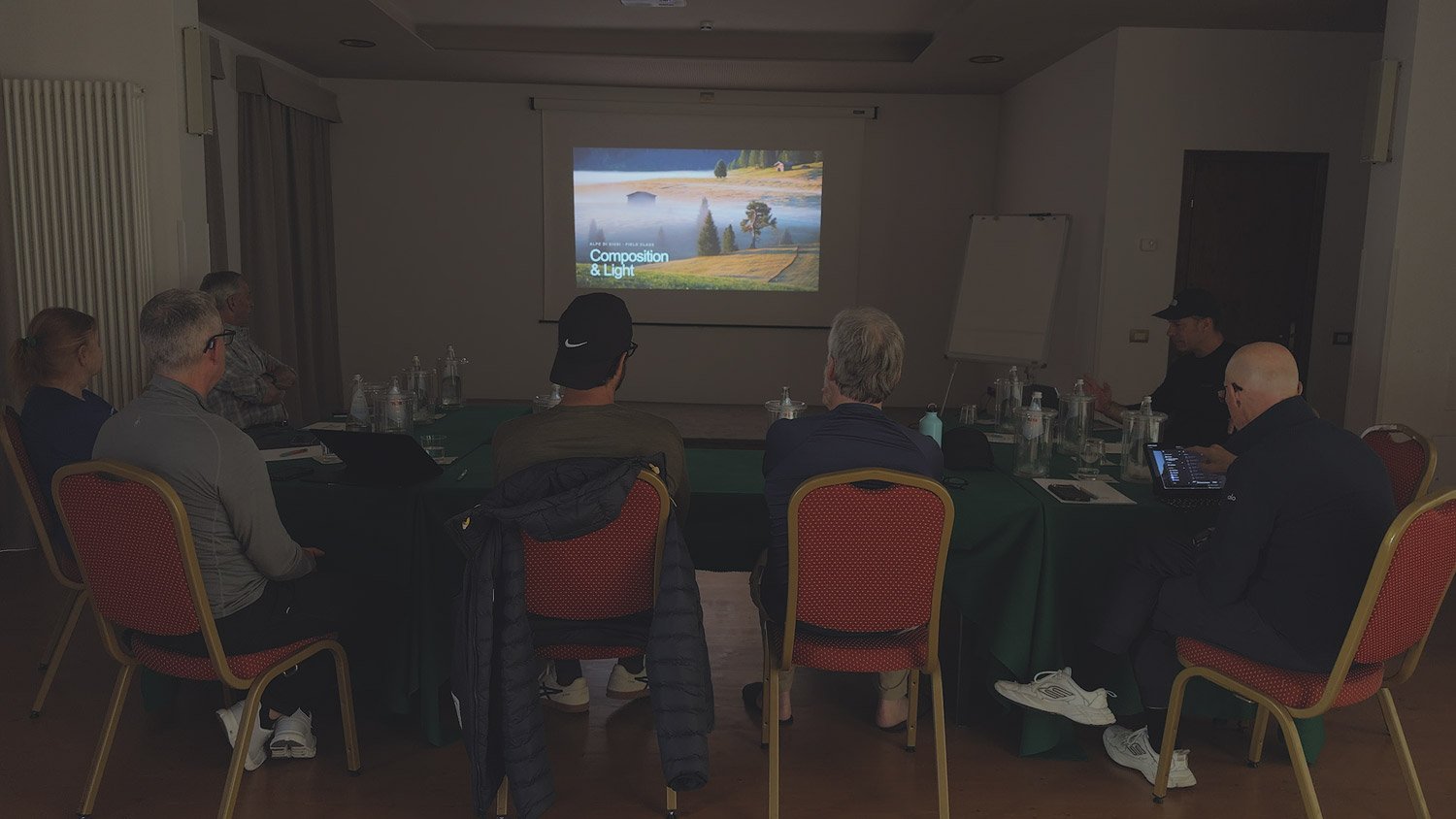
With fewer changes of accommodation during the Signature workshop, we had room for a slightly more relaxed daily routine. Slightly. I’d like to be very clear about that before anyone starts imagining lie-ins.
It also gave us time for a couple of extra short sessions on image reviews and editing. After just our first two outings, we sat down together to look through some photographs, compare approaches, and discuss framing and technical choices we could build on next time we went out. With the sessions still fresh in everyone’s minds, we could connect what had happened in the field with what we were seeing on screen.
“Having the opportunity for one-to-one conversations about composition while we were out in the field, and then being able to continue that learning through editing and image review sessions, was extremely valuable.”
— Tony & Wendy Dutton, Australia
Cadini di Misurina: Black-and-White Images and XPan Compositions
That afternoon, we headed to Cadini di Misurina, where the climb gave everyone’s legs and lungs something to think about. Reaching the top took some effort, but once we arrived, cameras and their owners were soon busy.
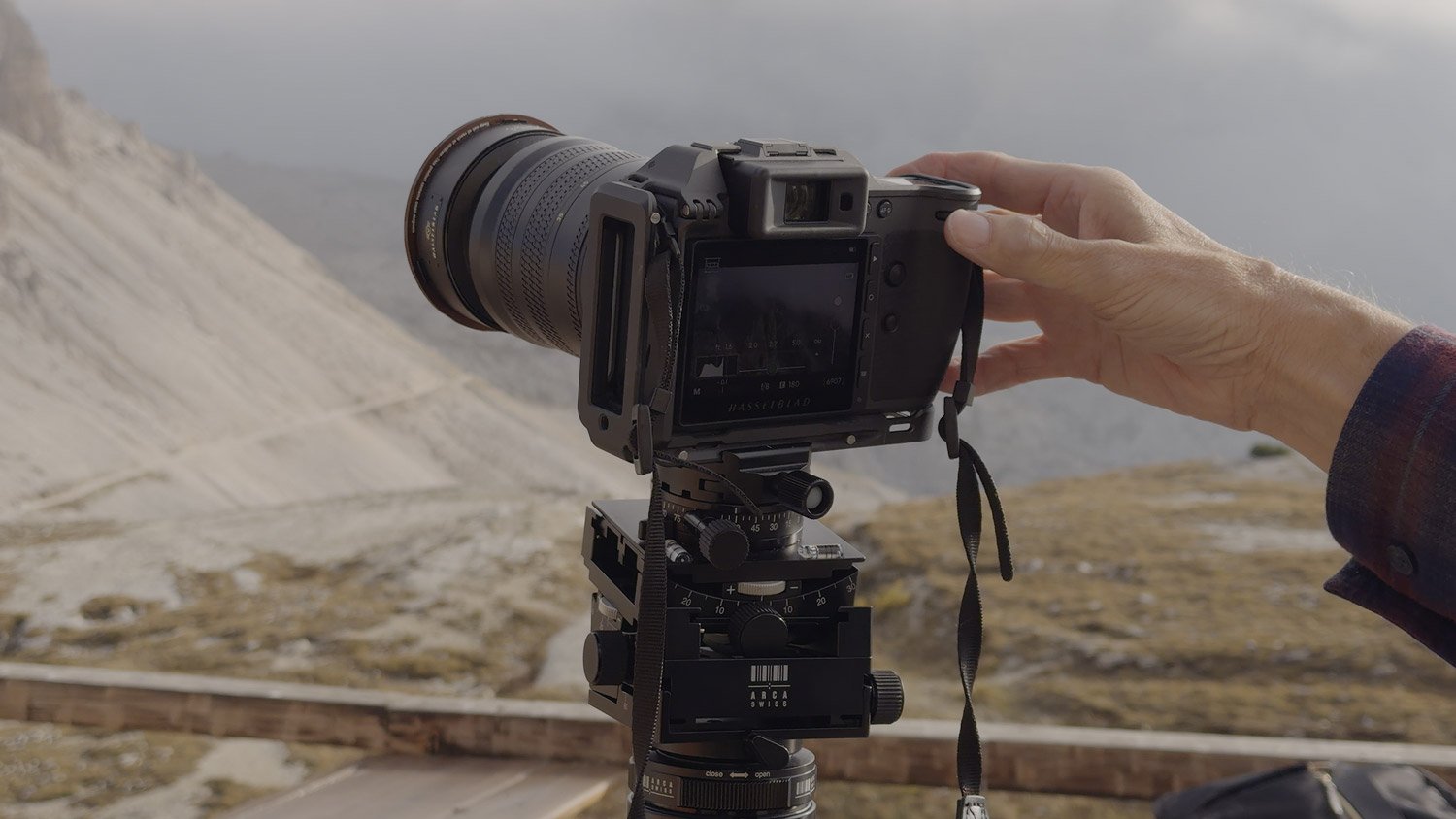
David had done the climb with a 70-liter backpack, the biggest I’ve ever seen on one of our workshops. He’s seriously fit and carried it without any trouble. His two Hasselblad bodies were traveling first class, apparently. Plenty of legroom, someone else doing the walking. I was starting to think they’d booked the better workshop.
Above us, the sky was a flawless blue. Again. The clouds appeared to have left the Dolomites altogether.
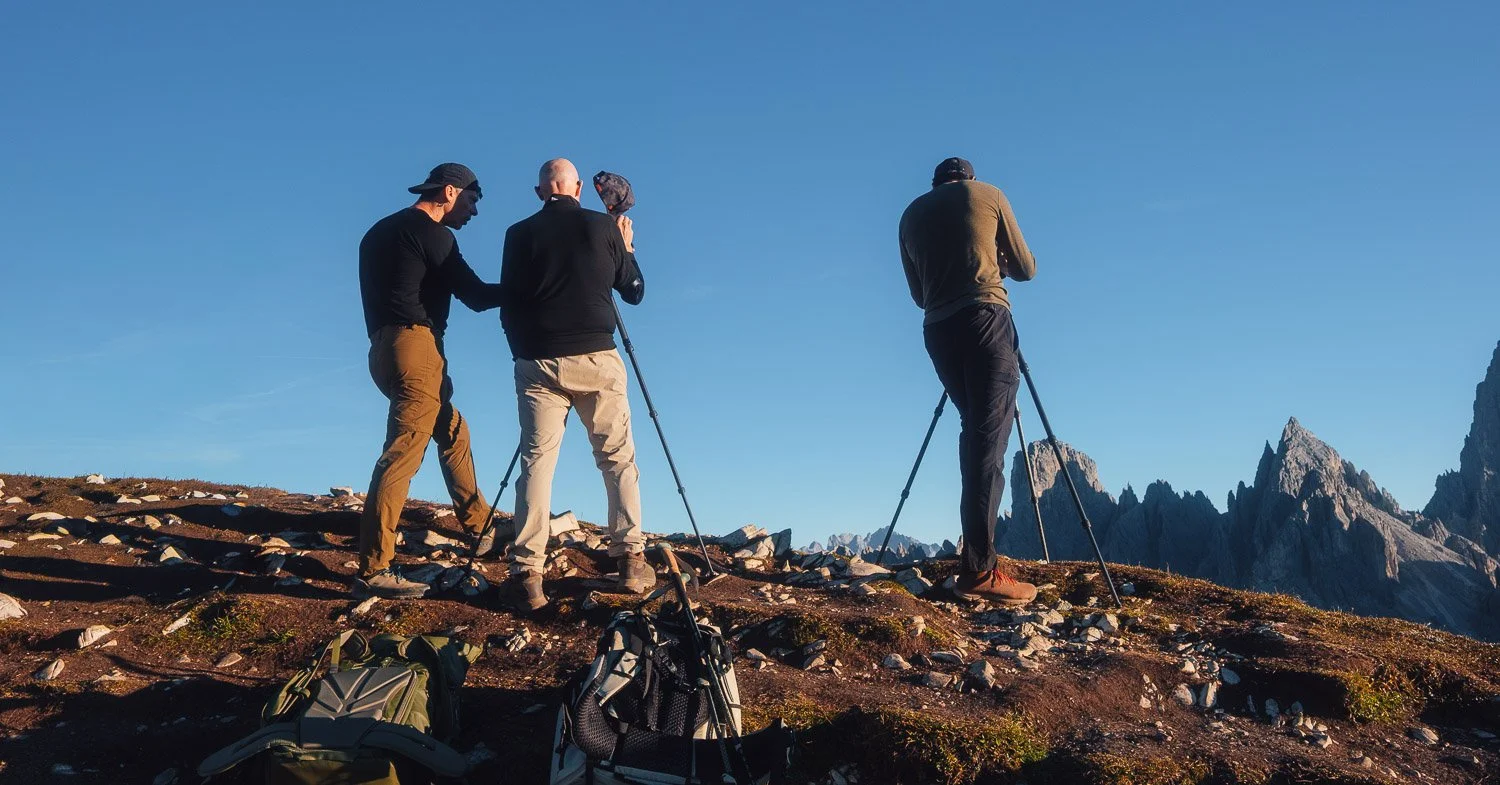
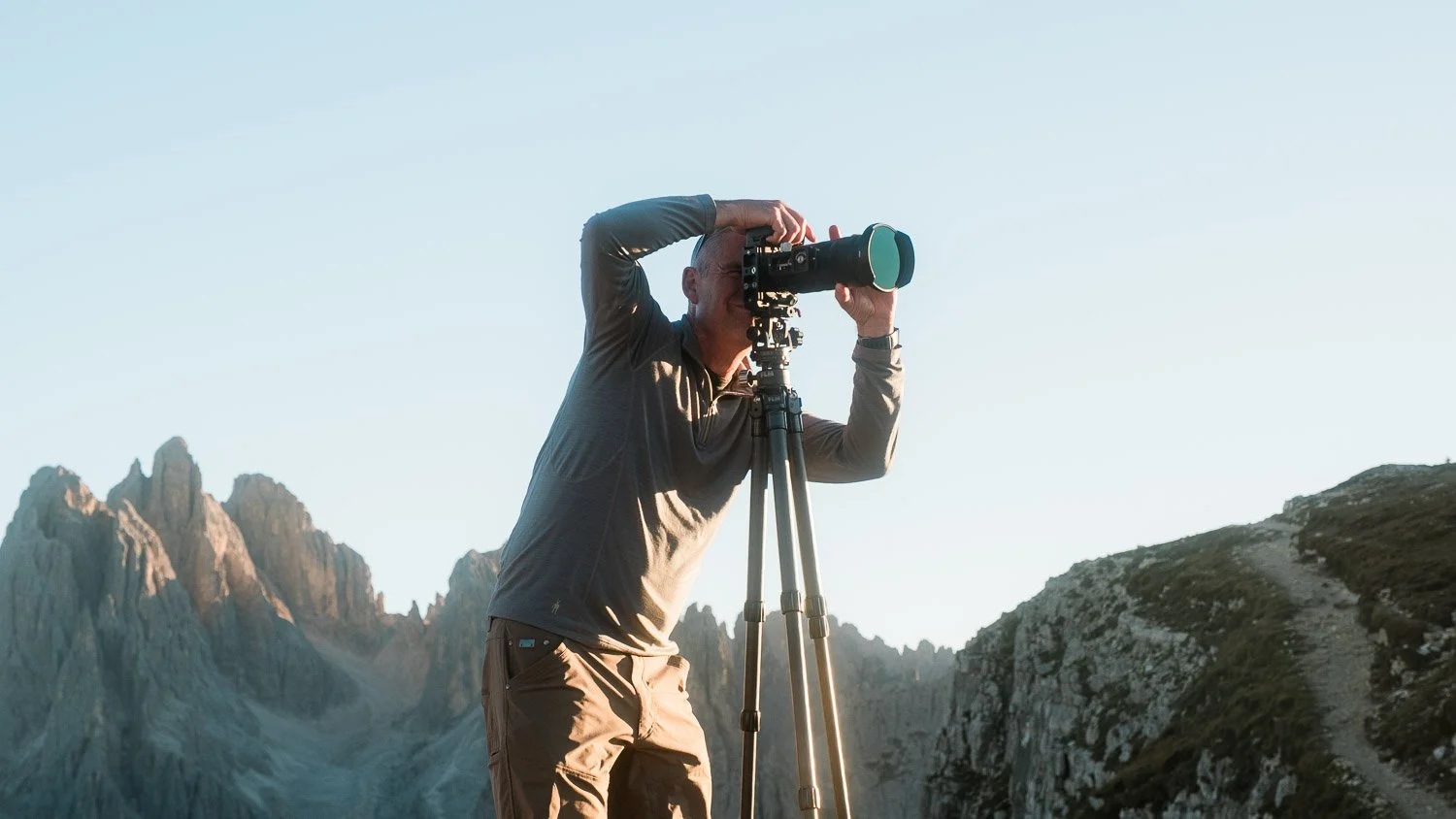
As I moved between the participants, I found myself getting increasingly interested in how they were interpreting a landscape I know so well. The black-and-white compositions and the wide XPan aspect ratio, in particular, caught my attention. These were the first signs of a theme that would keep surfacing throughout the week. More on that later.
In fact, something fairly unusual happened that afternoon: I didn’t take a single photograph.
I was too interested in what everyone else was making. We worked through framing choices together, discussing what to include, what to leave out, and how the wider format changed the composition. Their ideas gave us plenty to explore. I know these mountains well; I don’t know in advance what someone else will notice in them. That exchange is one of the things I enjoy most about teaching in the field.
Once the sun disappeared, the temperature seemed determined to reach freezing before we could get our jackets on. We packed up and began the walk down to the van, with pizza providing a clear sense of direction.
Passo Falzarego and Cinque Torri: Changing Light and Mountain History
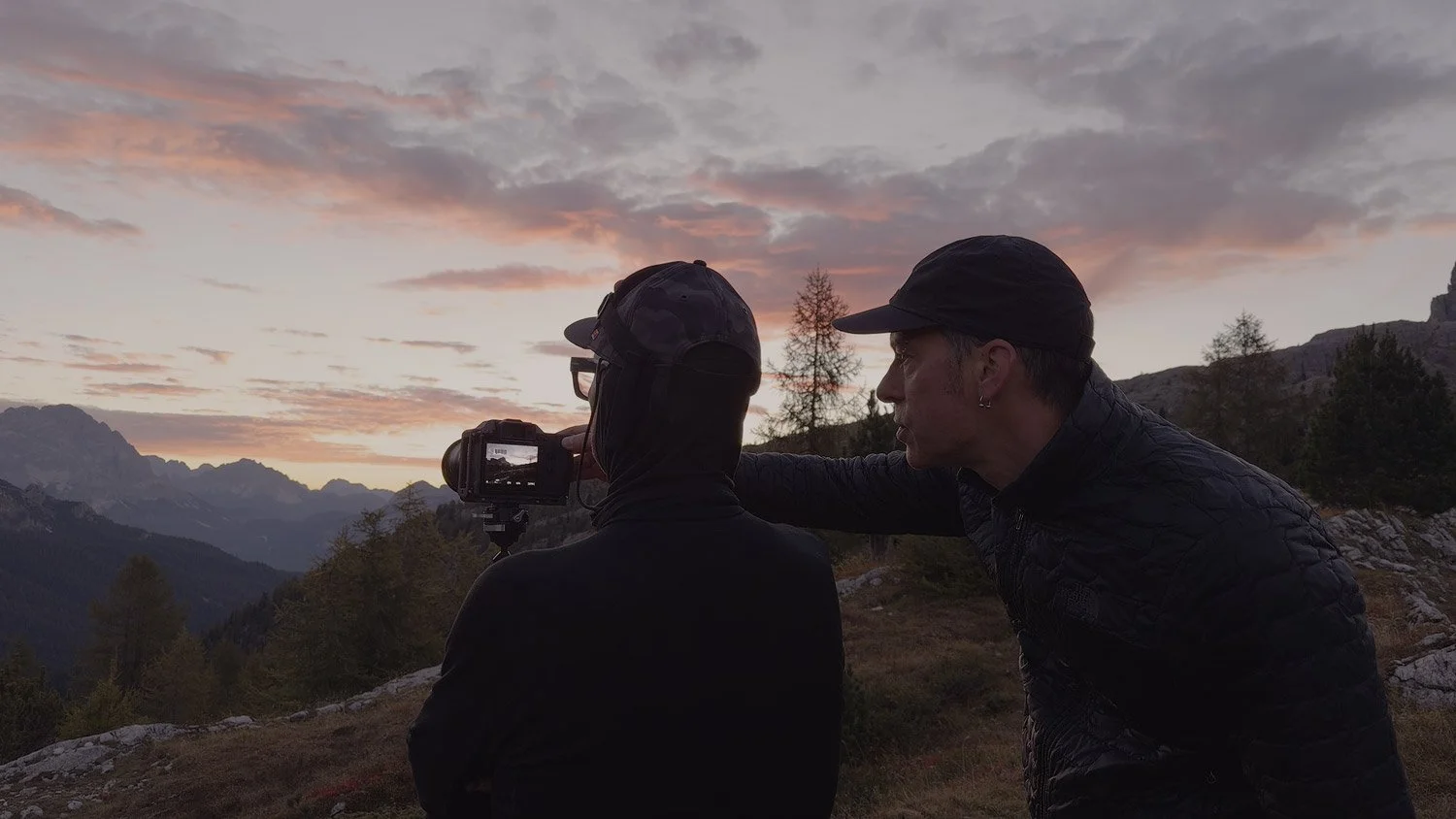
The following morning, around Passo Falzarego, the clouds finally returned.
And they’d made an effort. Beautiful shapes, color, and changing light gave us plenty to work with at dawn. After two days of blue skies, it felt like a reward for having behaved reasonably well about the whole thing.
Andrea fifteen years ago would probably have complained considerably more. I’ve had some practice since then. I still can’t persuade clouds to appear, but I’ve become better at enjoying what’s there while I wait.
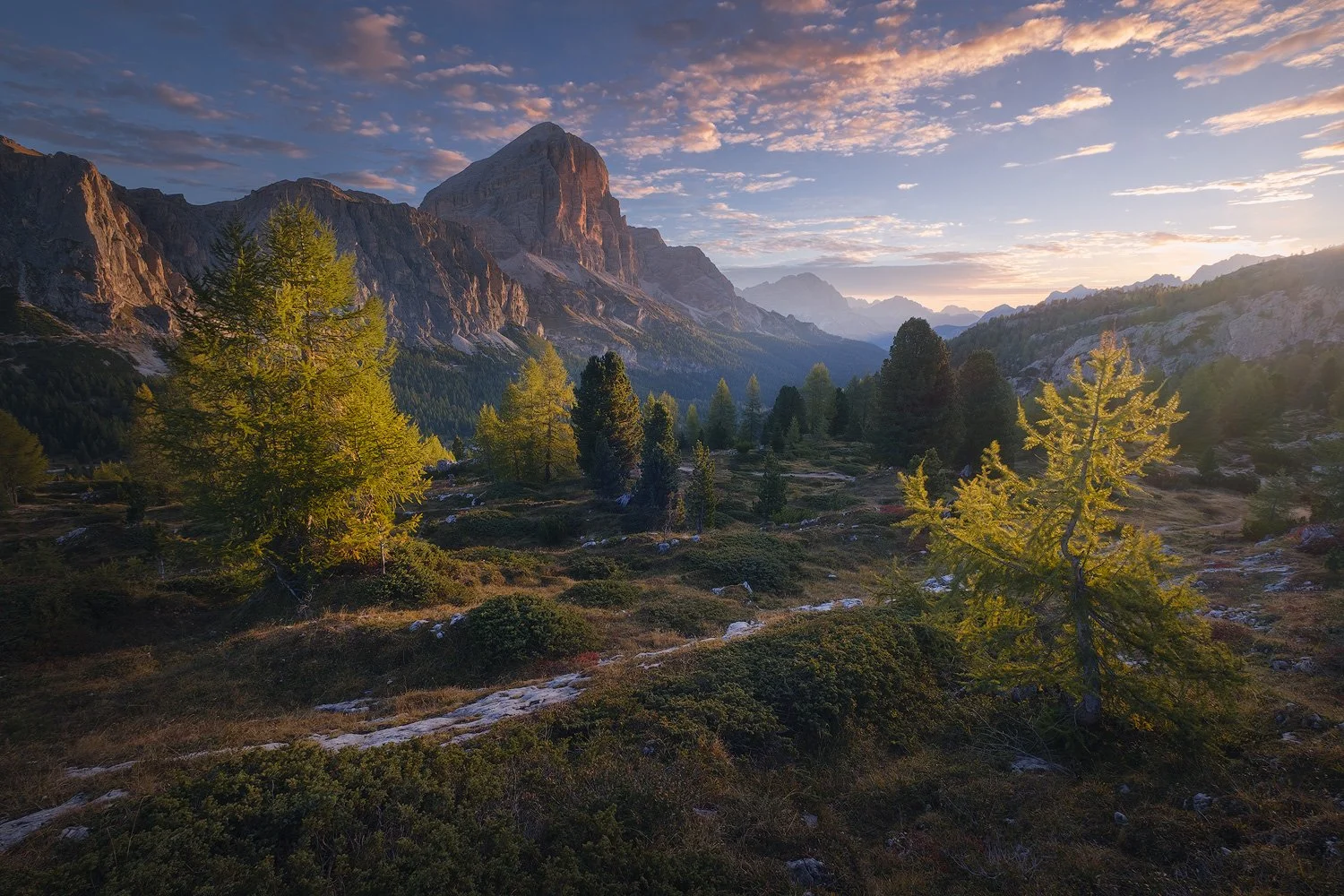
Falzarego can make you work for a composition. There’s a lot going on, with elements competing for attention and no immediately obvious way to organize them. Finding a frame means deciding which relationships matter and how much of the surrounding landscape to leave out.
That complexity gave us plenty to discuss, and everyone came away with strong photographs. The beautiful light certainly helped, but there were still choices to make about what deserved a place in the frame.
In the afternoon, we moved just a couple of kilometers east to Cinque Torri.
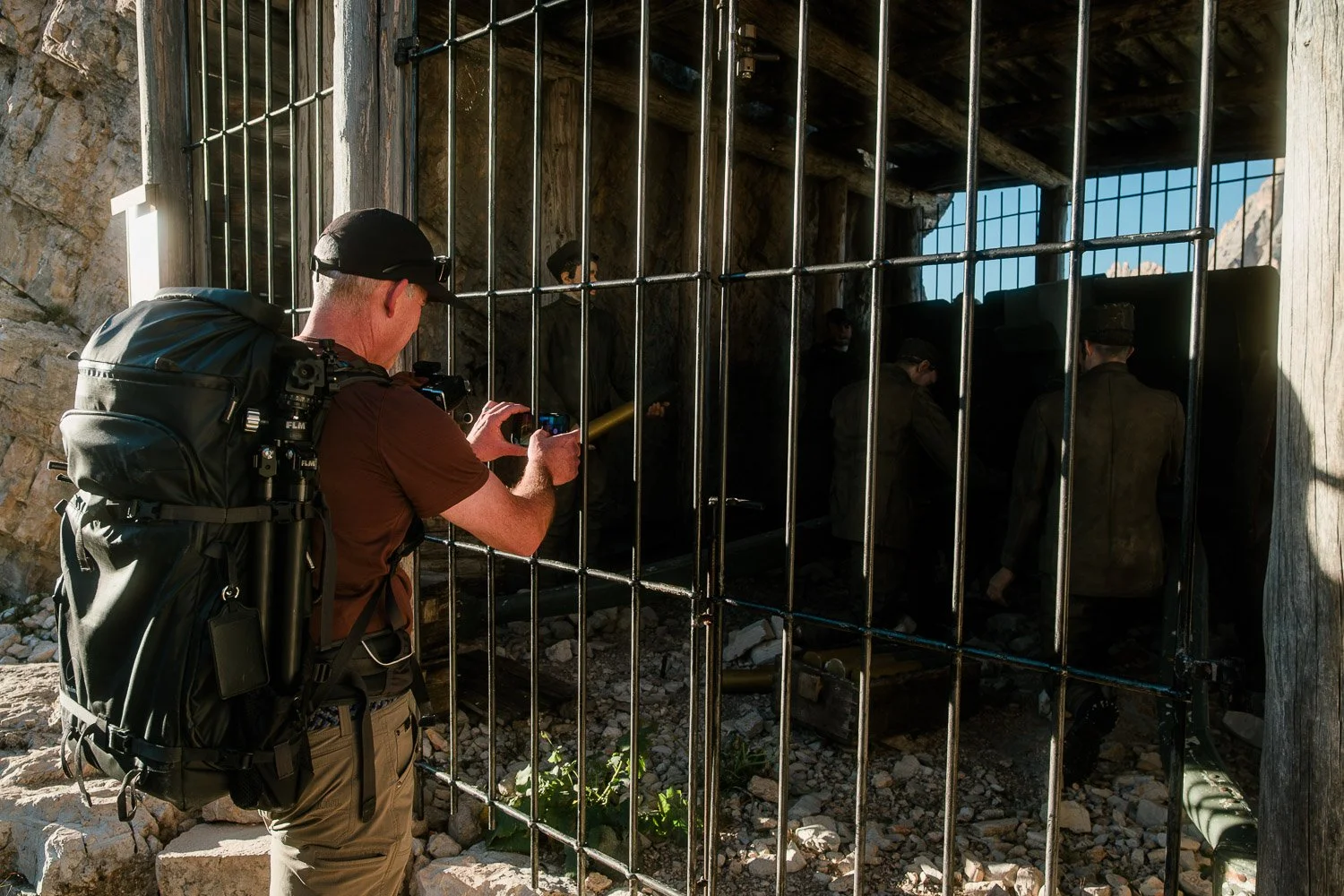
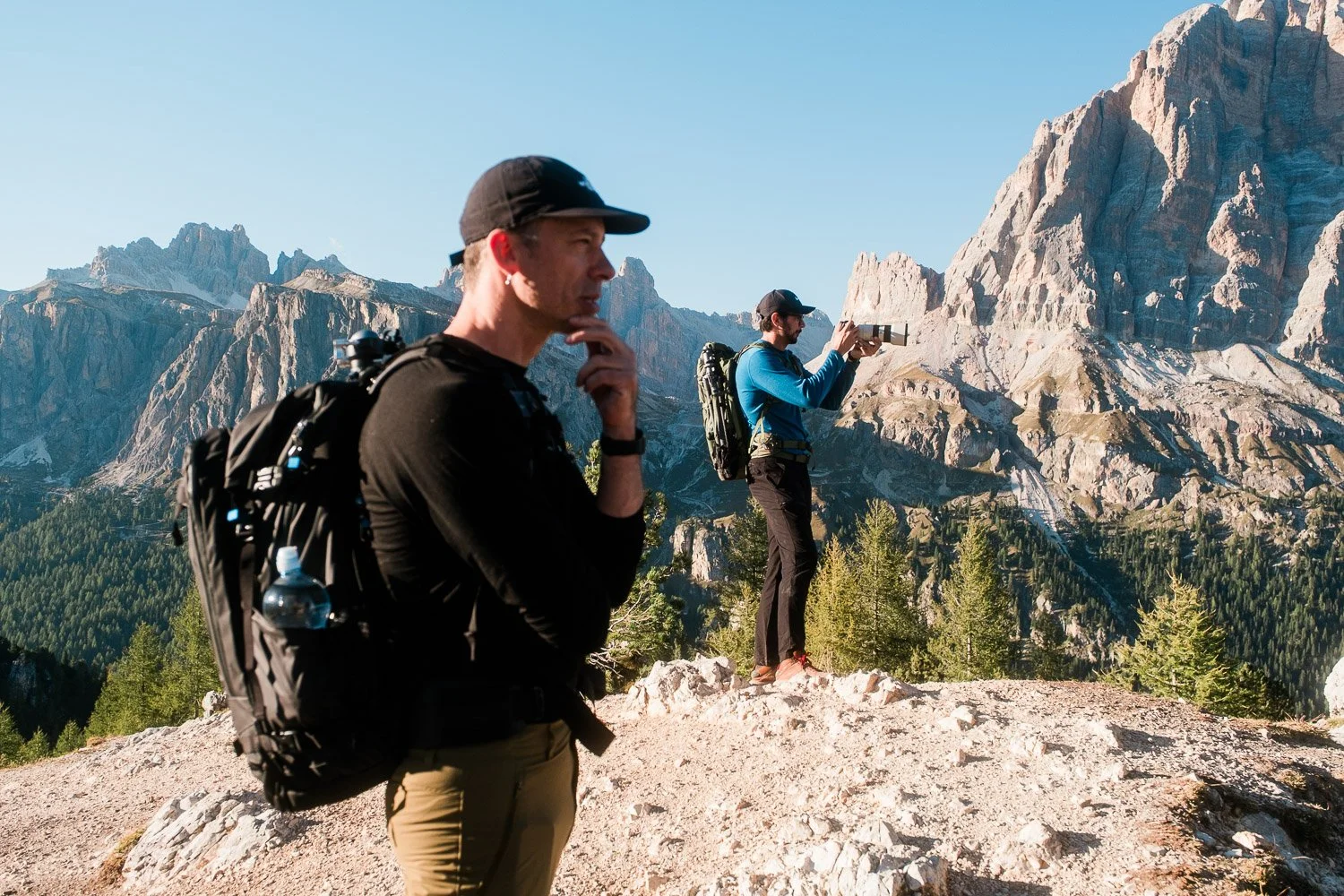
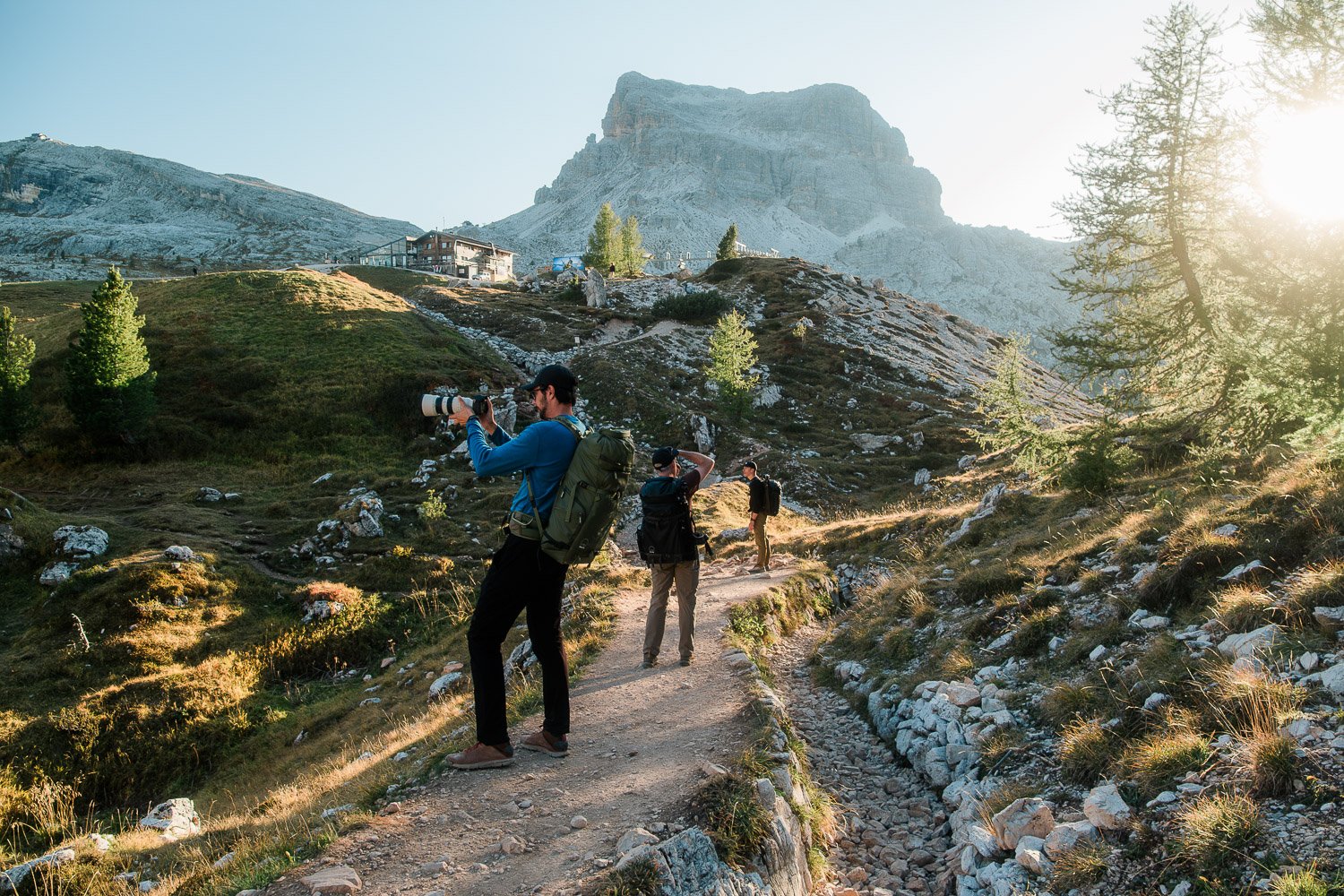
I touched on the history of this area in the Immersive field report, but it’s something I find difficult to separate from being here. Among these rock towers are reminders of the young men who fought in the mountains during the First World War. Trying to imagine their lives in such harsh conditions changes how I experience the place.
For me, that awareness carries into the photographs too. The landscape takes on another dimension when you know something about what happened within it.
By afternoon, we were working beneath a largely empty sky again. The group kept exploring, and I enjoyed seeing the compositions taking shape as we moved through the area. A place can be familiar to me and still produce photographs I wouldn’t have thought to make.
At this point, you might reasonably be wondering why I keep talking about everyone’s photographs without showing you any.
Fair question. I’m saving a selection for a separate article or video, where I can give their work the space and attention it deserves.
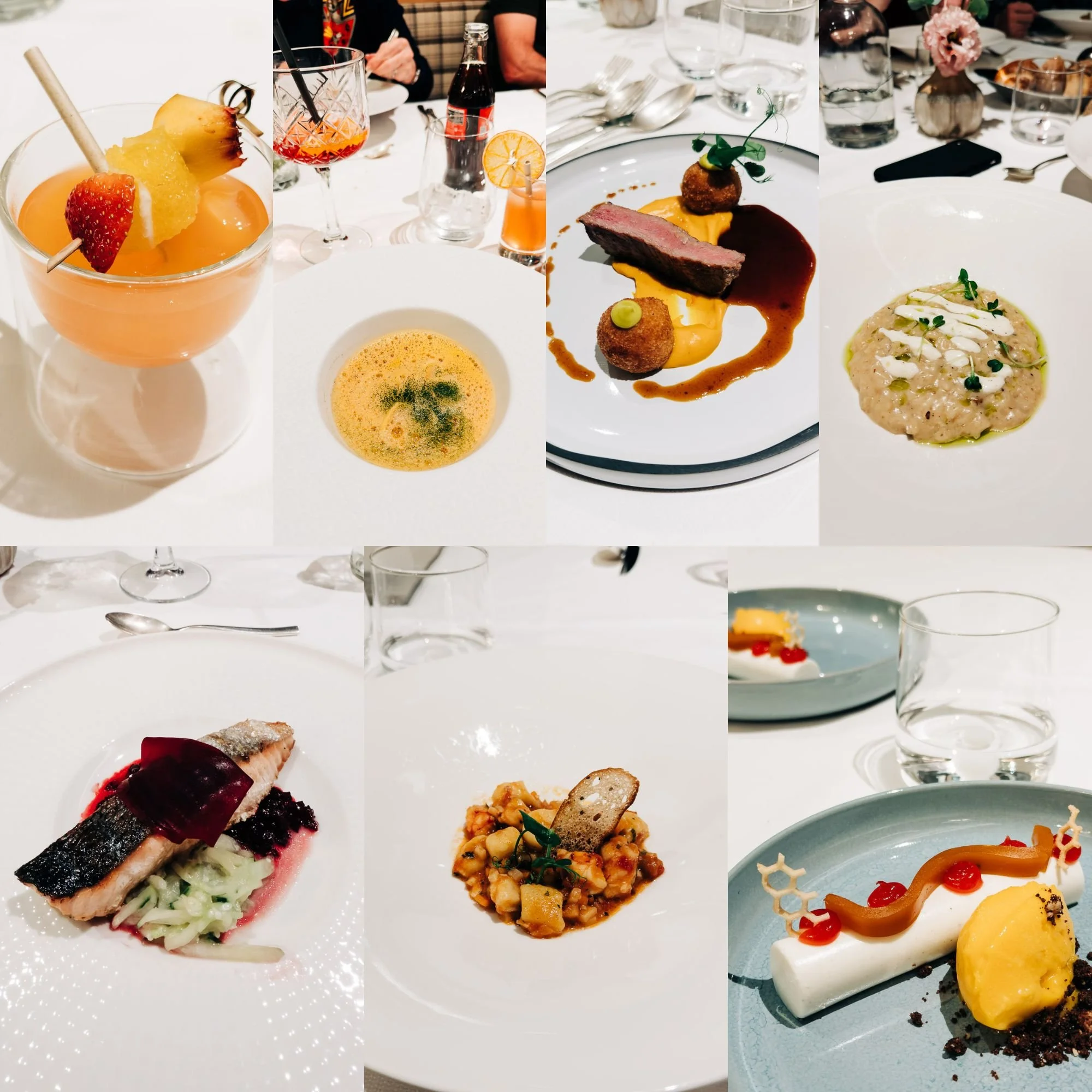
That evening, we gathered around the table for venison stew, carbonara, lamb ribs, and red wine. There was plenty to talk about after a day like that.
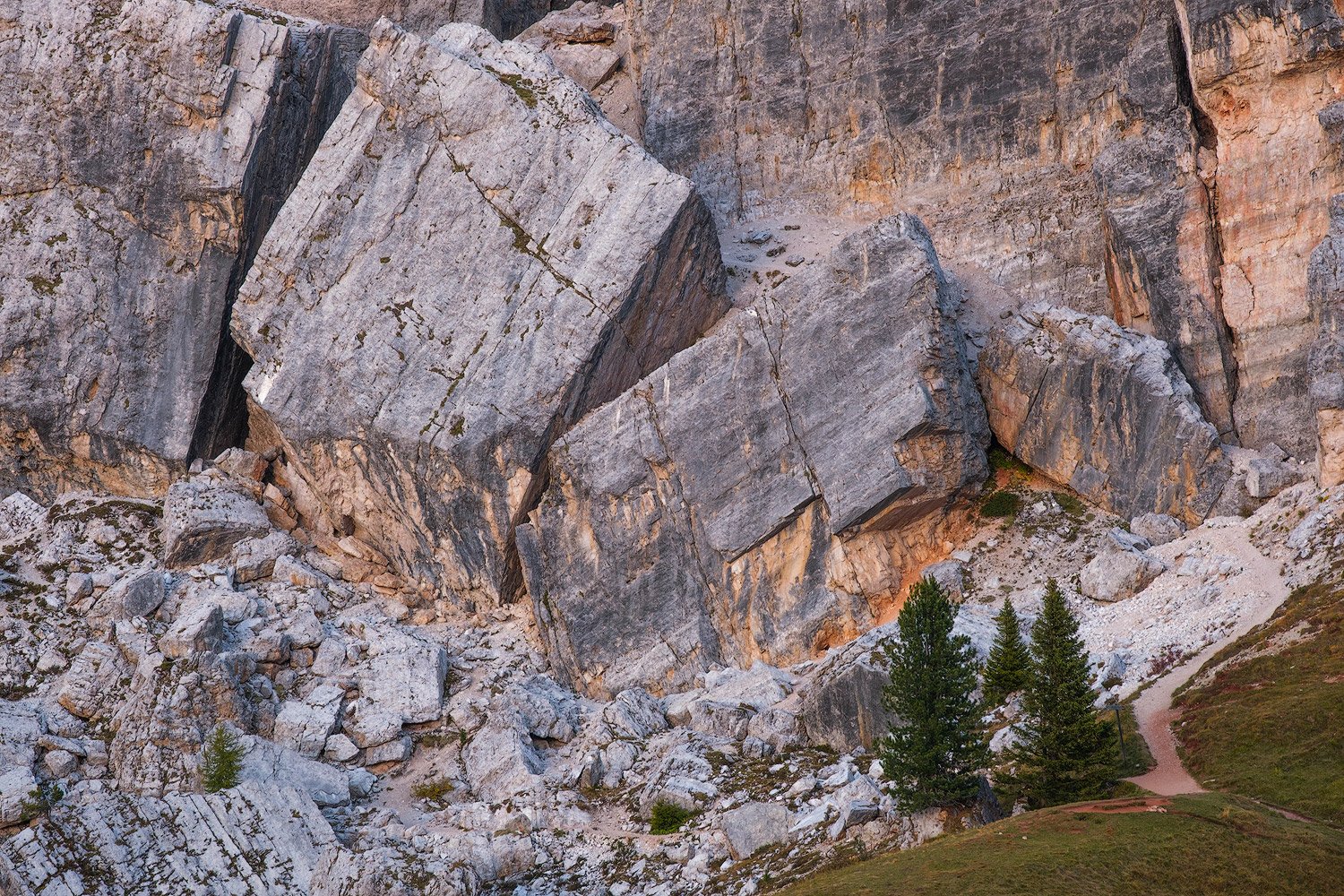
“Andrea has a great ability to explain what he is seeing, why a composition works, and how to improve an image both in the field and during post-processing.”
— Fred Tafoya, USA
Tre Cime di Lavaredo: A Cloudy Afternoon Worth Waiting For
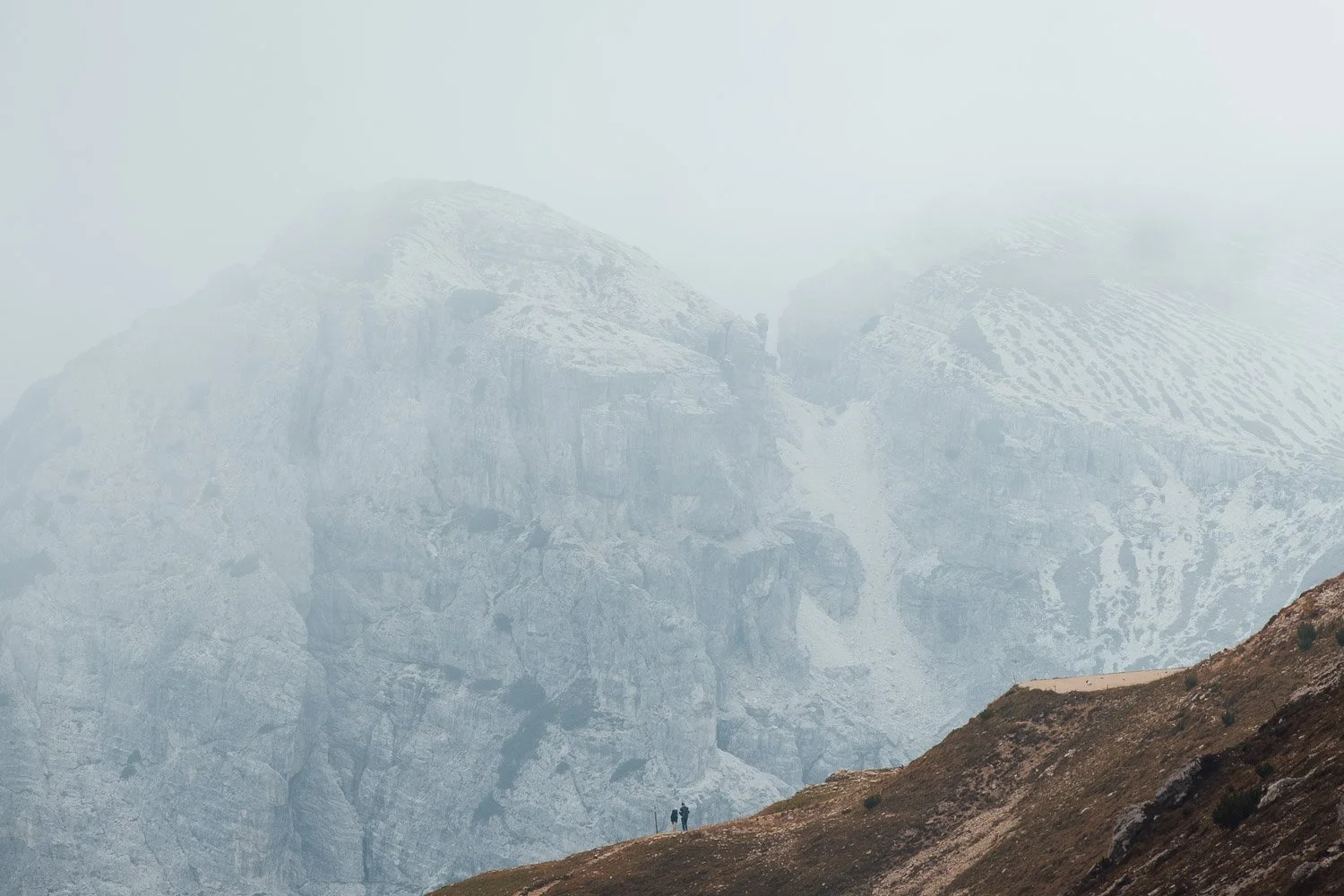
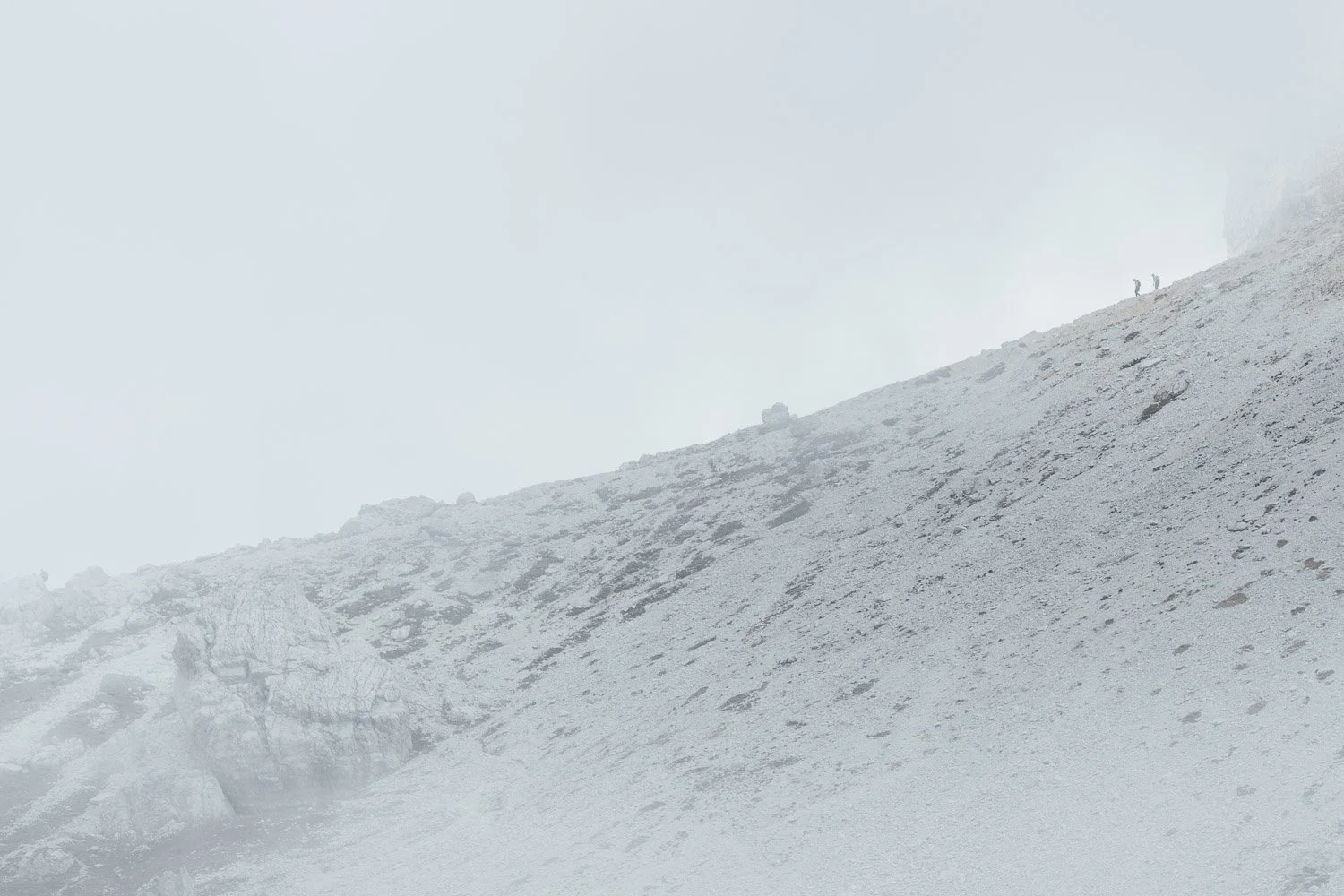
By early afternoon the next day, we were beginning to wonder whether the mountains would let us see them at all.
We were heading to Tre Cime di Lavaredo, planning to walk to Rifugio Locatelli before returning to Forcella Lavaredo for sunset. There was plenty of movement in the sky, but a thick layer of low cloud seemed unusually reluctant to move on.
Clouds come and go throughout the day here. These appeared to have made themselves comfortable.
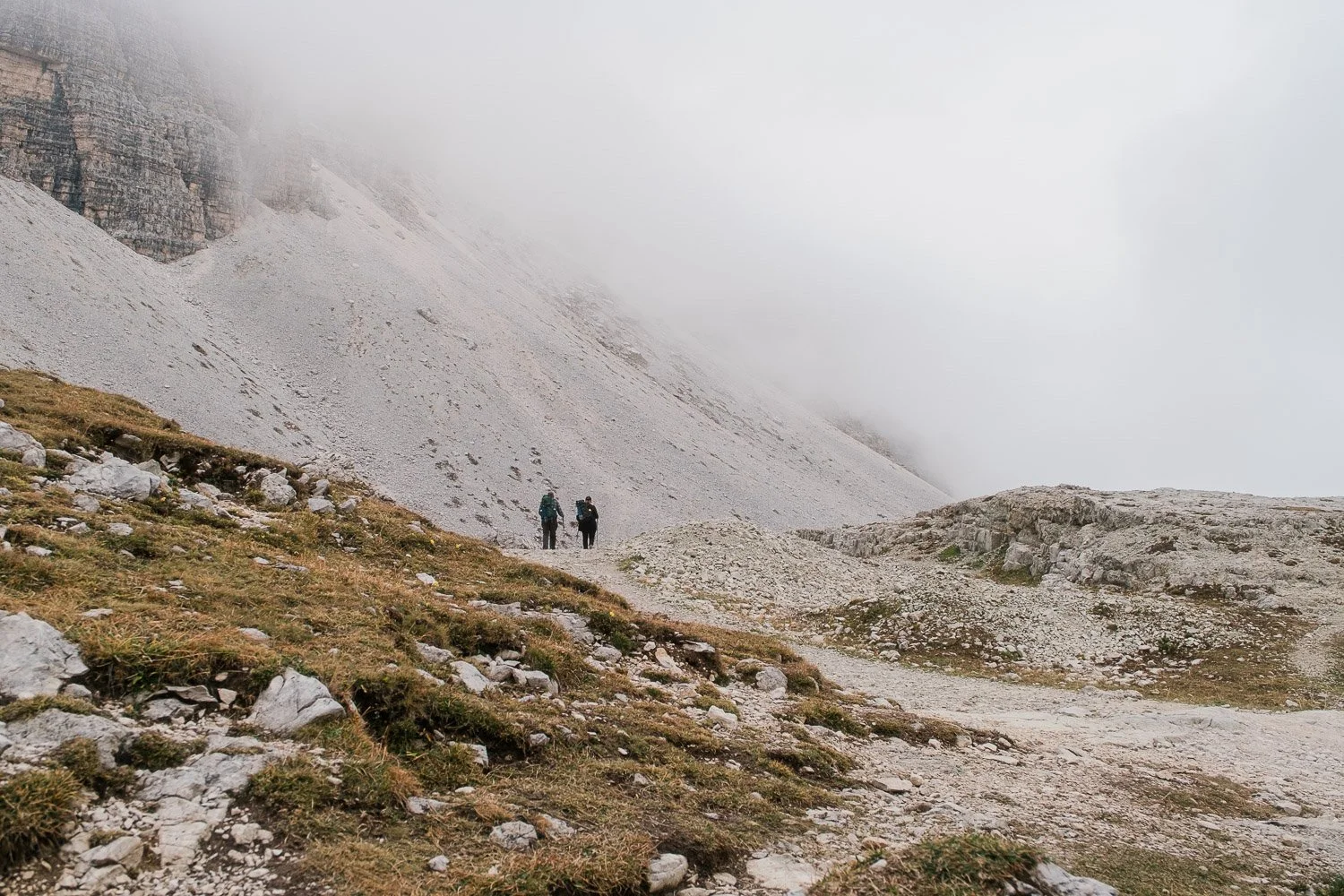
Mountain forecasts always leave room for uncertainty, especially at around 2,500 meters. As we set off, low cloud hid almost everything in the direction of Auronzo. It stayed with us during the roughly hour climb to the forcella, giving us plenty of time to consider whether we’d be spending the afternoon photographing the inside of a cloud.
At the forcella, the view north offered a few small openings. Enough to encourage me, though opinions within the group varied.
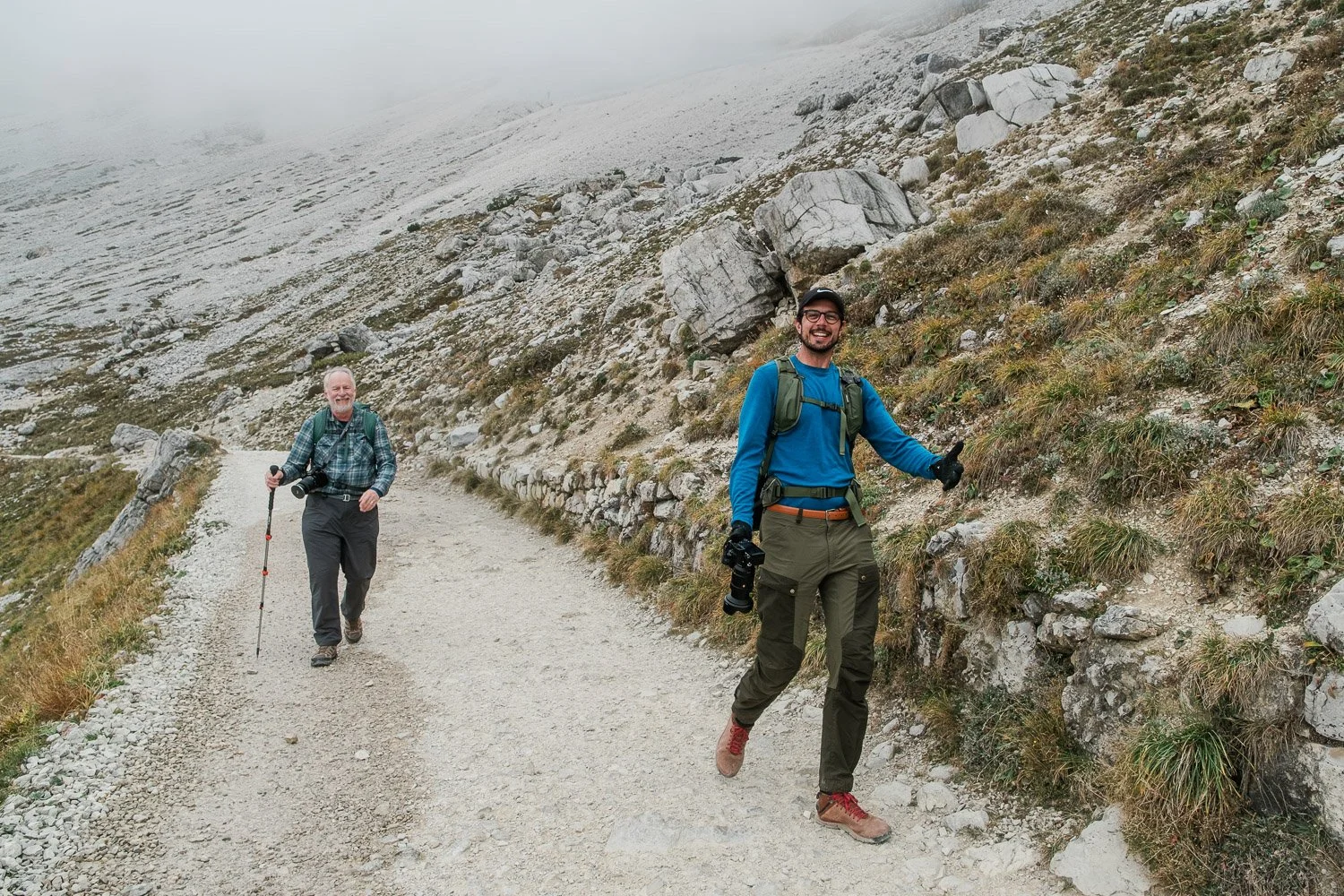
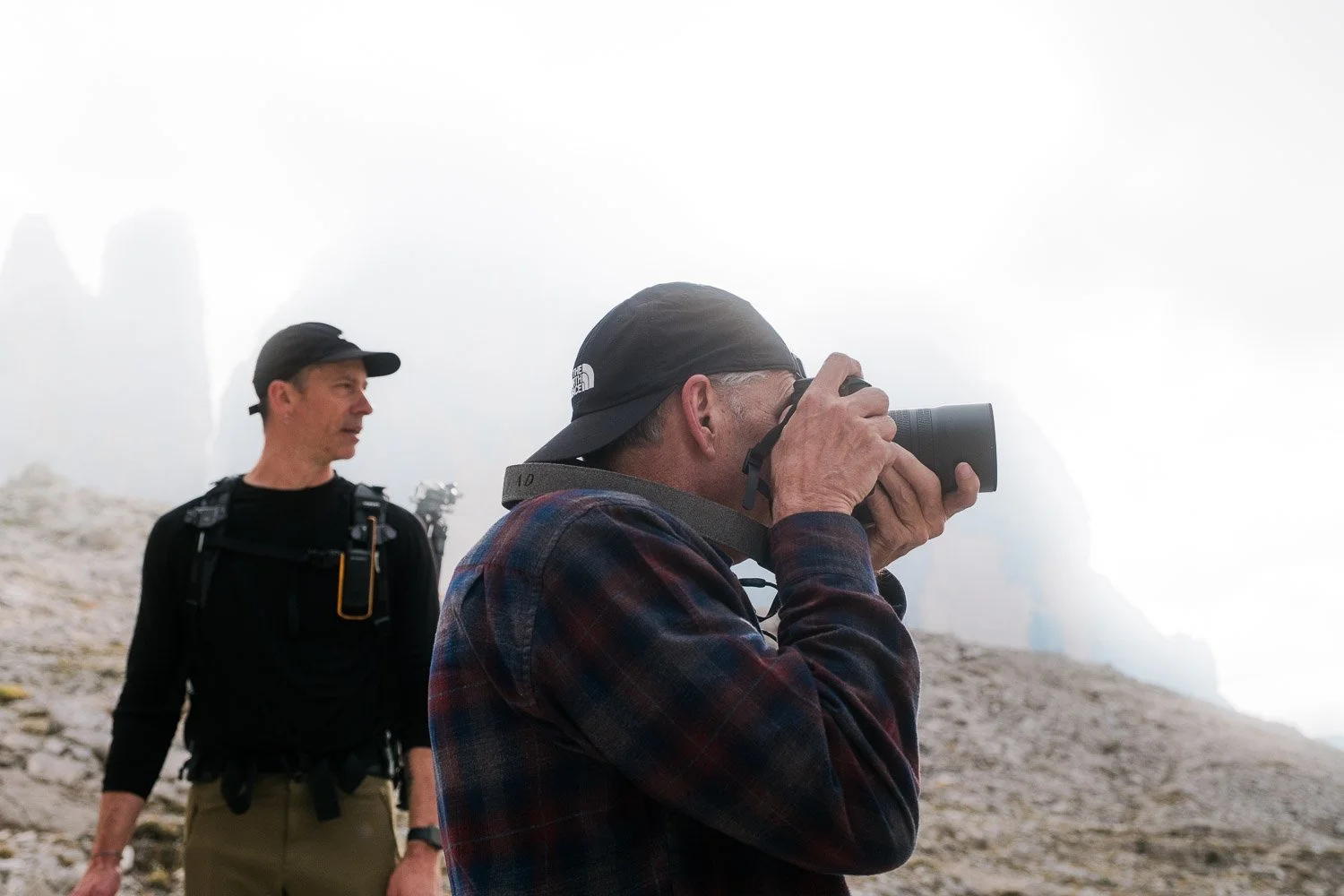
One participant asked, with a hint of resignation, what I thought our chances were for sunset.
“What do you think?” I asked.
“I don’t think this is going to clear. I reckon the session’s a write-off.”
“We’ll see,” I said. “If you’re wrong, you owe everyone a spritz.”
I wasn’t certain it would clear either. But I’ve seen conditions change quickly enough here to know that the view from the pass doesn’t necessarily tell you how the afternoon will unfold.
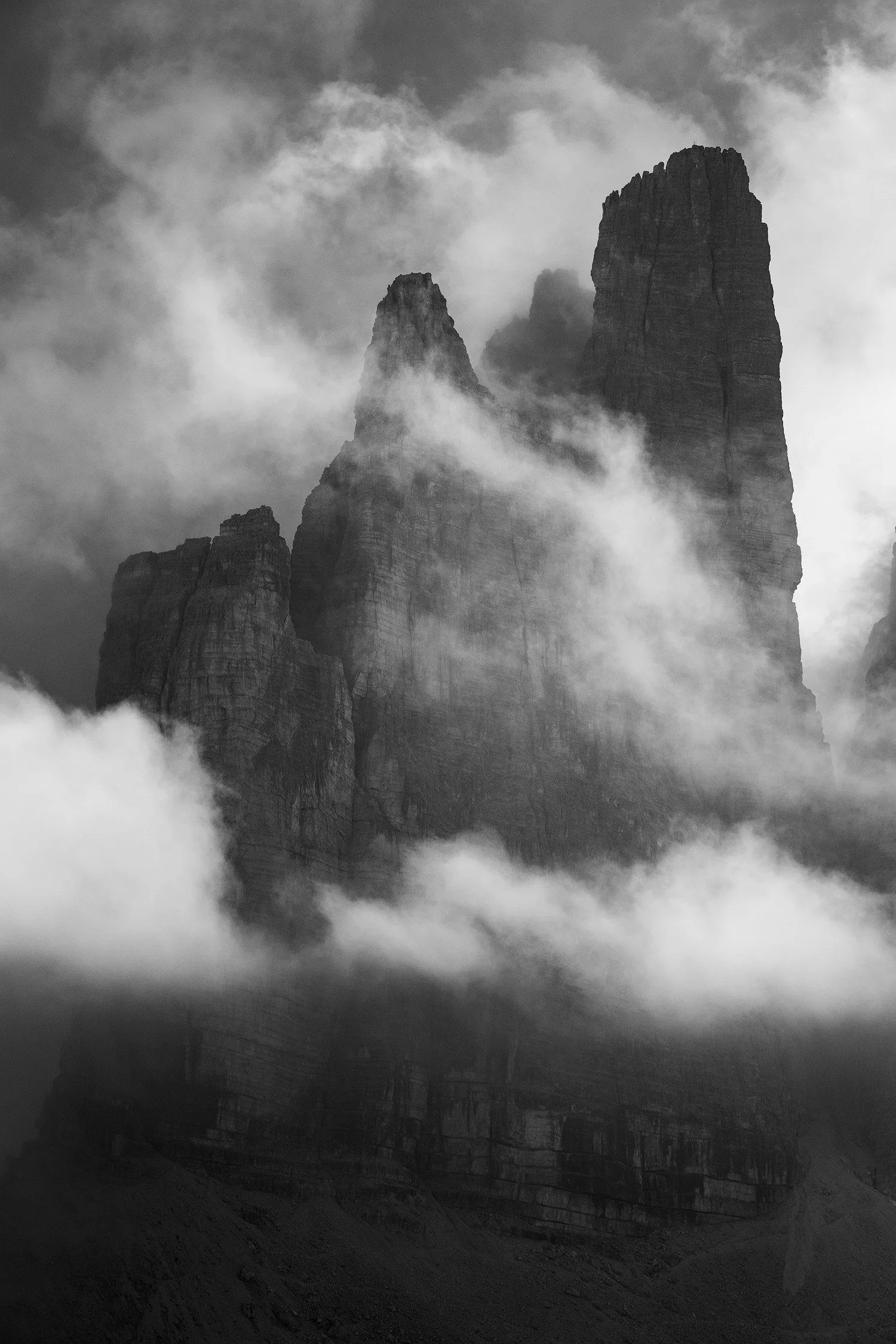
We continued down onto the northern side, and within ten or fifteen minutes, the clouds around the peaks began to thin. They never disappeared completely. Instead, they revealed enough of Tre Cime to give us something far more interesting than an unobstructed view: enormous rock faces appearing through shifting cloud, with all the scale and atmosphere we’d hoped for.
Progress toward the rifugio slowed considerably.
For a moment, this looked suspiciously like the way to Cirith Ungol. Fortunately, our route led to a rifugio, which I consider a significant improvement.
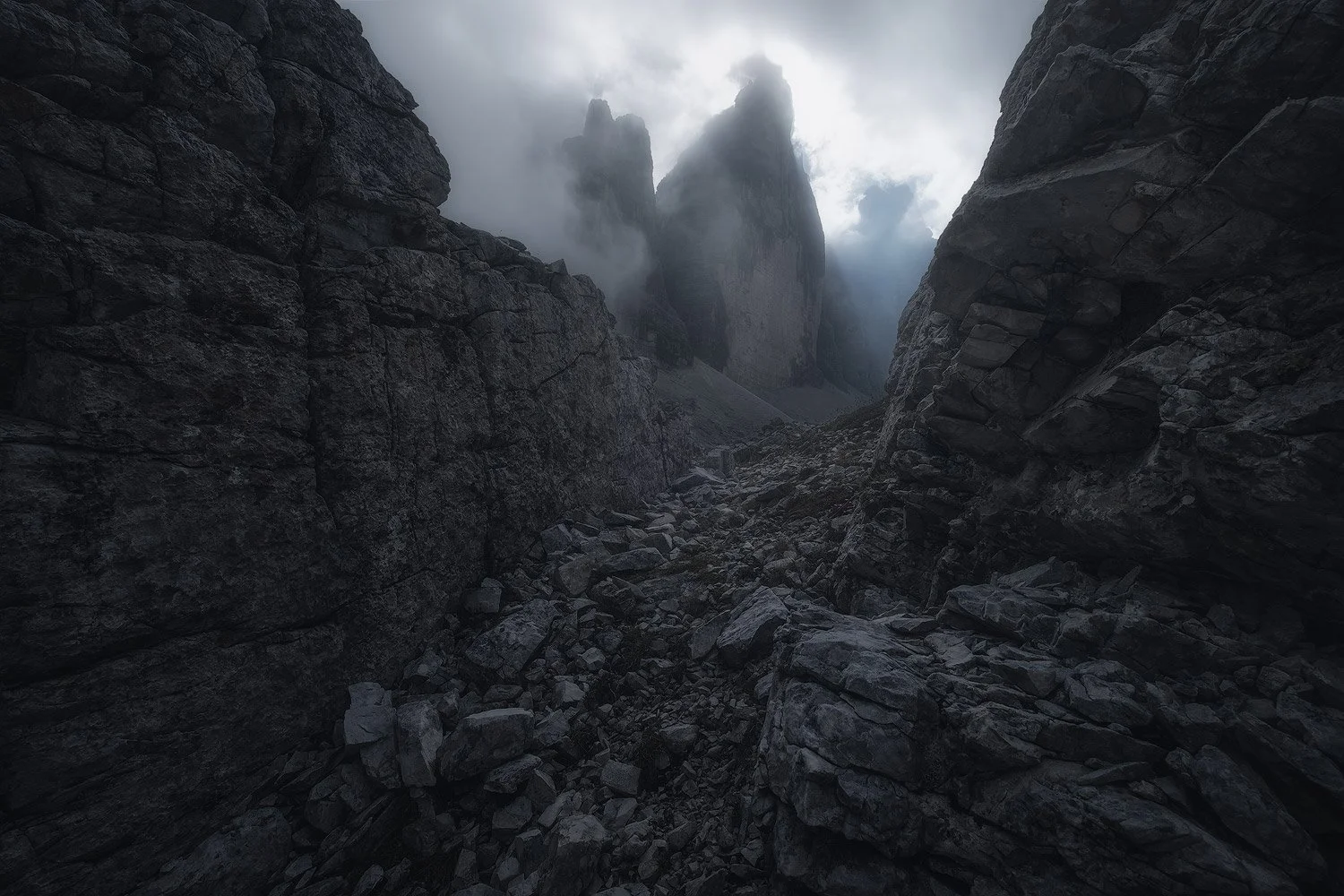
Over the next hour, we kept stopping as another peak emerged or a gap opened somewhere else. Cameras came out, went away, and came straight back out again. There was a lot to photograph between us and our destination.
When we finally reached Rifugio Locatelli, it was already closed for the season. Fortunately, its manager, a good friend of ours, happened to be there finishing the last jobs before locking up. Sabrina asked whether there was any chance of a few beers.
Which is how we found ourselves drinking wonderfully cold beer outside a closed mountain hut.
I’d love to credit my positive thinking, but Sabrina had actually asked the useful question.
And Fred, thank you for picking up the tab.
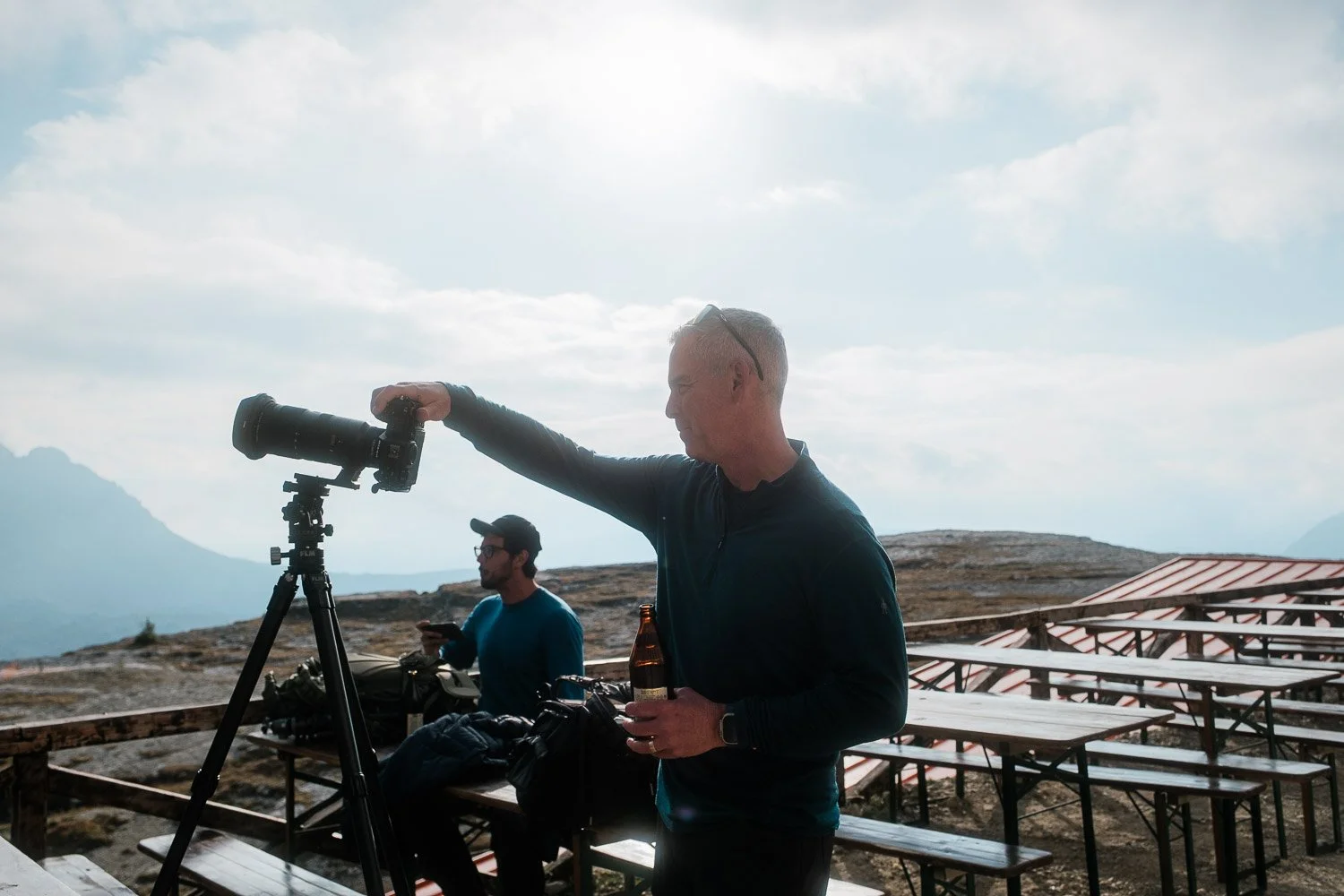
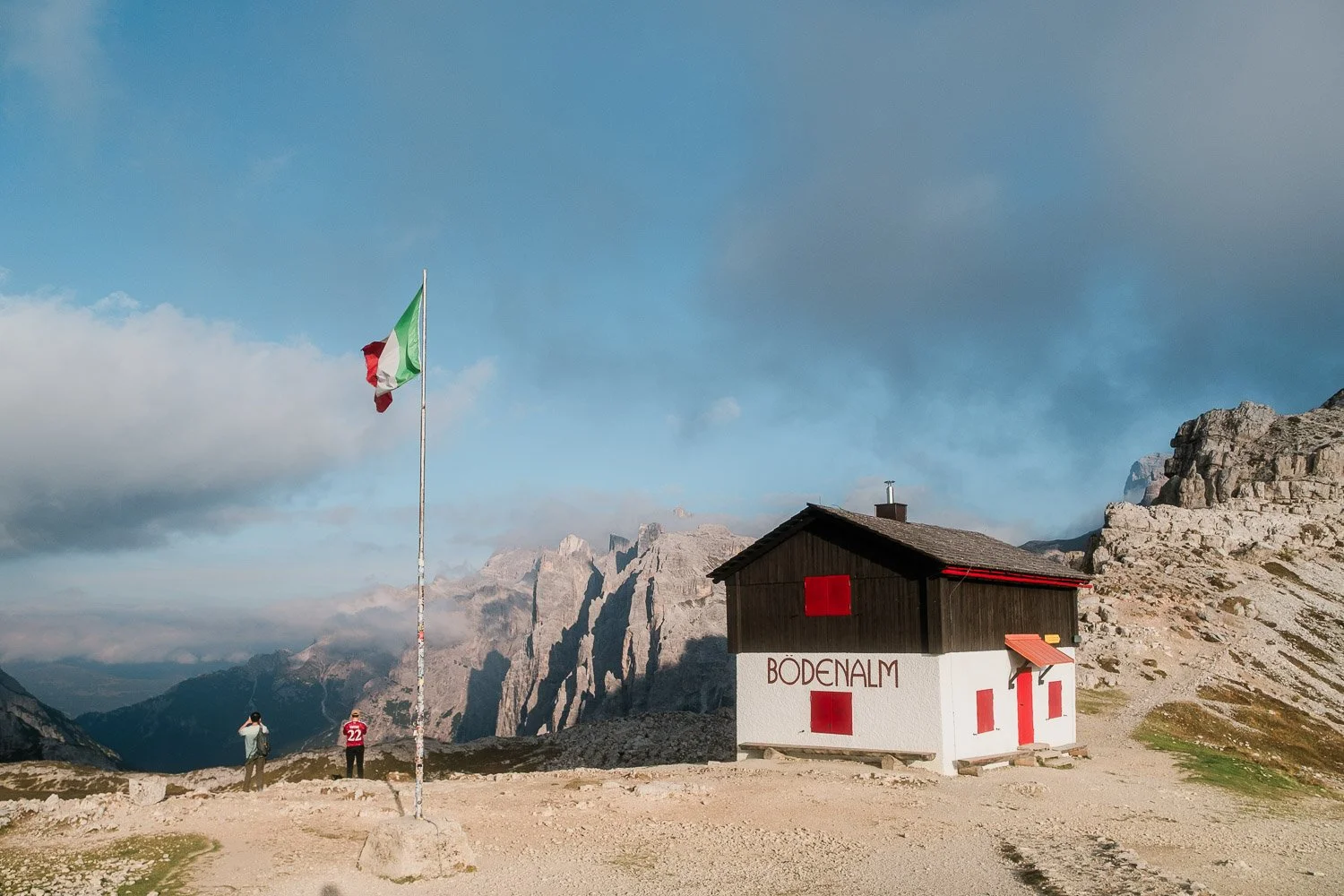
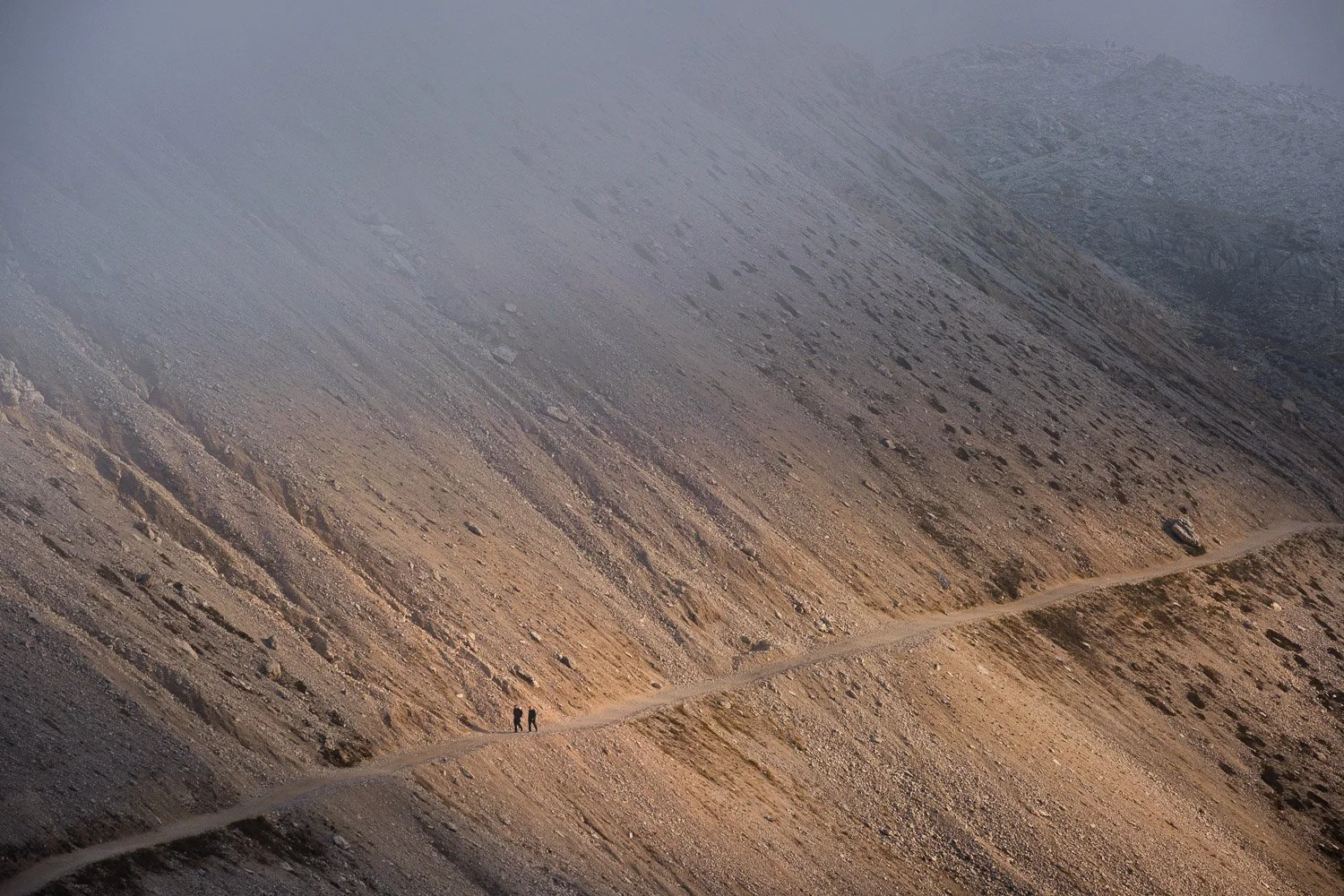
The afternoon became one of the most memorable sessions of the week. We started with our cameras pointed toward Monte Paterno, then spread our attention across the surrounding mountains as the clouds and light kept changing. A photograph would hold us in one direction until something happening elsewhere made us turn again.
Between the walk, the extraordinary conditions, the beer, and perhaps a little help from the altitude, things became increasingly cheerful. There was plenty of laughter, interrupted by the sudden need to photograph whatever had just appeared.
By the time sunset approached, we’d already spent hours making images. The sunset itself never really happened, but by then nobody seemed particularly concerned. We’d had so much to work with that any final burst of color would have been an extra.
We headed back a little earlier and rounded off the day with pizza and several rounds of grappa with Maria.
I’d have to check whether the spritz debt was ever settled. The grappa, however, was very well accounted for.
Alpe di Siusi: From Foggy Meadows to a Colorful Sunrise
The next morning, we packed our bags and headed for South Tyrol. A change of hotel also meant a complete change of landscape: we were on our way to Alpe di Siusi.
Up here, broad meadows and scattered wooden huts replace the rocky terrain we’d spent the previous days exploring. Walking trails cross the plateau beneath Sassolungo and Sassopiatto, with mountain huts tucked into the surrounding heights. It’s a place I love spending time in, with or without a camera.
On arrival, we had to take quite a lot of that on trust.
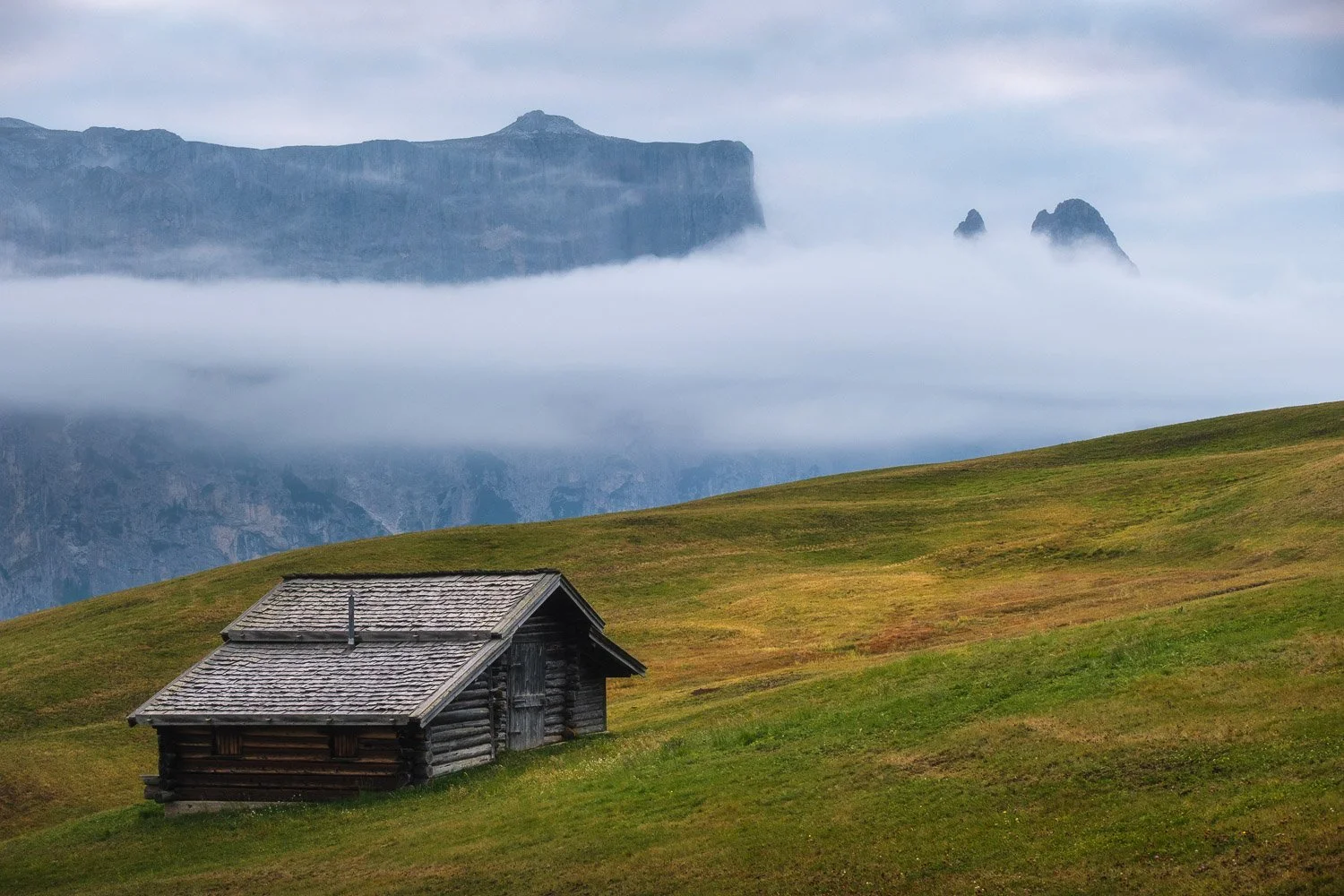
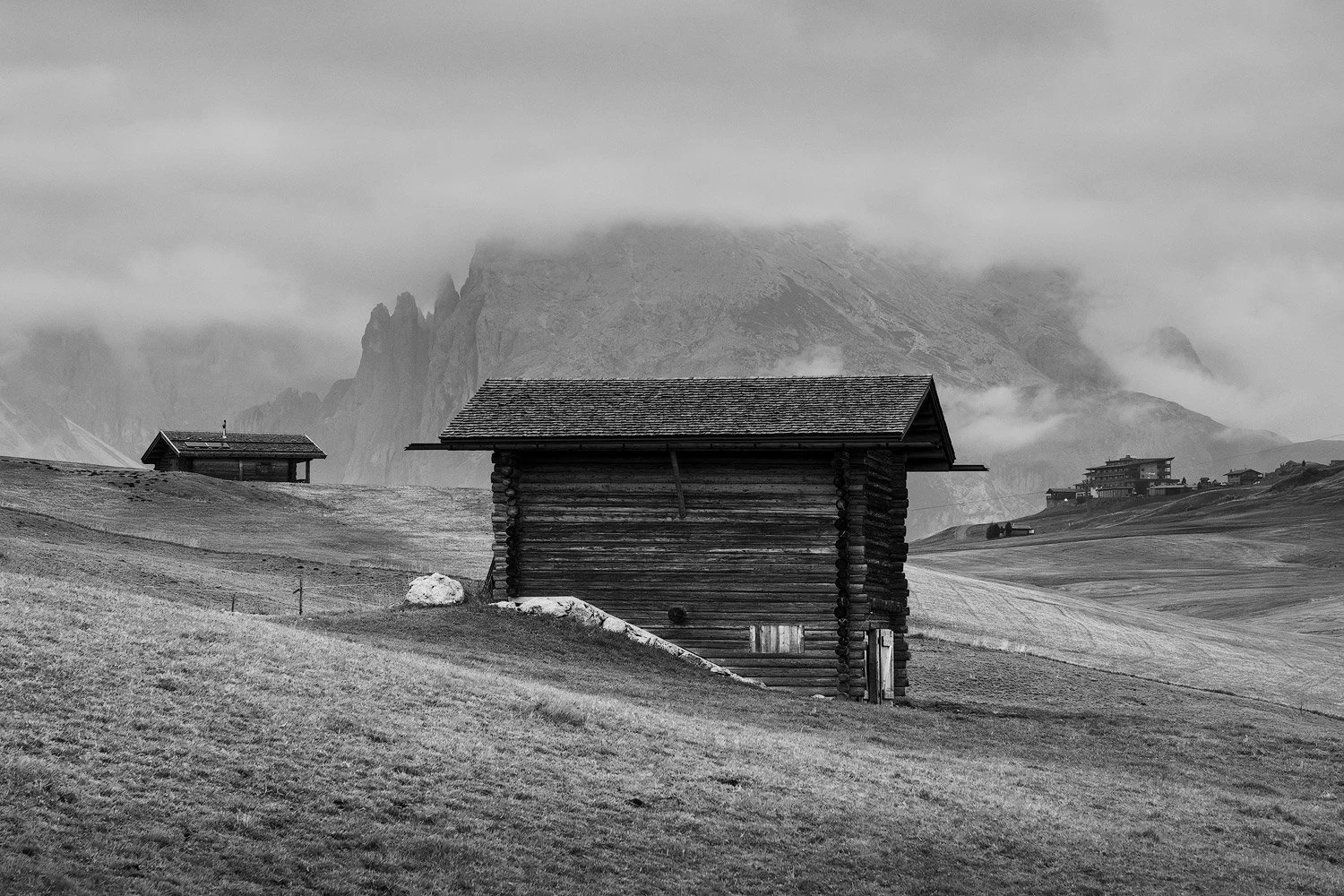
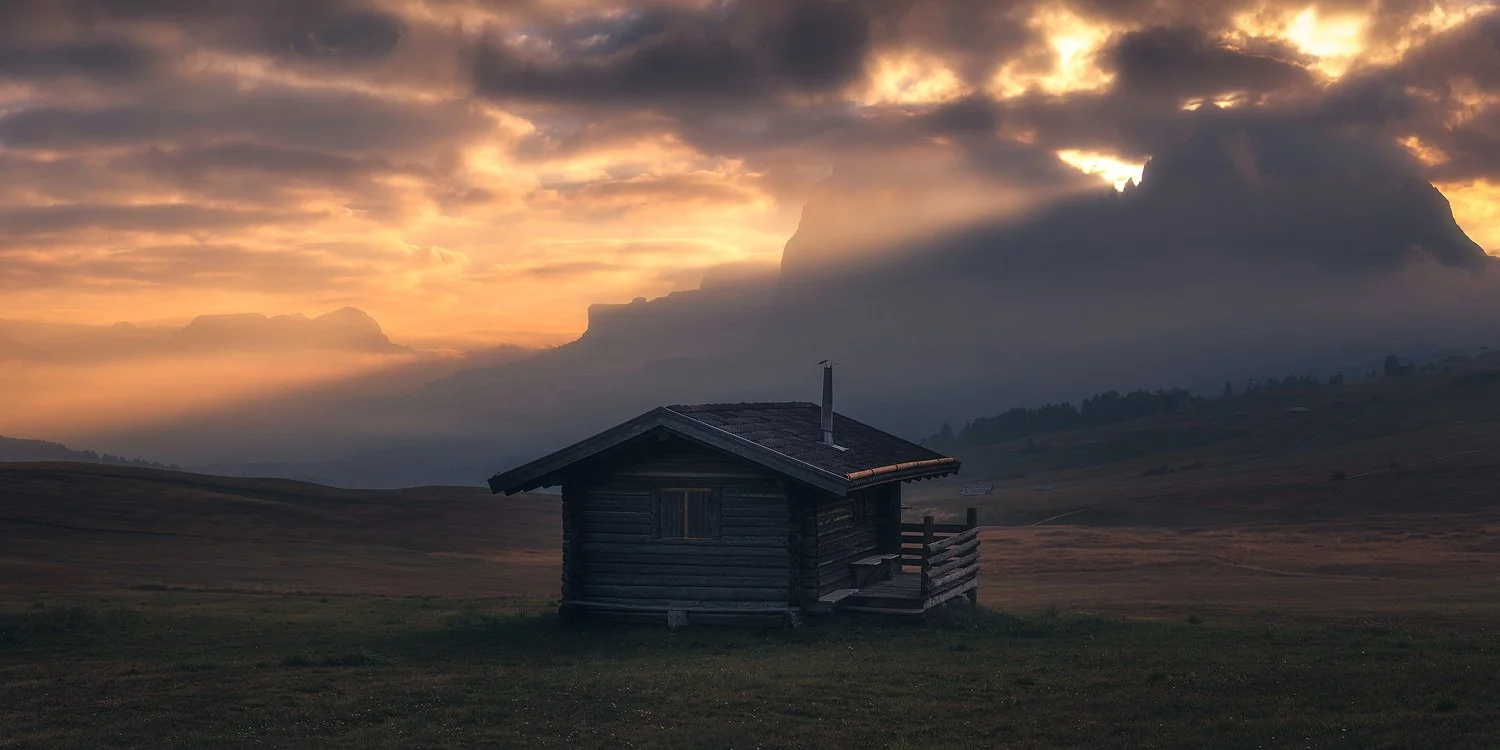
Low cloud covered almost the entire plateau and stayed through the afternoon into the evening. We went out anyway, exploring what we could see and working with simpler compositions of wooden huts appearing through the fog. There wasn’t much movement or drama, but the limited visibility gave us a reason to pay attention to smaller arrangements that might otherwise have been lost in the wider view.
By morning, the cloud hadn’t moved very far. This time, though, shafts of light occasionally broke through, briefly revealing parts of the landscape before hiding them again.
Everyone spread out, looking for somewhere promising to work. With conditions changing in every direction, there was no single position that offered an obvious advantage. A patch of meadow would light up, a hut would emerge, and somewhere behind us another opening would demand attention.
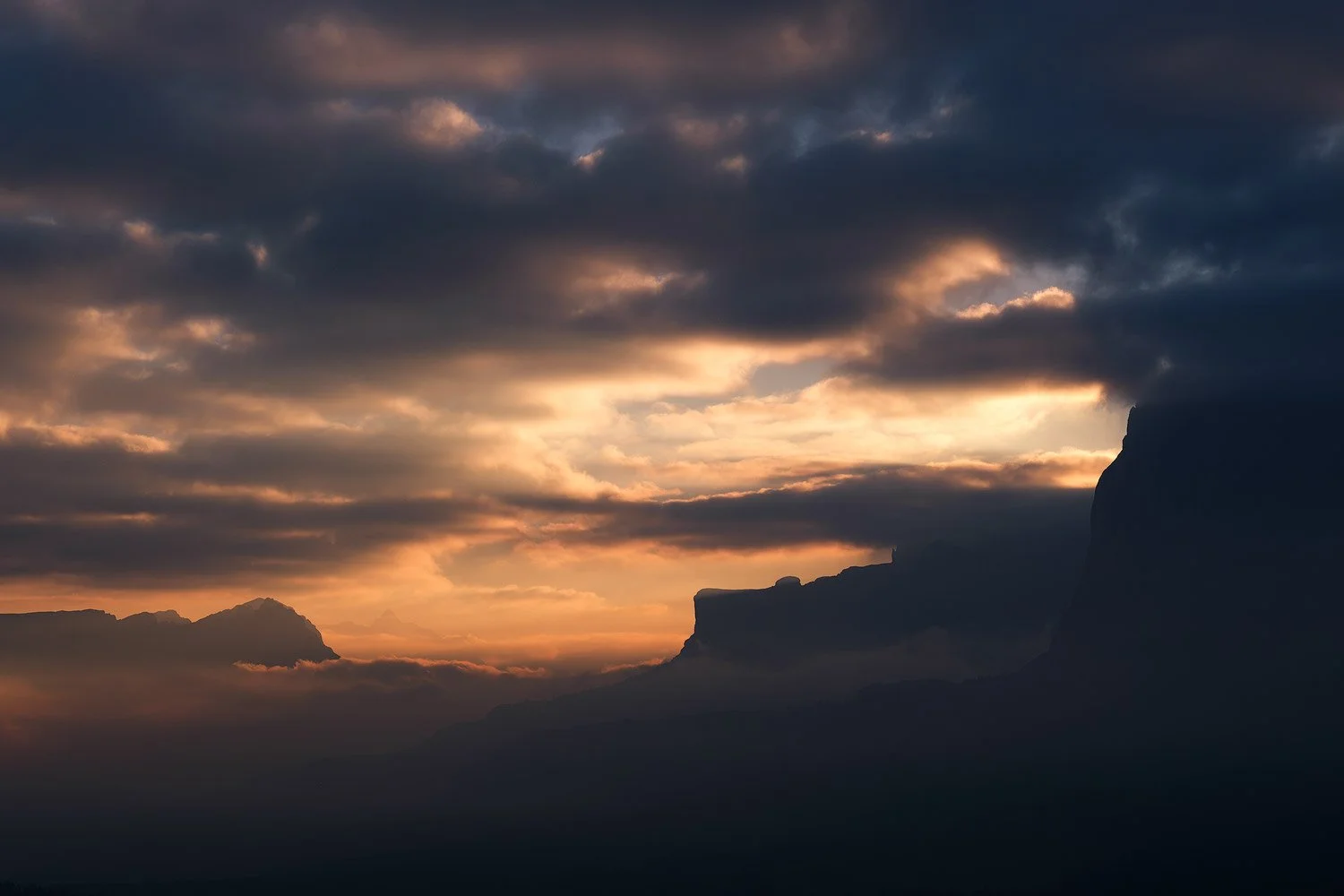
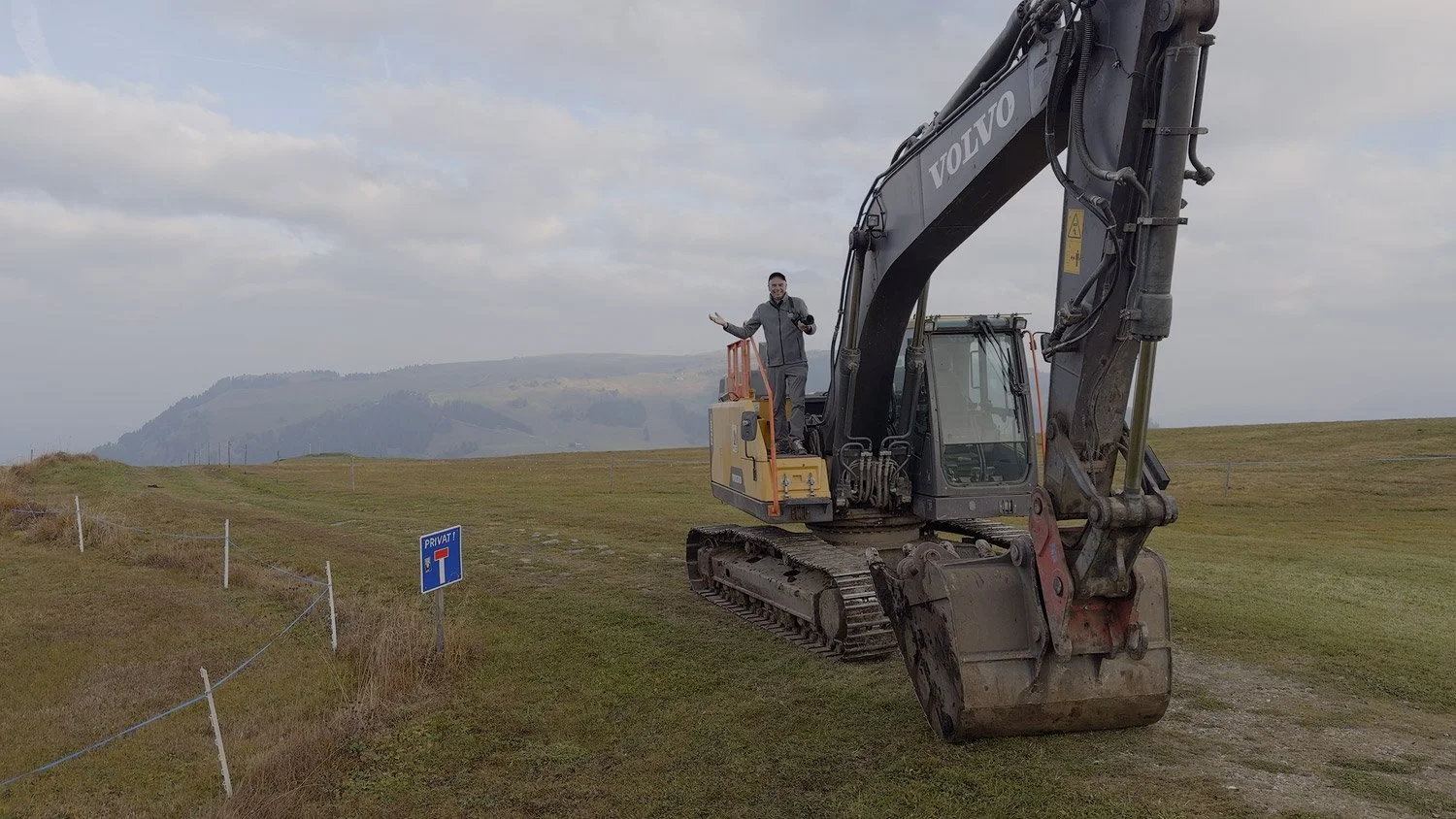
In case you’re wondering, David was after a higher vantage point. His backpack was still within his carrying capacity, though possibly outside the excavator’s.
David and I spent a particularly entertaining part of the morning walking back and forth along the same path, trying to decide where the next gap might appear. We’d look ahead, consider moving farther, then turn around to check what was happening behind us. Every decision seemed to come with a reason to reconsider it.
I’m not sure how much useful distance we covered. We certainly inspected that stretch of path thoroughly.
There were photographs to be made all around us, but we had to keep looking beyond the one we thought might happen next. The shifting light kept giving us reasons to change our minds.
Back at the hotel, I approached breakfast with considerably less uncertainty.
Two bowls of locally made yogurt with fresh fruit. An omelet with speck, cheese, and chives. Croissants with chocolate and pistachio cream. Three cappuccinos.
I’d found my composition, and nothing needed removing.
After some well-earned downtime, we headed out again to explore the main valley on foot. By late afternoon, we’d reached the viewpoint where we planned to photograph sunset.
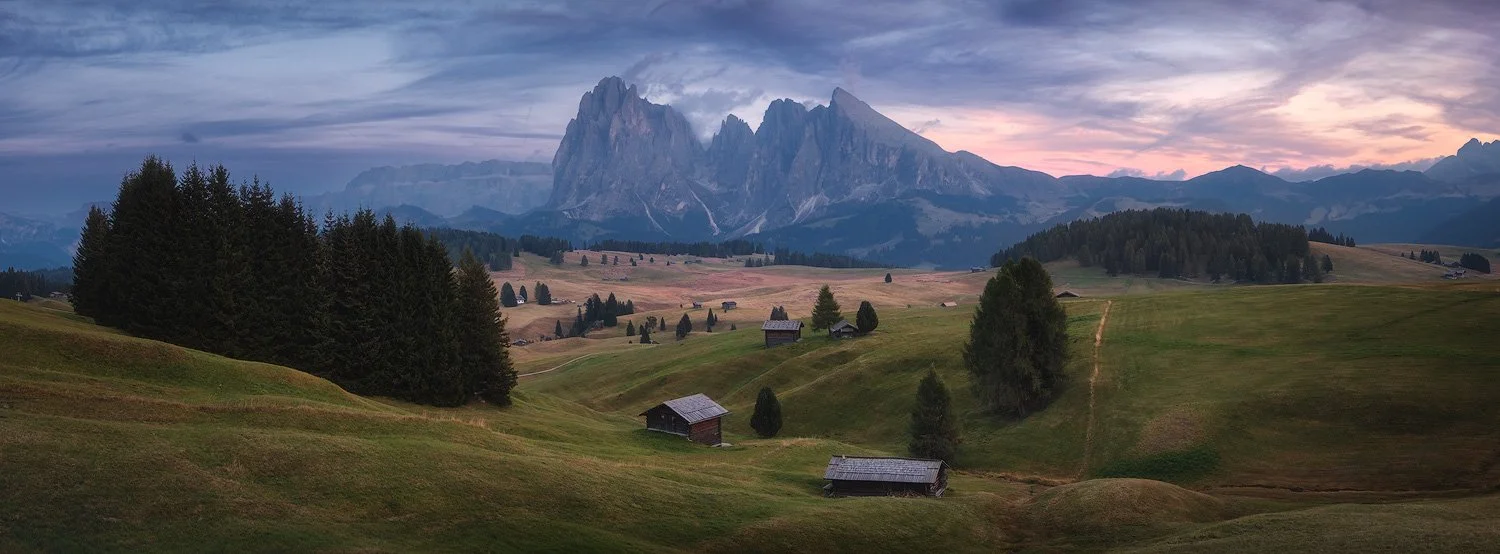
Fujifilm X-T4 · Fujinon XF 10–24mm · Eight horizontal shots stitched together · XPan crop
It’s one of the most familiar views on the plateau, and I understand why. However many photographs you’ve seen of it, standing there and watching the valley stretch out beneath the mountains still gives you plenty to enjoy.
The following morning, we returned to a nearby area and witnessed one of the most beautiful sunrises I’ve seen at Alpe di Siusi in years.
The colors kept changing, giving us a different version of the landscape every few minutes. Even the Hasselblads in the group had their work cut out for them. Or at least that’s what I was telling myself from behind my Fujifilm.
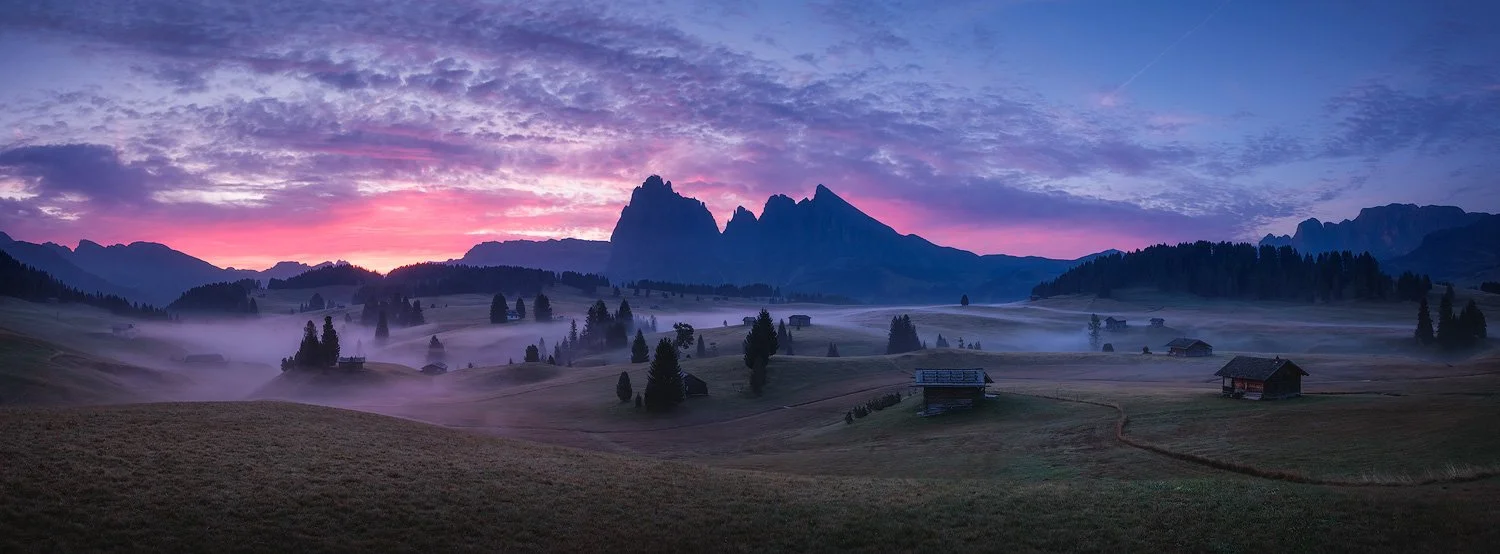
Fujifilm X-T4 · Fujinon XF 10–24mm · Eight bracketed shots stitched together · XPan crop
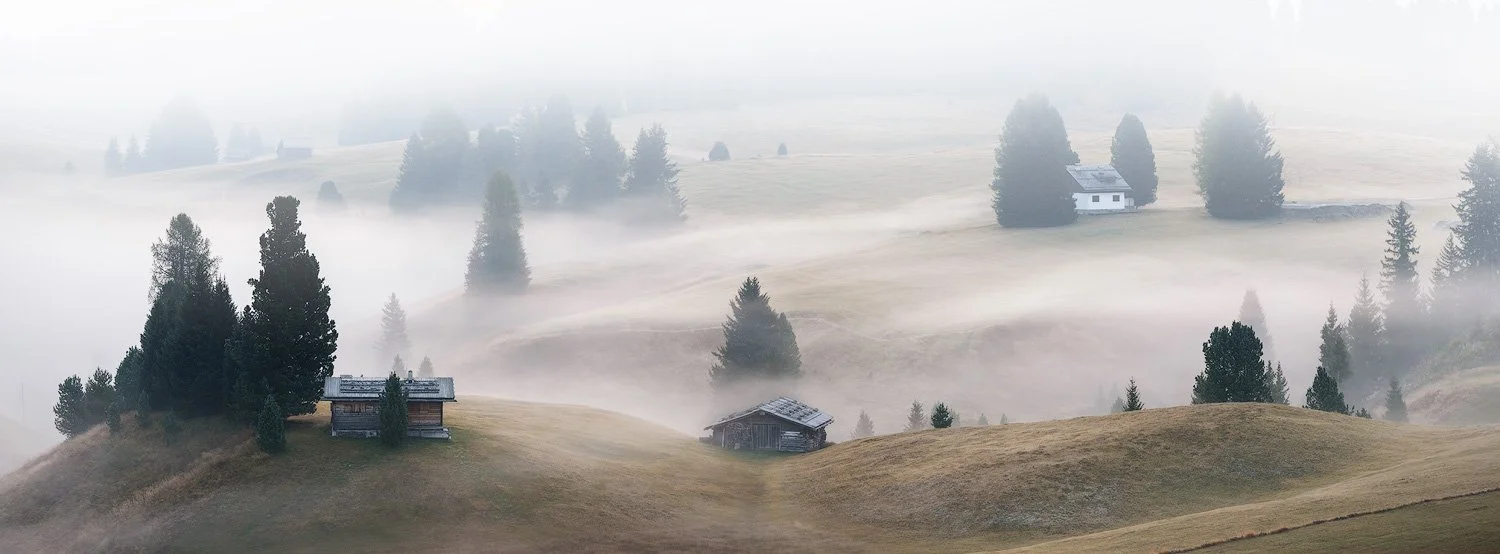
Fujifilm X-T4 · Fujinon XF 50–140mm · Six shots stitched together · XPan crop
Then the sun cleared the Sella, and our attention shifted again. Light reached the thin layers of mist lying across the valley, revealing patterns that had barely been visible before. Out came the telephoto lenses as we began picking out smaller scenes within the meadows.
We’d already had a remarkable display of color. Now we had another reason to stay.
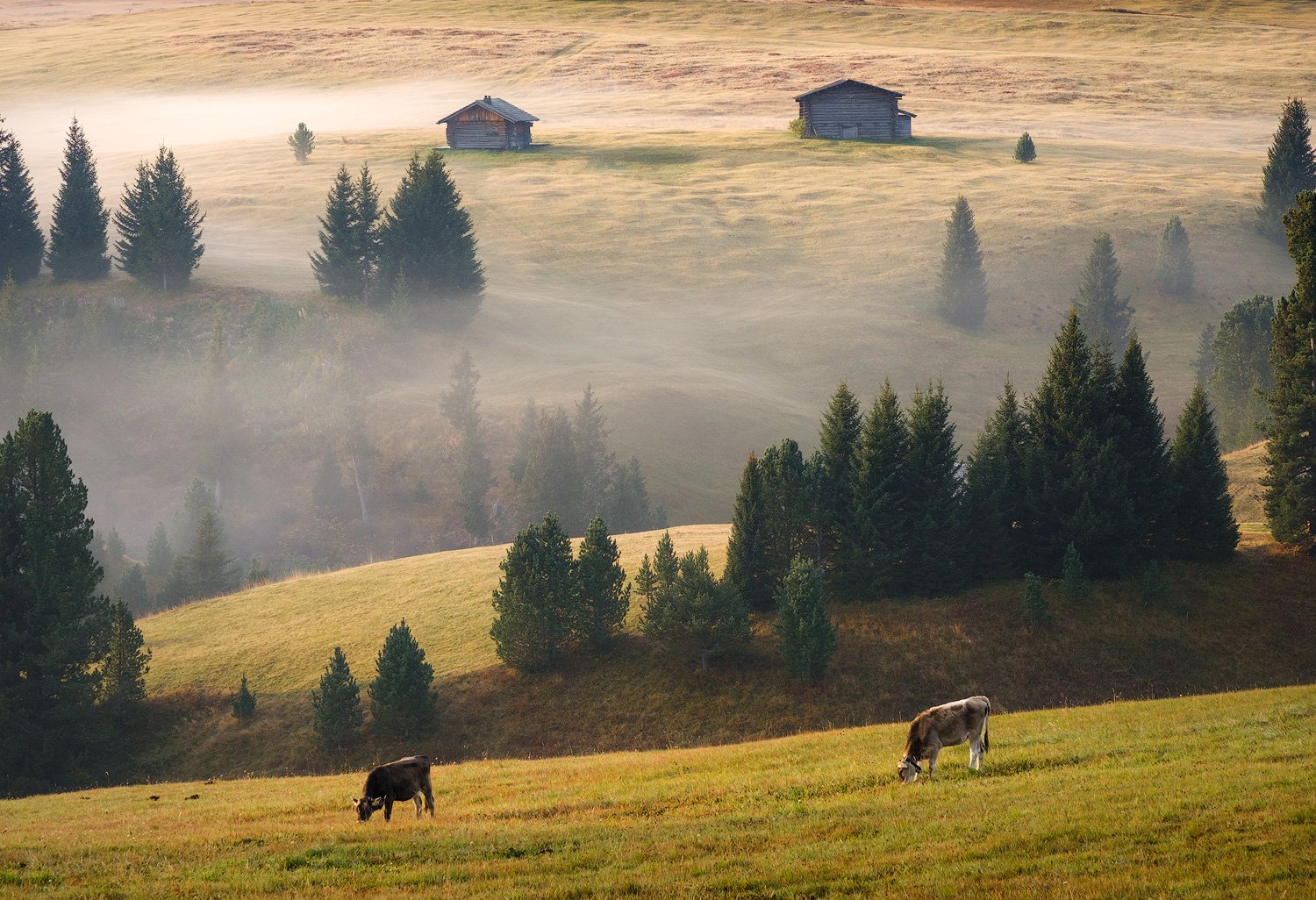
By the time we returned to the hotel, the group was buzzing. It had become another of those sessions we’d be talking about long after the workshop.
That afternoon’s photo review gave us a chance to see just how differently everyone had experienced it. We’d been out in the same conditions, yet the images varied enormously in framing, emphasis, and mood.
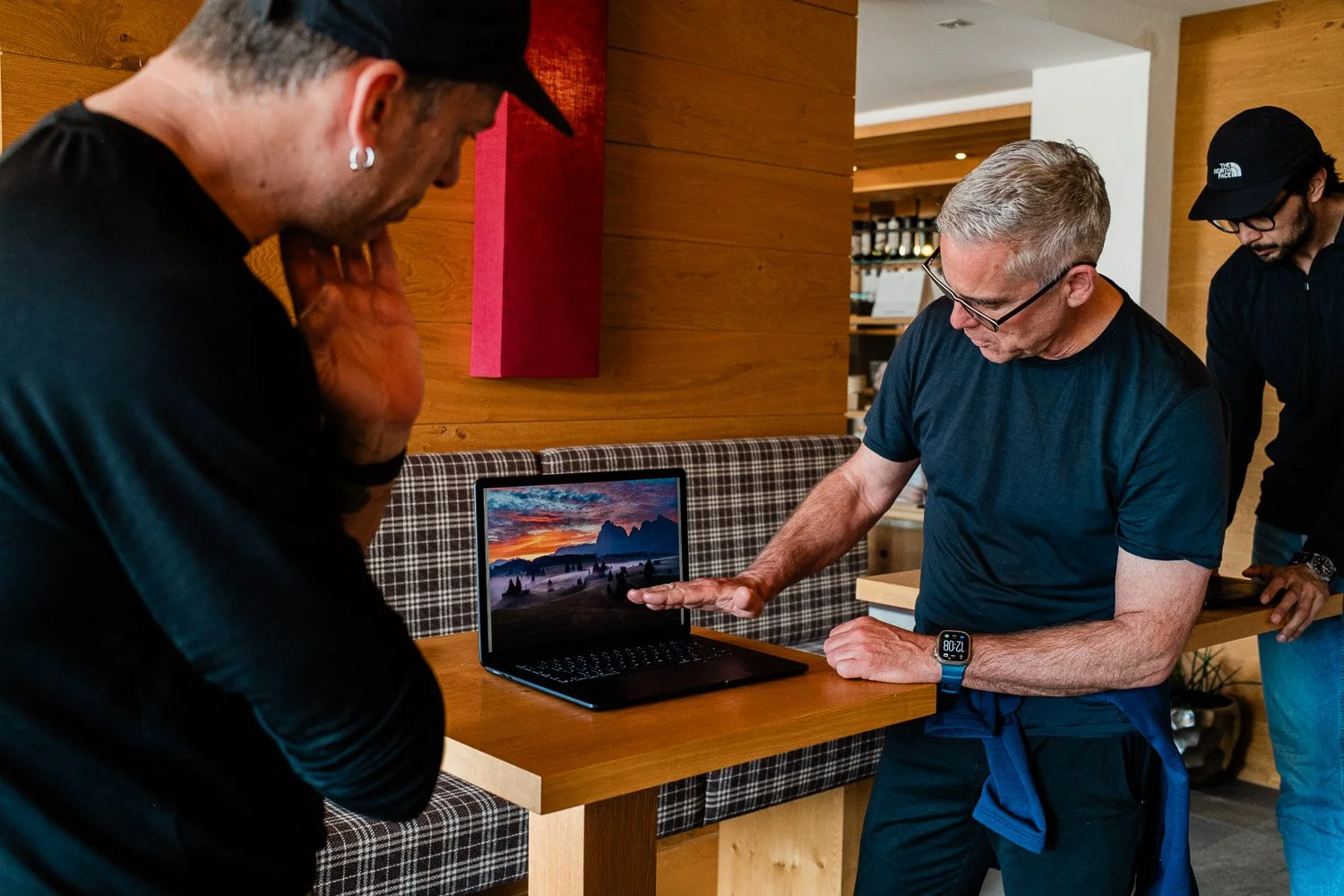
A beautifully captured sunrise at Alpe di Siusi, perfectly edited by Fred. With so much color in the scene, getting the balance right makes all the difference.
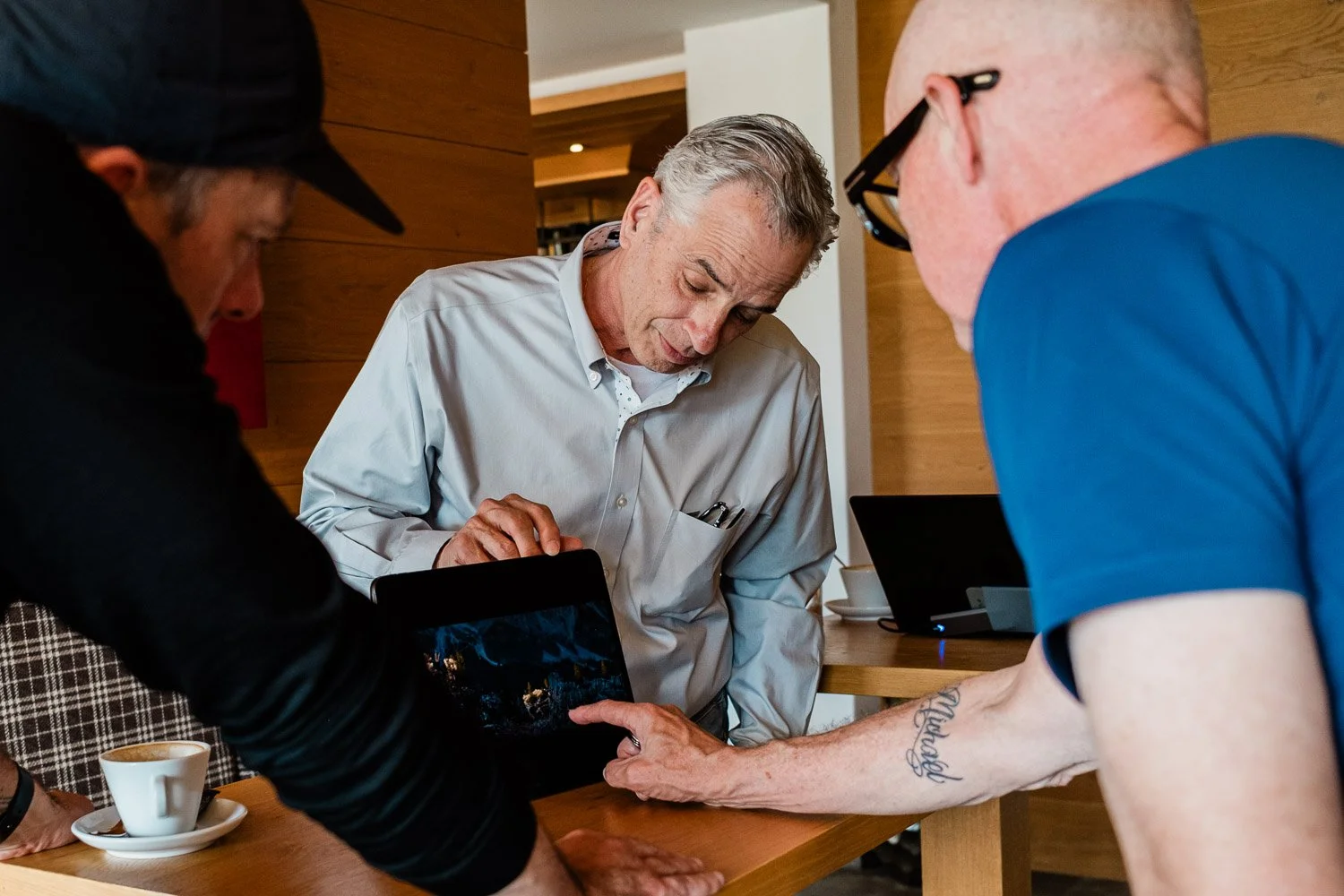
David, Stuart, and me taking a closer look at David’s wonderful composition at Cinque Torri. In XPan format, naturally. If your Hasselblad can, it would be rude not to.
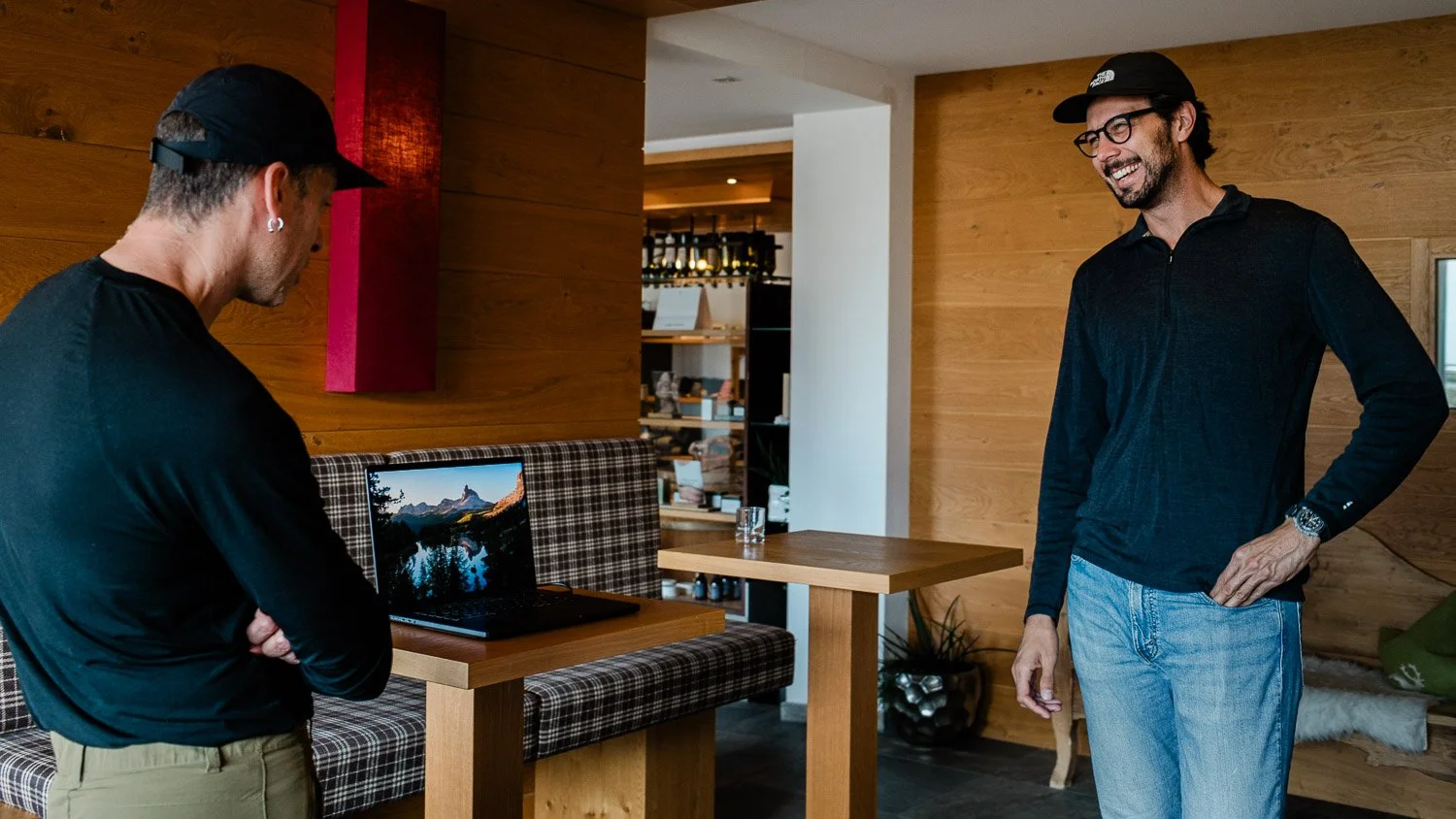
Henrique’s beautifully captured image from our sunrise visit to the alpine lake, as the first light reached the larches. He caught the mood of that morning wonderfully.
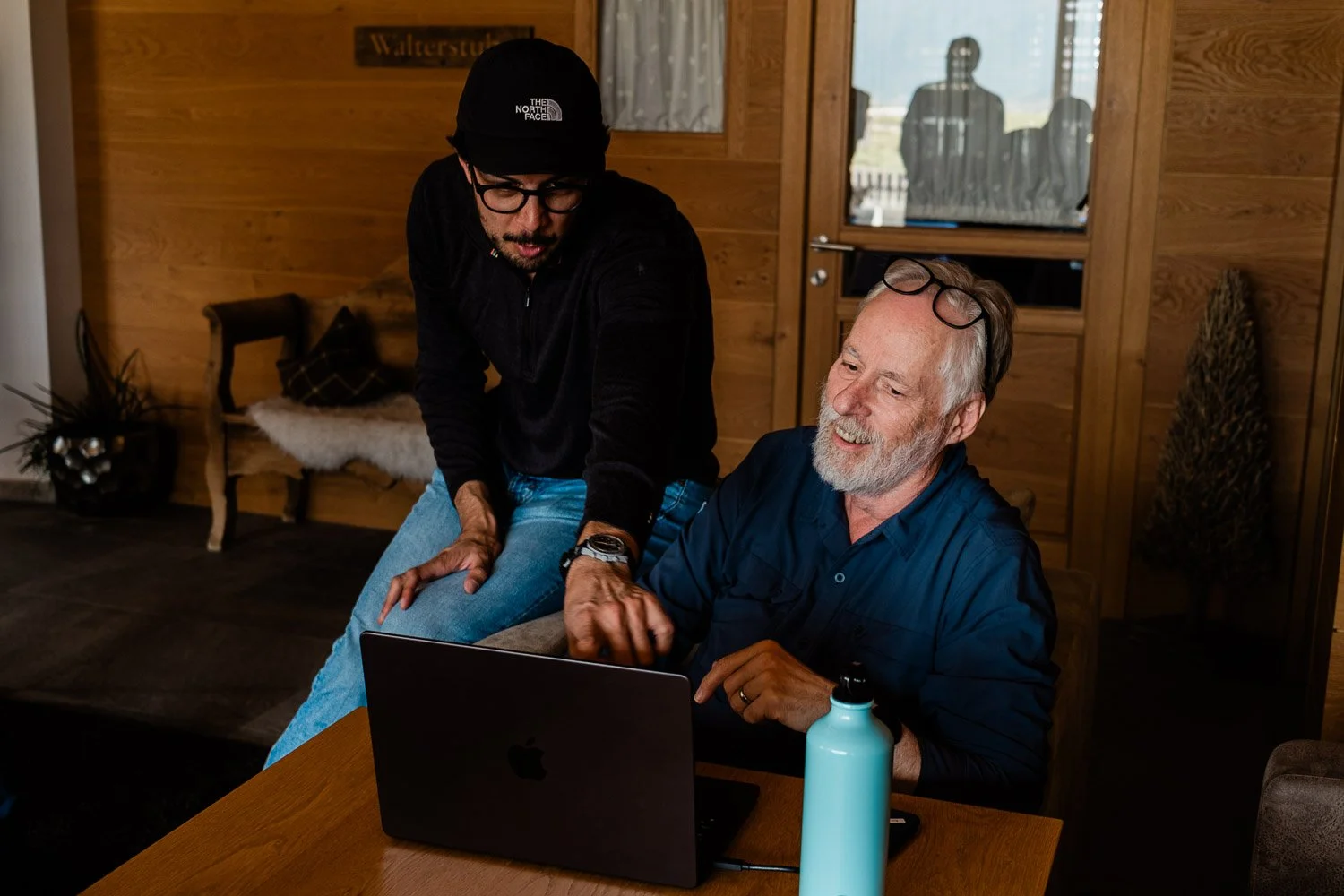
Henrique was probably explaining why Tony’s photograph would look better in color. Tony was probably explaining why Henrique was wrong. (My guess, not their actual conversation.)
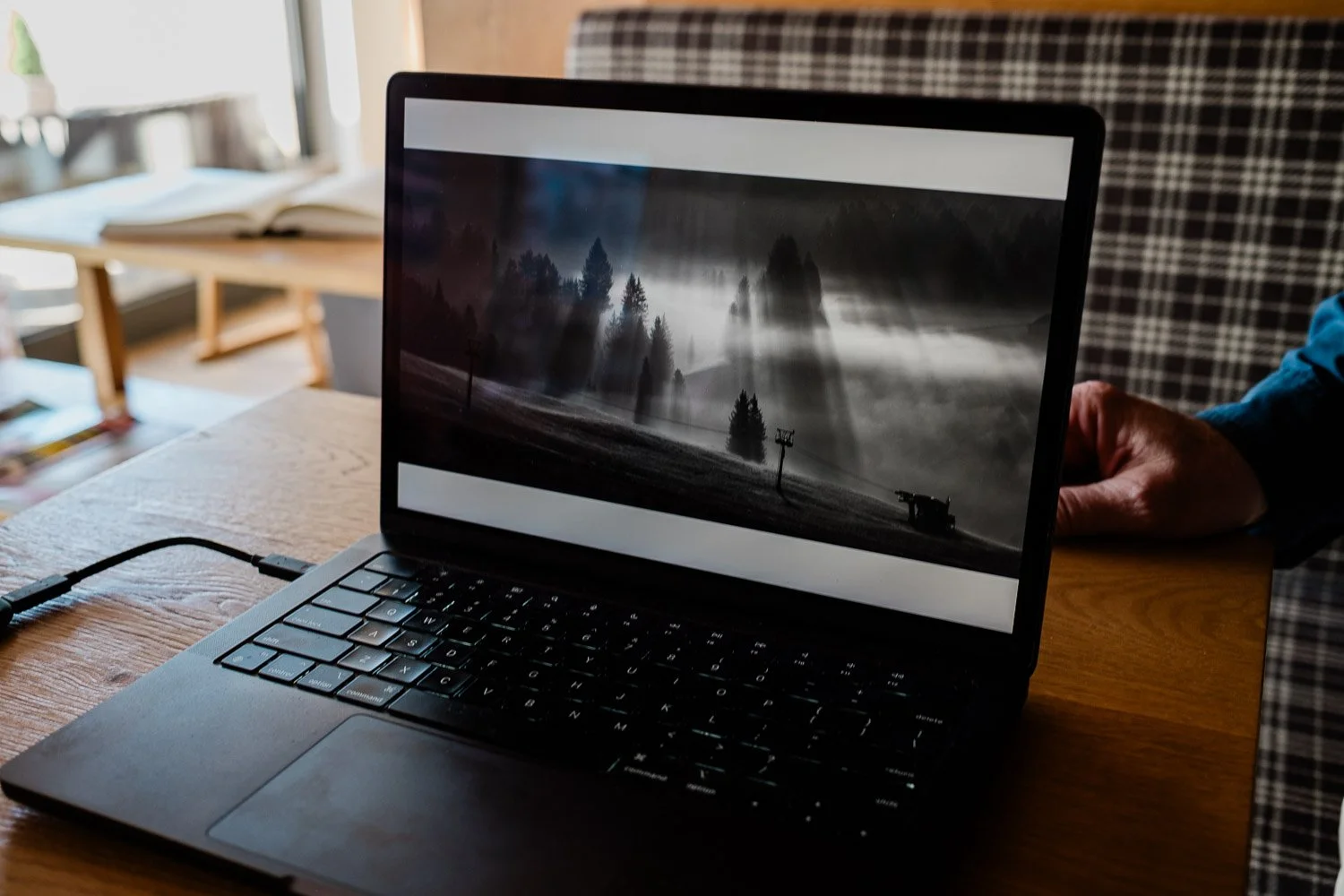
One of Tony’s fantastic black-and-white images from our foggy morning at Alpe di Siusi. Tony and Wendy became the group’s unofficial black-and-white influencers.
Seeing everyone’s photographs together was one of my favorite parts of the week. The standard was very high. We revisited black-and-white images, wide XPan frames, and plenty of other compositions that gave us a lot to discuss. I loved seeing what each person had noticed and how they’d chosen to photograph it. I was genuinely impressed with the work everyone shared.
“I also came away thinking differently about photography, particularly about the arrangement of subjects and overlapping elements within a composition.”
— David Sauro, USA
Seceda and Our Final Evening in the Dolomites
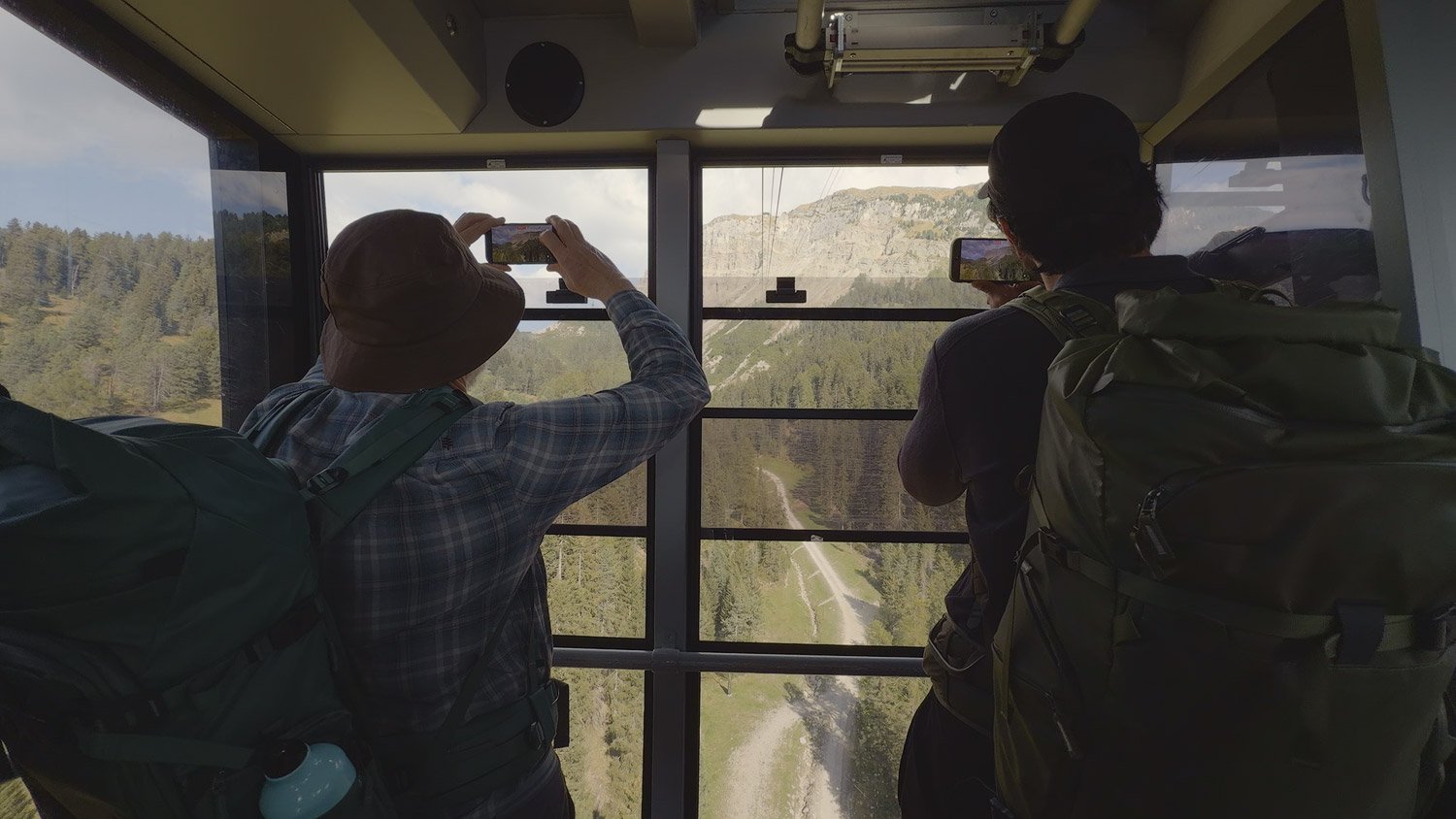
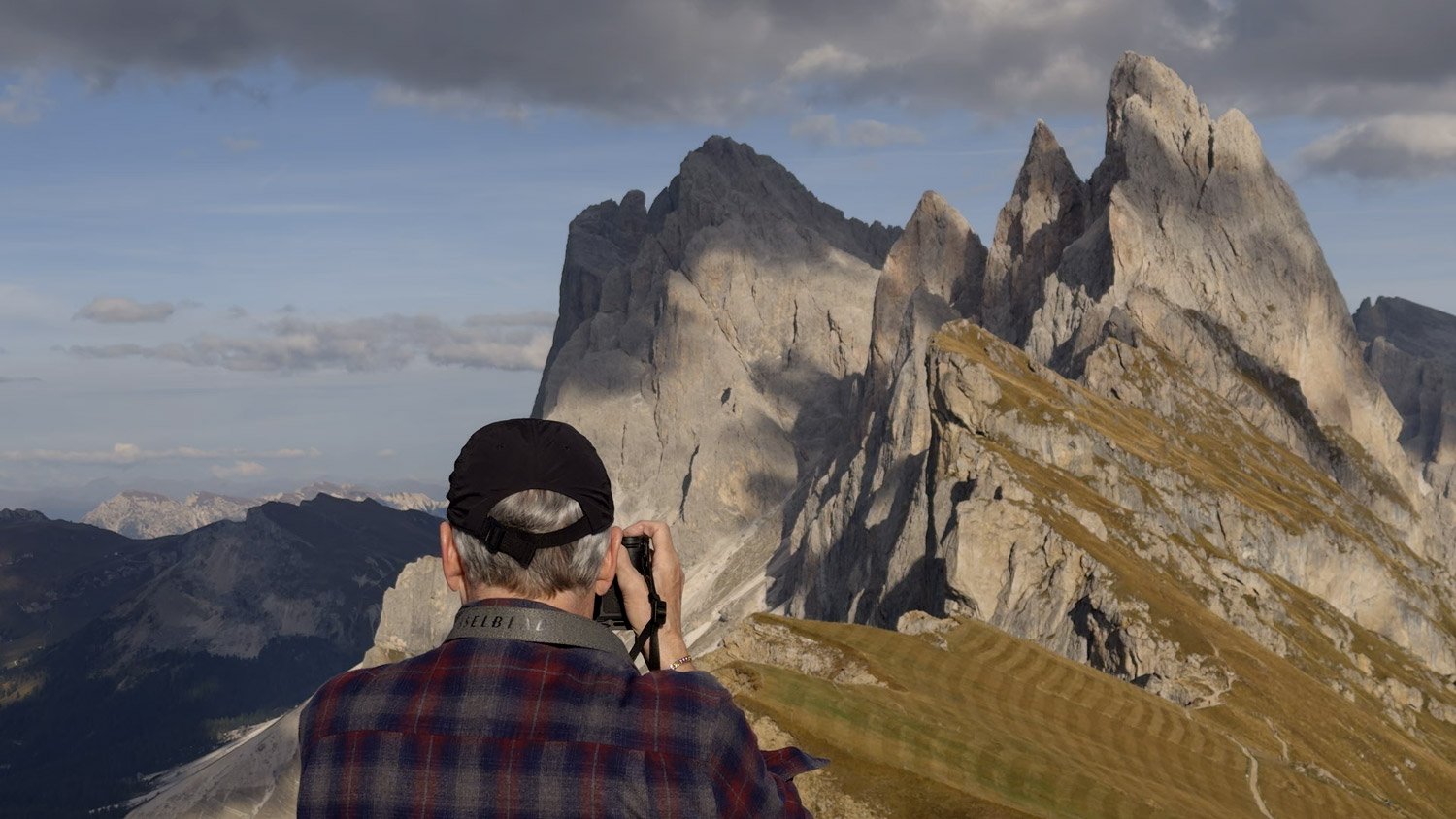
After a snack and a cappuccino, we headed out for our final location: Seceda.
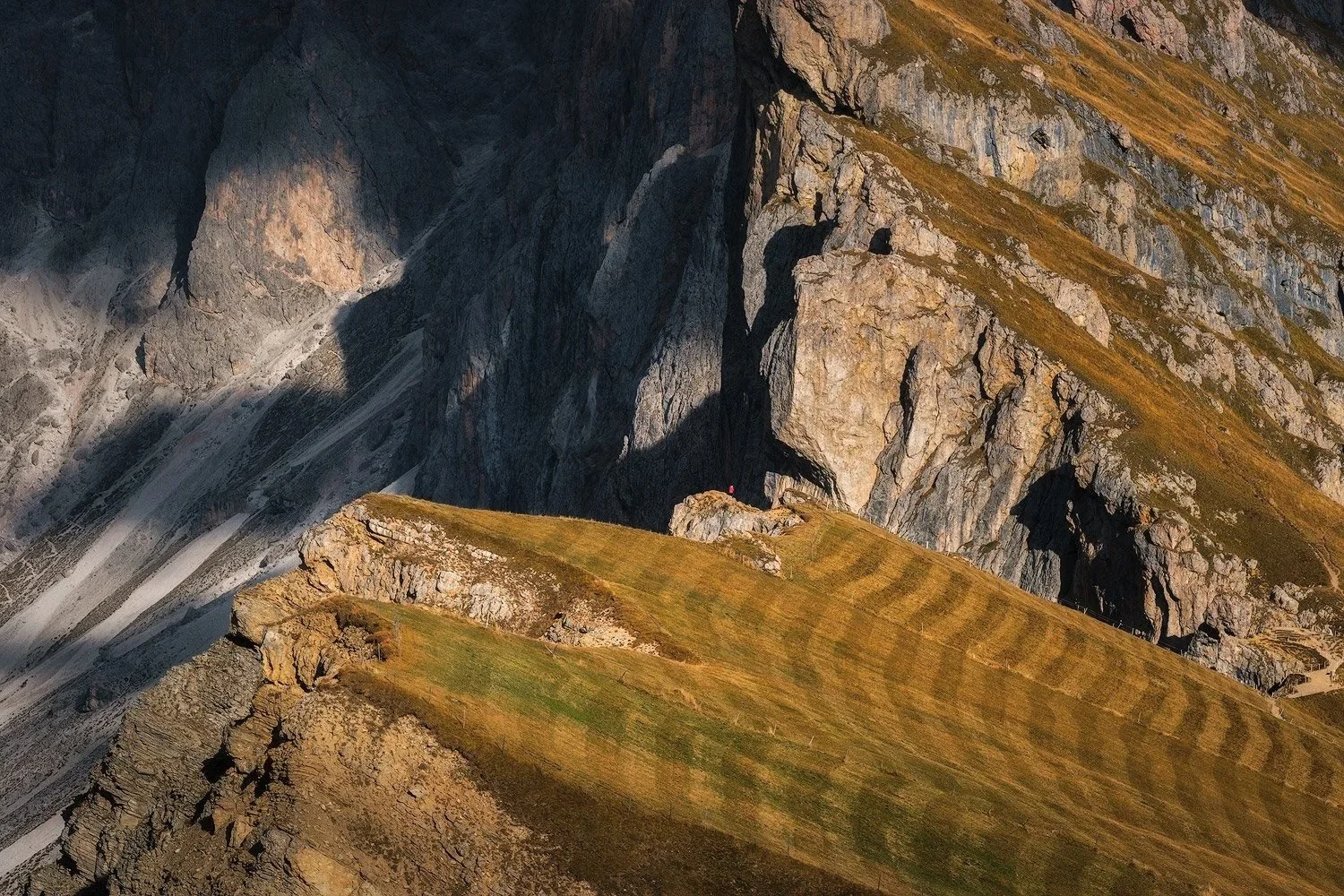
Its distinctive ridge has become one of the most recognizable sights in the Dolomites. Geologically, it’s an extraordinary place, and being up there is a pleasure in itself.
Photographically, I find fewer ways to vary the composition here than around Tre Cime. At Seceda, the changing weather and light play a bigger part in what draws me to make another photograph of the ridge.
That evening, we didn’t get the atmosphere I’d hoped for, but we enjoyed spending our final session up there together.
Later, back at the hotel, we settled around the table for our last dinner. There was excellent food, wine, and plenty of stories from the week. Henrique also took it upon himself to give the limoncello spritz a thorough assessment. Apparently, one sample wasn’t enough to reach a reliable conclusion.
Over dinner, we went back over the week: the photographs, the walks, and the moments that still had us laughing. It was a lovely evening to linger at the table.
The following morning, we packed our bags and headed back to Venice Airport. Sabrina and I loved spending these days with you all. Thank you for the company, the curiosity, and the enthusiasm you brought to the week.
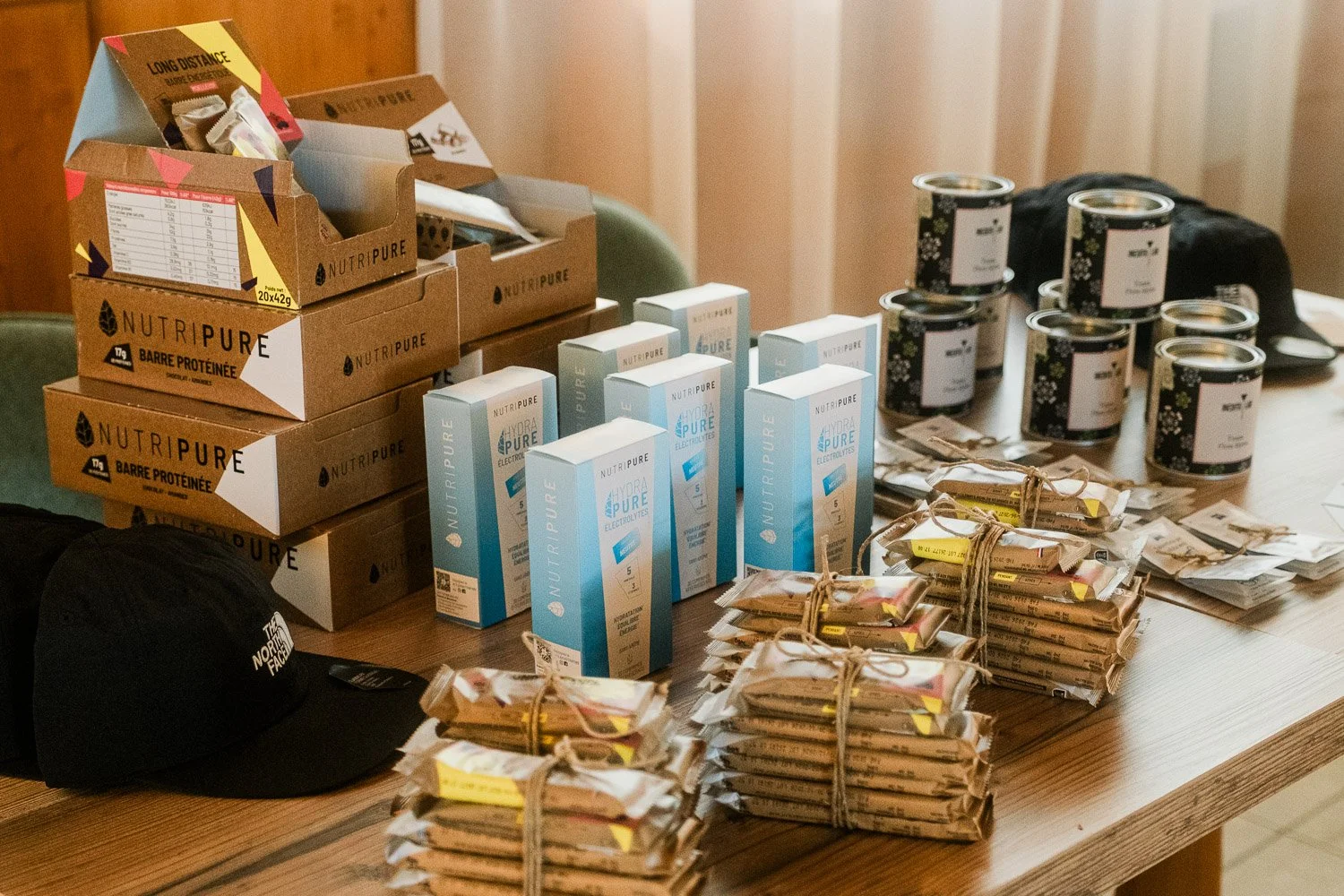
A huge thank you to The North Face, Nutripure, AllTrails, DxO, and IneditoLab for their support of this Dolomites workshop editions.
Join the 2027 Dolomites Signature Priority List
If you’re thinking about joining us, the workshop page explains the experience, the walks, and what’s included.
The next planned edition is 2027. If you'd like to be among the first to hear when the dates and details are available, you can join the priority list below.
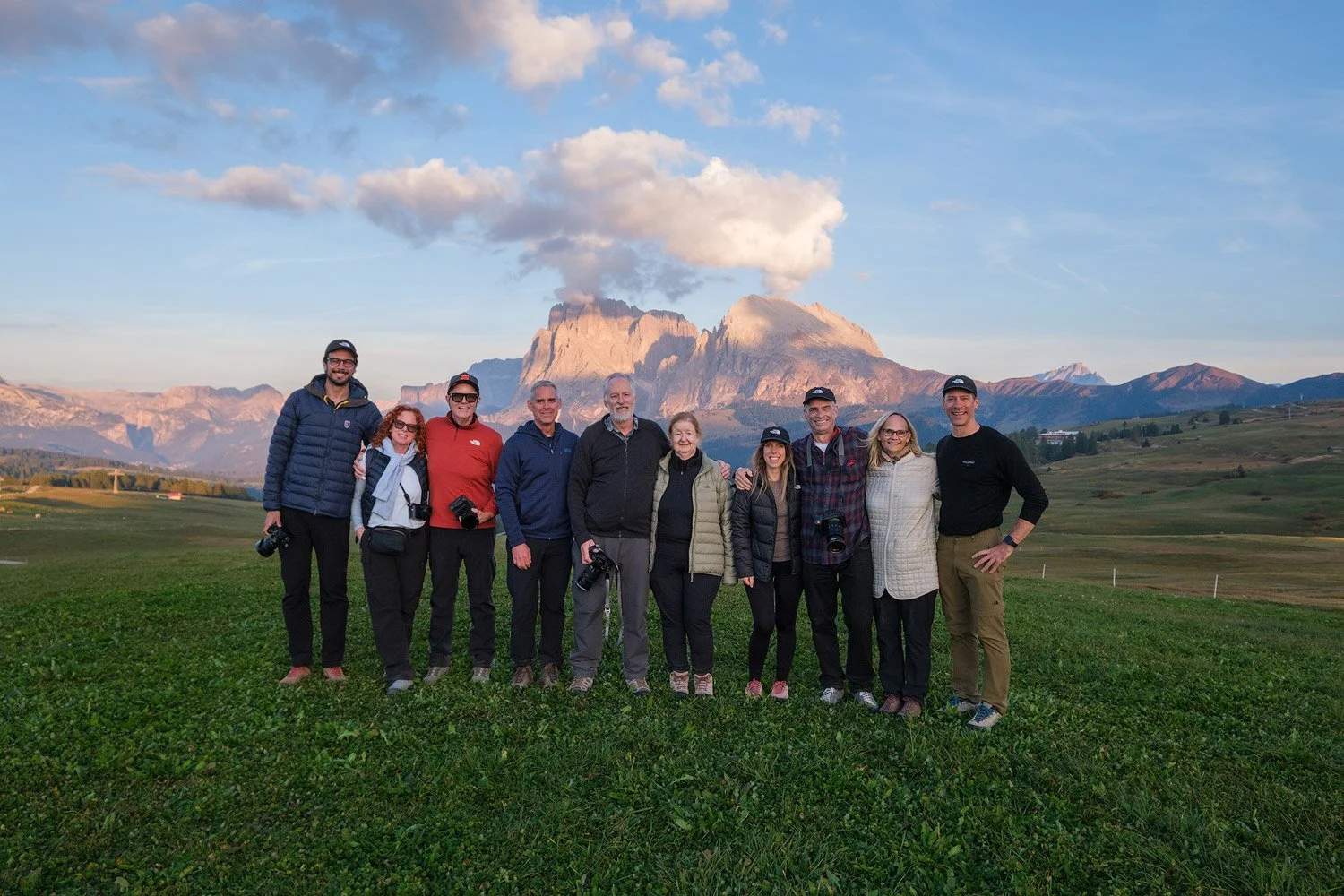
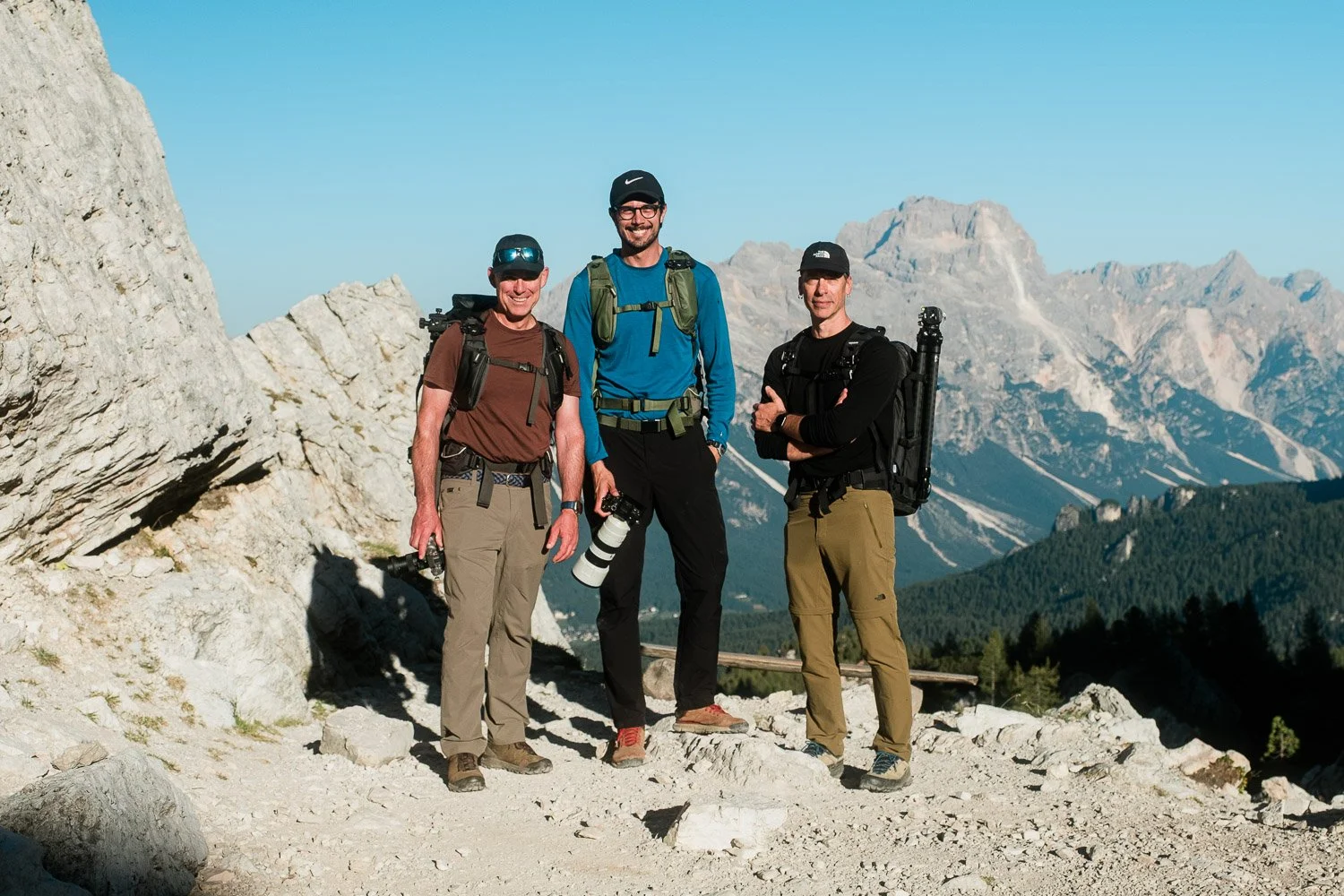
Our 2026 Dolomites Signature Workshop group
What’s it like to join our Dolomites Immersive Photography Workshop? Follow our 2026 group through eight days in the Italian Dolomites. Mountain hut stays, shared meals, time to learn, and days spent making photographs with people who love it as much as you do.