
Fujifilm X-T50 Review - One Month of Landscape Photography

Introduction
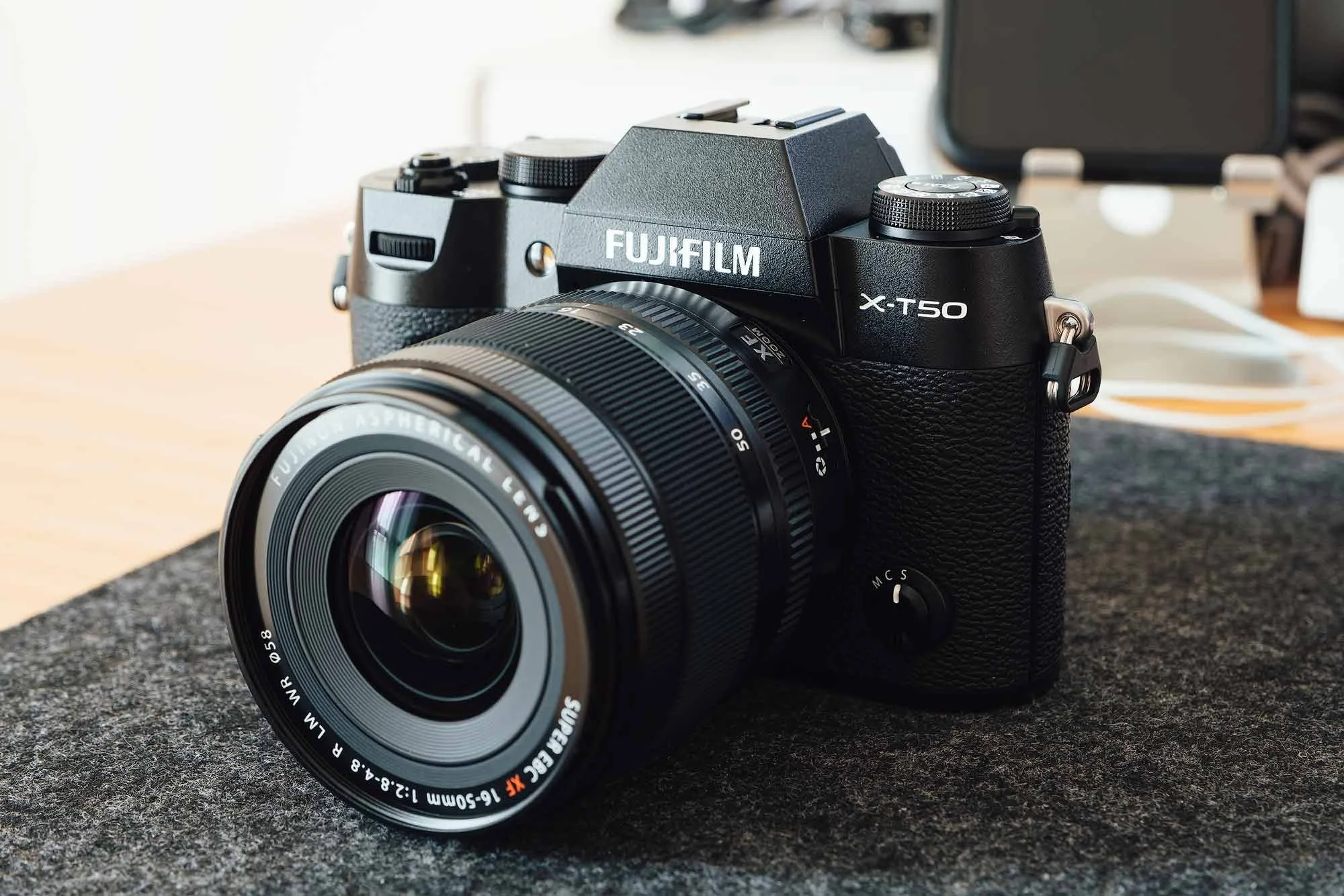
Last June, Fujifilm launched the new Fujifilm X-T50. Recently I’ve had the opportunity to use this camera for about a month photographing in the Dolomites, giving me plenty of time to test it out properly in real-world conditions.
This won’t be a typical review. Instead, I’ll focus on usability and performance from a landscape photographer’s perspective, and I'll discuss what I like, what I don’t, and who I think the X-T50 is really for.
Just to give you some context, I’ve been using Fujifilm cameras for over ten years, and my favorites are still the “X-T one-digit” series, like the X-T2, 3, 4, and the newest X-T5, mainly because of their pro features and the larger body that suits my big hands better.
However, if you’ve been following my work for a while, you know I also use the smaller X-T30 as a lightweight backup camera—and I still think it’s fantastic.
If you’re familiar with Fujifilm cameras, the X-T two digits models are known for being the more compact and affordable version of the higher-end X-T one digit series.
However, with the new X-T50, affordability seems to be less of a priority.

The new Fujifilm X-T50 brings a lot of new updates and is priced significantly higher than previous models in the line. It features:
40.2MP APS-C X-Trans
X-Processor 5th gen
7-STOP IBIS
Subject detection
6K video recording
2.36-million-dot EVF
1.84-million-dot tilting display
Improved autofocus algorithm
Enhanced power efficiency
So, internally, it’s basically an X-T5 repacked in a smaller body.
When it comes to the exterior features, it is where, of course, the X-T50 looks completely different from the X-T5. It has a similar ergonomic design to the X-T30 but is slightly larger with more rounded edges, and what immediately stands out is the redesigned button and dial layout, which is one of the areas where I have some mixed feelings about certain changes.
Okay, let’s first start with how it was my experience in the field with the camera.
1. X-T50 Design: Size & Ergonomics
As someone who’s been using the X-T30 for about five years, the X-T50 felt instantly familiar. I love its compact size—it’s incredibly easy to carry around. The ergonomics are pretty good; it’s a bit small for my hands, but still enjoyable to use, especially with the new more rounded edges.

I set the front dial to ISO and the back dial to Shutter Speed, just like on all my other Fujifilm bodies. I always shoot in manual mode, and to be honest, I rarely use the top dials for exposure compensation or shutter speed anymore—only on rare occasions. The positioning and accessibility of both dials are excellent, making them easy to adjust even while wearing gloves.


Whether I was shooting handheld or on a tripod, the camera was a real pleasure to use.
2. 7-Stop In-Body Image Stabilization
The 7-stop IBIS is fantastic. I love it. It makes a huge difference when shooting handheld, especially with long lenses or in low light when I don’t have time to set up a tripod. I didn’t get a single blurry shot the entire trip, which gave me great confidence in my gear.

I can’t say the same thing, though, when considering its performance on video, which from my experience is less effective. The IBIS isn't intended to be used with camera movement, I know, but sometimes even standing perfectly still doing slow pan/tilt movements is very jerky. Anyway, for simple b-rolls I usually film for my youtube videos it’s fine, but there is definitely room for improvement.
3. Image Quality: 40mp Sensor!

Jumping right into image quality: since it shares the same sensor of the X-T5, I can only say that the image quality of this tiny camera is fantastic. I’ve already covered it extensively in my Fujifilm X-T5 review.
The detail, contrast, color rendition, and dynamic range of the 40mp sensor are excellent, giving me plenty of flexibility when editing. The sharpness is really great, and the higher megapixel count allows for more forgiving cropping during post-processing.


Seventy percent of the images I captured during my trip to the Dolomites were with the X-T50 and the Fujifilm 50-140mm lens. You know how much I love that lens, and I really enjoyed the combo X-T50 with the 50-140. The weight of the 50-140 was perfectly balanced by the lighter camera body, making the overall setup super manageable.

A quick note about Film simulations from a photo editing perspective. Most of these images have been edited starting with the new Reala Ace, which I must say works very effectively with slightly flat images. I find the Reala Ace gives that oomph right away, preserving natural color relationships while enhancing microcontrast before I even touch the sliders in the Basic panel.
I typically gravitate towards the Provia film simulation for most of my images, but the Reala Ace has now become my first choice when I need to give images a bit more contrast right from the start.
4. Film Simulation Dial: Is It Necessary?
Now, speaking of Film Simulations, one of the new 'upgrades' is the addition of a dedicated film simulation dial.

This is where things get weird. I didn’t use it once during the time I spent with the camera and honestly I don’t understand it at all. I would have definitely preferred an updated drive/video selection knob, similar to the one on the X-T30, maybe with a feature to save separate photo and video settings.
When the first reviews were coming out on this update, everyone was so excited about it, and I was like, seriously?
I can’t really see myself frequently changing the Film Simulation throughout a photo session to the point where I’d need a dedicated knob on top of the camera. For my travel or landscape work, I always set my camera to RAW.
I use a customized profile to get a pretty flat output as a reference for evaluating the exposure on the display and EVF, and that’s it. I’ve found that to be the best approach for maintaining consistency in my images and having full control of the data collected.
So, honestly, I don’t care too much about the film simulation dial. As I said, I’d probably prefer a drive/video dial instead. Of course, we’re not all the same, so I’m sure there are photographers who appreciate this new addition and find it useful. But, that’s not the case for me.
5. Camera Layout & Buttons

Talking about the knobs and positioning, from an overall perspective, when I look at them they’re getting even more different across each camera. I don’t really understand Fujifilm's direction when it comes to knobs and buttons placement and ergonomics. To some extent, it feels like using cameras from different systems and brands. I just don’t see any continuity or consistency across the entire lineup.


Fujifilm introduced a new Drive button, which is cool and replicates the approach used on the beautiful X100 series. However, I find the Drive button slows down my workflow when I need to switch between the single shot, burst, bracketing, or video modes.
I find it makes much more sense on the X100 series, considering its different use. I can surely assign those functions to one of the custom buttons, but having them right there on a dedicated knob would be much more convenient.

The Q button, which protrudes on the back, is still in a not very practical position. Its location remains one of the most frustrating 'features' of the entire camera. I’ve already mentioned my frustration with it in my past review of the X-T30. It’s almost impossible to not unintentionally press it and activate the Quick Menu. Anyway, just like on my X-T30, I immediately deactivated it and assigned it to the AF-ON button.
6. Display & EVF: How Good Are They?

Like past models in this series, the X-T50 has a tilt-only display with a higher resolution at 1840 K dots like the X-T5. The up-and-down-only touchscreen isn’t a big deal to me based on how I use my cameras, but considering the camera's price point and its improved video capabilities, it’s a bit of a bummer. It would be great to have a tilting screen that works also in portrait mode.

The electronic viewfinder features the same 2.36 million dots as the X-T30, which is nice. I didn’t have any problem photographing with it, but of course, it’s not as amazing as the 3.69 million dots on the X-T5. Here is one of those areas where I think Fujifilm scaled back features to fit the price range.
That said, I don’t see the lower resolution being a major downside or limiting factor when it comes to the shooting experience and capturing great photos.
7. Autofocus: Fast but Not Perfect
The AF is definitely snappier and more accurate than in the X-T30, which is great, but it doesn’t make much of a difference for my landscape photography. However, it’s a nice plus when doing travel photography, when I need more responsiveness and work quicker.

As for video, even with this new release, the AF is still not great and unreliable, with the same flaws we see in the Fujifilm X-T5. The AF performance isn’t quite up to Sony and Canon’s standards.
I had the opportunity multiple times to compare the AF on videos with other Sony and Canon users, and the difference in how much faster and more reliably the AF locks onto the subject on those cameras is substantial.
For normal, easy shooting scenarios, it’s fine, but I still don’t know what’s holding Fujifilm back from catching up.
8. Features I Missed

Now, if we’re just looking at the price of the X-T50, there are other few drawbacks that make me hesitate to consider this camera a good deal, at least for myself:
First off, the camera is not weather sealed. I talked about this aspect in others of my videos, and I’ve said before that the lack of weather sealing has never been a big problem with my X-T30. I’ve taken it through all sorts of challenging weather, and with a little extra care, it handled everything just fine. But with the X-T50 being priced at a premium, I do think this is one feature that would have made a real difference.
Another thing is that it uses the same older and smaller NP-W126S style battery. Fujifilm says the new processor is more efficient and this battery will continue to last like it would with the bigger and newer battery, but from my experience, with the integration of new IBIS I found myself switching batteries more often than with my X-T30. My X-T4’s new version-battery can easily last me a whole day of shooting stills and video, with juice to spare for the next day. Of course, you can always bring spare batteries, but it’s kind of a hassle to swap them out when you’re dealing with tricky weather and your camera is dying. This is an aspect that I’m valuing more and more with each year.
The third thing is the single SD card slot. I know, the X-T30 only has one too, but what really bugs me is that, for just $200 more, you get an X-T5 with all the features that are missing here. These are features that I find very important for anyone who decides to invest that amount of money in a camera that lacks premium features but comes with a premium price tag.
And finally, there is no dedicated photo or video switch on this camera. You have to go into the Drive mode and scroll all the way to the bottom to switch to video mode. And that’s kind of weird for a hybrid camera, especially since Fujifilm has included that photo/video toggle on all their other models. So, that’s another reason that makes me wonder who this camera is really for.

9. Considerations: Key Pros & Cons
Don't get me wrong. I really enjoyed taking and using the X-T50 to the Dolomites, and I’m super happy with the images I got. It’s really great having a compact camera body as a backup, especially with that level of image quality.
That being said, I keep asking myself: what’s the decisive factor that would make someone choose the X-T50 over the X-T5? I don’t think the Film Simulation knob is a deciding factor that would attract a whole new audience.
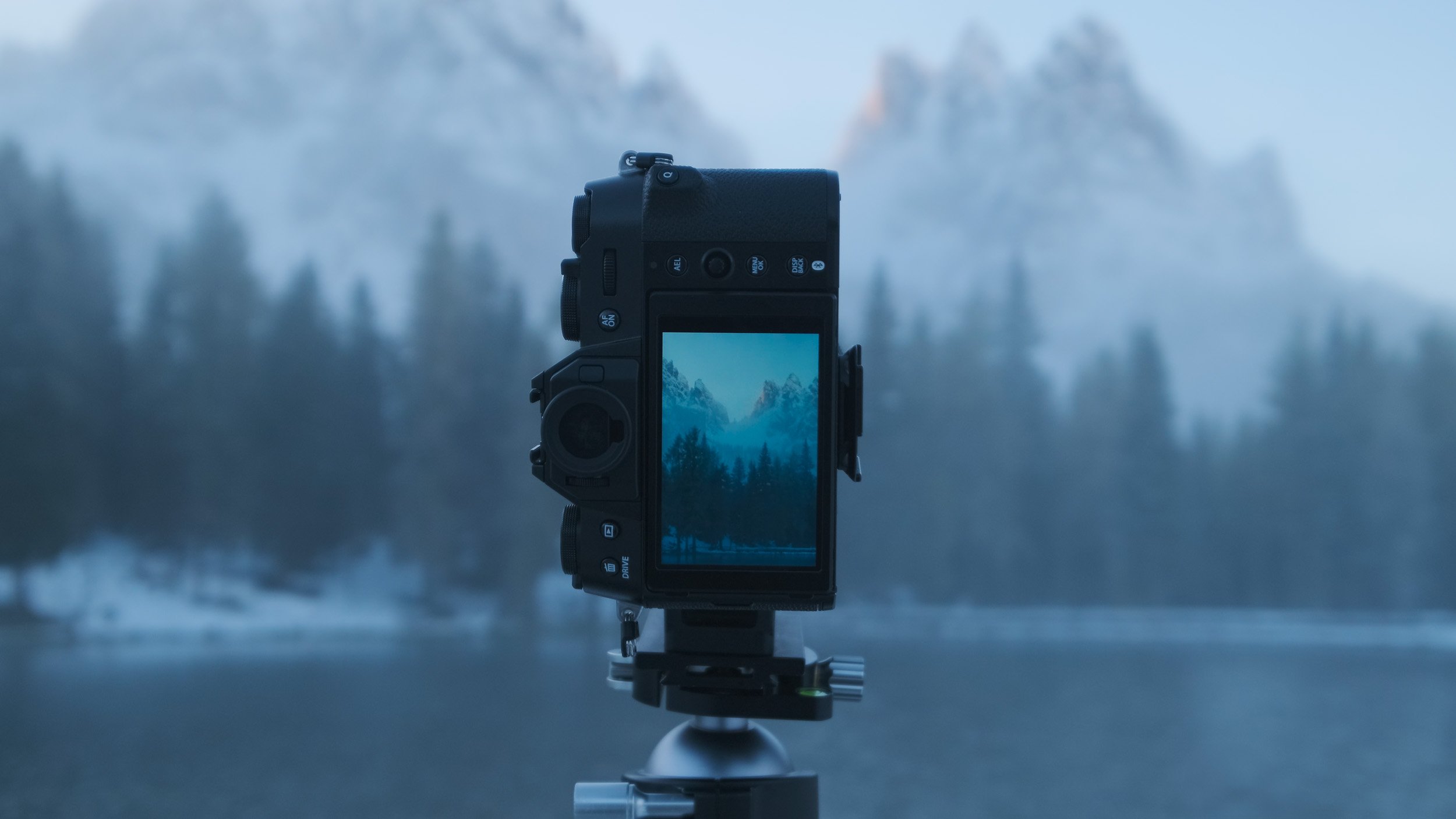
At this price point, the only compelling reason I see to get the X-T50 over the X-T5 is if compactness is your top priority, which means saving 119g in weight and size (not a lot, honestly). But even then, if you’re after a more compact, still-powerful camera at a price that's more aligned with what you get, I’d say the X-T30 is a more viable option.
Beyond that, from my personal perspective, it’s hard for me to recommend the X-T50 over the X-T5. If it were a couple of hundred dollars cheaper, it would feel like a better deal. For just a couple hundred bucks more, you can get all the pro-level features of the incredible X-T5, which is totally worth the investment. Or even pick up a second-hand X-T5 for the same price.
I remember when Fuji launched the first X-T two digit series, and it was meant to be the smaller, more affordable version of the flagship X-T one-digit series.
Well, now I really struggle to see that difference.
10. What About You?
That’s my take on the Fujifilm X-T50. What about you—what’s your opinion on this Fuji release? If you’re a Fujifilm user or an X-T50 owner, please leave a comment and share your thoughts or experience with the camera. I’d love to hear what you think.
And if you found this helpful, please forward this article to a friend or fellow photographer who might benefit from it.

About Andrea
I help photographers create stronger, more intentional landscape images by developing both their technical skills and creative vision.
With over 15 years of experience, I run immersive landscape photography workshops and hands-on field sessions where photographers, from beginners to advanced, learn to master camera technique, understand light and composition, and make the decisions that shape compelling photographs.
PHOTOGRAPHY WORKSHOPS
This camera came with me to the Dolomites for a reason — I lead a small-group workshop there every year. If a trip like this is something you've been considering, here's what it looks like a Dolomites workshop with us.

A practical review to discover how the Fujifilm XT5, X-T4, and X-T3 cameras perform against each other for Landscape Photography. Full test in the field!