
How to Shoot Drone Panoramas in Iceland - Highlands Photography Guide
I've photographed a lot of places. Very few of them make as much sense from altitude as the Icelandic Highlands.
The graphic contrast, the rivers, the way the terrain organises itself into shapes you can only fully read from above. It's one of those rare environments where picking up the drone isn't an afterthought.
It's the obvious choice.
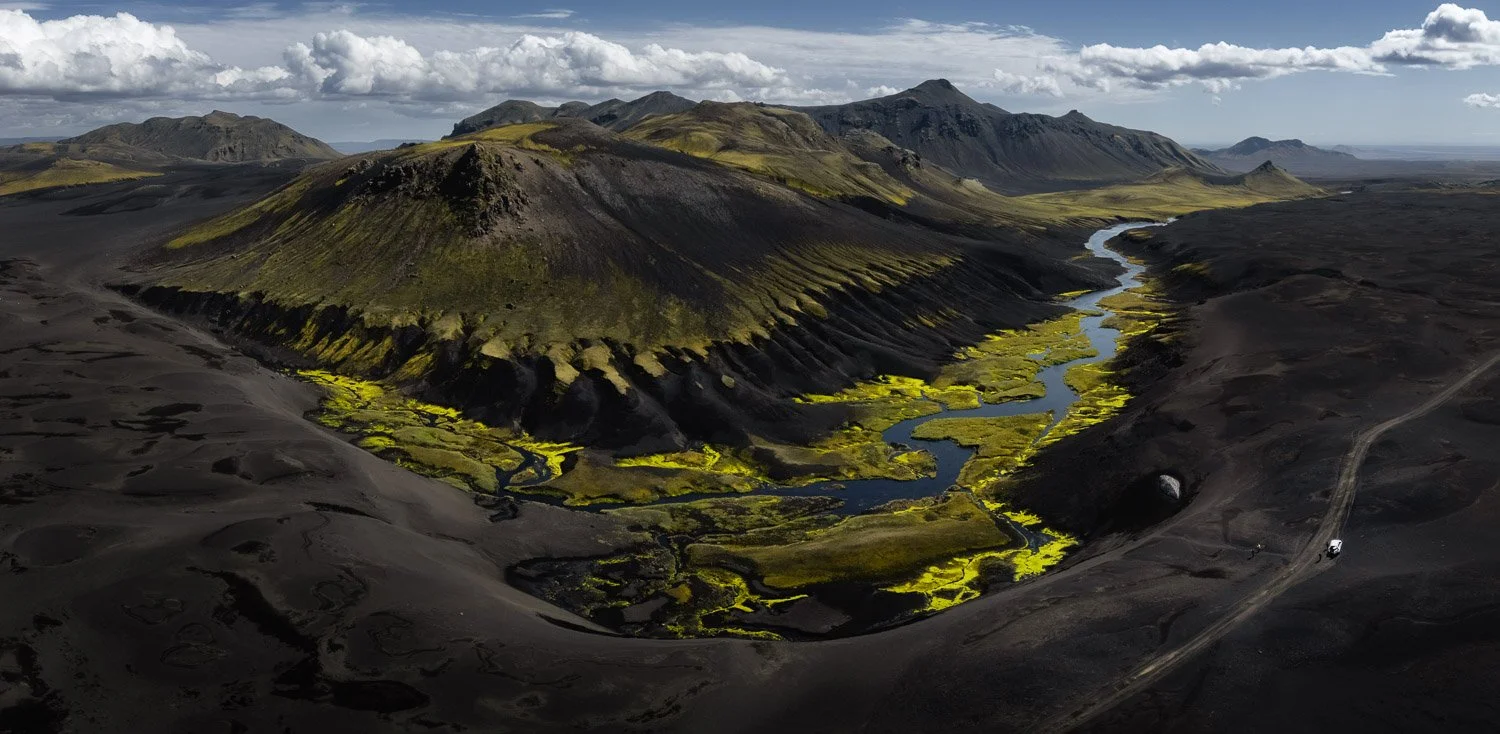
Final panorama shot
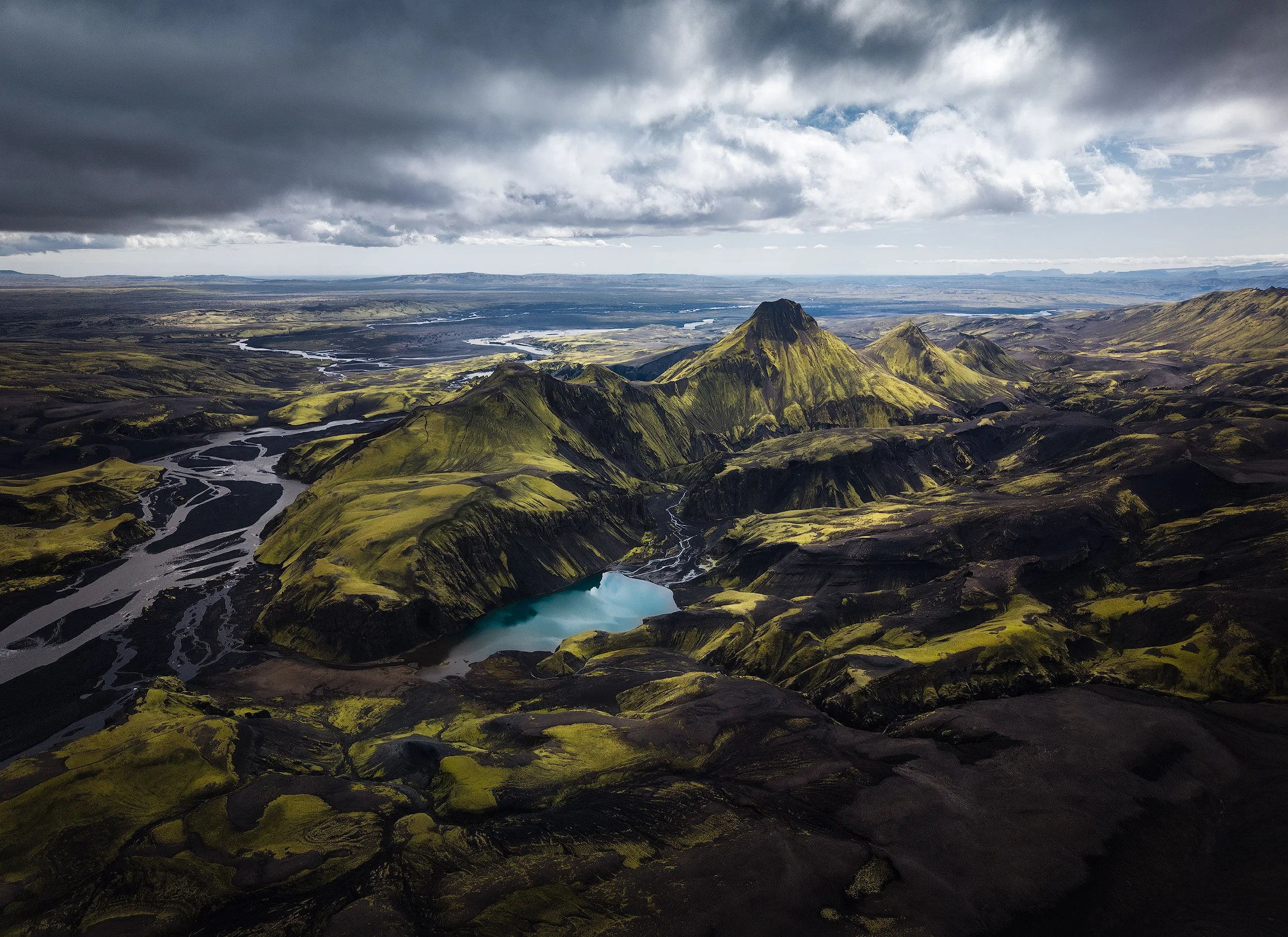
This panorama was shot last year during our workshops in Iceland. A small group of photographers, a modified 4×4, and a part of the Highlands that very few visitors ever reach. Black volcanic sand as far as you can see, rivers braiding through electric green moss, volcanic cones rising out of the desert.
The kind of place that makes you stop and look before you do anything else.
Now, how to approach a shot like this?
Finding the right altitude for drone photography
With a drone, the temptation is always to go higher. But higher is not always better. If you climb too much, the landscape starts to flatten. The river valley loses depth, the erosion lines on the mountain become less visible, and the foreground and background start to feel like they are sitting on the same plane.
So instead of going straight up, I like to move slowly.
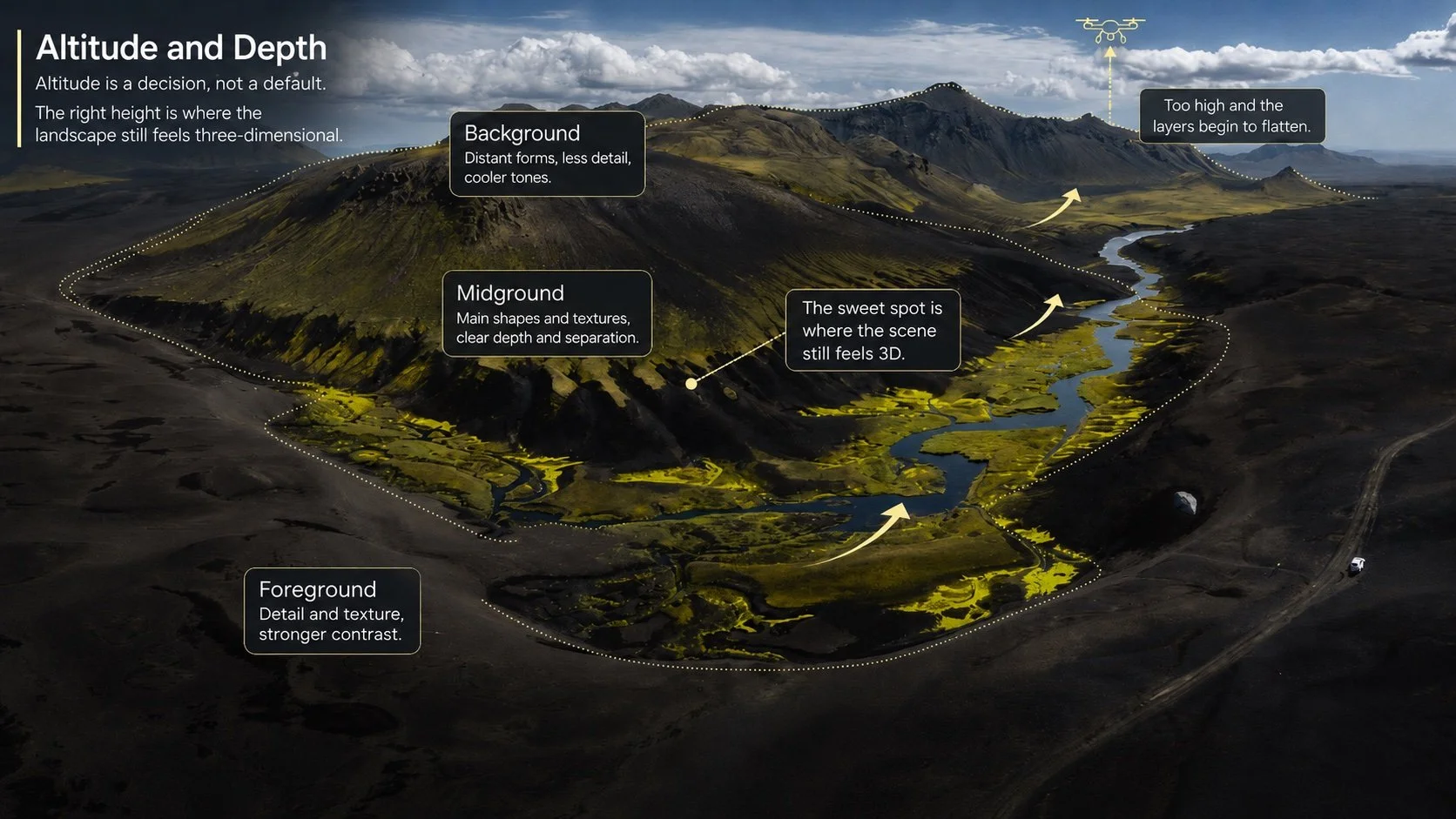
I climb a little and pause. Then I descend slightly and look again. I’m not just looking for a dramatic viewpoint. I’m looking for the height where the landscape still feels three-dimensional.
In this case, I wanted the river to feel lower than the surrounding black sand. I wanted the mountain slopes to still have shape. And I wanted the distance between the foreground, the valley, and the mountains to remain visible.
That is usually the sweet spot.
Then I start thinking about the panorama itself.
Overlapping frames in a drone panorama
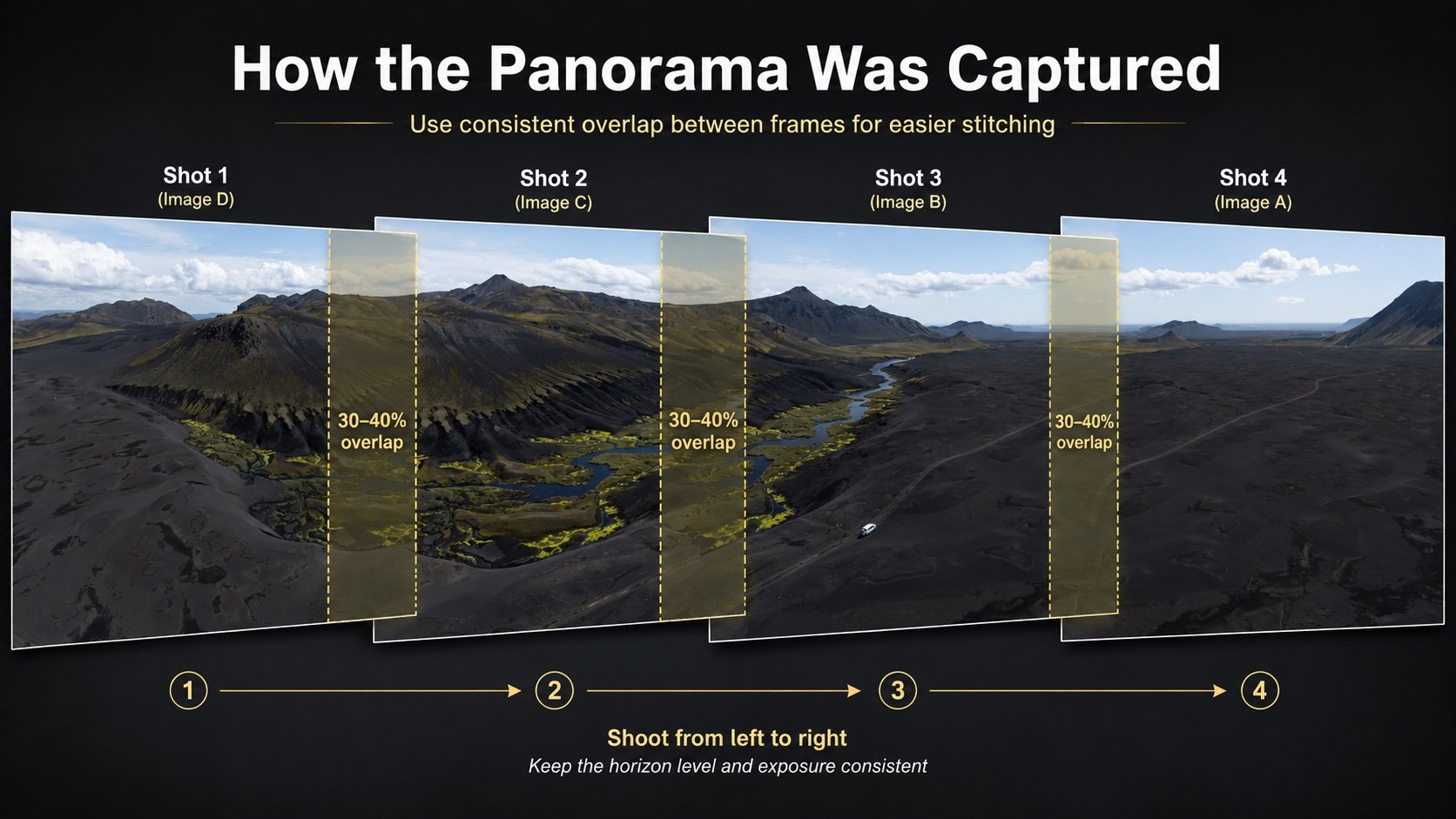
Most people will tell you to overlap each frame by around 30–40%, and that’s good advice. But in the field, I think about it slightly differently.
I don’t just overlap the frames. I overlap the important shapes.
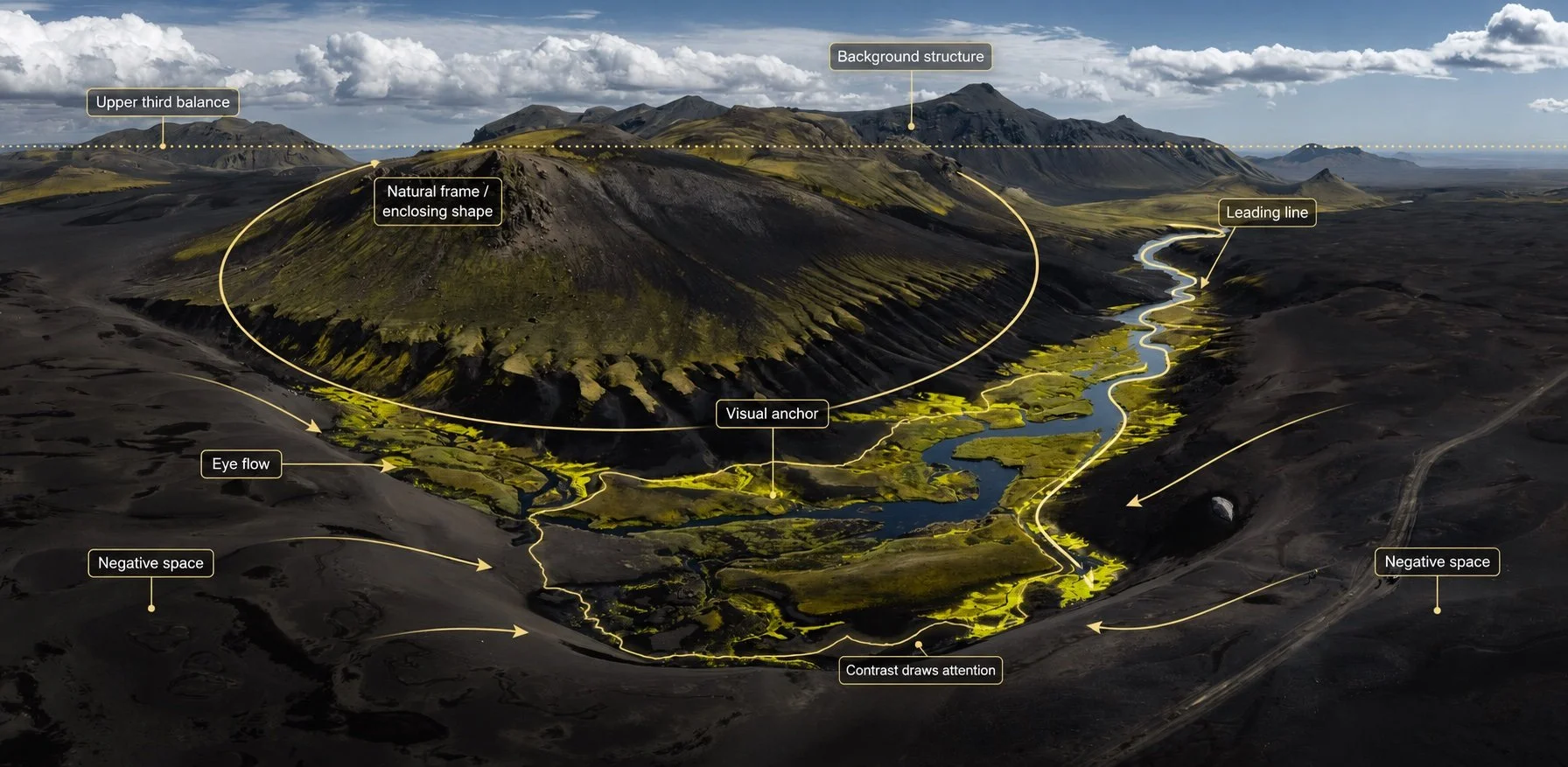
In this scene, the river is the visual spine of the image. It leads the eye through the black volcanic landscape and connects the foreground to the mountains in the distance. So when I move from one frame to the next, I’m careful not to cut that river too close to the edge. I want it to continue naturally into the following shot.
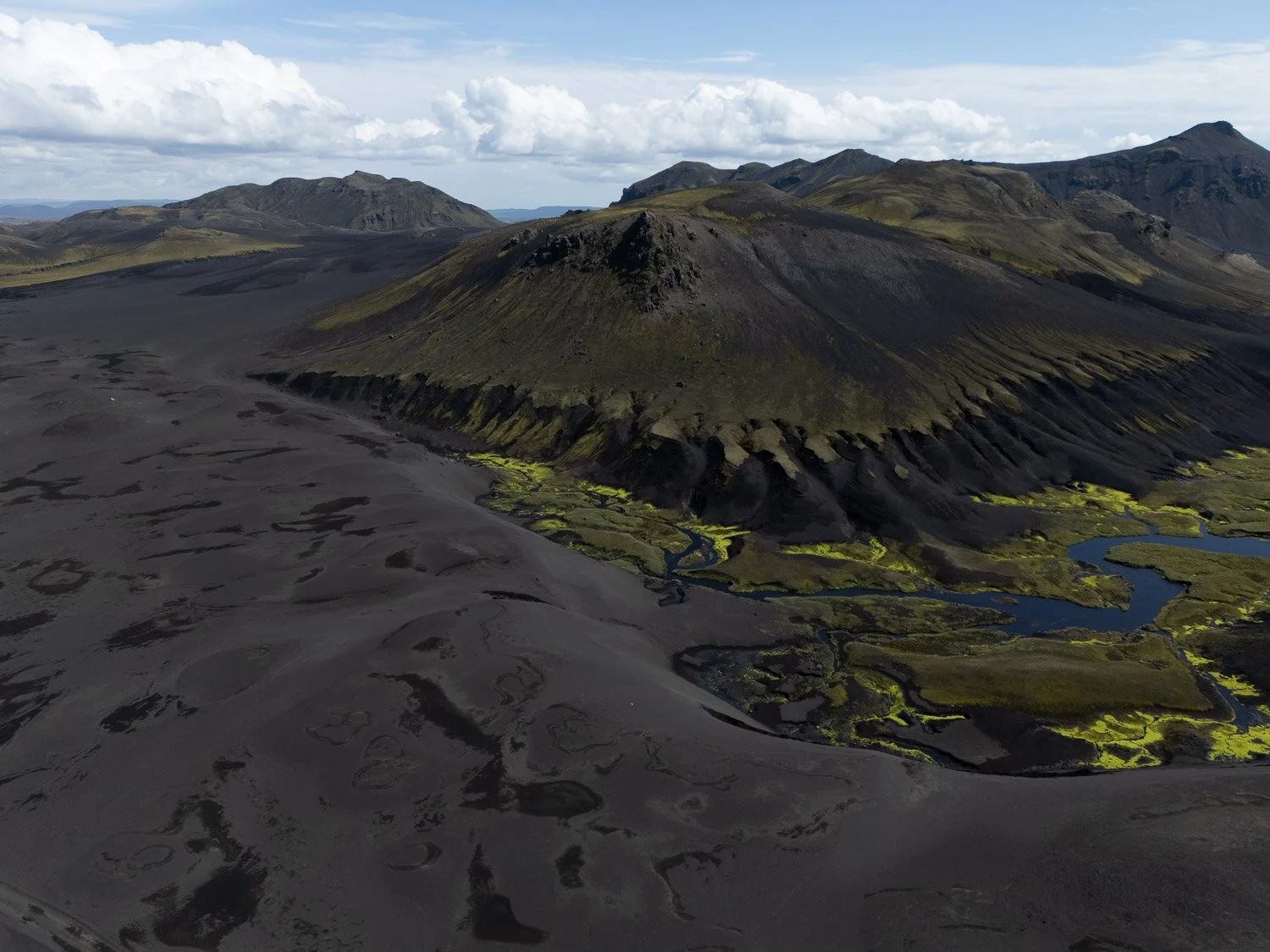
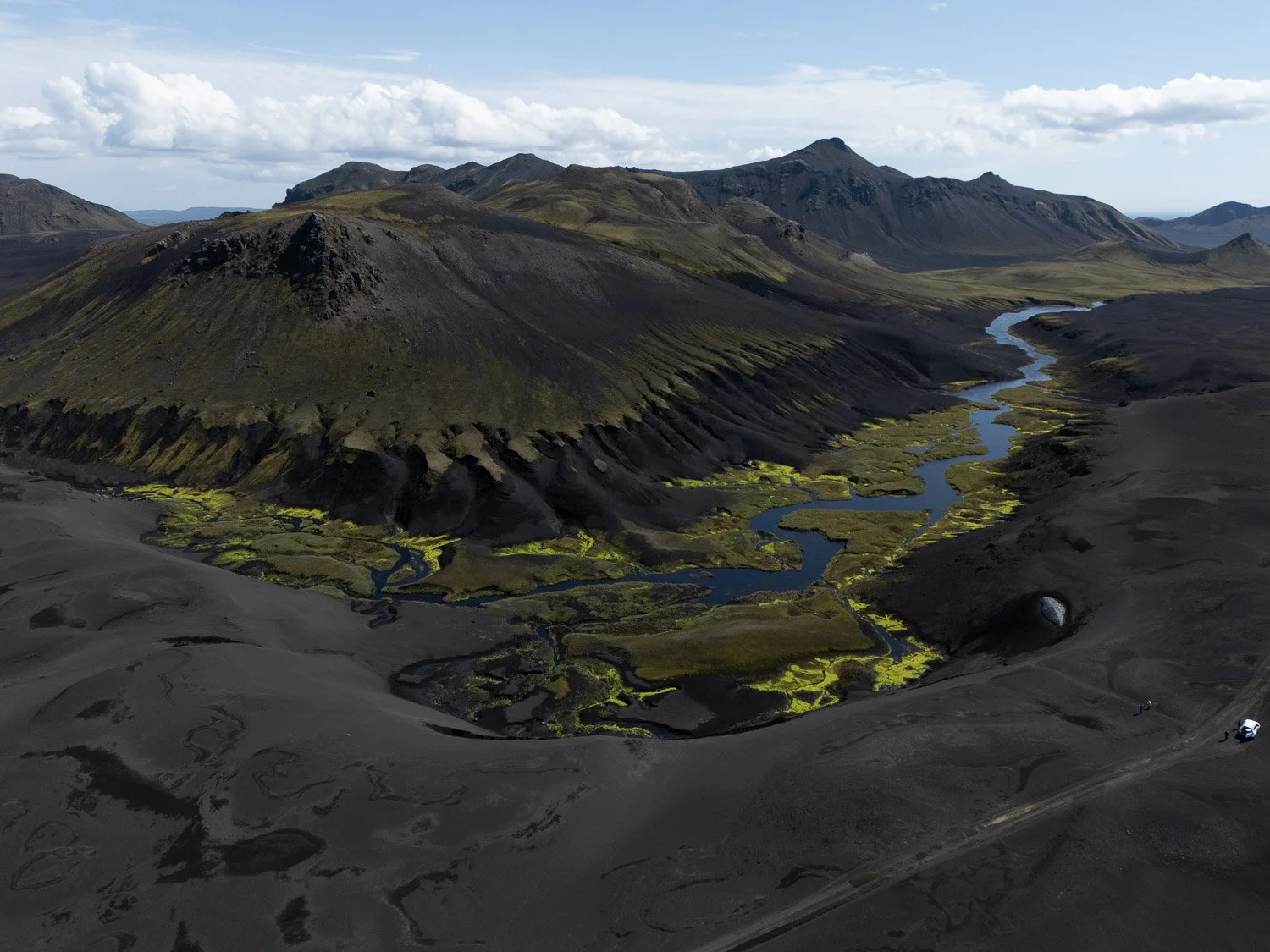
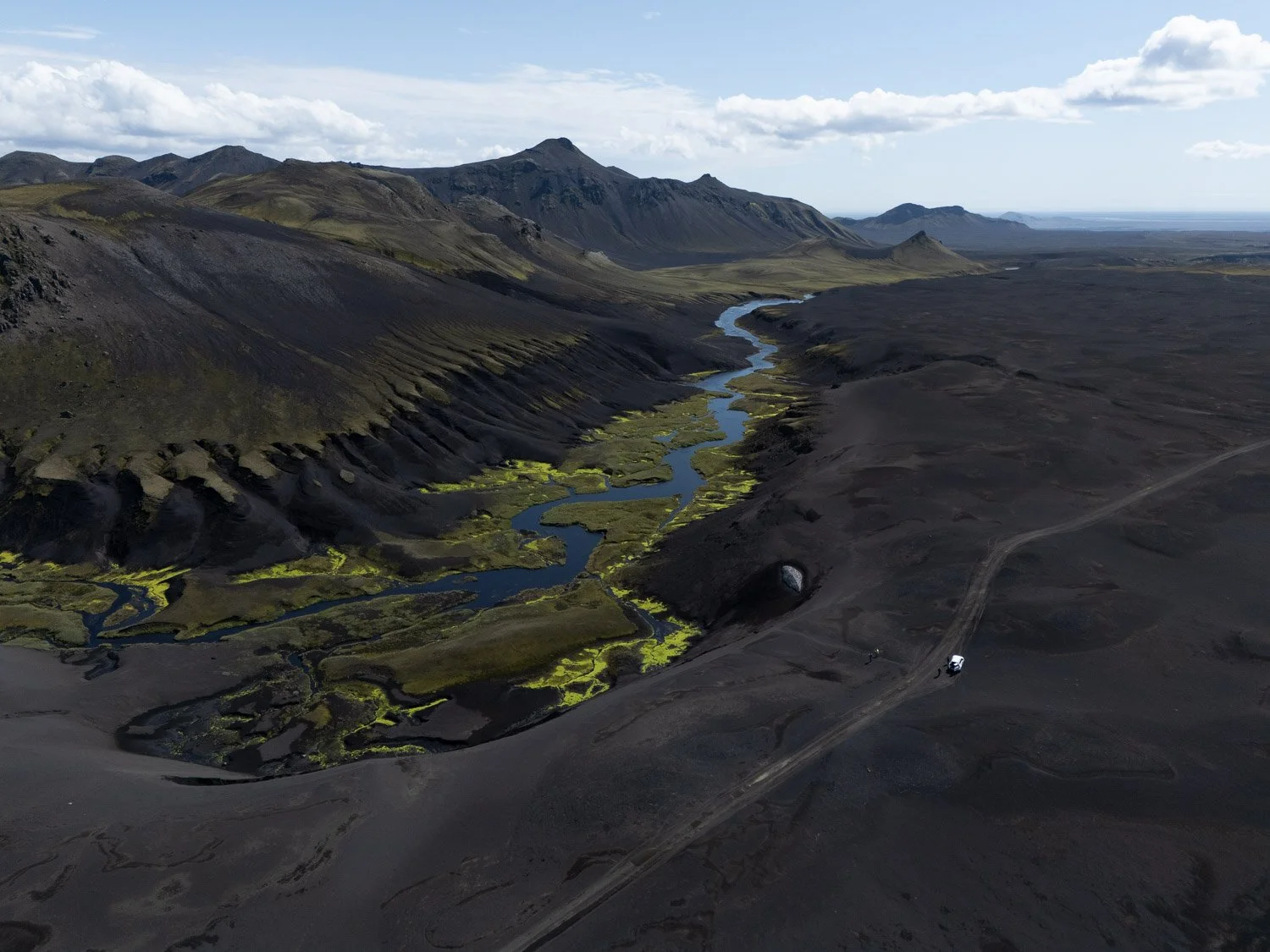
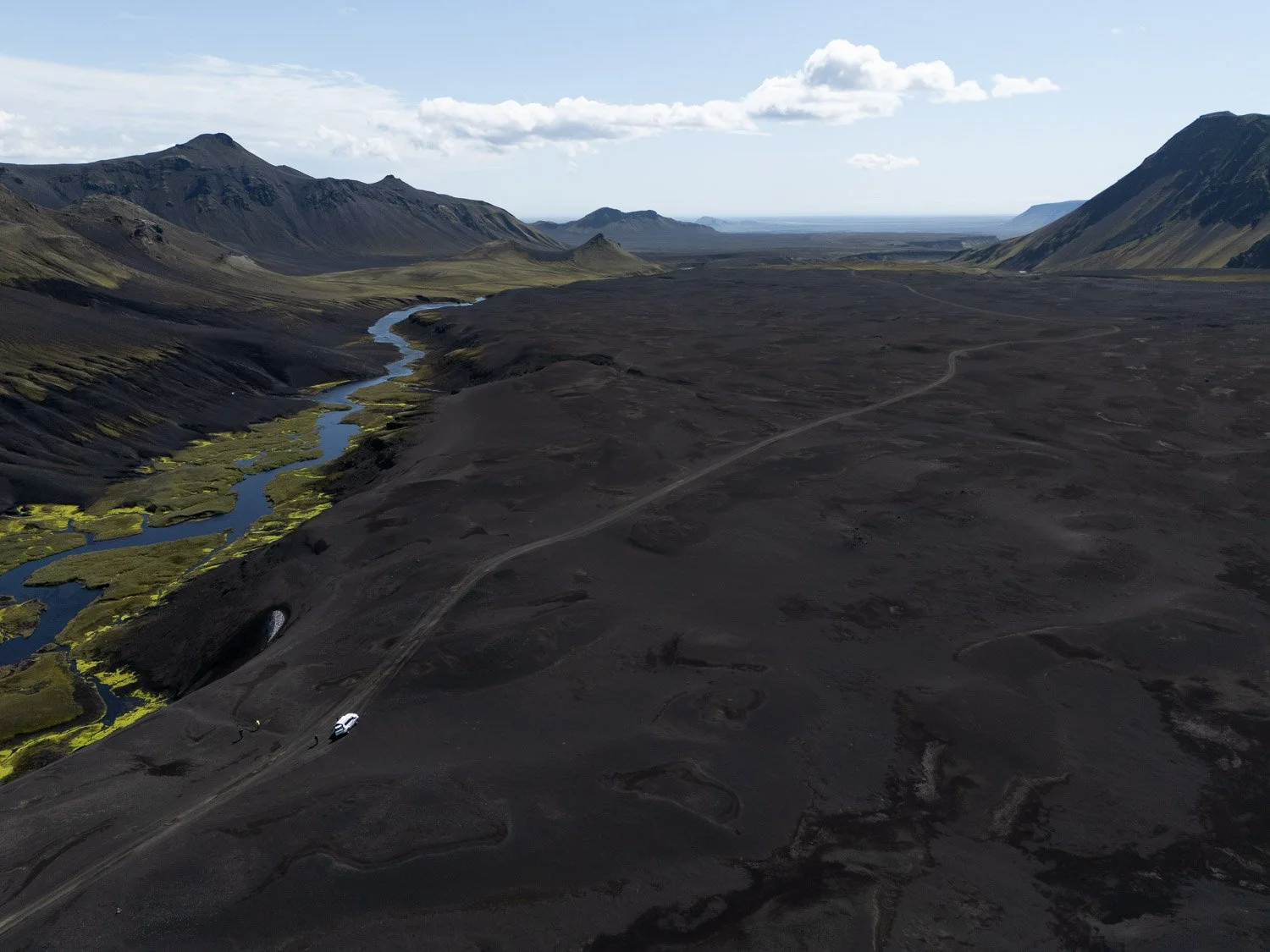
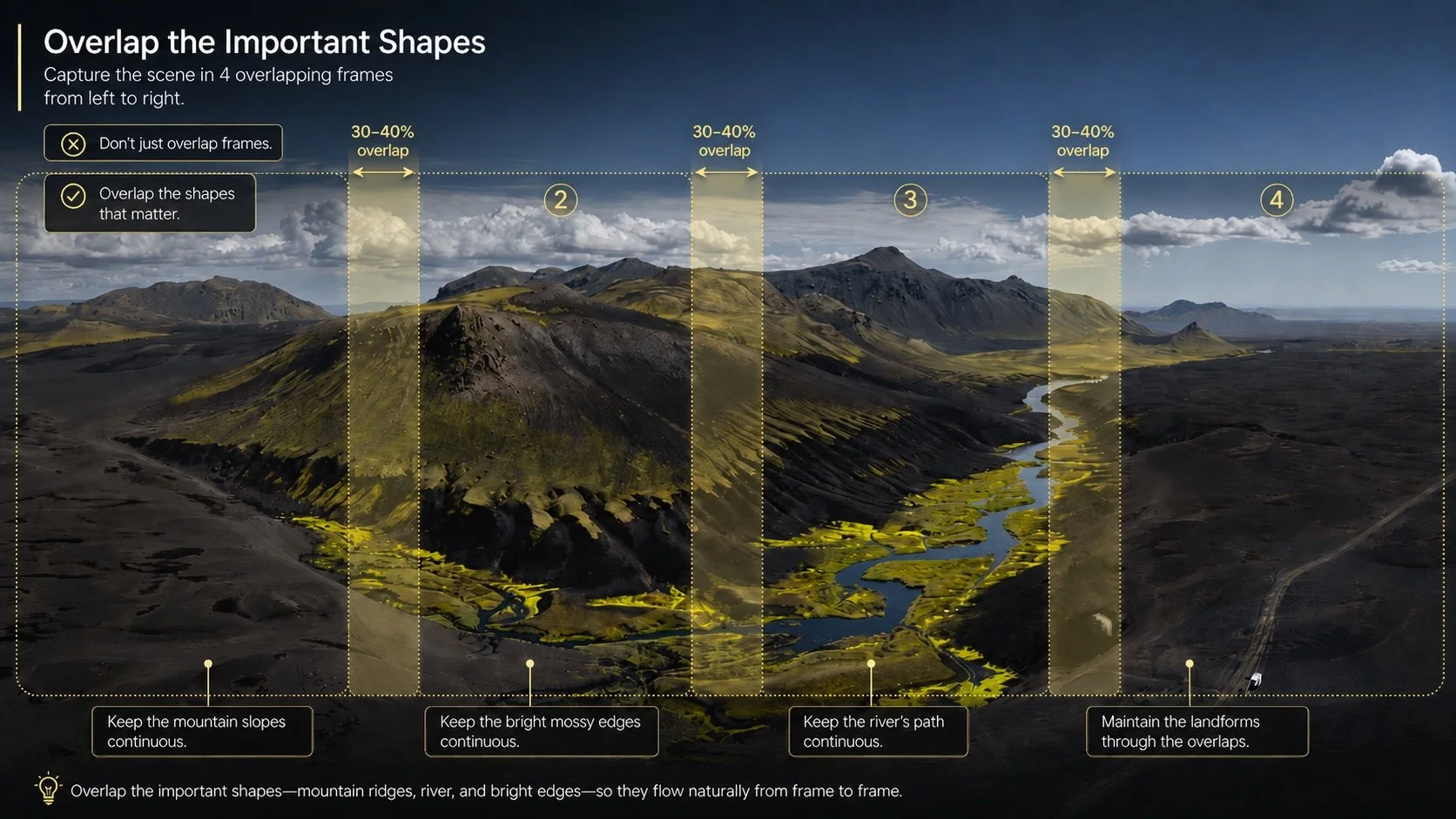
The same applies to the mossy edges around the water and the mountain slopes in the background. If those shapes are broken awkwardly from one frame to the next, the final panorama may still stitch, but the image can feel less natural.
So before taking the next frame, I quickly check the edge of my composition and ask myself: does the next shot give this shape enough room to continue?
If you've been waiting for the kind of trip that changes the way you see, not just through a lens, but in general, this is it.
Bracketing drone panoramas in high-contrast light
In this kind of light, I always protect the sky. The clouds are bright, and once those highlights are gone, they’re gone. I’d rather let the shadows fall a little darker and recover them later than lose detail in the sky.
If the contrast is strong, I bracket.
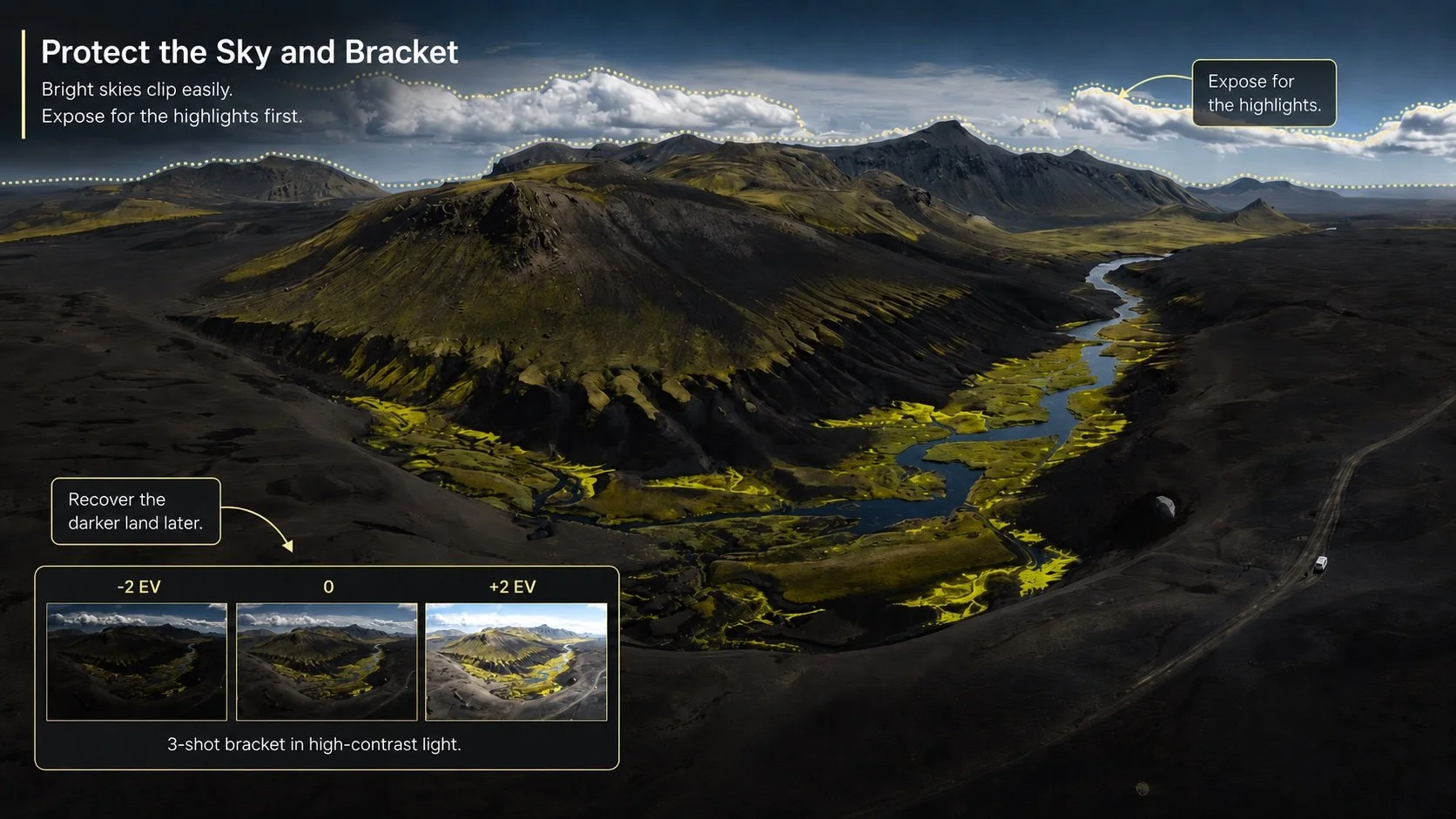
A simple three-shot bracket gives me much more room in post. It lets me keep the clouds clean while still pulling detail out of the dark volcanic sand. And of course, I shoot RAW. With a scene like this, that’s non-negotiable.
Cloud shadows. Watch the light before you start.
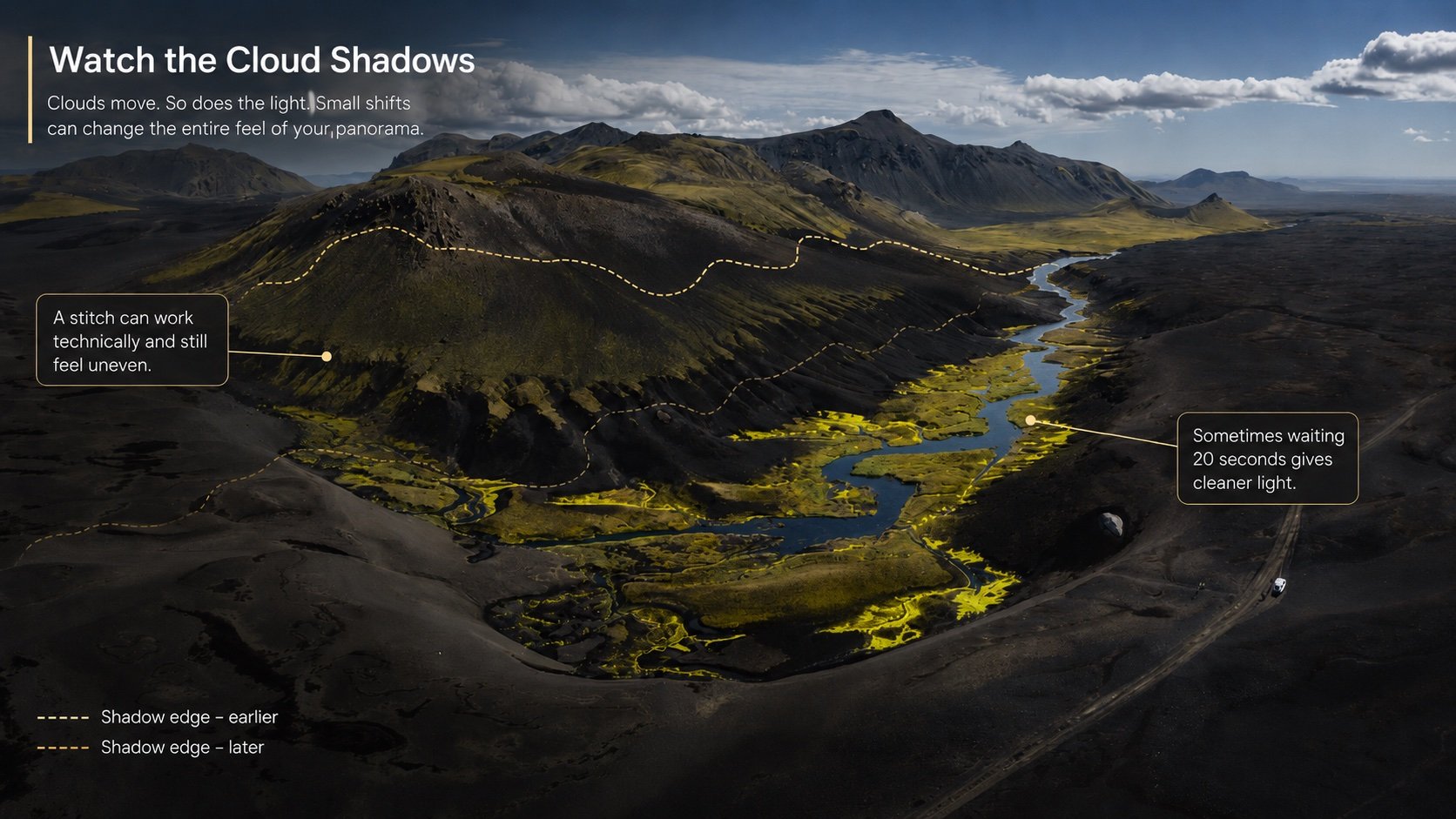
One thing people often forget with drone panoramas is cloud shadow.
Before starting the sequence, I usually watch the light for a few seconds. In the Highlands, cloud shadows move quickly, and if one part of the valley is in full sun while the next frame is already falling into shade, the panorama may still stitch perfectly, but the light will feel uneven.
Sometimes waiting twenty seconds gives you a much cleaner result.
Wind, shutter speed, and drone stability
I also try not to rush the sequence.
After each small rotation, I let the drone settle for a moment before taking the next frame. It’s a tiny pause, but in a windy place like the Highlands, it can make a real difference.
A shutter speed that works perfectly on a calm day may not be enough when the drone is fighting gusts. In strong wind, I keep the shutter speed higher than I instinctively would. Not because the landscape is moving, but because the drone is.
Even if the drone looks stable on the screen, it may still be correcting its position. If you rush, you can end up with small alignment problems or slightly soft frames that only become obvious later, when you try to stitch everything together.
And before I fly anywhere, I check the wind direction.
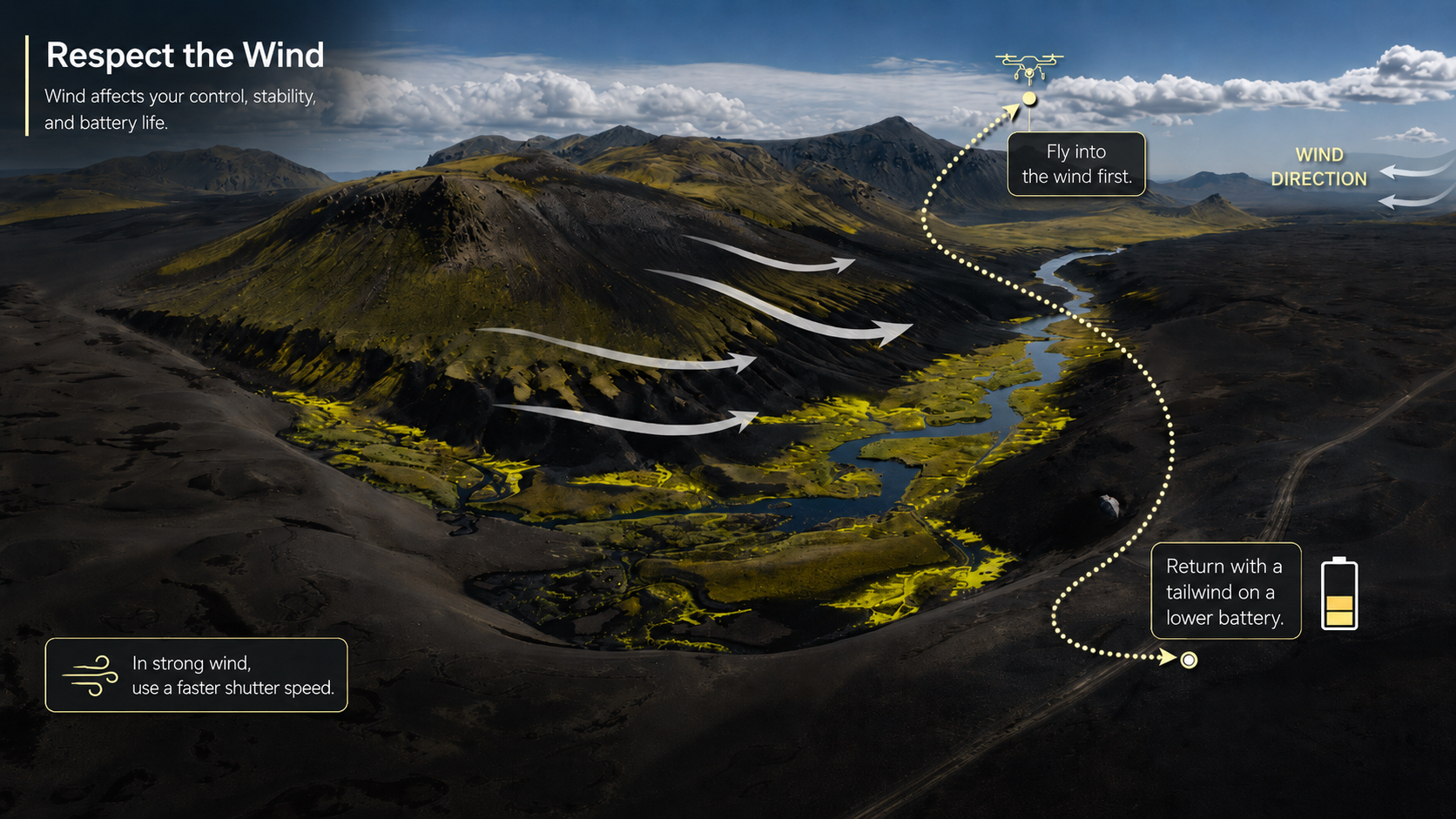
This is one of those practical things that sounds obvious, but it can save your drone. Flying downwind feels easy. The drone moves quickly, the battery looks fine, and everything feels under control. The problem comes when you need to return against that same wind with a battery that is already half used.
That’s when the drone has to work much harder.
So in the Highlands, I usually prefer to fly into the wind first and return with a tailwind. It’s a simple habit, but an important one.
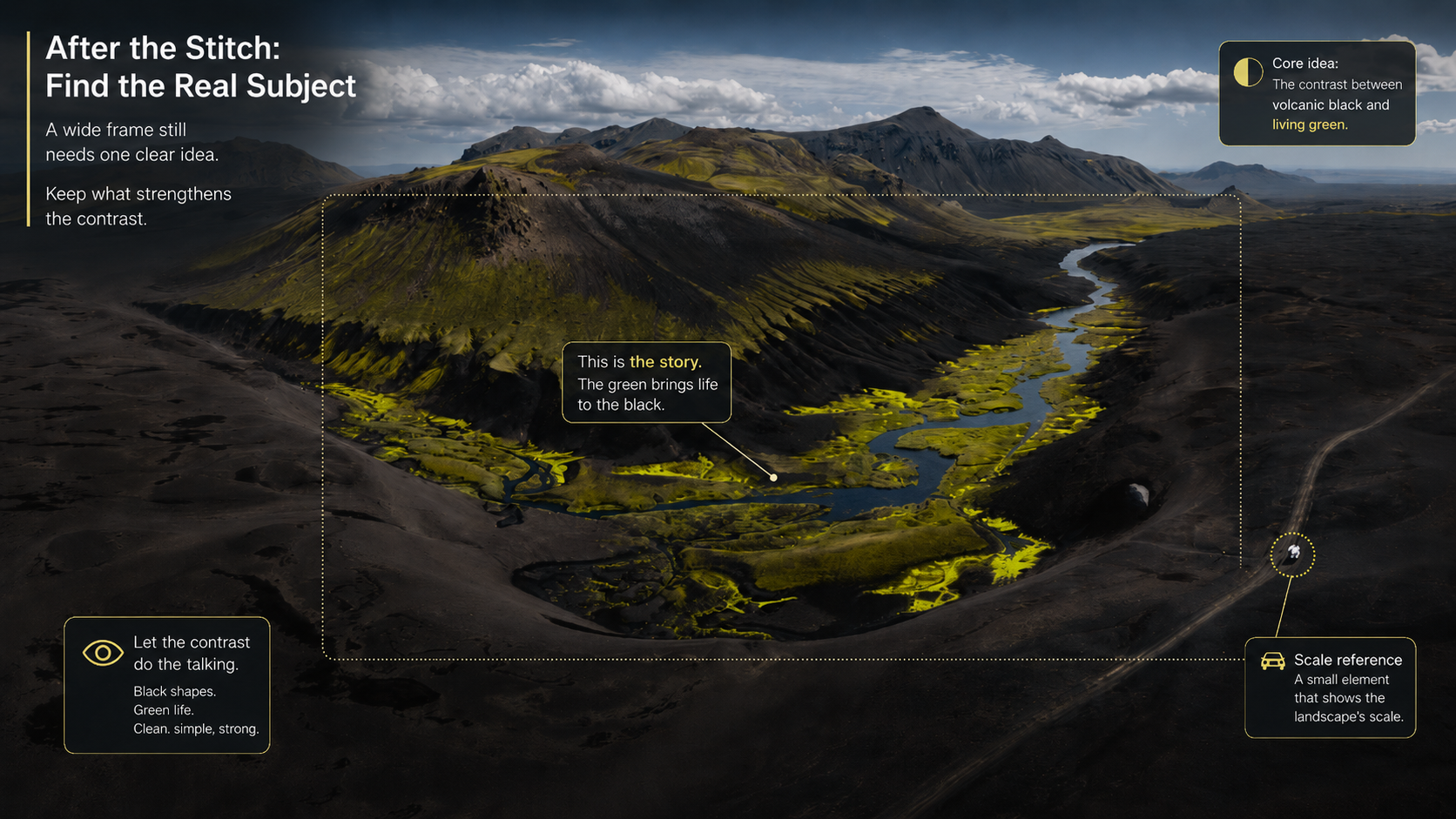
A panorama gives you a wide frame, but that doesn’t mean you need to keep everything. The final image still needs a clear idea.
For me, this photograph is about the contrast between volcanic black and living green. That’s the heart of the image.
The river matters because it carries your eye through that contrast. The mountains matter because they give structure and scale. The white car in the lower right isn’t a distraction to me; it’s a small reference point that tells you how big this landscape really is.
Everything else has to earn its place.
Post-processing the Icelandic highlands greens
The moss in the Highlands really does look like that. That electric yellow-green against black volcanic sand is not something you invent in post. It’s what you see standing there.
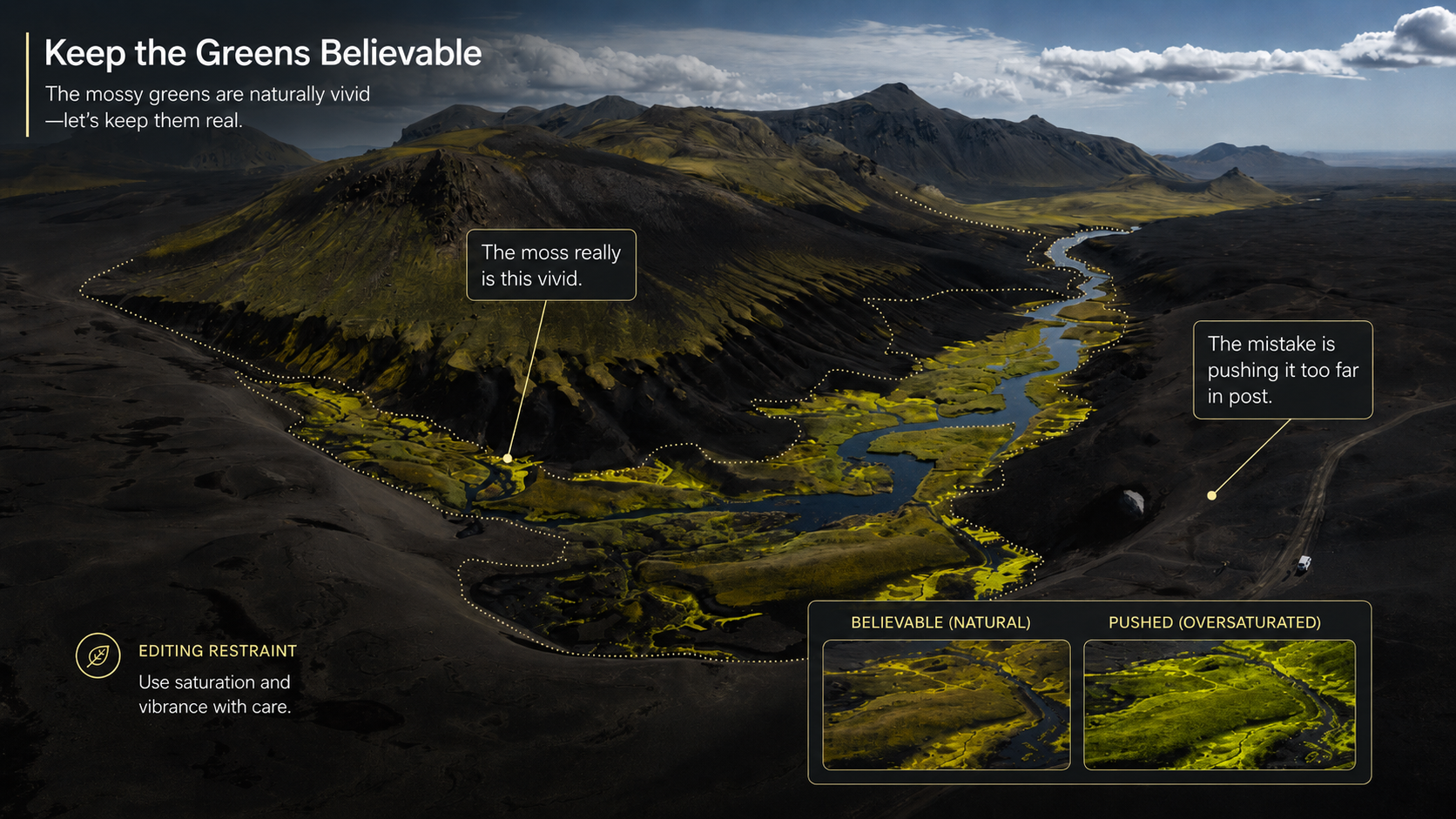
But because it already looks so intense, it’s very easy to push it too far.
A little more saturation, a little more vibrance, a little more yellow, and suddenly the image stops feeling photographed and starts feeling artificial.
So with this kind of file, I’m very careful with the HSL panel. I want the green to stay alive, but I don’t want it to scream.
The contrast between the moss and the black sand is already doing the work. My job in post is not to make it louder. It’s to keep it believable.
I always try to ask myself whether I’m making the image stronger or just making it noisier.
Join us in Iceland!
If this resonated with you and you've been thinking about joining us, you can find all the details and apply for a spot by following the link below. Learn more about our upcoming Highlands of Iceland Photography Workshop to shoot these locations yourself.
Landmannalaugar, Kerlingarfjöll, Langisjór and beyond — a practical photography guide to the remote Highlands of Iceland, with tips on light, gear, and how to get there.