
How to Read Changing Light in Landscape Photography — Tuscany Masterclass
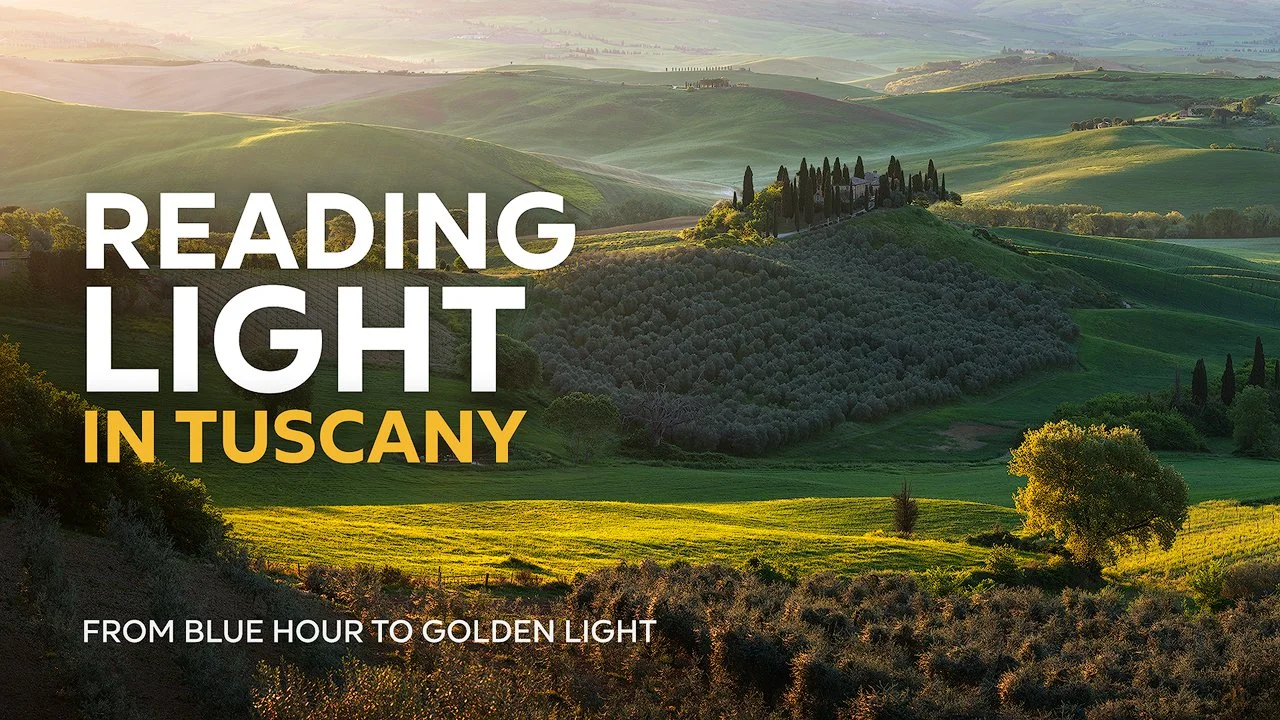
This is probably the image most photographers would wait for in a place like this. Warm, directional light, beautiful rolling hills, cypress trees, the classic feeling of Tuscany.
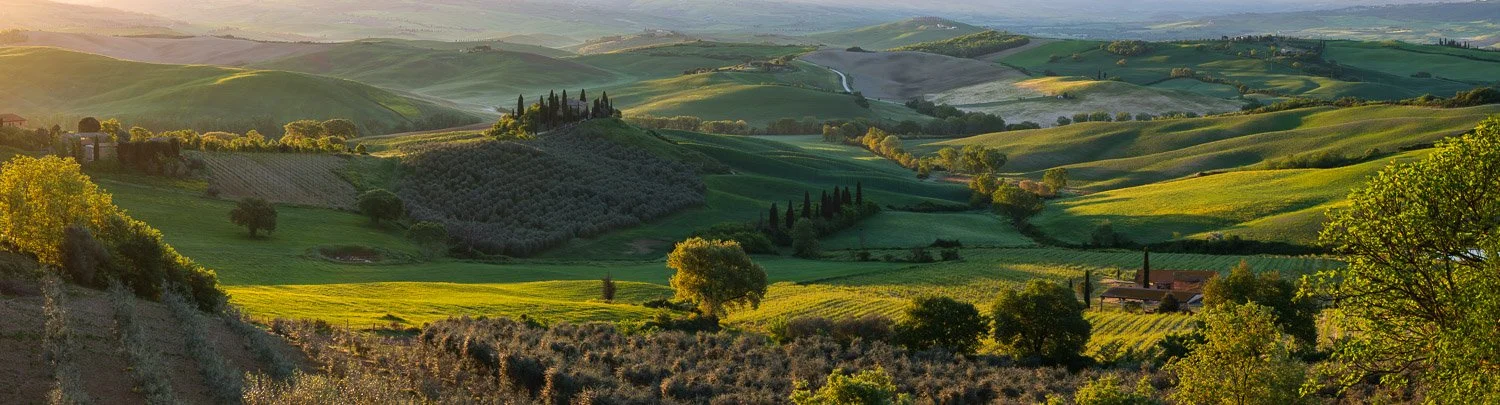
But here's what I want to show you today. From the same spot, in the same morning, I made several completely different photographs. Not because I got lucky with the light, but because I knew how to read it.
Twenty-five minutes before this frame, the same landscape looked completely different. Cooler, quieter, almost blue-green. No golden light at all. And most photographers standing there would have been waiting for the light to become good enough.
In this article, I want to take you through the way I read this scene in the field. Not just what I photographed, but why I made certain decisions as the light moved across the landscape.
By the end, I want you to feel more confident reading changing light in the field, and hopefully you’ll have a few useful tips to expand your creative options next time you’re out shooting.
Reading the Landscape Before Sunrise
Let me take you back to the beginning of the morning.
When I arrived at this viewpoint, the first thing I did was simply look. I didn’t start by choosing a lens or looking for the final composition. I wanted to understand the landscape first.
I was there with a small group of six photographers. We were in the middle of our spring workshop in Tuscany, and this is exactly what I asked them to do as well: pause for a moment and read the scene.
Where is the light coming from? What areas are already interesting? What could become stronger once the sun starts to rise?
In a place as complex as Val d'Orcia, you have to slow down — otherwise you react to what's in front of you instead of reading it.
At this stage, I’m not trying to make the final image. I’m basically building a plan.
So, the first image I want to show you was made before direct sunlight reached the landscape. I started with the Fujifilm 50-140 telephoto lens to isolate small parts of the scene. I’ve photographed this location many times, but I still enjoy the challenge of finding something different.
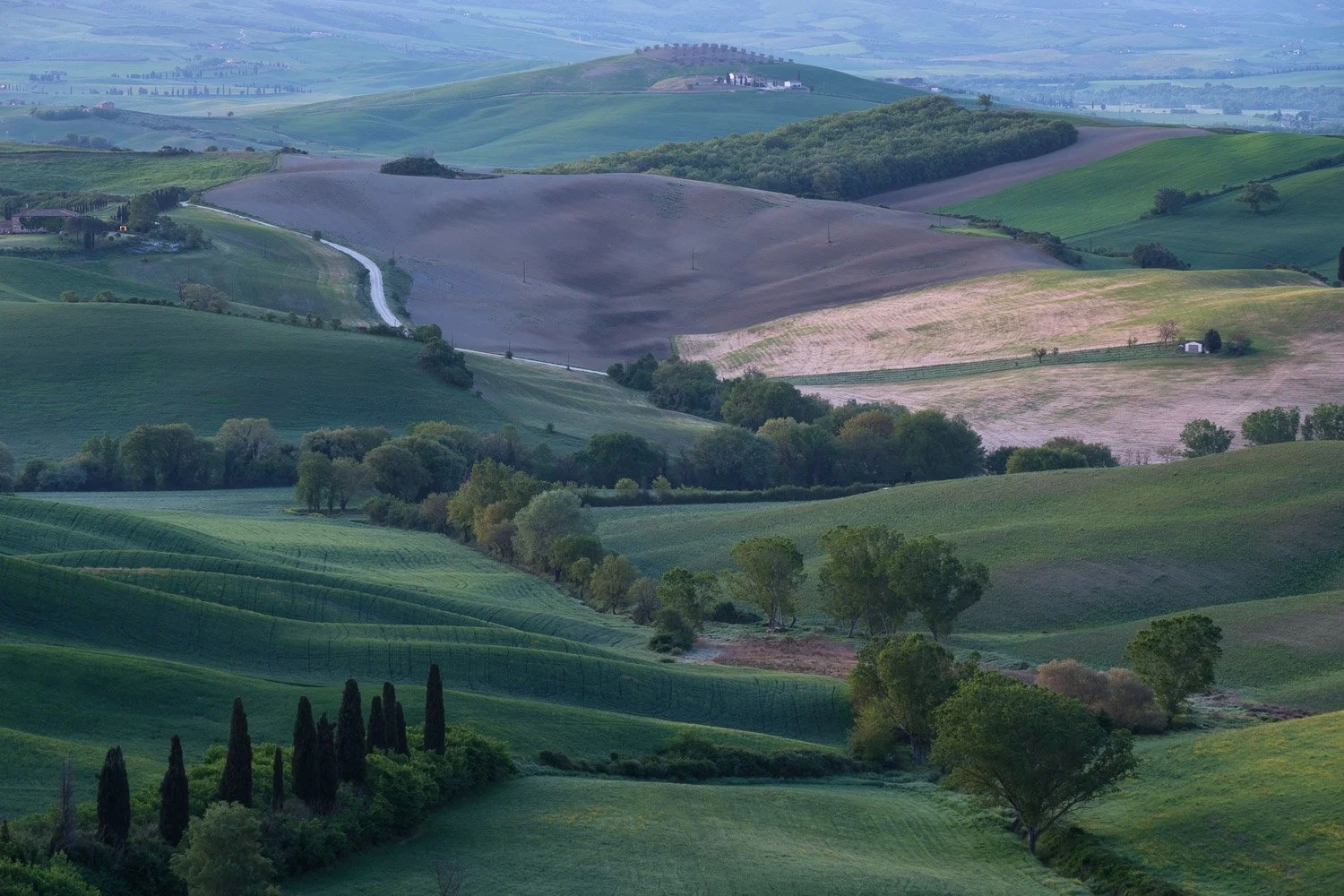
Captured at 6:01 AM
I quite enjoy the arrangement of the elements in this first shot. From a compositional standpoint, the cypress trees help anchor the frame, while the road gently connects the different hills together. Even in this cooler light, the scene already had depth.
Sometimes you find an image that already works in this early light. Other times, you simply notice something that could become more interesting once the sun reaches it. For example, I came back to this composition later on once the sun was hitting it from the side.
So, I make a mental note, and when the light changes, I know where to come back.
That is the value of being there early. You are not only looking at what the landscape is now. You are imagining what it might become.
Another thing I want you to notice is the strong blue colour cast.
This was around 6:00 in the morning, with sunrise at 6:22. So we were still in that blue-hour transition before any direct sunlight had reached the landscape.
The sun hasn't cleared the horizon yet. Most of what you’re seeing here is being lit by the sky itself. That gives the scene this cool, blue-rich quality — and yet there is already direction, depth, and separation in it.
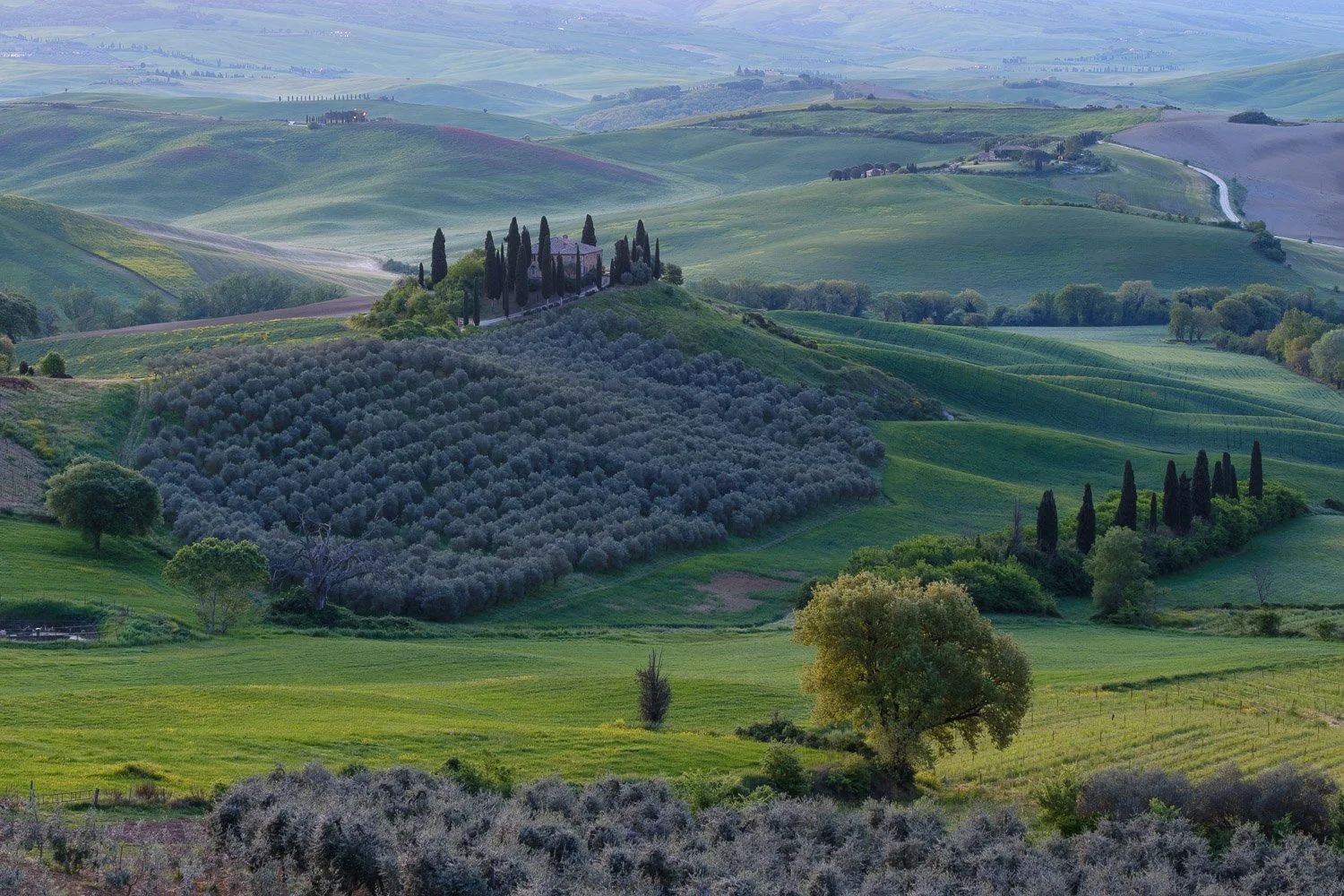
Captured at 6:03 AM
Here is another shot captured just moments later. This is one of the more classic compositions from this viewpoint, framing the farmhouse, but what I find interesting is that this early light still gives the landscape a great sense of dimensionality.
How Soft Light Changes Before Golden Hour
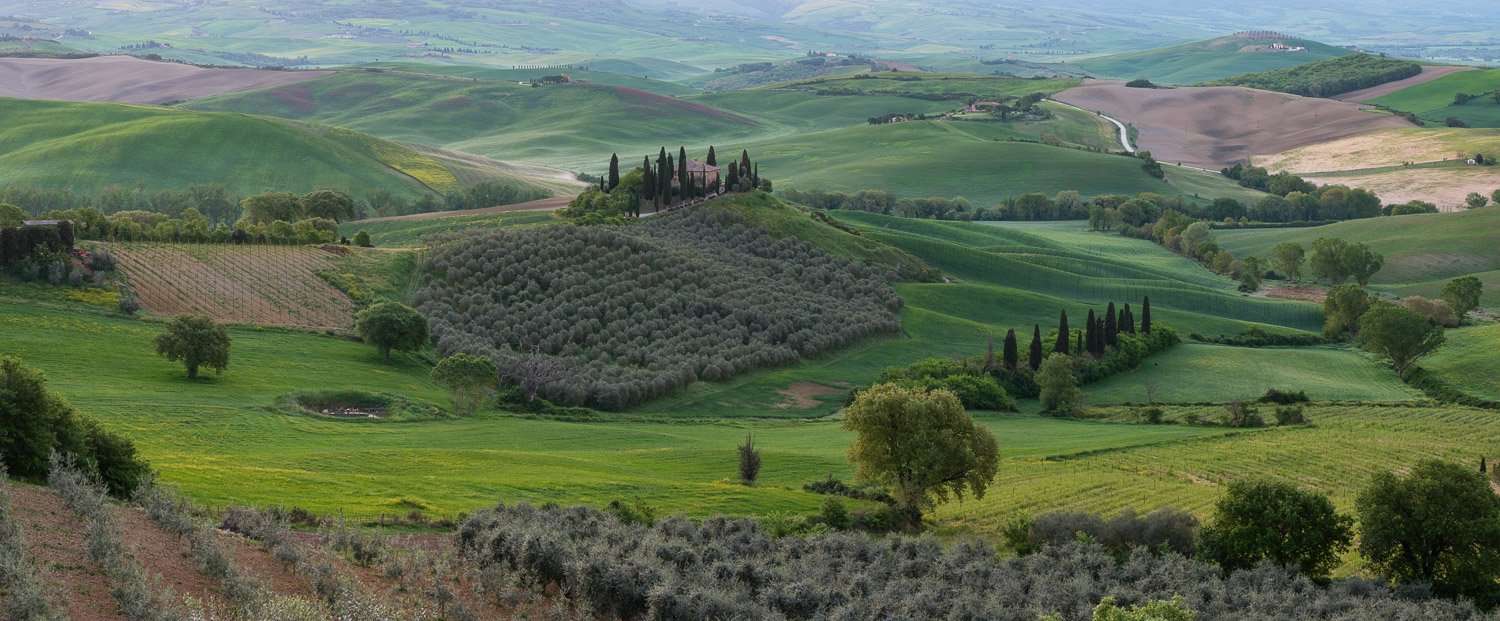
Panorama stitch (4 horizontal images) - Captured at 6:20 AM
Now, this is where it gets interesting. Even before the direct sunlight arrives, the light is already changing quite a lot.
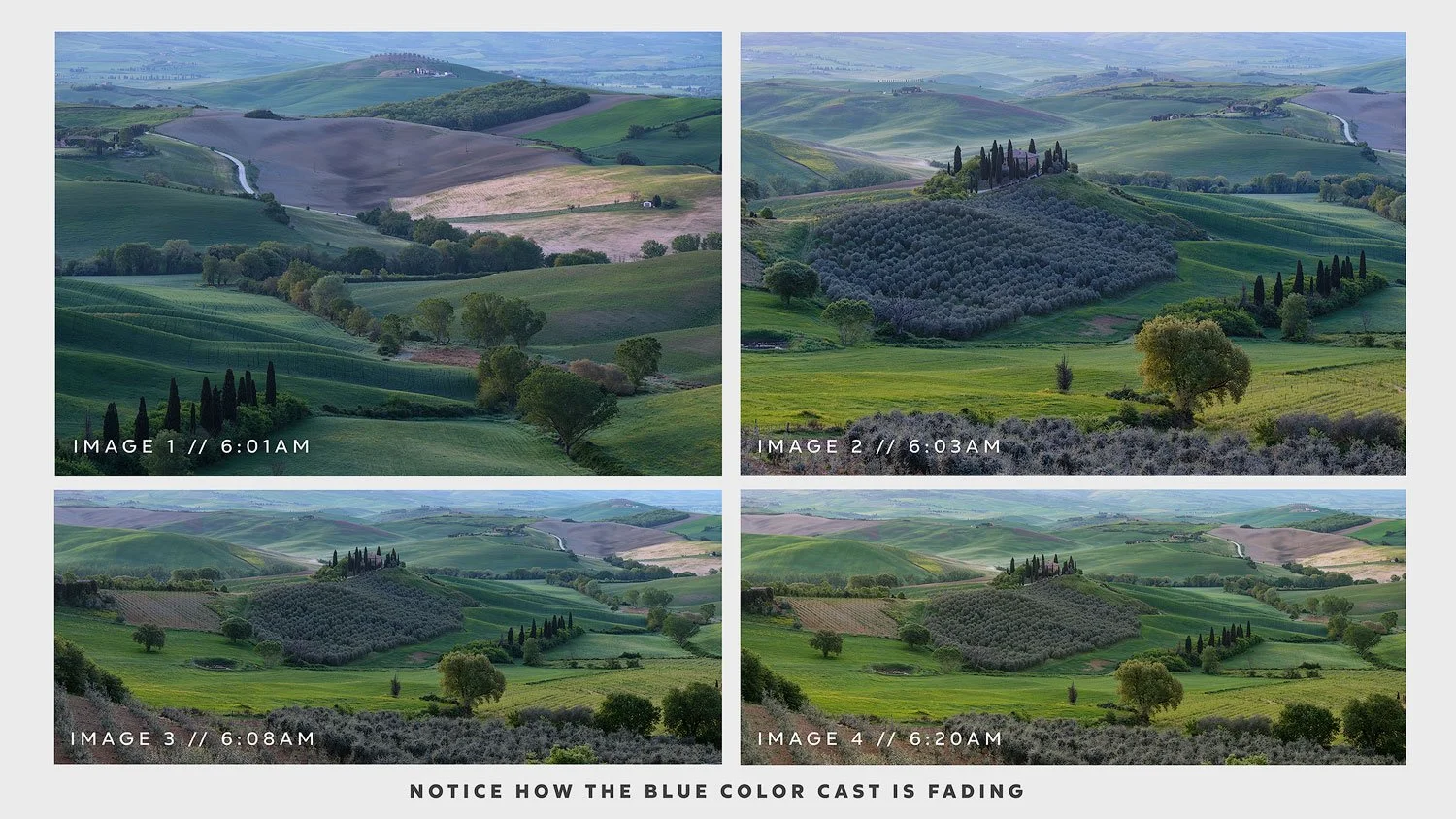
These frames may look similar if you only glance at them, but they were made over a short window of time, and the mood is not the same.
From Image 1 to Image 4 was only 20 minutes, but notice how the mood shifts.
From this viewpoint, the sun still had to rise above the mountains in the distance, so the first direct light didn’t actually reach the hills until around 6:30.
So all these frames were made in that transition before direct sunlight. The landscape was still in soft light — but the colours were already shifting, the contrast was relaxing, and the mood was changing.
This is the kind of soft light I find very useful in a complex landscape.
Soft light works beautifully when there are many layers and details in the scene. It lets the eye move more naturally through the landscape without strong, bright areas pulling too much attention.
That is the strength of this moment.
If you've been waiting for the kind of trip that changes the way you see, not just through a lens, but in general, this is it.
Why White Balance Cannot Replace Good Light
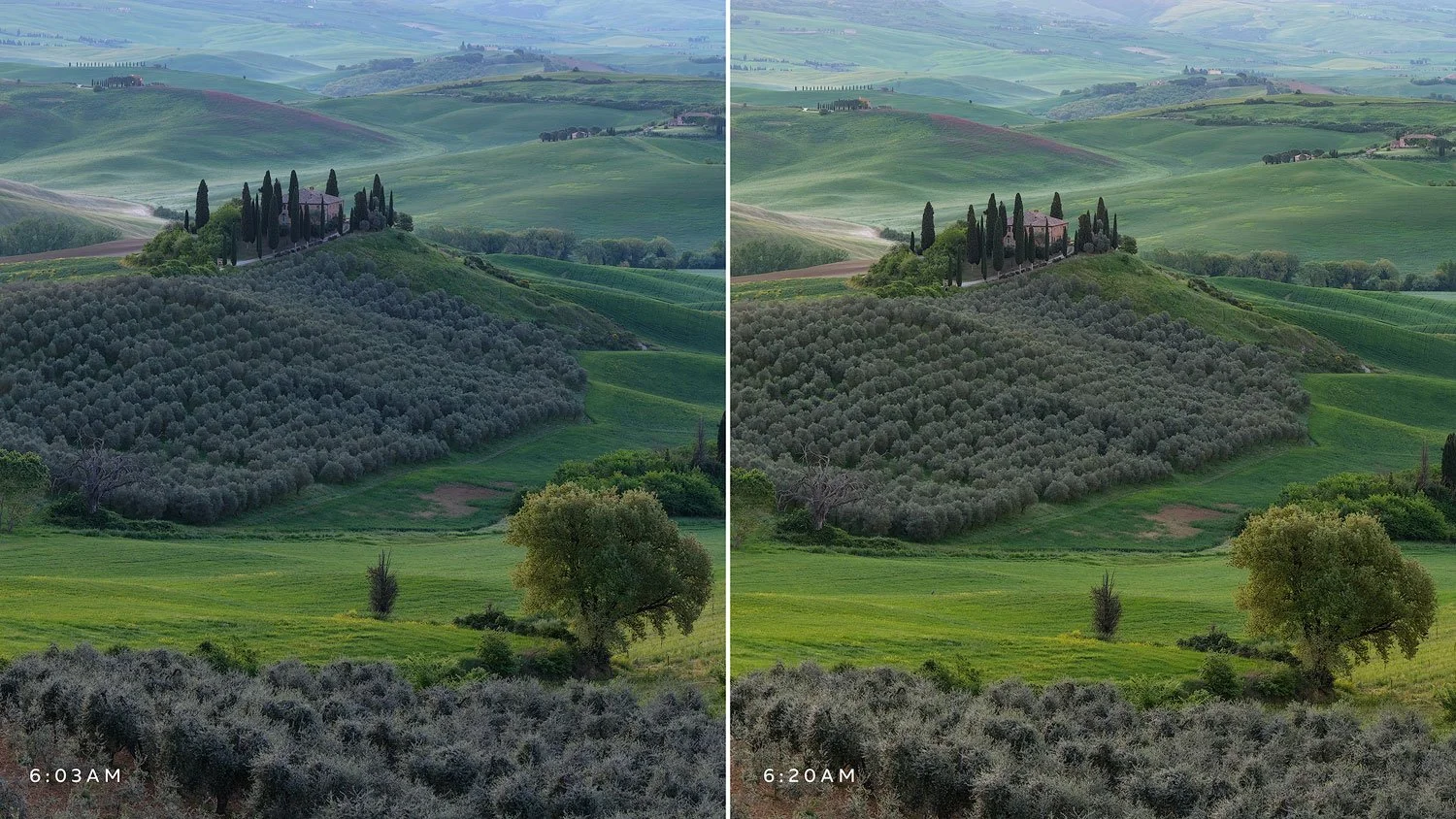
Now, you might say, “Well, if this image is cooler, couldn’t I just warm up the white balance in Lightroom and get something similar to Image 4?” Let's test that.
Here on the right, the image from earlier in the morning. On the left, the one made about twenty minutes later.
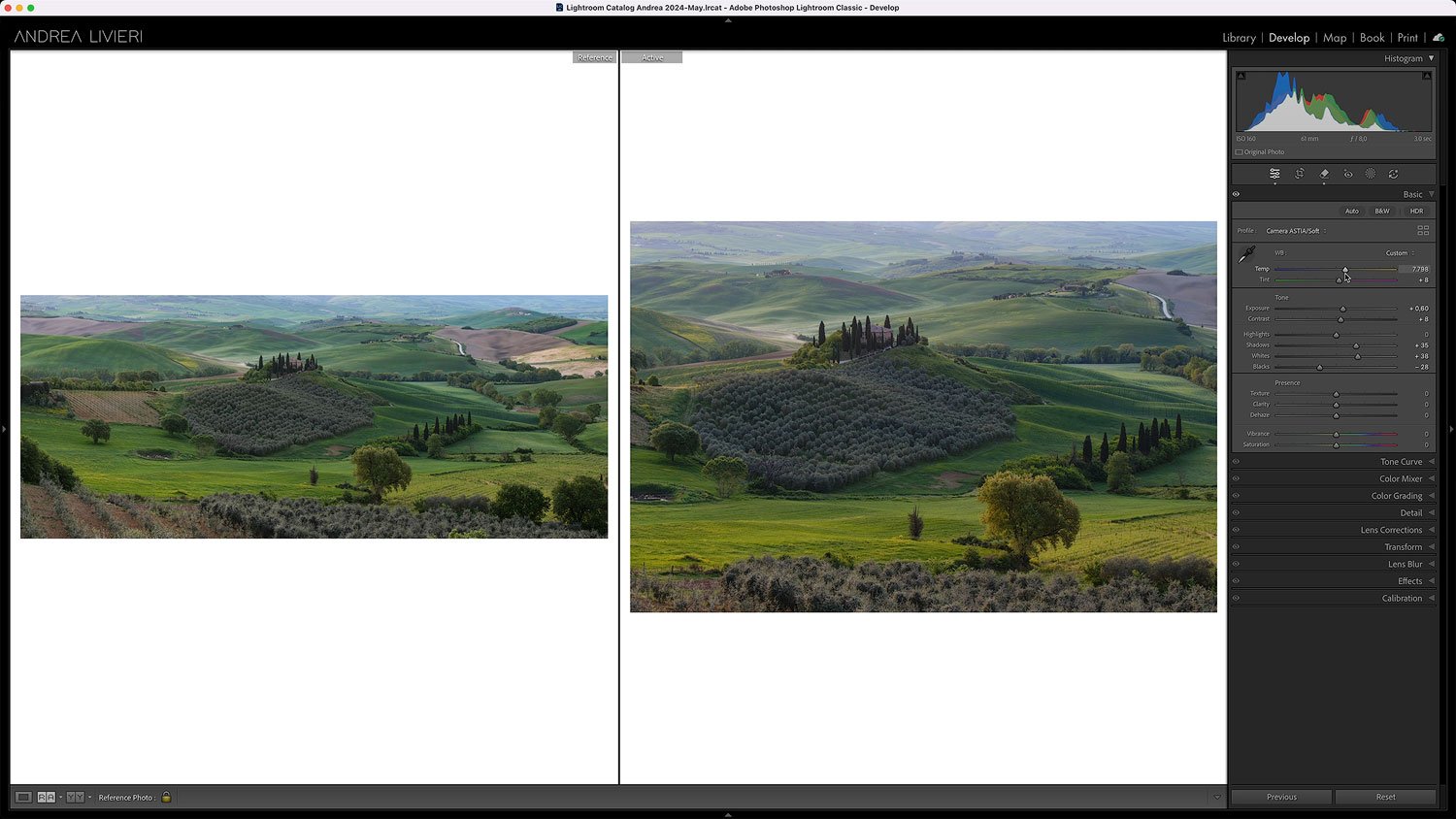
I'm going to warm up the cooler version by increasing the temperature and adjusting the tint, and try to bring it closer to what we got later.
At first, it seems like it helps. The image becomes warmer, of course. The blue cast is reduced, and the greens start to feel less cold.
Image 1 - 6:20 AM
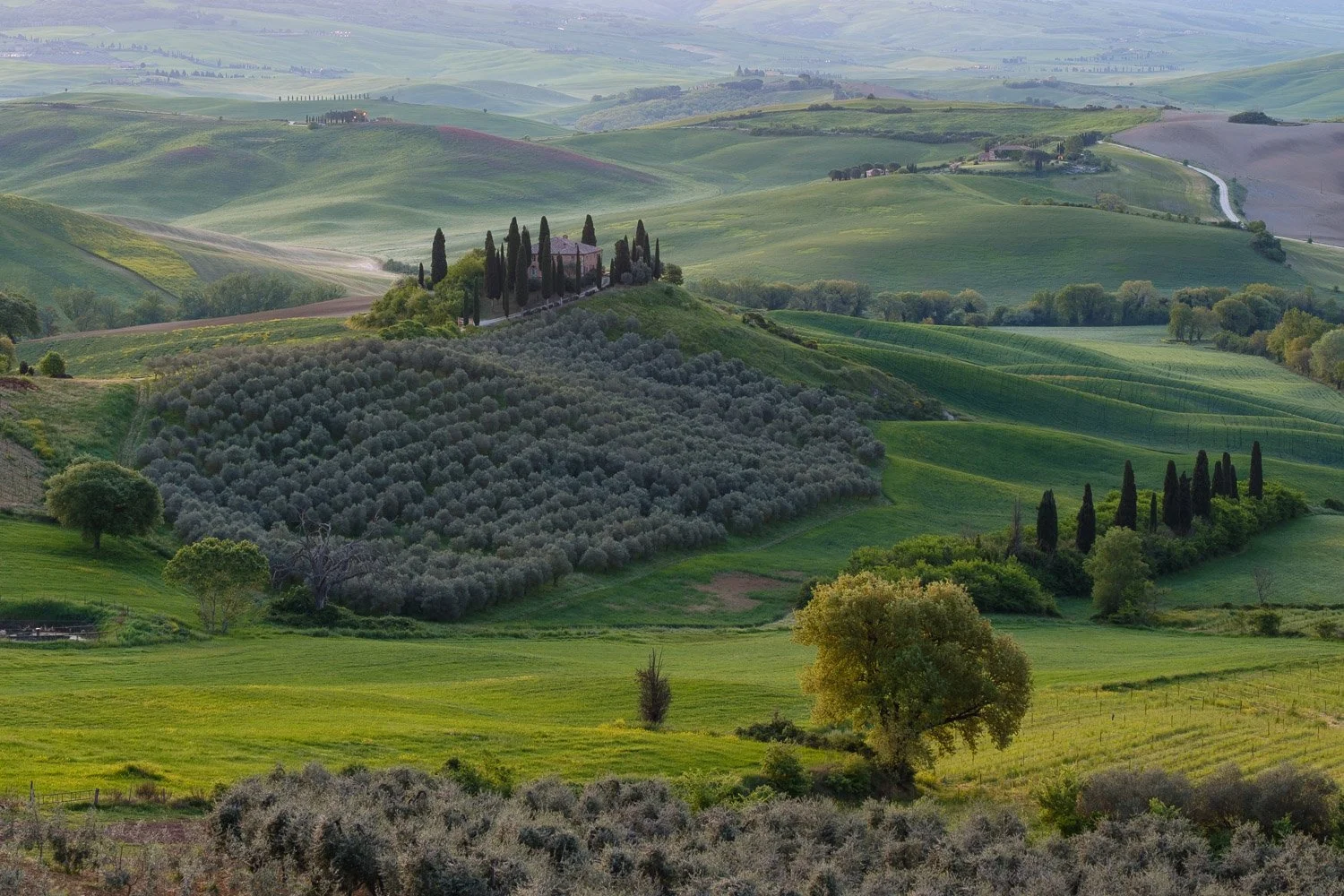
Image 4 (w/tweaked white balance) - 6:20 AM
But if you look carefully, you can tell it still doesn’t become the same photograph.
Because the difference between these two images is not only colour temperature. The actual quality of light has changed. The shadows are more open, the contrast is softer, and the olive grove separates differently from the fields around it. Warming the white balance changes the cast. It can't change how the light actually touched the grass.
Sure, editing can move the image in a certain direction, but it cannot fully replace the quality of light you had in the field.
Photographing the First Directional Light of Sunrise
Once I had the soft-light panorama, I stayed with the wide approach for a few more minutes, because I could see that the first direct light was about to reach the landscape.
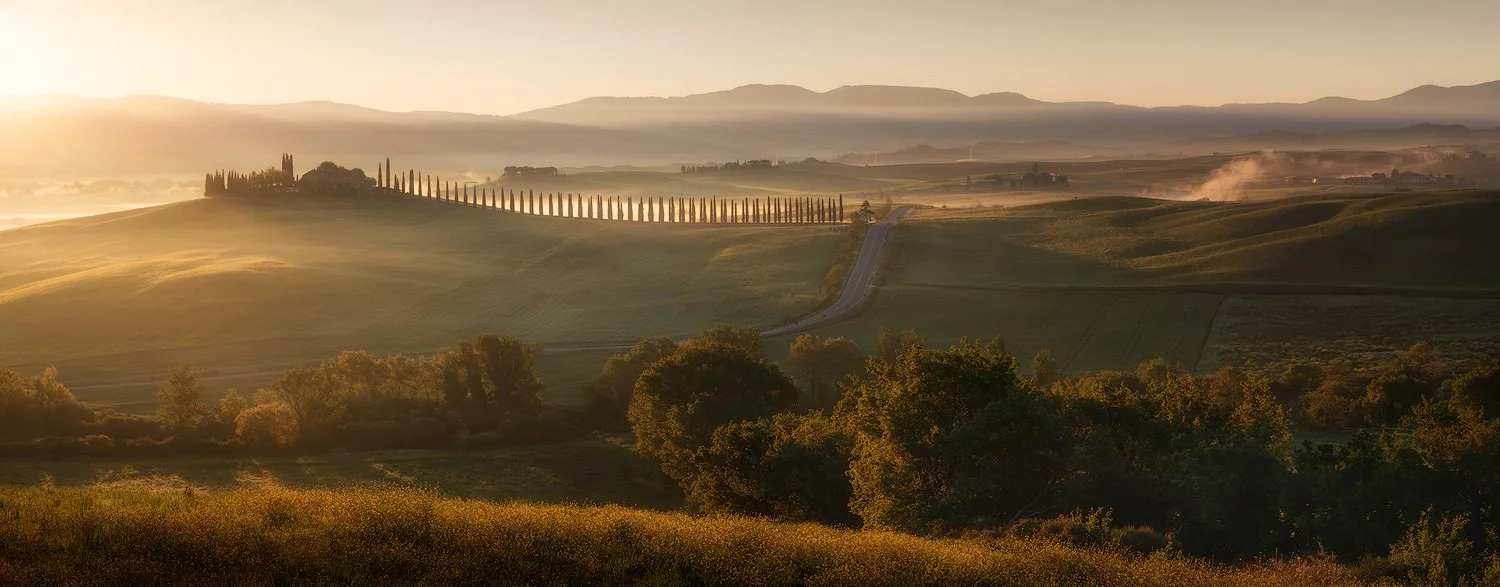
So I kept the camera in vertical orientation and made two more panoramic sequences: one when the first warm light was just starting to touch the scene, and another just a minute later.
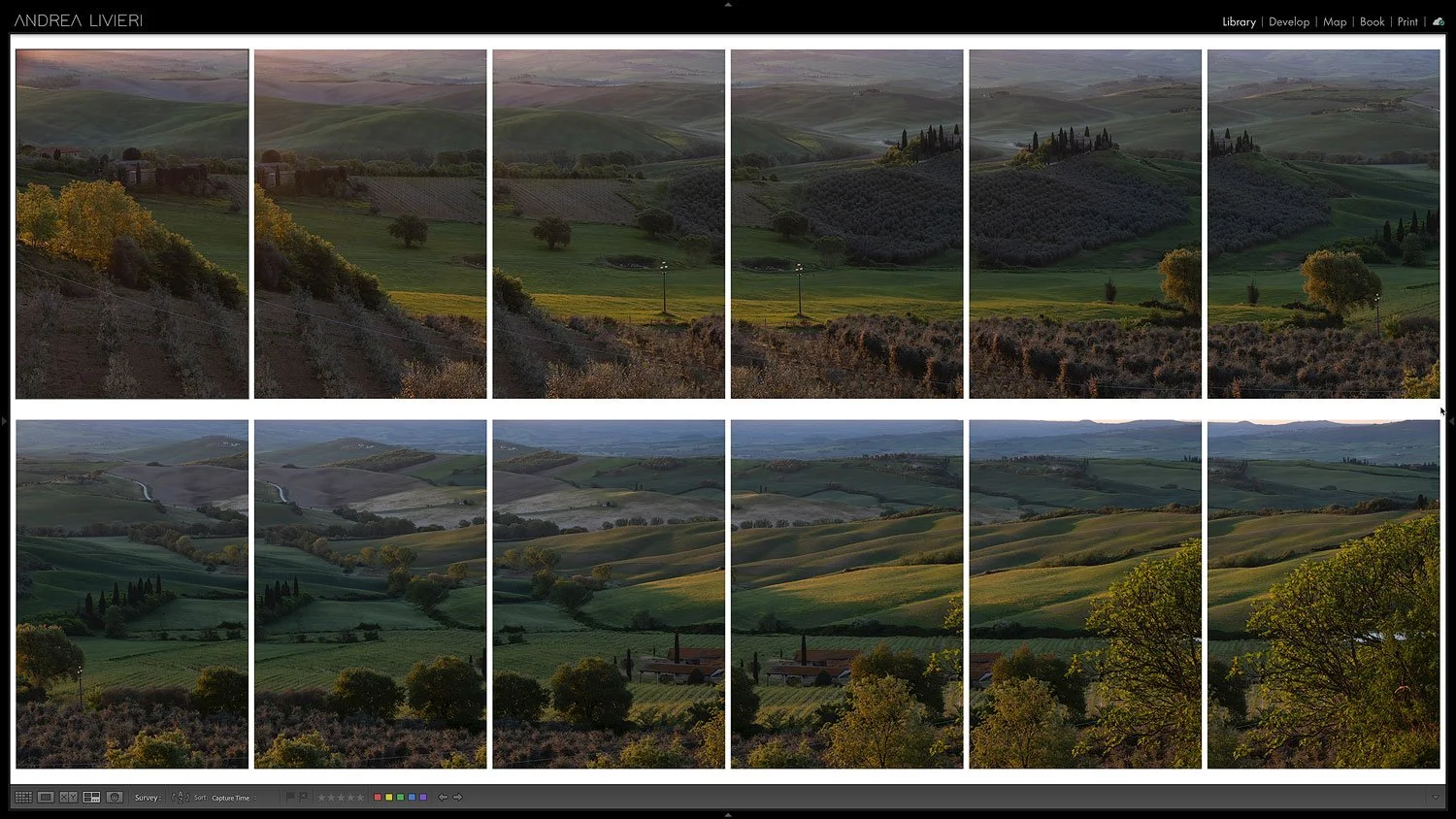
First pano series - 6:29 AM
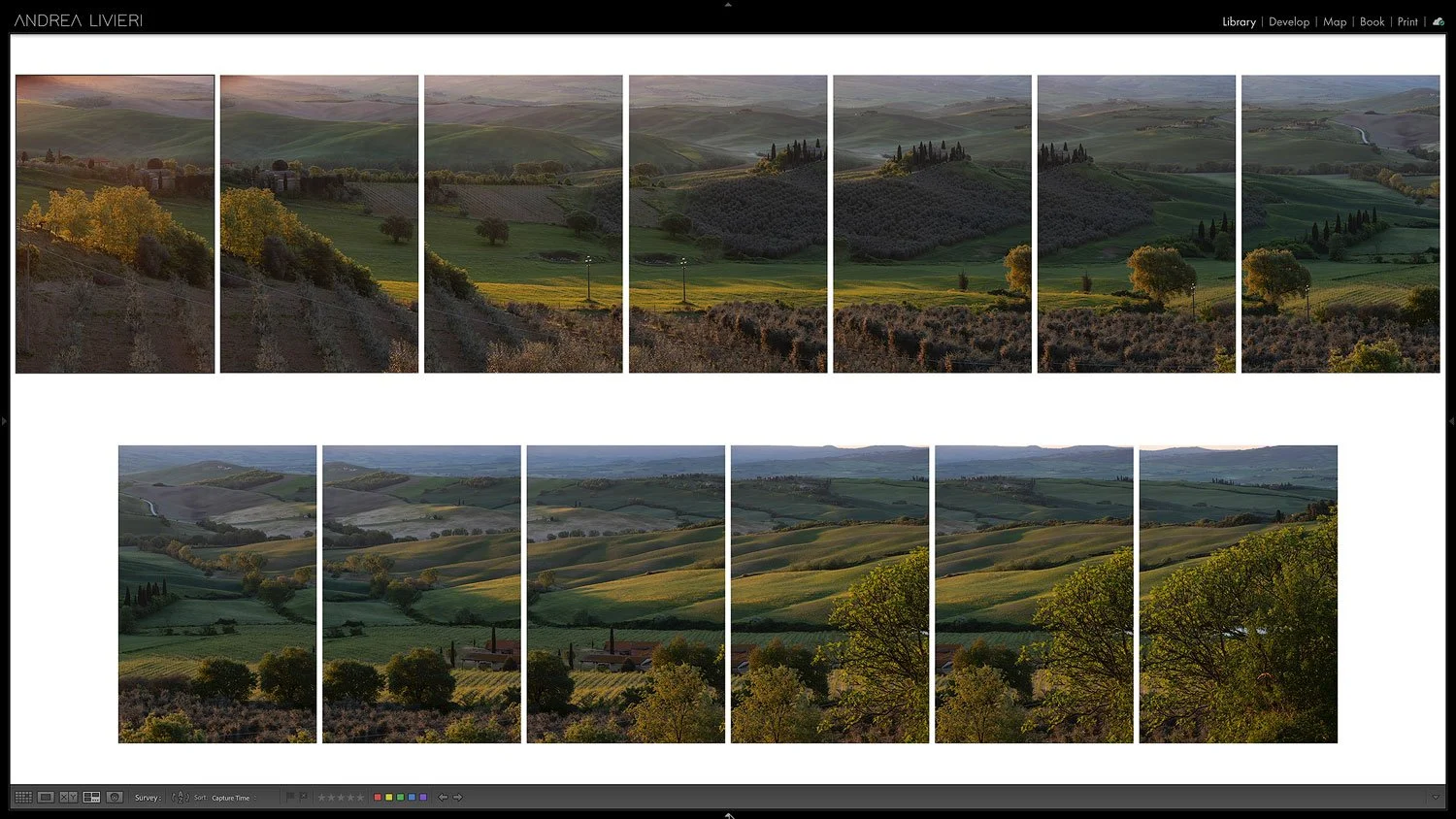
Second pano series - 6:31 AM
And this is where the feeling changes again. The foreground starts to warm up, while parts of the distance are still cooler. That mix of warm and cool colors gives the image a stronger sense of depth.
I worked quickly here because this kind of transition doesn’t last long. Even one minute can make a visible difference.
When light changes this fast, perfection becomes less important than timing.
When I see this happening, I stop refining and start capturing. I'll sort the variations in the edit.
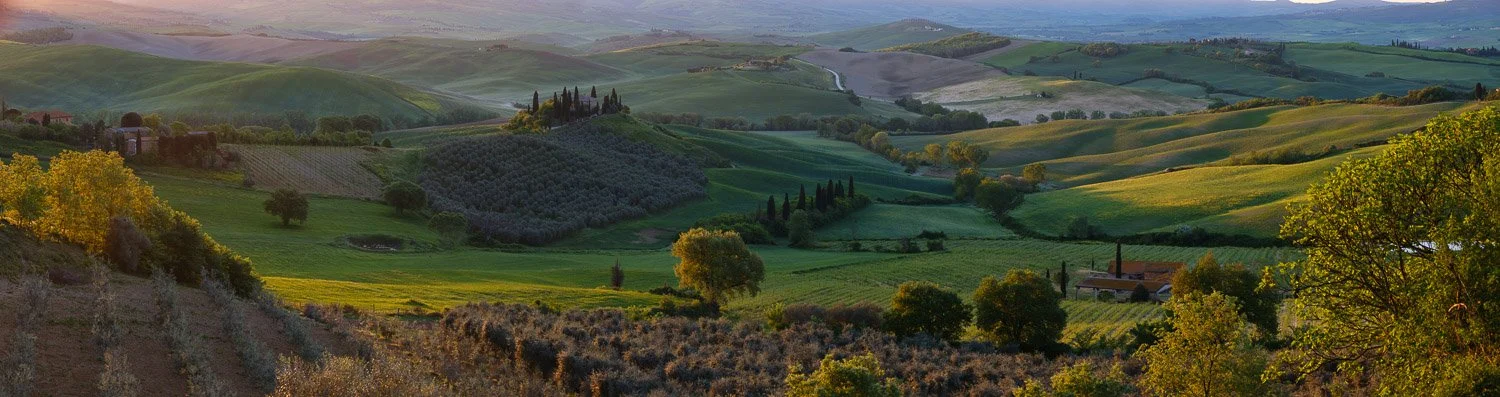
First panorama stitch in direct light - 6:29 AM
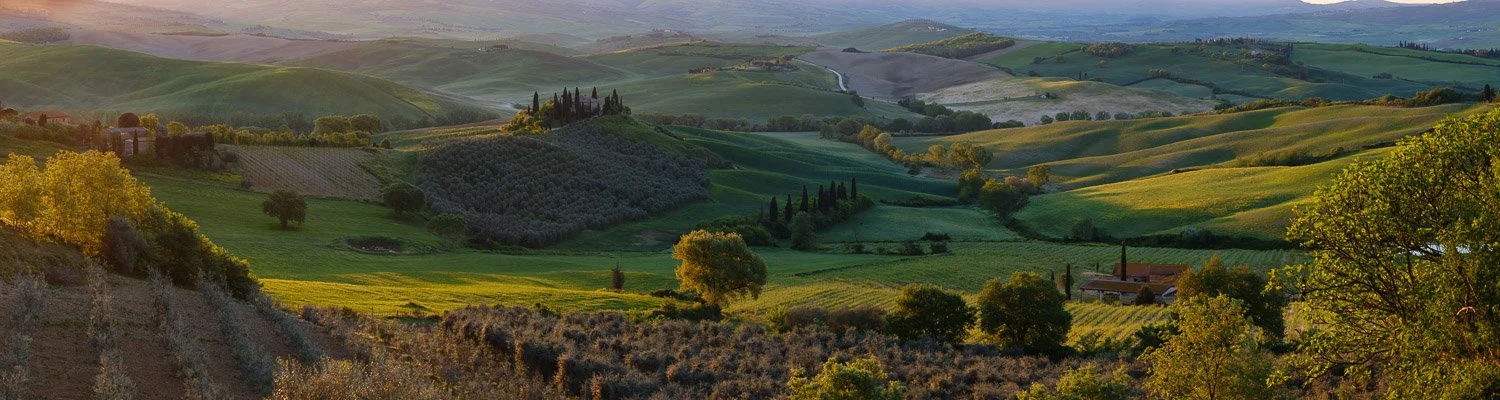
Second panorama stitch in direct light - 6:31 AM
You can already see how the balance changes from one frame to the next. The warm light becomes stronger, the foreground grabs our attention more, and the cooler areas begin to disappear.
With no clouds, the sun changed the landscape every second. So I decided to make one more large panorama.
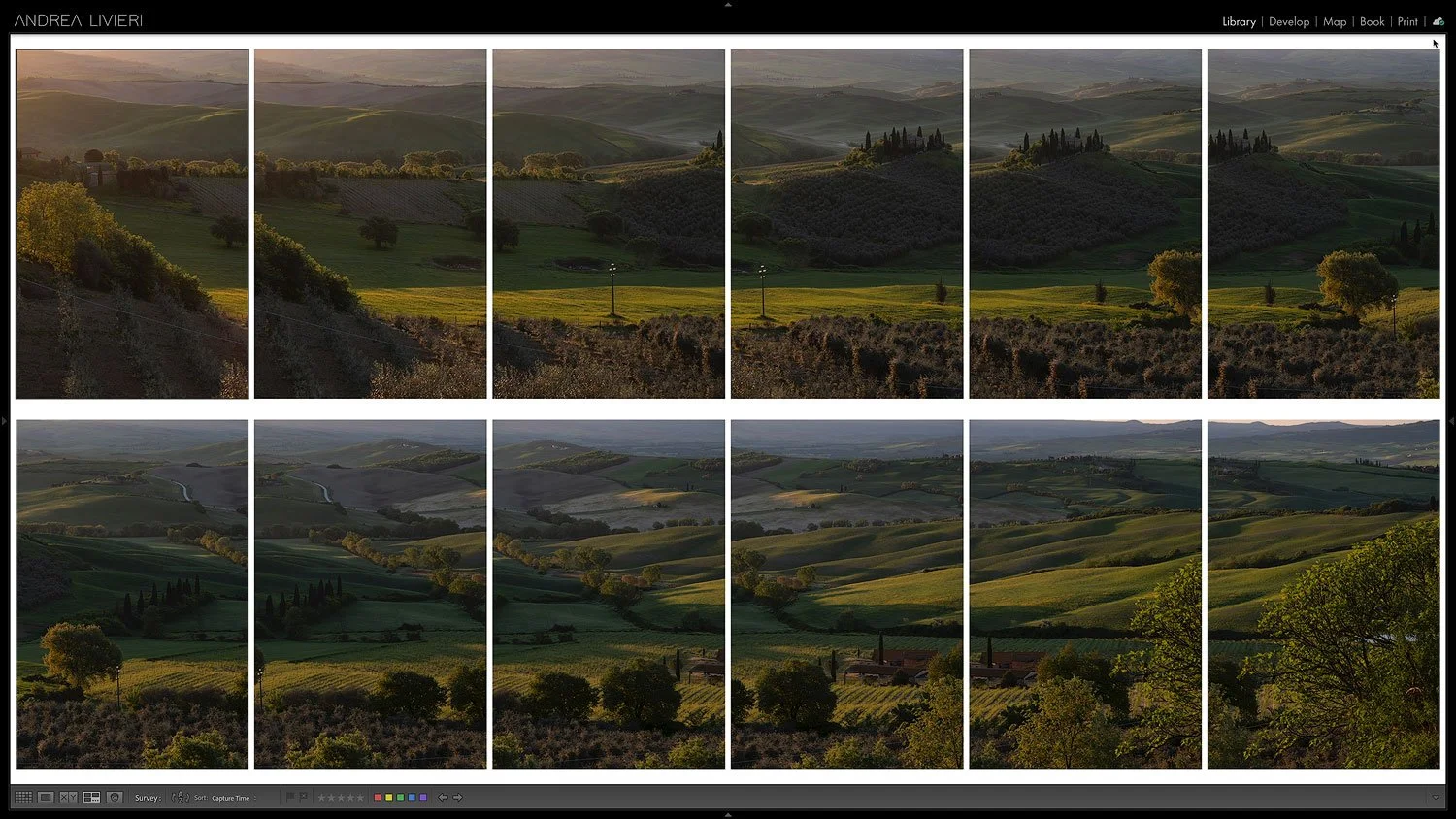
Third pano series - 6:36 AM
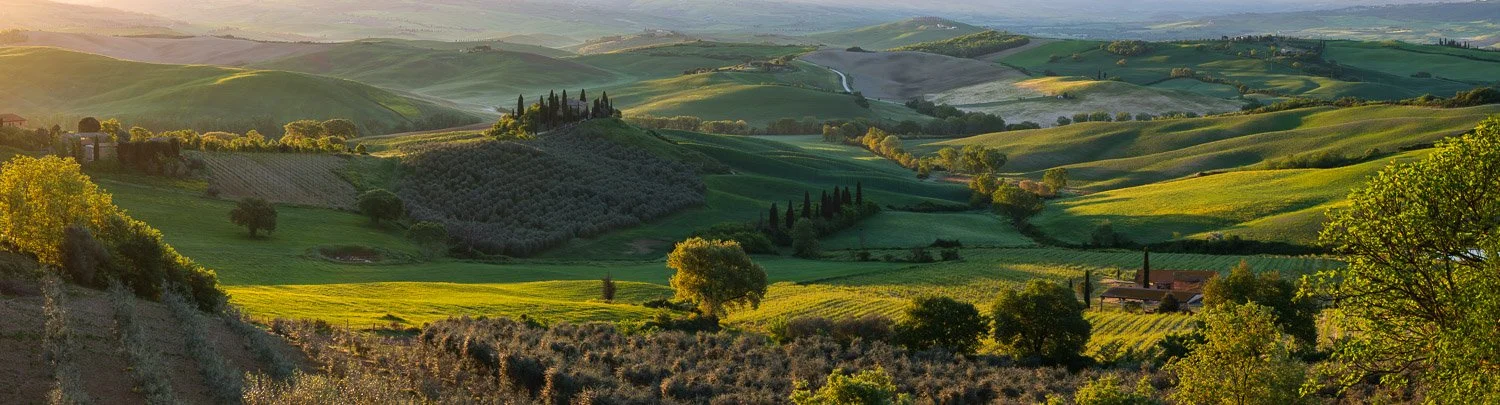
Third panorama stitch in direct light - 6:36 AM
This one ended up being my absolute favorite of the panoramic series. At this point, the light had become much more dramatic. It was shaping the hills, giving the fields more contrast, and creating that beautiful classic Tuscan mood.
Moving From Wide Scenes to Telephoto Compositions
After making those wider panoramas, I started moving back into tighter compositions.
This is something very important to understand. Soft light often works better for wider scenes. Strong directional light usually works better when you simplify the frame.
The brighter areas were starting to pull the eye more aggressively.
So I came back to the same farmhouse composition I had used earlier in the soft light — pretty much the same framing, but completely different feeling. The directional light changes the whole character of the image. It's more alive, more dramatic, and the subject has a presence it didn't have before.
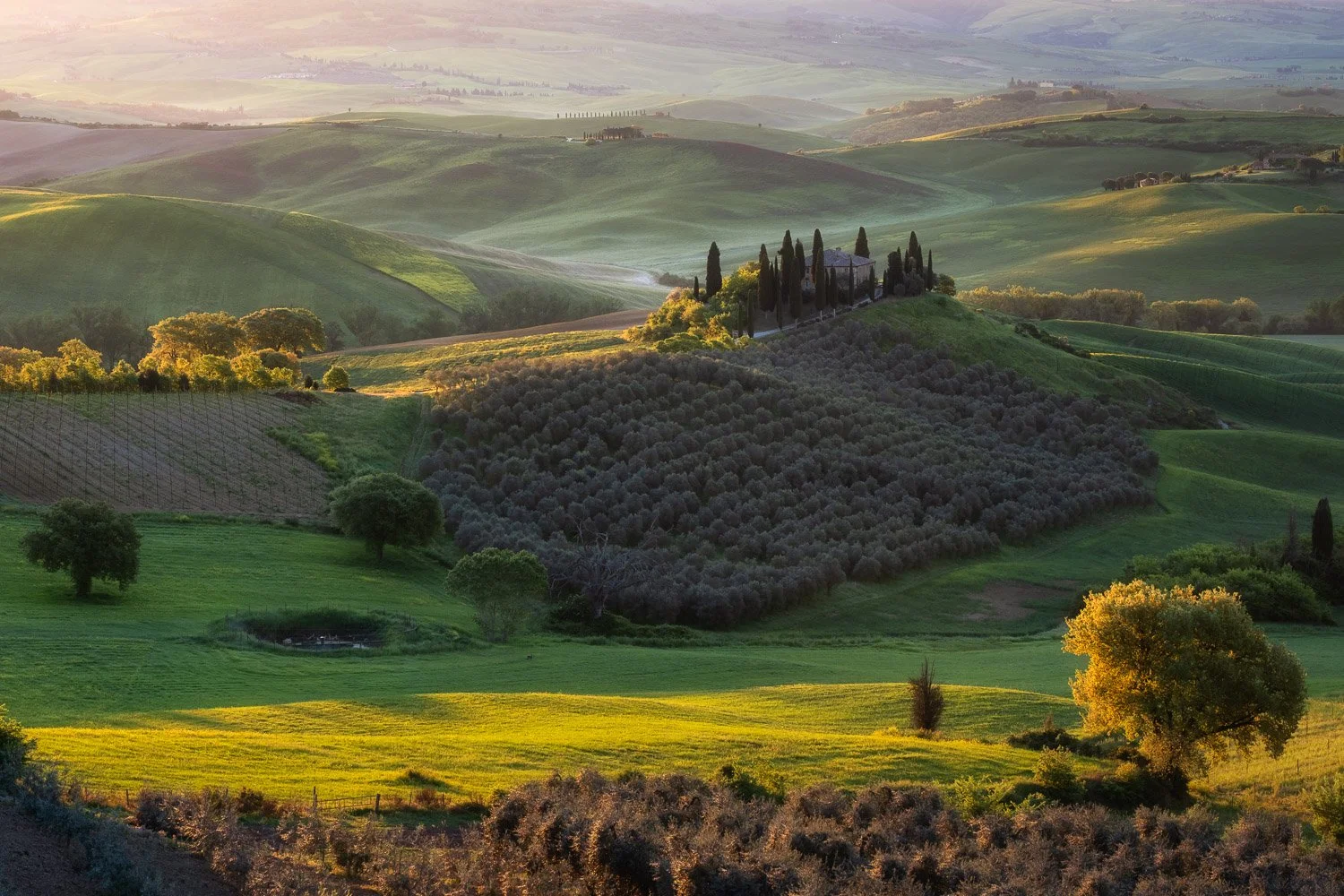
Captured at 6:33 AM
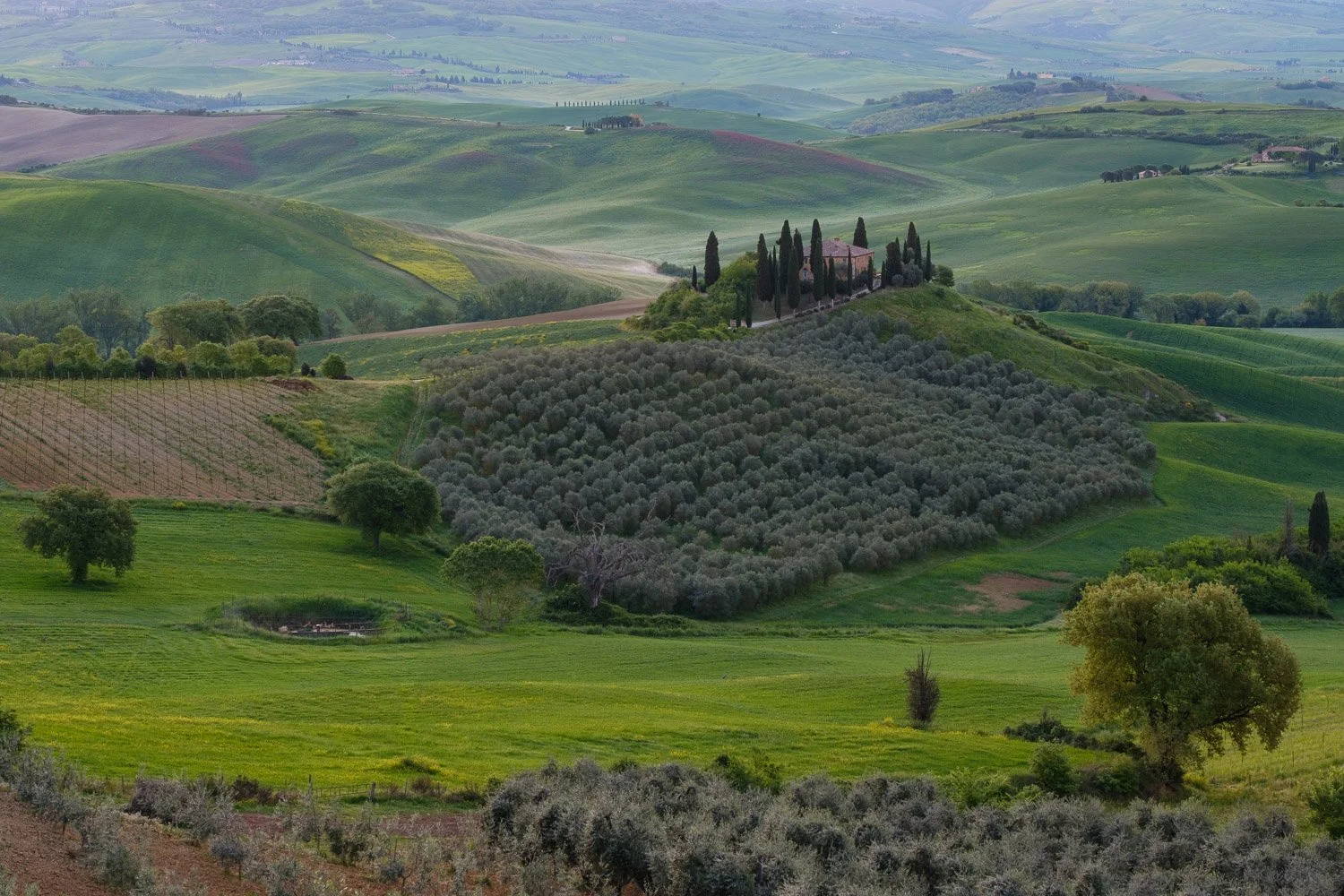
Captured at 6:19 AM
Then I turned my attention to the right side of the landscape. Because at a famous viewpoint like this one, it is very easy to become locked onto the famous subject. You arrive, you know what you’re “supposed” to photograph, and everything else becomes secondary. But the landscape doesn’t work that way. Sometimes the most interesting relationship is happening away from the obvious subject.
This also brought me back to the frame I photographed at the very beginning of the morning.
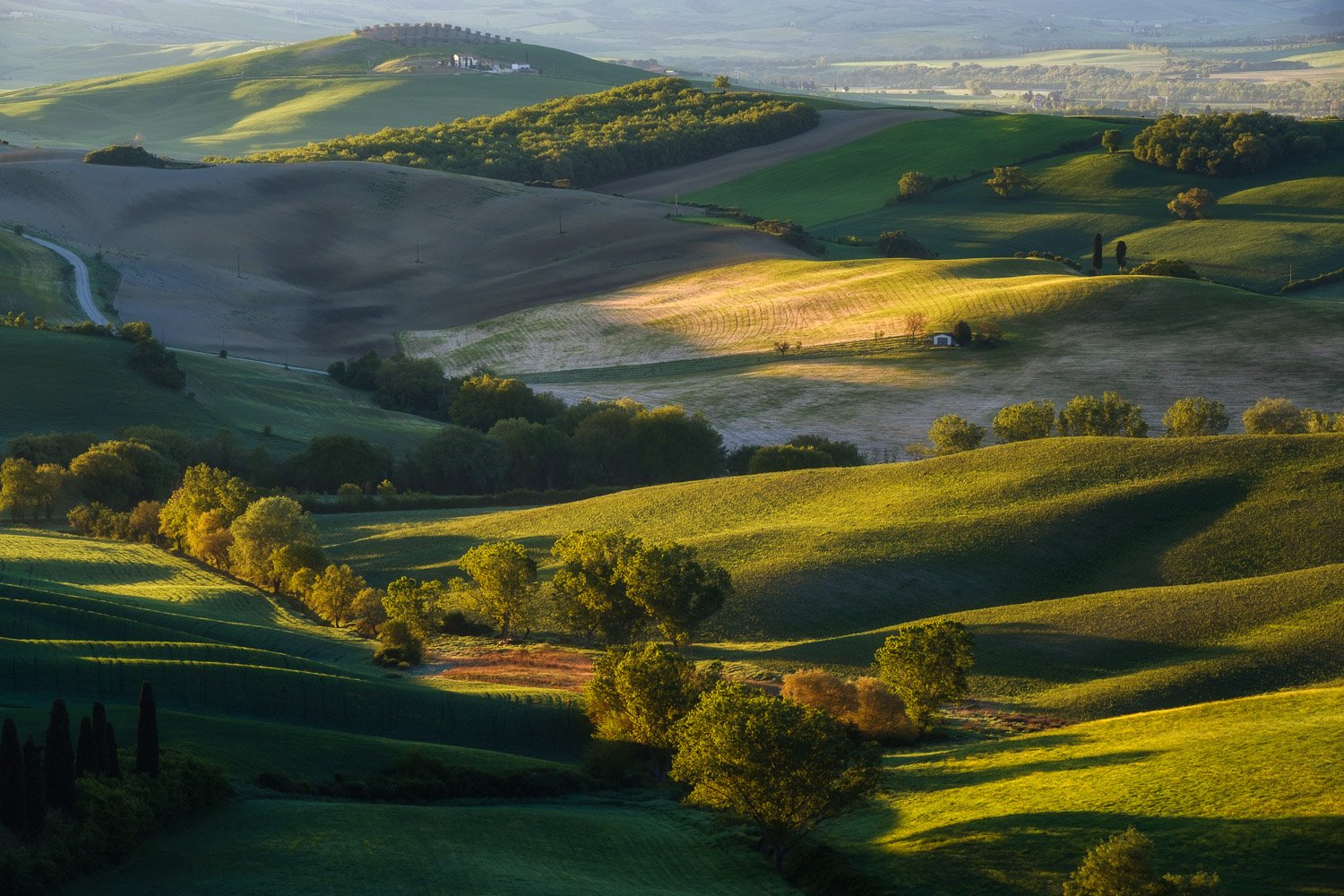
Captured at 6:43 AM
Now I was looking at the same area in much warmer, side light. This is exactly why I made that mental note earlier.
What I like about this kind of frame is that it teaches you to read the landscape, not just the location.
Very similar framing captured at 6:01 AM
Once you remove the iconic subject, you are left with the raw ingredients: shapes, colours, tones, and rhythm. And if those are strong enough, the image can still work beautifully.
As you can see now, the sunlit areas become much more visually important. They immediately pull our attention.
And this is where golden light becomes both beautiful and a little demanding. Because the brightest warm areas in the frame immediately attract the eye.
If those areas support the composition, wonderful. But if they are in the wrong spot, they can easily distract us from the main story.
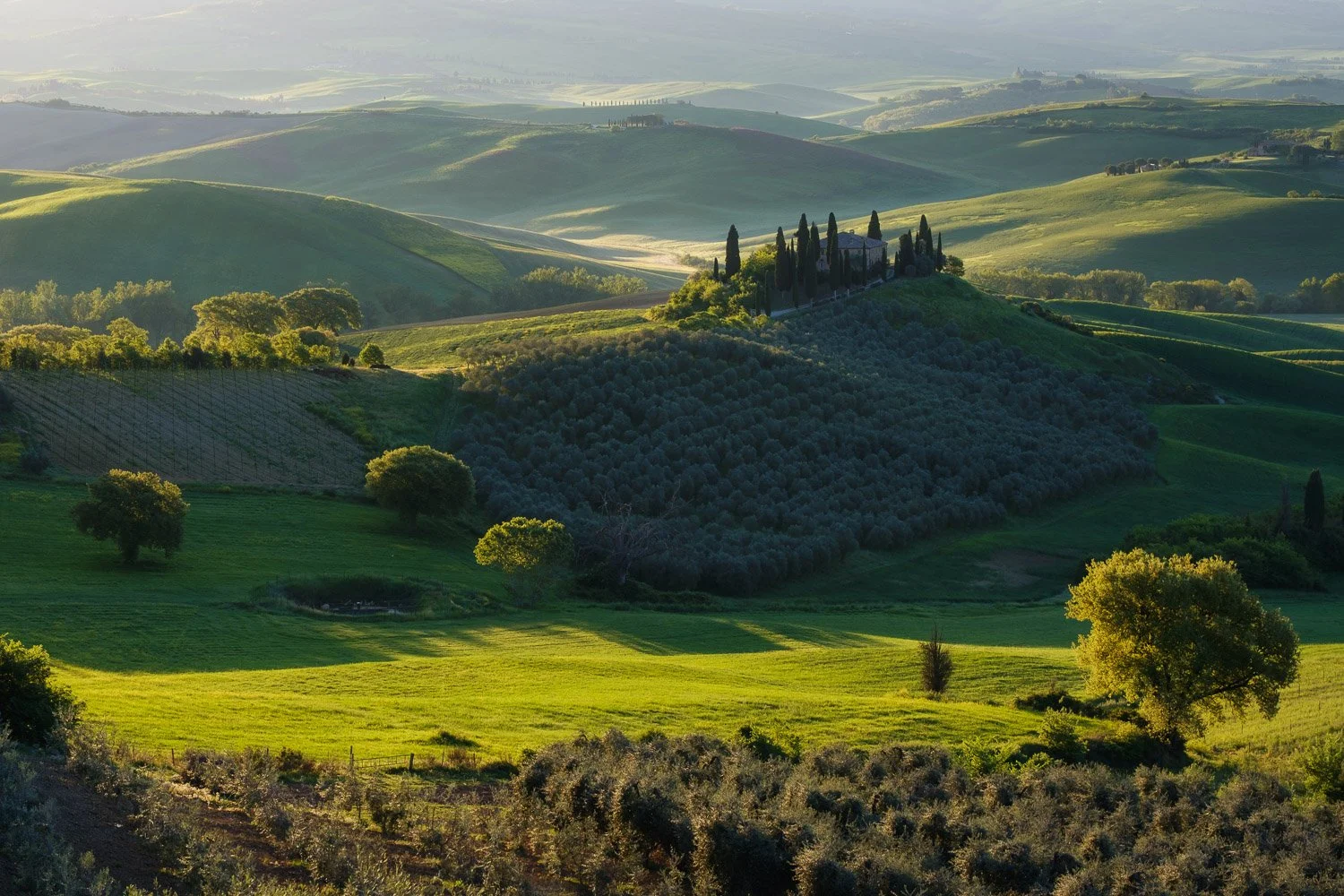
Captured at 6:49 AM
Then I returned to the farmhouse, again, and look how different it feels now.
What I really love about this version is the colour. The orange tones are mostly gone, and everything has shifted toward softer yellows and greens. I love this simplified color palette.
Also, look at the trees on the left side of the frame. The light is catching them beautifully. They balance out that big heavy shadow area on the right — and to me, that balance is what makes this image work.
Then, I got tighter isolating just the farmhouse, and what I like about this framing is that the farmhouse is not simply glowing in full sunlight.
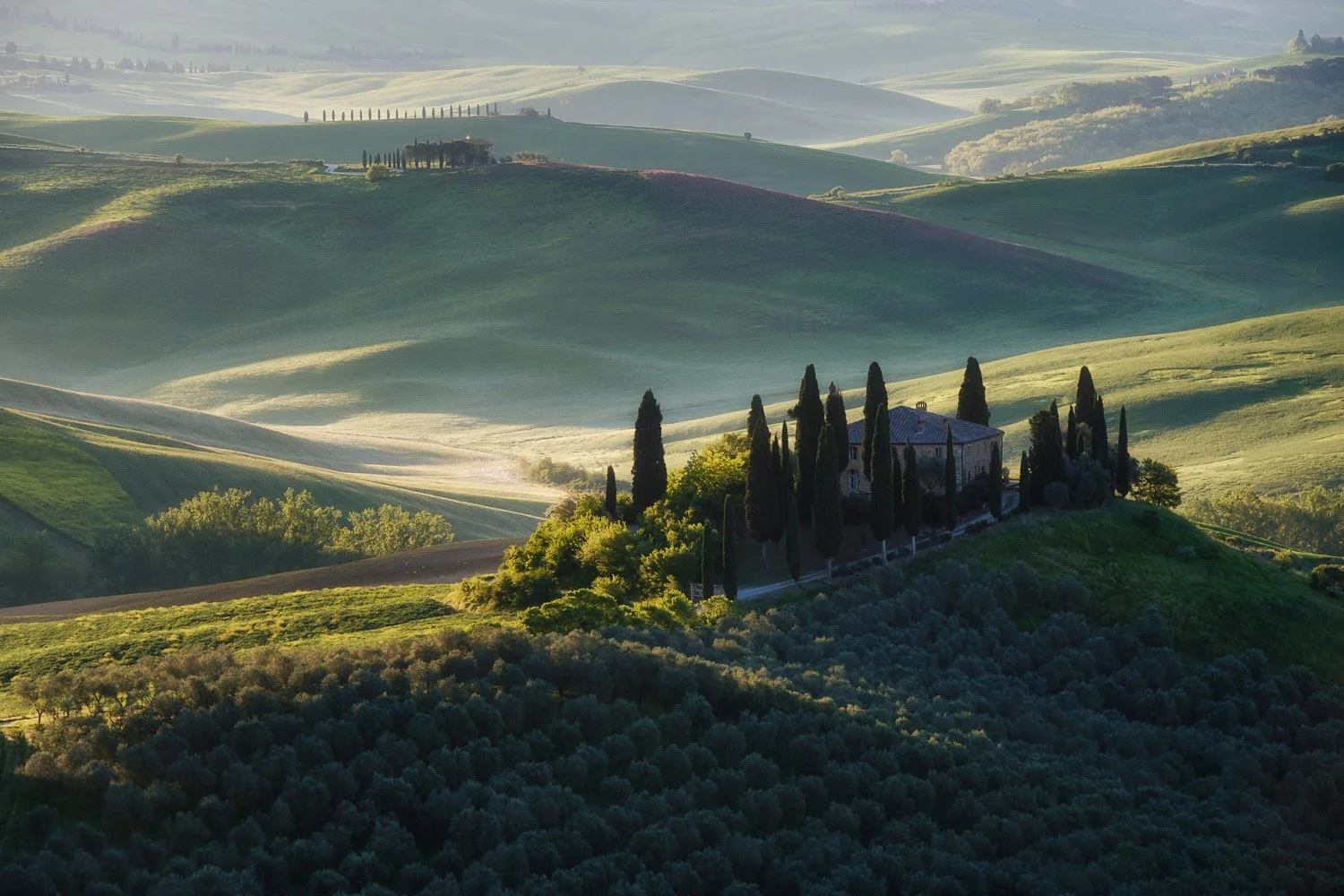
Captured at 6:50 AM
Part of the strength of this image comes from the fact that the subject still has shadow around it. The light is not revealing everything. It is leaving something behind. And that gives the photograph a sense of depth that the fully lit version just doesn't have.
Earlier, the photograph was about harmony. Now it is about mood, shadow, and mystery.
That’s the point I want to make. When the light changes, the subject may stay the same, but the meaning of the photograph changes.
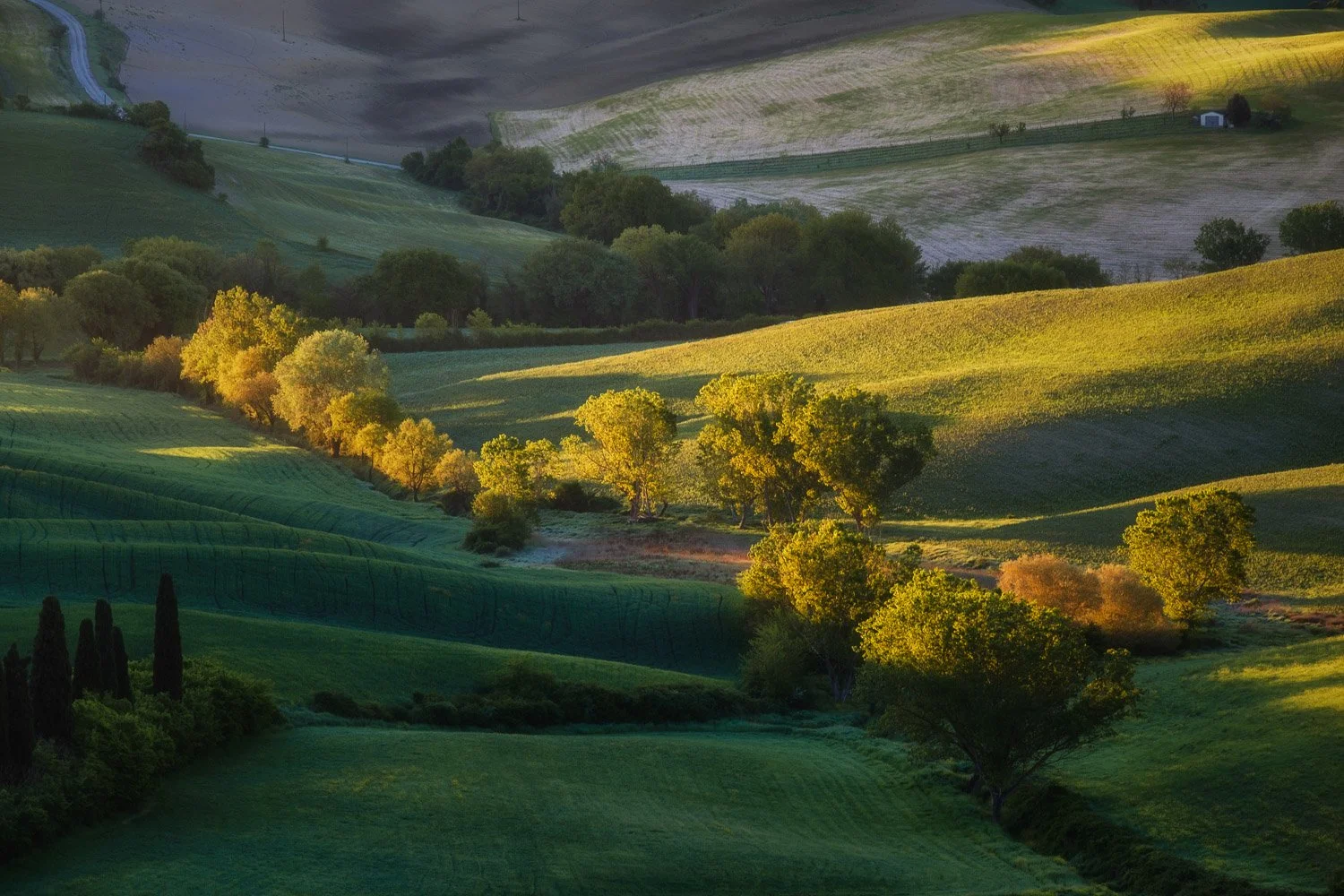
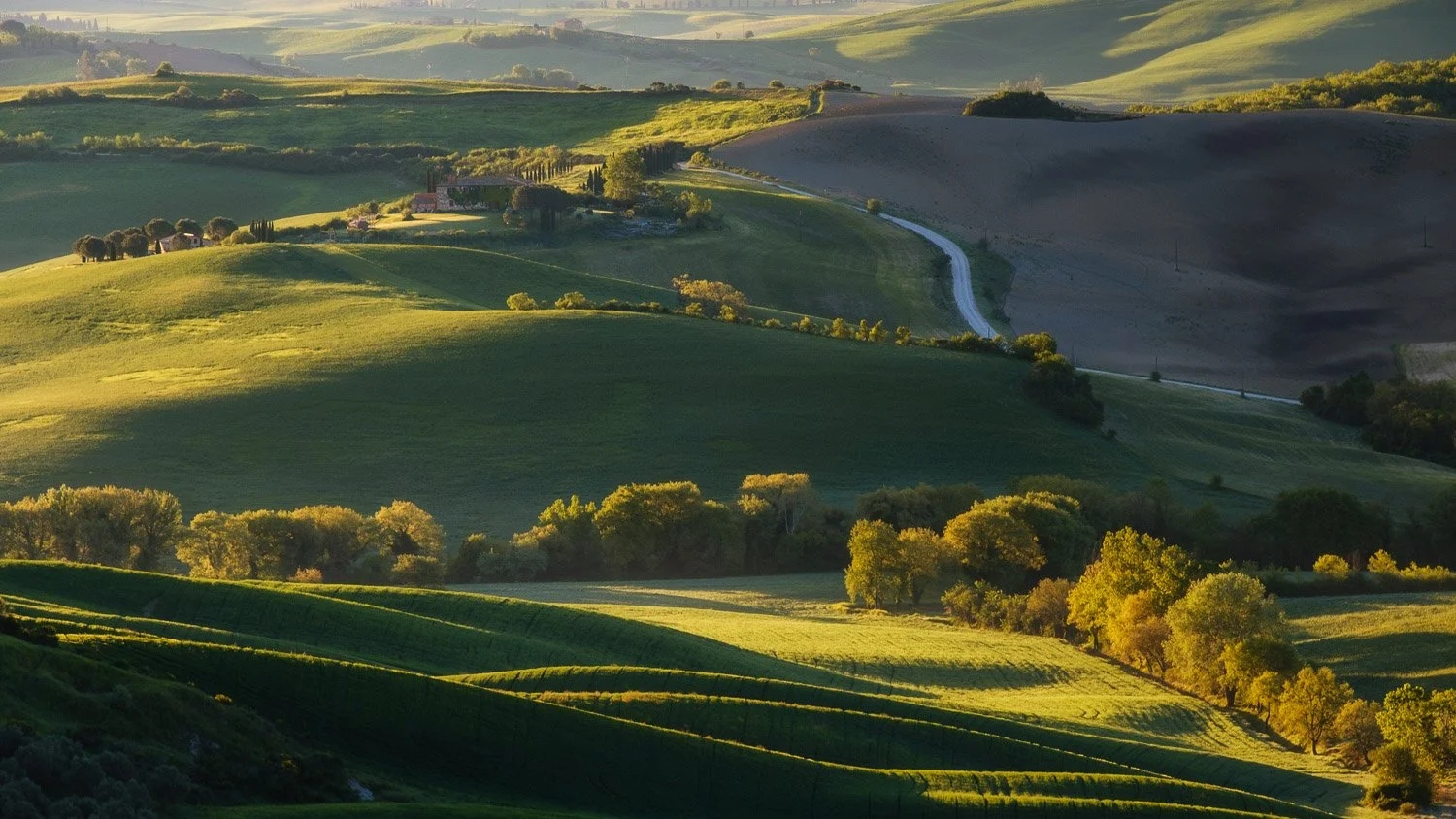
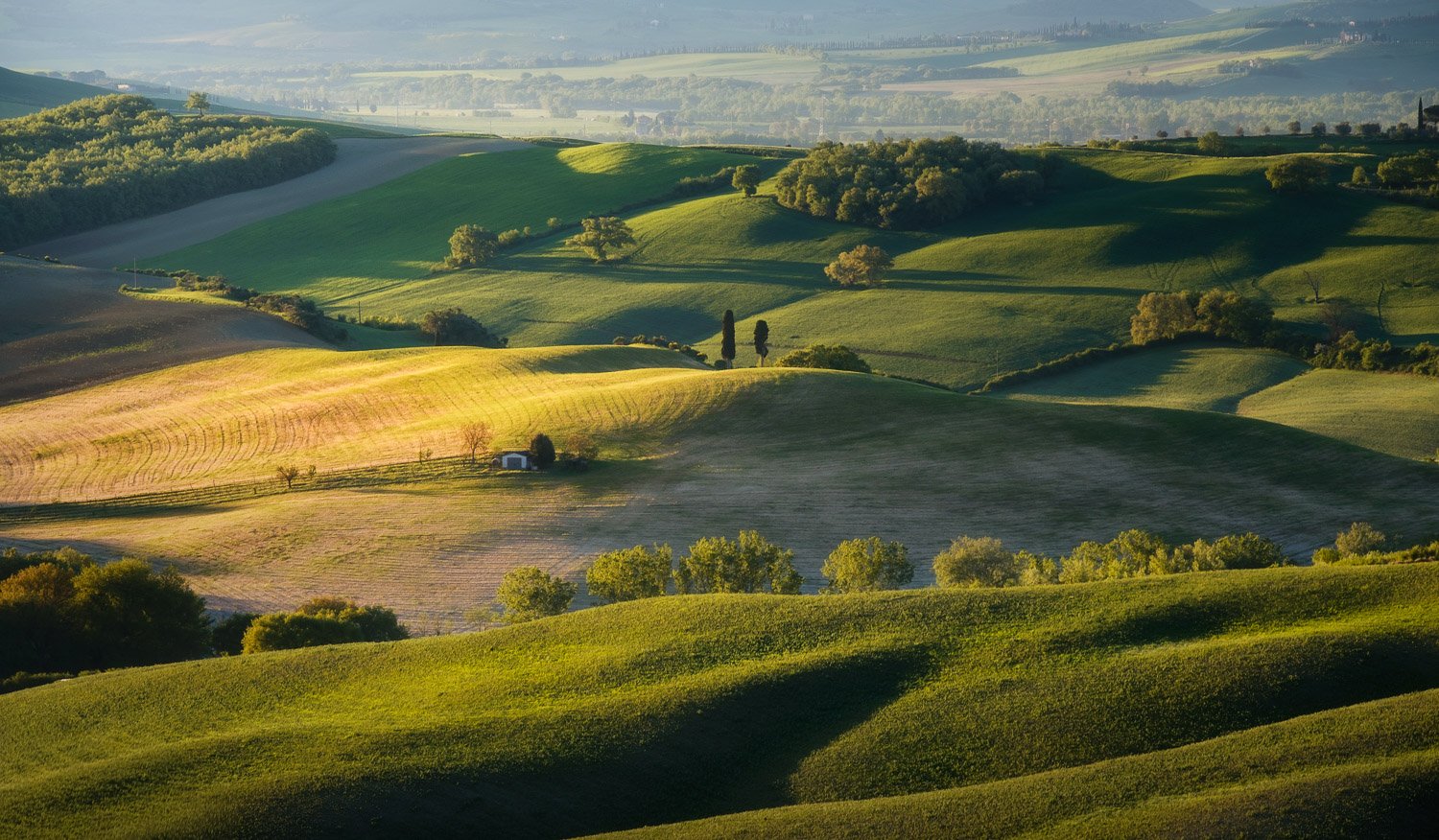
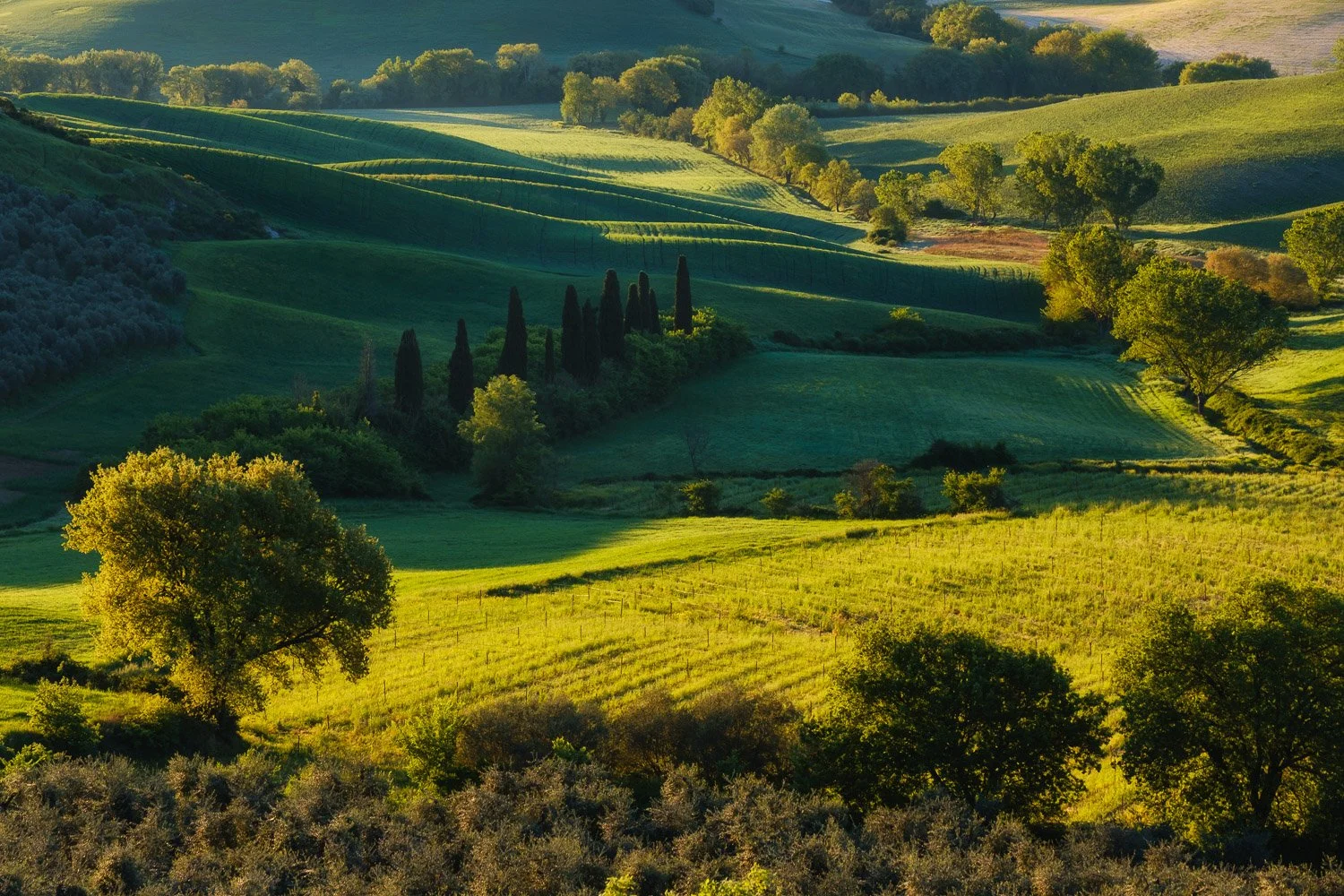
Looking back at the sequence, the soft early light was about the whole landscape. Harmony, depth, relationship. The golden light became about selection — mood, shadow, pattern. So, very different stories of the same place.
That is the real lesson. Not that one type of light is better than another. But that each type of light gives you different creative possibilities.
Join us in Tuscany!
If this resonated with you and you've been thinking about joining us, you can find all the details and apply for a spot by following the link below.

Eight days, four photographers, and a landscape that changed the plan every morning. Here's what actually happened on our 2026 Iceland Highlands workshop.