
How Light Influences Composition in Landscape Photography
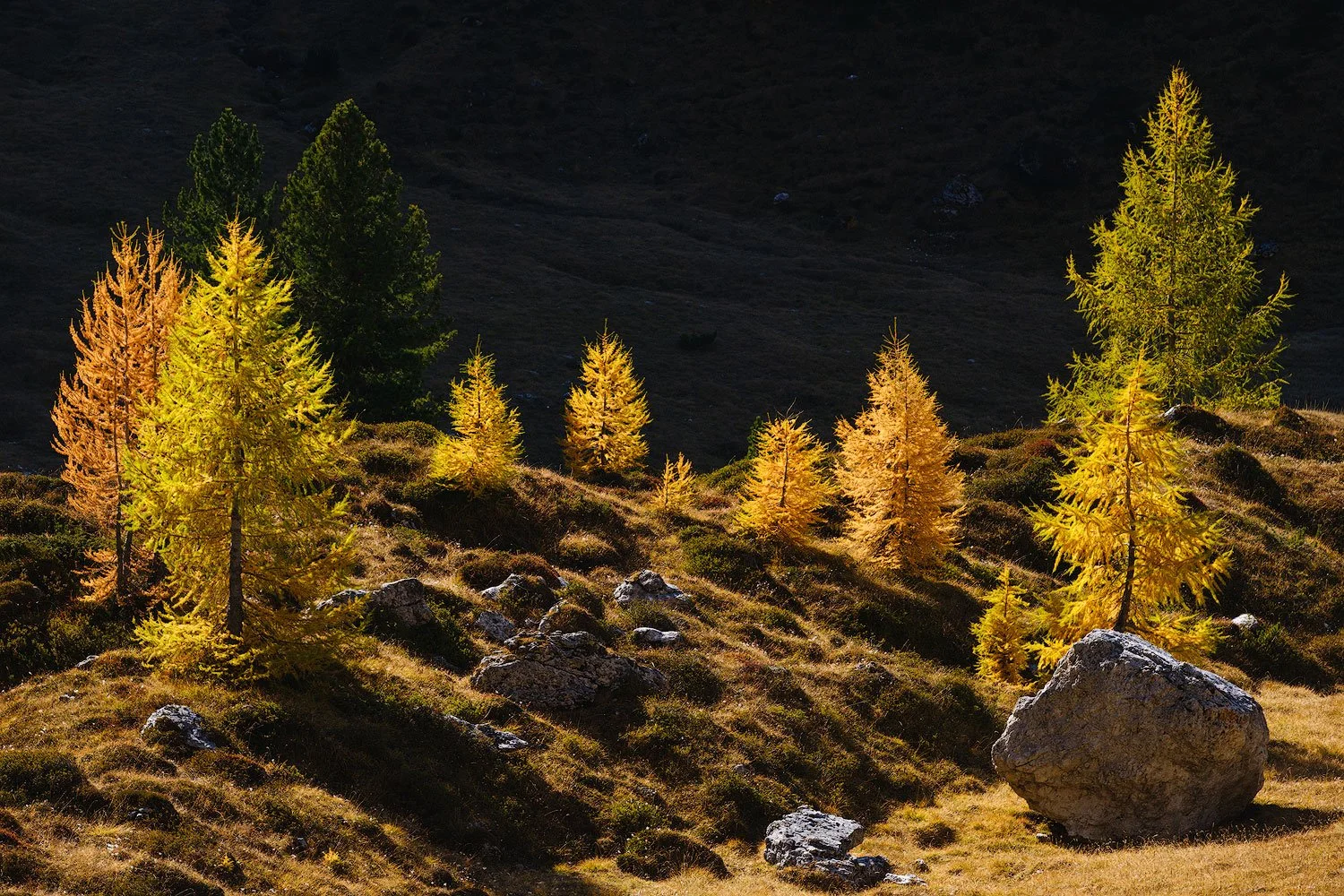
We talk a lot about light in landscape photography.
Golden hour, soft light, dramatic light… we use these words all the time.
But what really matters isn’t whether the light is “good” or “bad”. I’ve heard those words used in every possible situation, and they rarely explain what’s actually happening.
What matters is what the light is doing to the landscape in front of us.
In this article, I want to show you how this plays out in a very real situation, using two images taken from the same spot, just a few hours apart, to give you a clearer way of thinking about light when you’re out shooting.
1. How Light Shapes the Same Scene
The two following images were taken this autumn in the Dolomites, during a hike in the area of Cadini di Misurina.
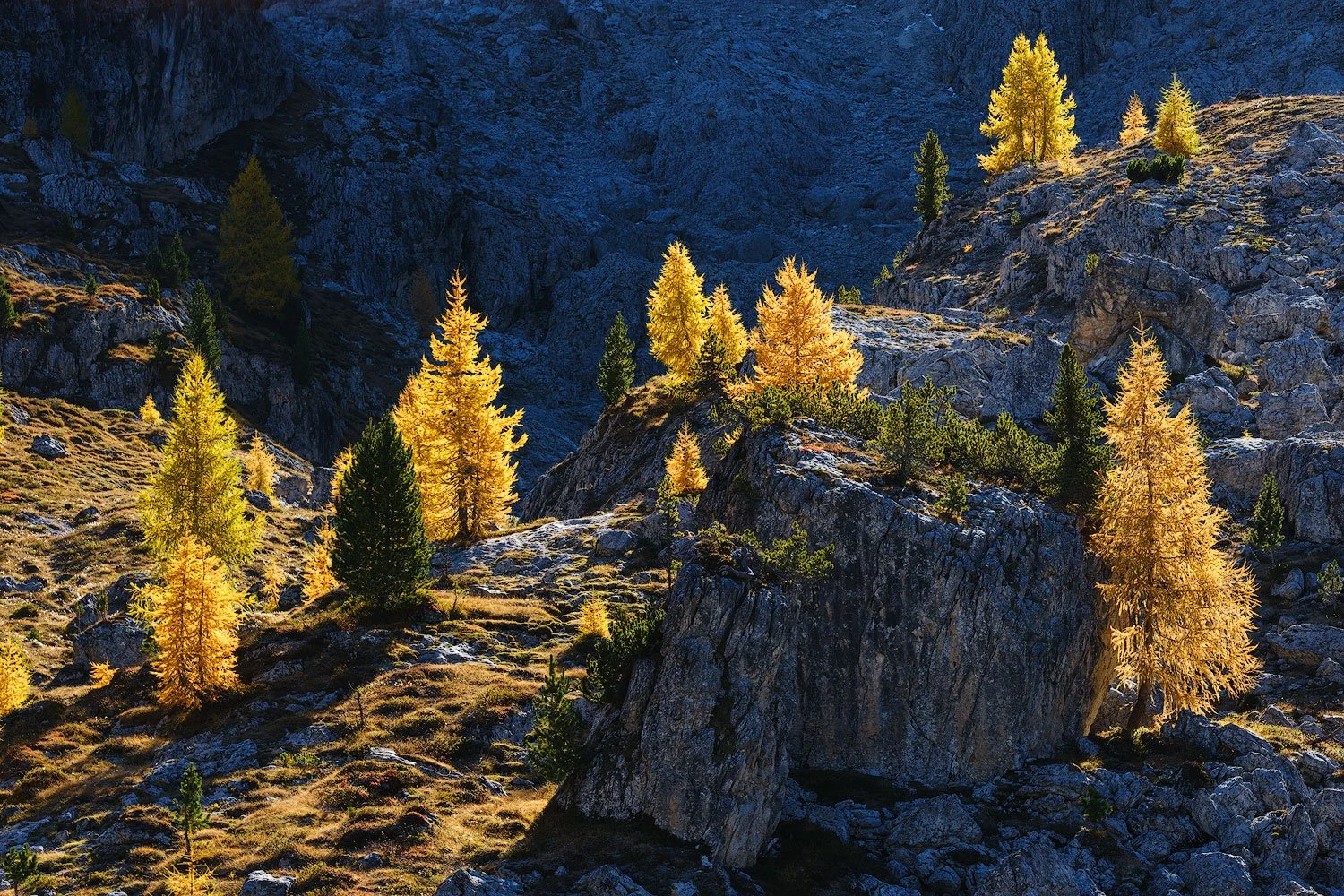
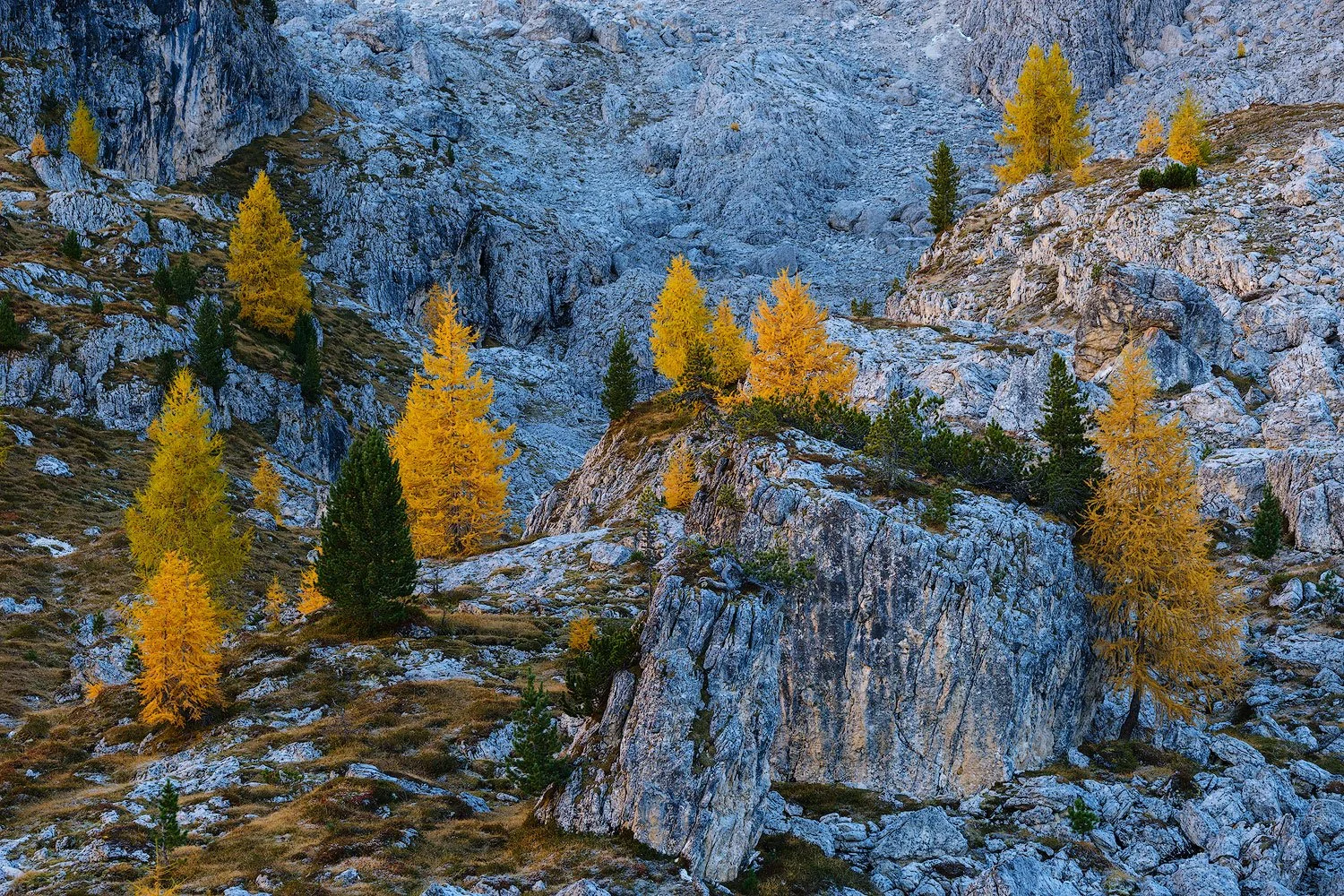
What makes them interesting to me is that they were shot from exactly the same spot, just a few hours apart, on the same day.
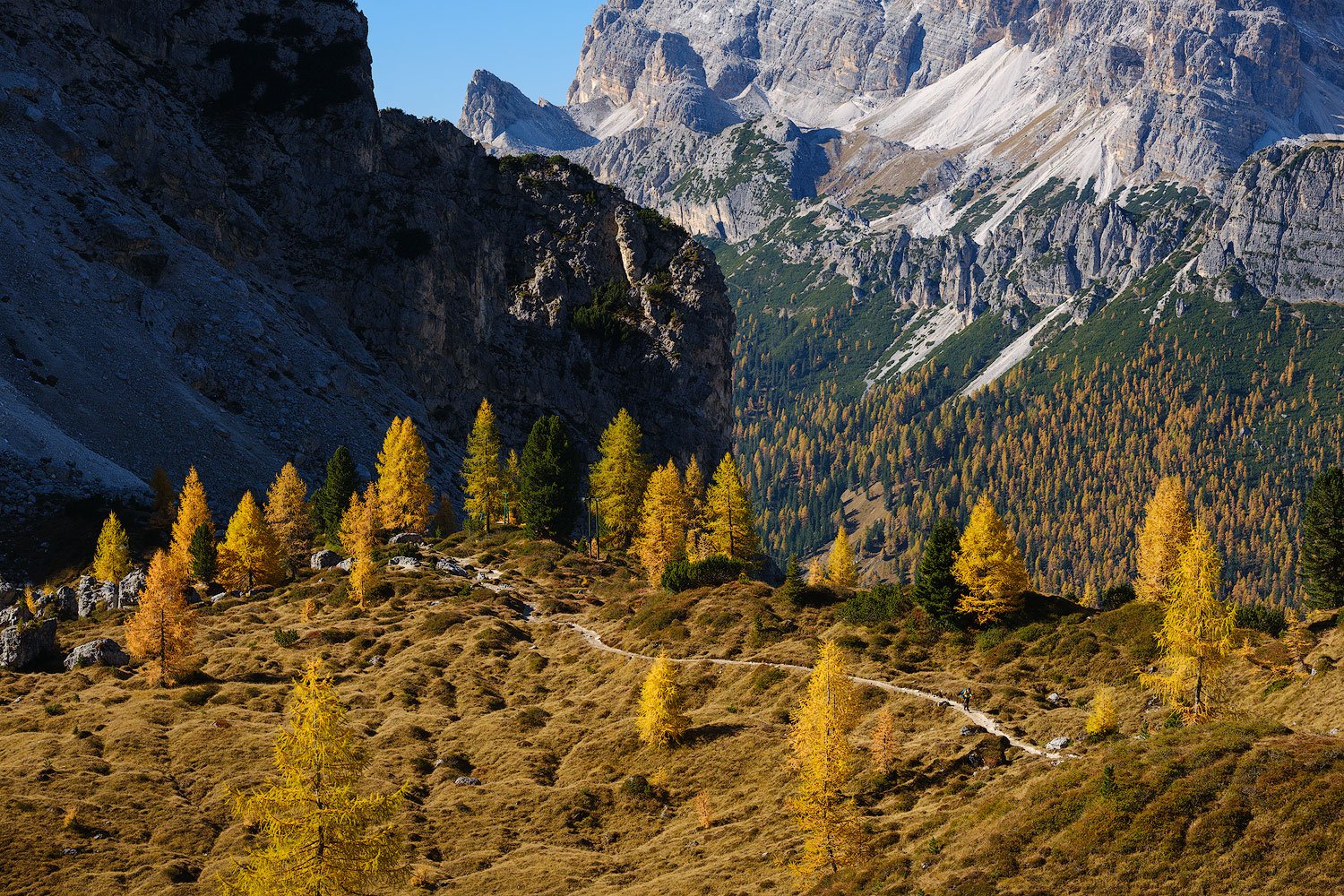
The first one (left) was taken on my way to the destination, when the sun was still quite high, and the light was very directional, cutting through the landscape.
The second one (right) was taken on the way back, when that same area was already in the shade, lit instead by a soft, bouncing light reflected from the surrounding terrain.
I like both images.
But they speak about the landscape in very different ways.
Nothing changed:
same scene
same focal length
same framing
What changed is how the light interacts with the landscape, and that changes everything.
This is something I keep repeating in my workshops: light doesn’t just light the scene, it decides how the scene works. Once you really understand this, composition stops being a set of rules and becomes a response to what’s happening in front of you.
This is exactly the kind of situation we face constantly in the field, and learning how to read it is one of the most important skills you can develop as a landscape photographer.
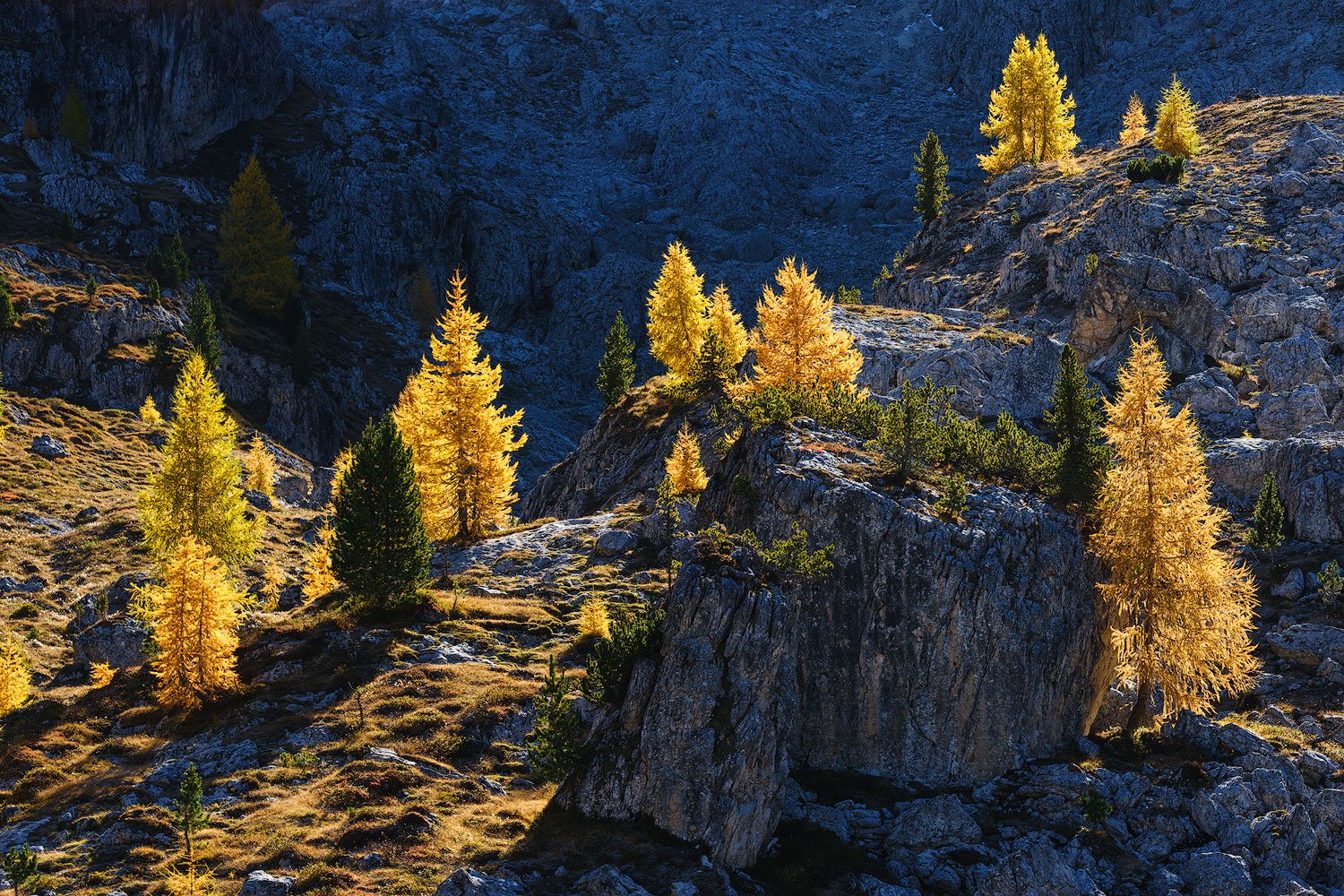
Image 1: Direct light
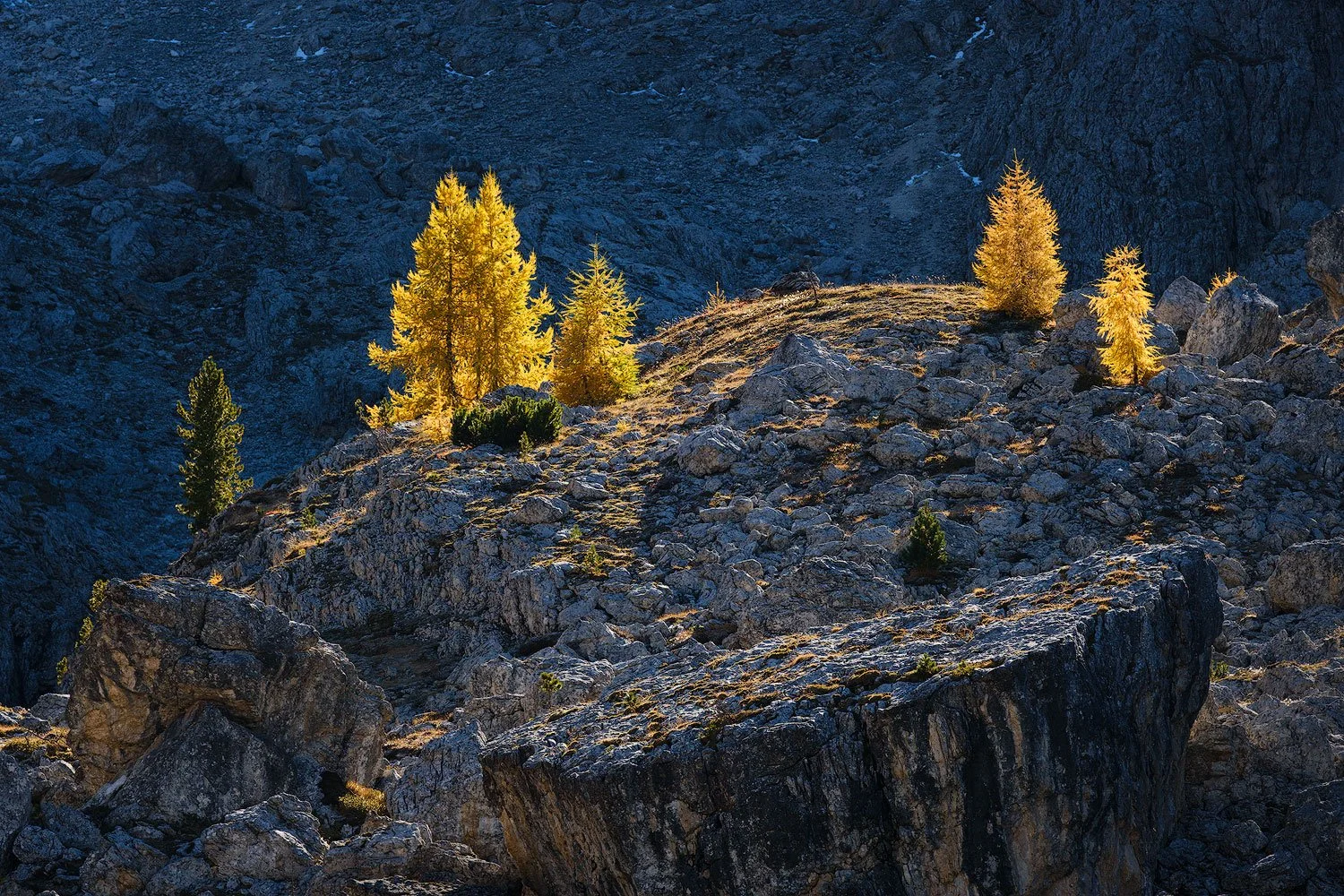
In the first image, the light is more directional.
What I notice straight away:
only certain trees are illuminated
the surrounding rocks fall back into shadow
contrast increases separation
the scene immediately feels organised
This kind of light has intent. It doesn’t illuminate everything equally; it makes a choice.
And that choice is crucial: it tells the viewer what matters.
Here, the light establishes a clear visual hierarchy. The trees are no longer just part of the landscape; they become the subject. Everything else exists to support them or quietly step aside.
In moments like this, composition becomes less about arranging shapes and more about recognising what the light is already saying. The photograph works because you’re not forcing structure onto the scene; you’re responding to the structure the light has created.
This is also why such light often rewards patience more than movement. Small shifts in illumination can refine the image far more than changing lenses or positions.
But there’s another important thing happening here: depth.
Because light and shadow alternate through the scene, the landscape naturally separates into layers. Lit trees come forward, darker areas fall back. Even without strong atmospheric conditions, the image feels deeper and more three-dimensional.
Directional light helps the eye travel into the frame.
It creates pauses, transitions, and visual steps that guide the viewer from foreground to background.
In situations like this, you don’t need to force depth with composition tricks. The light is already doing that work for you.
In simple terms: when light is this directional, it’s already organising the scene for you.
Your job isn’t to add structure, but to recognise it and avoid getting in the way.
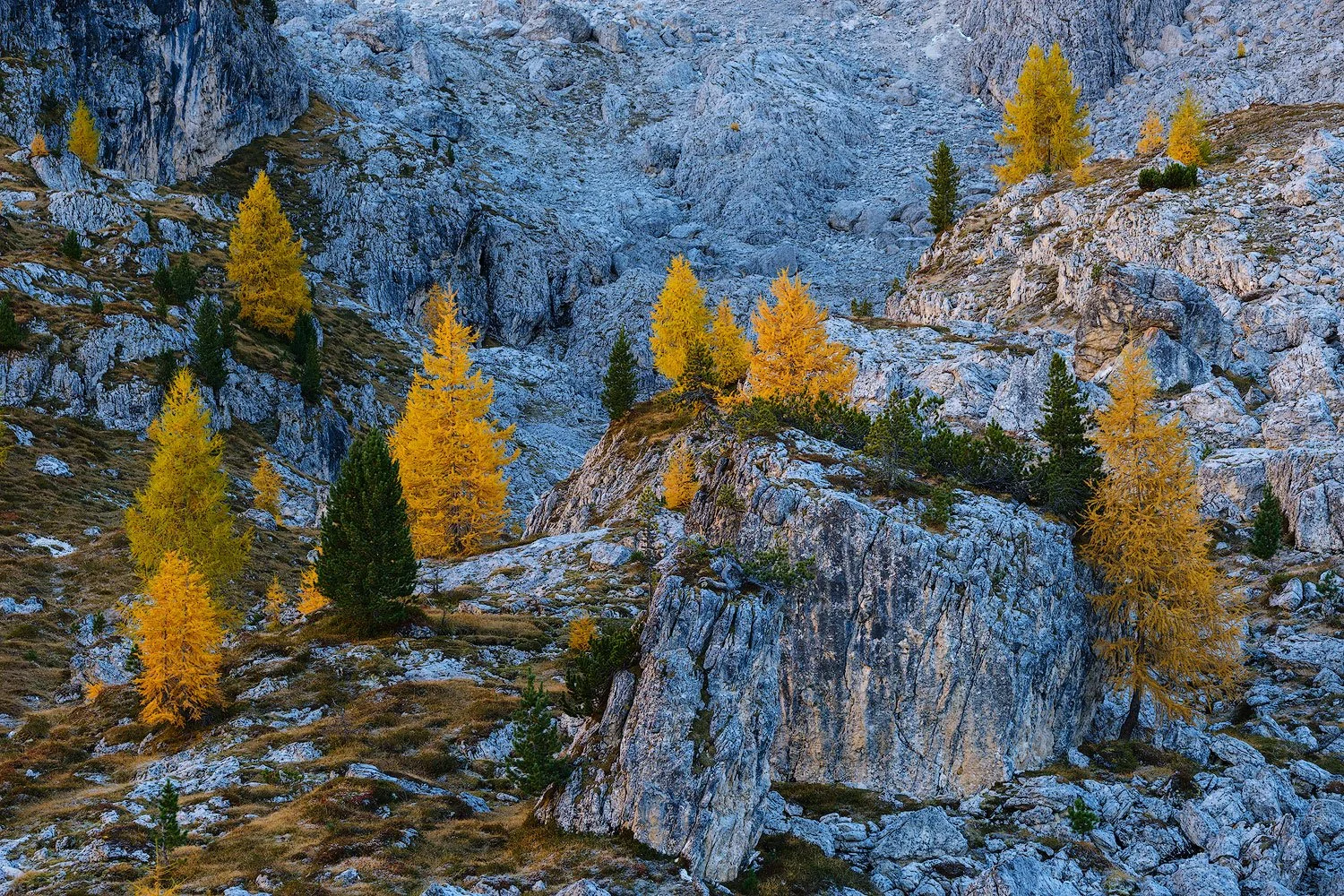
Image 2: Soft bouncing light
Now look at the second version of the same scene. The light behaves very differently.
It’s softer, more even, more democratic.
Here:
rocks and trees receive similar emphasis
textures emerge everywhere
nothing clearly dominates
the scene becomes descriptive rather than selective
This kind of light doesn’t decide for you. It presents the landscape as a whole and asks you to make sense of it.
That’s where many photographers feel stuck, because they approach this light with the same expectations they had for directional light.
But this light requires a different mindset.
Instead of relying on contrast and shadow to isolate a subject, you now have to work with:
balance
repetition
rhythm
subtle tonal relationships
The question shifts from “What is the subject?” to “How do these elements relate to each other?”
Depth also behaves very differently here.
Because everything is lit in a similar way, the scene feels more compressed. Foreground, midground, and background sit closer together visually. The image becomes more about surface and texture than spatial separation.
Again, this isn’t a flaw. It’s just a different visual result.
But it requires more care. When light stops creating depth for you, you need to be more intentional with:
spacing between elements
overlap and separation
what you include and what you leave out
This is where simplifying the frame becomes crucial.
2. The Key Point About Depth
Depth isn’t only created by wide lenses, foreground elements, or leading lines. A huge part of depth comes from how light shapes space.
Directional light tends to:
exaggerate distance
separate planes
enhance the feeling of three dimensions
Soft, even light tends to:
flatten space
emphasise texture over volume
reduce visual distance
Neither approach is better. They simply communicate different things about the same place.
3. Light Dictates Strategy
This comparison highlights a deeper truth:
Composition is not fixed. It adapts to the character of the light.
In selective light, complexity can be tolerated, even welcomed, because the light imposes order.
In soft light, complexity becomes dangerous. Without hierarchy, the frame quickly fills with competing elements, and clarity must come from simplification or structure rather than illumination.
Composition doesn’t live on its own. It depends on the quality of light you’re working with.
That’s why asking “Is this a good composition?” is often the wrong question.
A much better question is: “What is this light doing to the scene?”
Once you answer that, your decisions become much clearer.
The key is not to apply one compositional approach everywhere. The quality of light dictates how you think.
4. Putting This Into Practice
A simple field checklist
Before you start changing lenses or looking for a new composition, stop for a moment and ask yourself:
What is the light emphasising right now?
Is it creating separation, or flattening the scene?
Is it helping me simplify, or do I need to do that myself?
Would this scene benefit more from waiting, or from reframing?
These questions take just a few seconds, but they can completely change the way you approach a scene.
Here’s a simple way to think about it in practice.
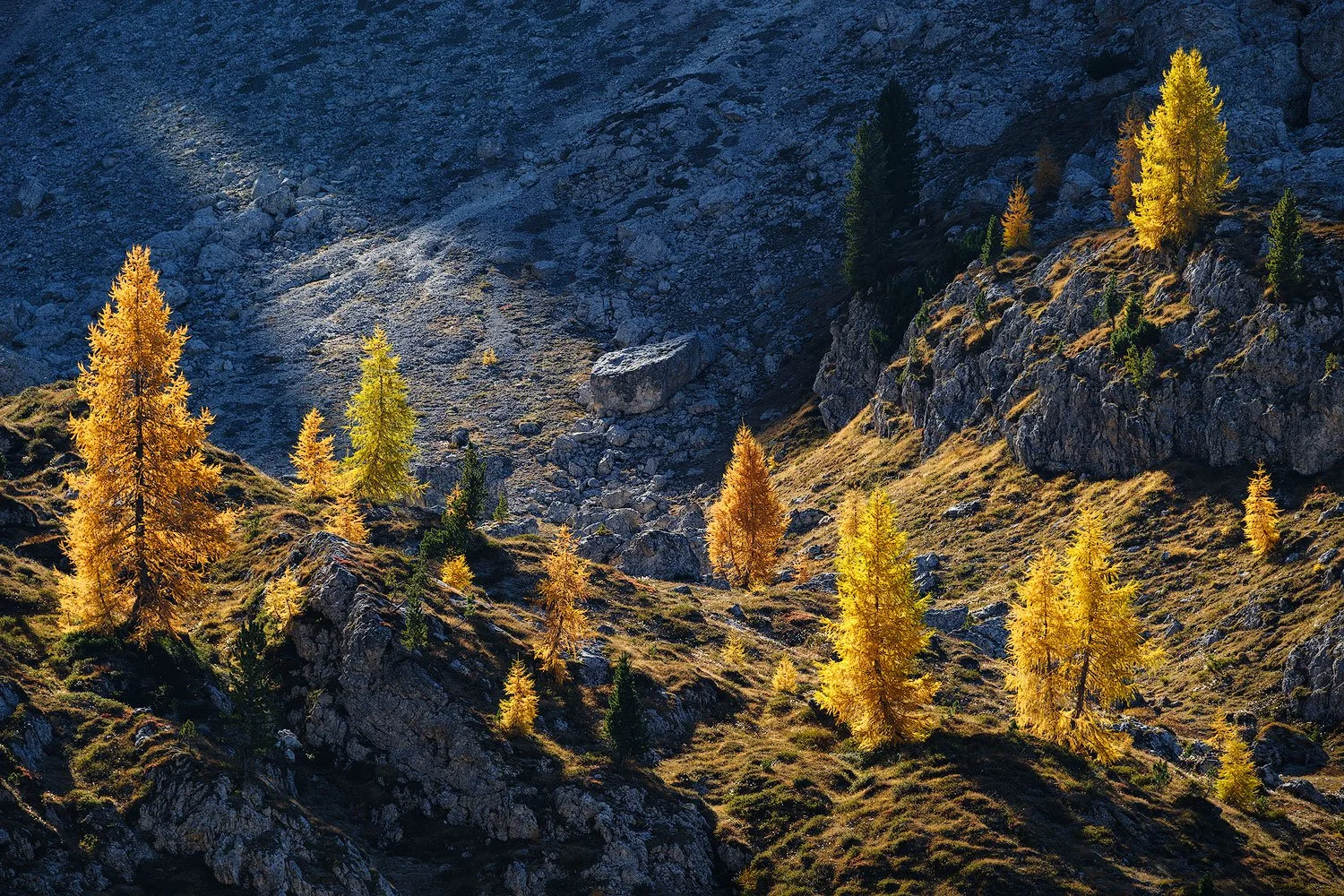
Another composition from the same location
When the light is directional
This is the kind of light that chooses for you.
When sunlight is cutting across the landscape, lighting only parts of the scene, your job is mostly to get out of the way.
Let shadows simplify the frame
Use shadowed areas to hide what doesn’t matter. You don’t need to show everything. Dark areas are not a problem; they’re often what gives the image structure and clarity.Don’t fight contrast
Strong light creates strong differences. Trying to make everything evenly visible usually weakens the image. Contrast is often what gives the scene clarity and direction. If something is meant to be secondary, let it fall back.Wait and refine
In directional light, small changes matter a lot. A cloud shifting, the sun moving slightly, a shadow creeping across a rock; these moments often make the difference. Often it’s better to wait than to keep moving around.
This is the kind of light where the photograph slowly reveals itself if you give it time.
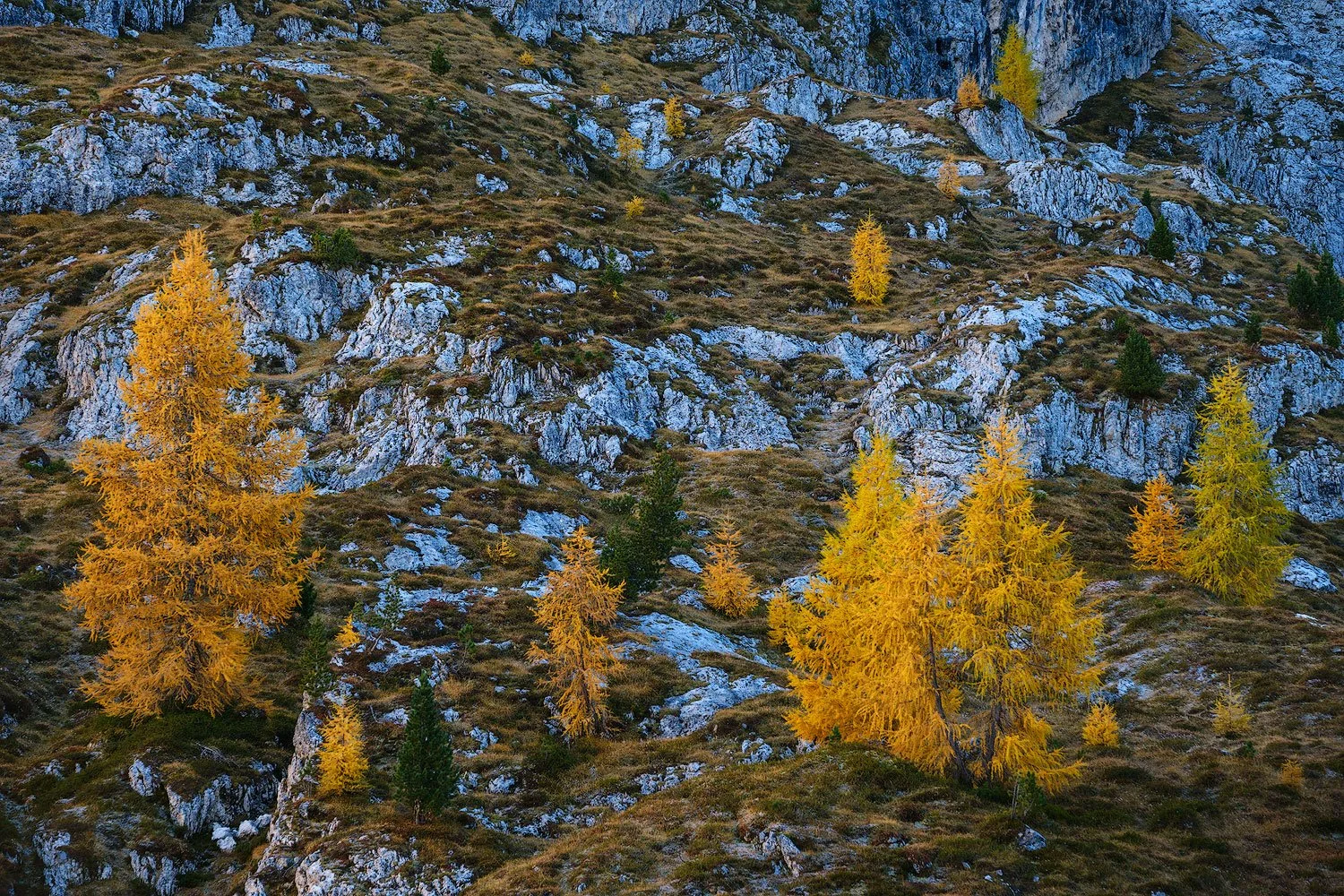
Another composition from the same location
When the light is soft
Soft light doesn’t reveal, it describes.
It shows relationships, textures, and subtle transitions.
That’s why it asks more from you as a photographer.
Be selective about what you include
When everything is evenly lit, everything has visual weight. This is where you need to be disciplined. Fewer elements usually lead to clearer images. Ask yourself what is essential, not what is available.Pay attention to spacing
Without strong light and shadow, depth and clarity come from how elements relate to each other. Distances, overlaps, and breathing space become the main compositional tools. Small adjustments in framing matter a lot here.Don’t wait for the light to isolate the subject
Soft light won’t separate things for you. If you’re waiting for drama, you’ll miss what this light does best. Instead, work with balance, rhythm, and calm. This is where quieter images come from.
This is the kind of light where simplicity comes from choice, not from conditions.
5. Making Decisions That Fit the Light
Photographs that feel intentional are rarely the result of luck. They usually come from slowing down and making decisions that actually fit the light you’re working with.
Learning to recognise these moments, and respond calmly rather than react impulsively, is one of the most valuable skills you can develop as a landscape photographer.
It’s also one of the main things we work on during my workshops: learning when it makes sense to stay put, when it’s worth waiting a few minutes longer, and when a composition that worked before no longer fits the light.
Same scene.
Different light.
Different way of seeing.
The real skill is not choosing the “best” light, but recognising what kind of photograph the light is inviting you to make, and adjusting your approach accordingly.
And once you start working at this level, your photography becomes clearer and far more deliberate.
What about you?
When you’re out shooting and the light starts to change, what do you usually struggle with the most?
Is it figuring out what the light is actually doing, deciding whether to wait or change your composition, or letting go of an idea that was working just a few minutes earlier?
If you feel like sharing, let me know in the comments. I’m always curious to hear how others deal with these moments out in the field.
Thanks for reading.
Join Me on a Photograhy Workshop
If you want to learn more about light, composition, technique, and improve your photography and editing skills at a deeper, more personalized level, I’d love to have you join me in one of my photography workshops, where we’ll work hands-on in stunning locations to level up both your editing and field techniques. If you’re interested, click the link below for all the details and sign up!

Beginner landscape photographers often overlook some types of light and miss opportunities to create very unique photographs. Explore ways to interpret and approach light differently throughout the day to create more compelling landscape images.