
When the Highlands Set the Rules: A Field Report from the 2026 Iceland Workshop
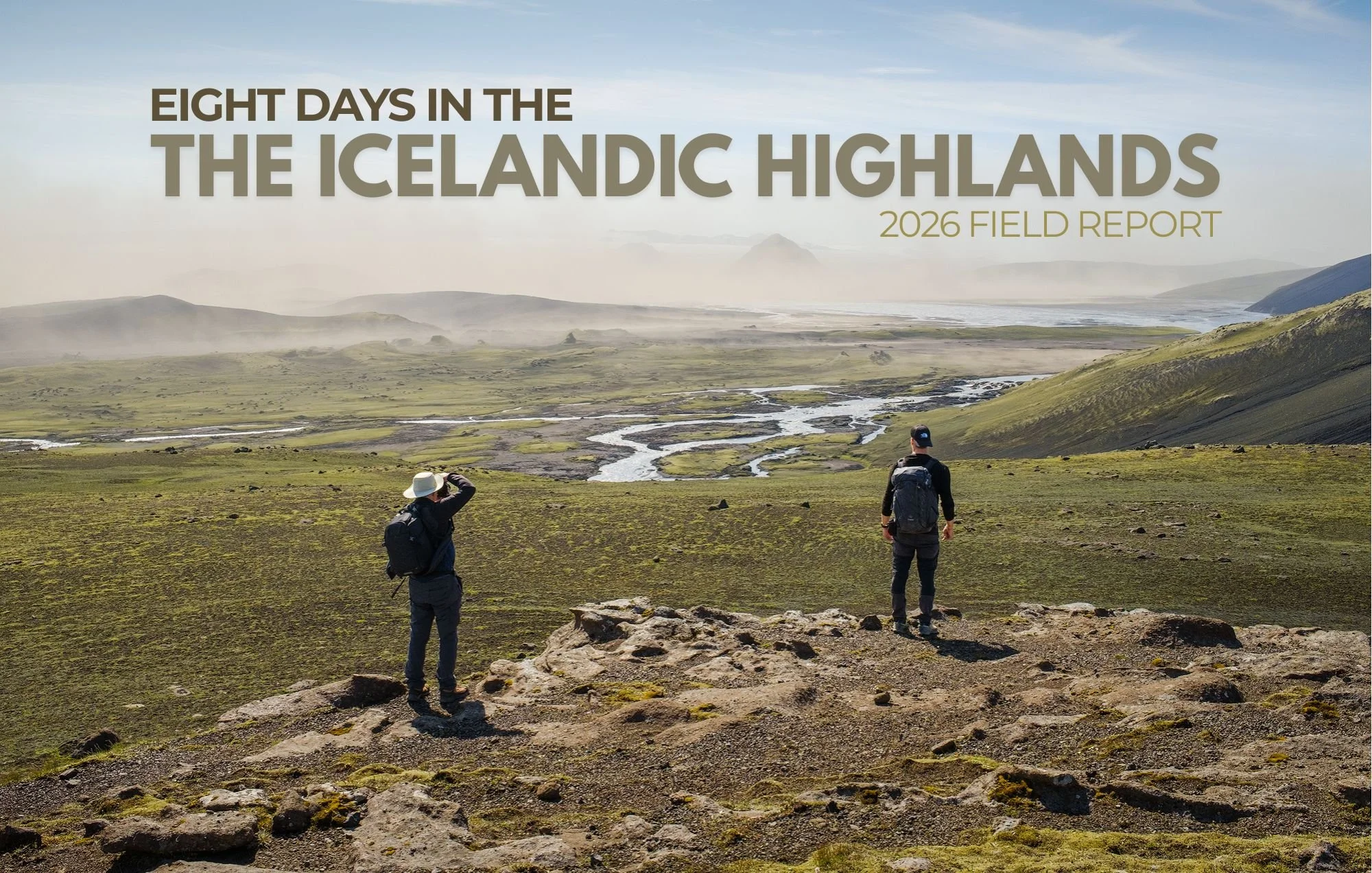
Ten minutes after leaving the vehicle at Kerlingarfjöll, we were leaning into the wind just to stay upright.
Below us, steps descended into a geothermal valley streaked with rust, yellow, and red rhyolite. Steam moved across the slopes we had traveled all day to photograph. Our cameras were ready, but gusts tore across the exposed ridge with enough force to make the decision clear. Going farther would have been unsafe.
Turning back on the first day of our Iceland Highlands photography workshop was frustrating. It was also the right call.
Photography rewards persistence. But persistence should never be confused with stubbornness.
Trip at a Glance
- Guides in the field
- 2
- Photographers per group
- 3
- Days in the field
- 8
- Camera system
- Fujifilm
- Highland transport
- Modified 4×4
- Dates coming soon
- 2028
Locations
Gear Used
Camera Bodies
- Fujifilm X-T4
- Fujifilm X-T30
Lenses
- Sigma 10–18mm F2.8 DC DN | Contemporary
- Sigma 100–400mm F5–6.3 DG DN OS | Contemporary
- Fujinon XF 50–140mm F2.8 R LM OIS WR
Kerlingarfjöll: A Plan Designed to Change
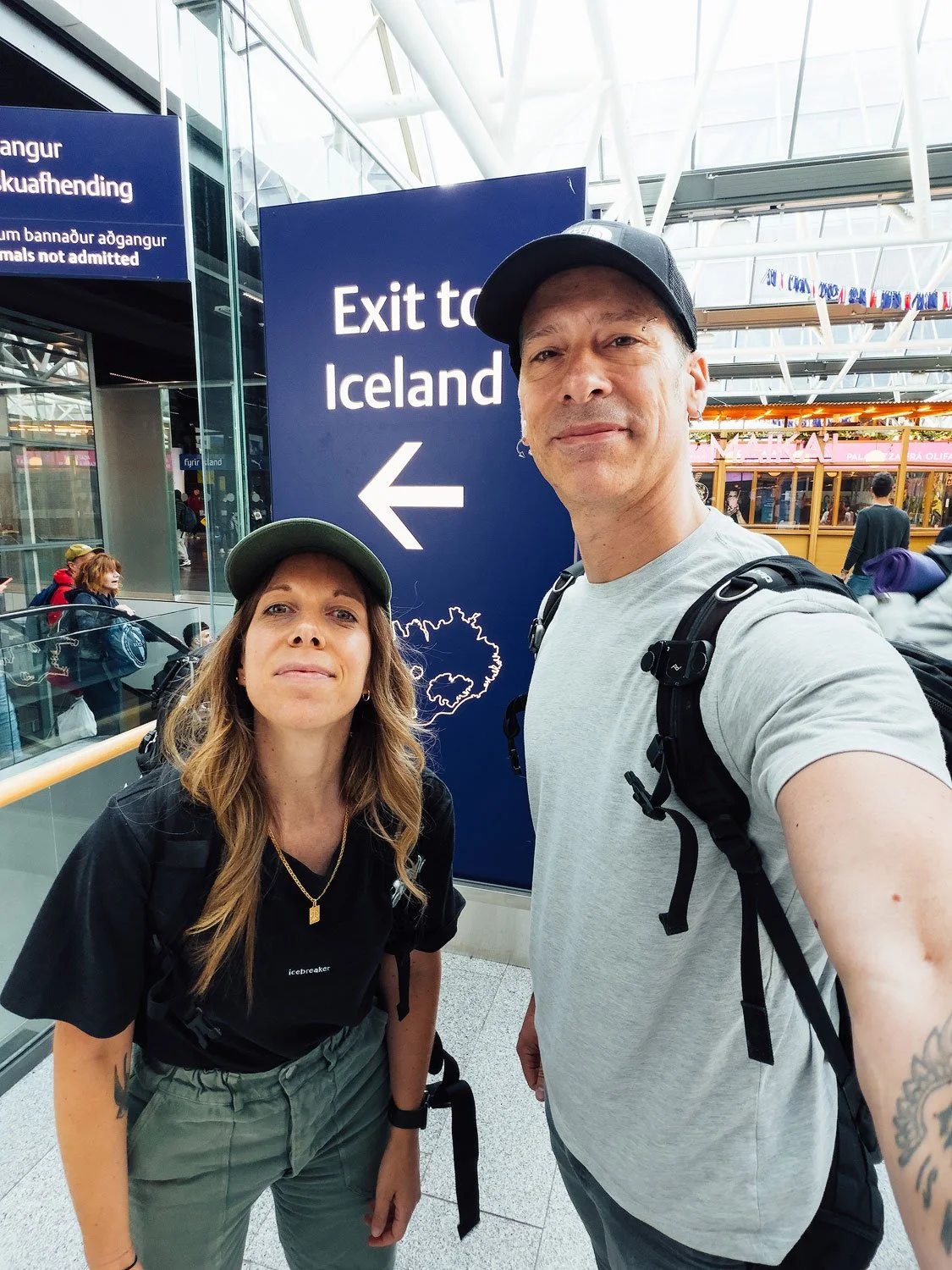
Our journey had begun more gently the previous evening, over dinner in Reykjavík. Sabrina and I met John and Tomas, the two photographers joining us for the week. The 2026 edition ultimately took place with two guests after a late cancellation.
By the end of the meal, it already felt less like four people preparing for a tour and more like a group of photographers about to share an adventure.
John was discovering Iceland for the first time. Tomas was returning to the country, but this journey took him into parts of the Highlands he had never seen. Their starting points were different, yet the landscape challenged and surprised them both.
For this edition, Sigma Italia loaned me two Fujifilm X Mount lenses: the Sigma 10-18mm F2.8 DC DN | Contemporary and the Sigma 100-400mm F5-6.3 DG DN OS | Contemporary. They offered opposite ways of reading the landscape: expansive views and quieter stories hidden inside them.
This trip report is only the beginning. I came home with plenty more photographs—and plenty to say—about both Sigma lenses. I've since published my full field review of the Sigma 100–400mm, including more photographs from Iceland and Rotterdam. A dedicated look at the 10–18mm will follow.
We kept most areas from our plan, but not the sequence. In Iceland, flexibility is not a backup plan. It is the plan. As the guide, I made route and safety decisions as conditions changed, while Sabrina kept every moving part organized from start to finish and supported John and Tomas throughout the week. She is exceptional at what she does. Much of what makes our workshops run smoothly, in and beyond the field, comes from her. All the BTS images are by Sabrina.
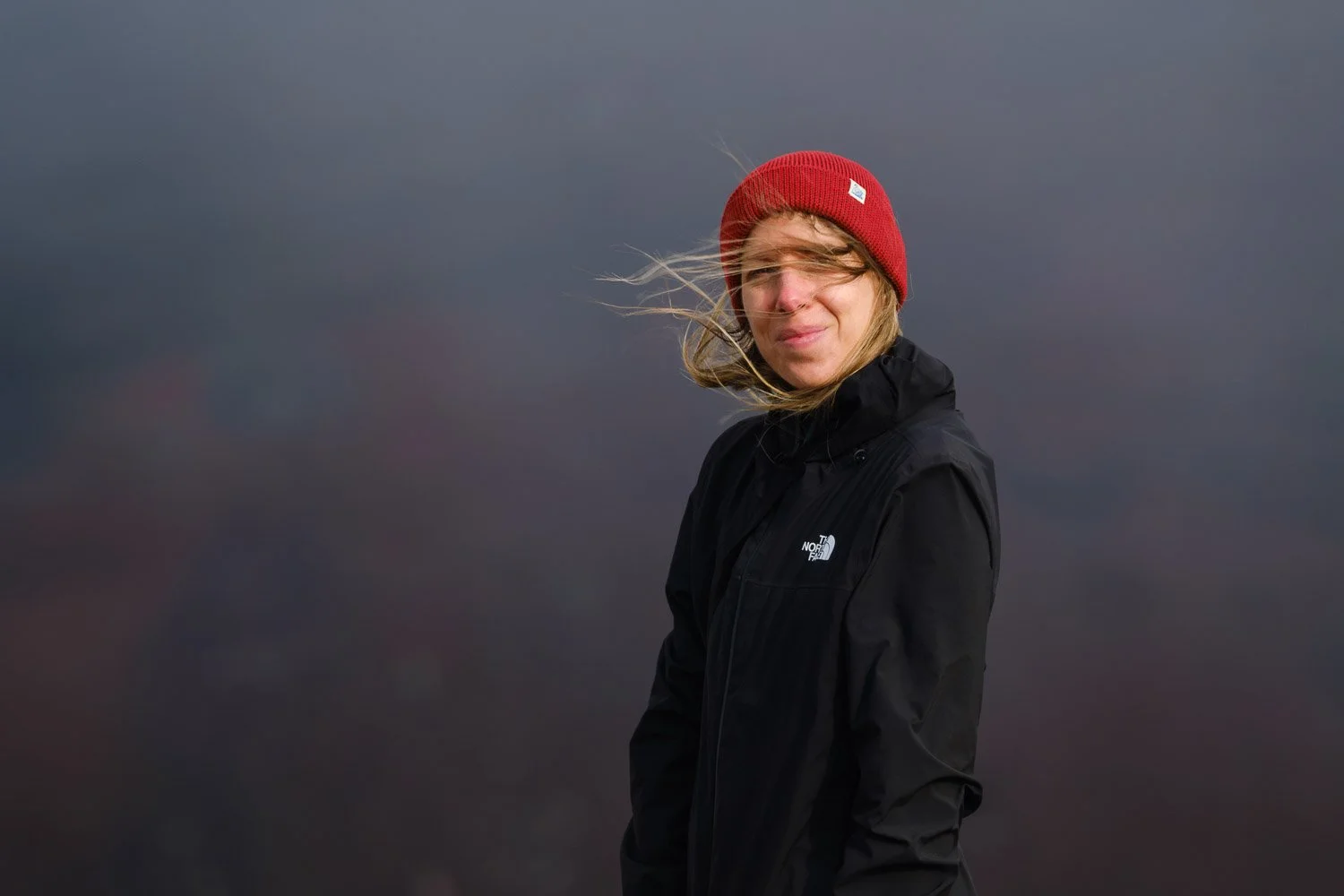
To discover more of Sabrina’s work beyond our workshops, visit Sabrina Tosato’s website and follow her on Instagram.
Most days began with a weather check over breakfast. We photographed from around 9 a.m. until 7 or 8 p.m., stopping for lunch near 1. We skipped sunrise and late-evening sessions because low clouds erased visibility at both ends of the day throughout the week. It mattered little. Daytime conditions were wonderfully atmospheric, and mood, rather than colorful light, became the theme.
That first morning, gravel replaced pavement and volcanic plains opened around us on the drive toward Kerlingarfjöll. We stopped whenever mountains, low clouds, and shifting light formed something worth investigating. A yellow weather warning followed us into the Highlands. At times, opening a vehicle door felt like entering an argument with the wind.
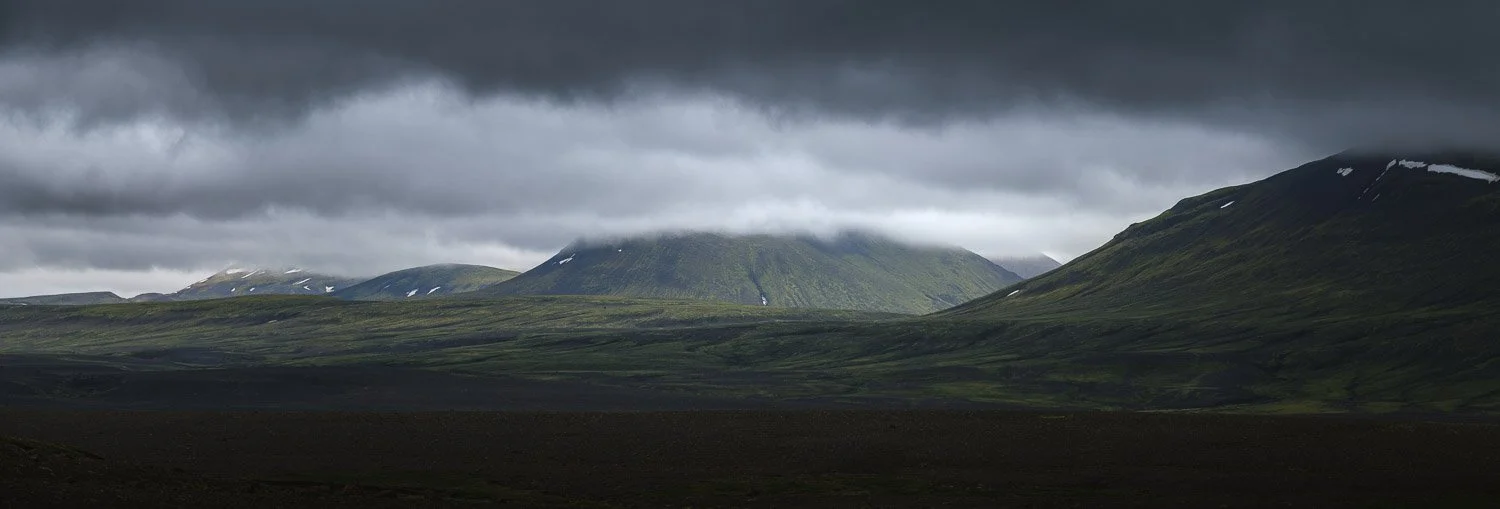
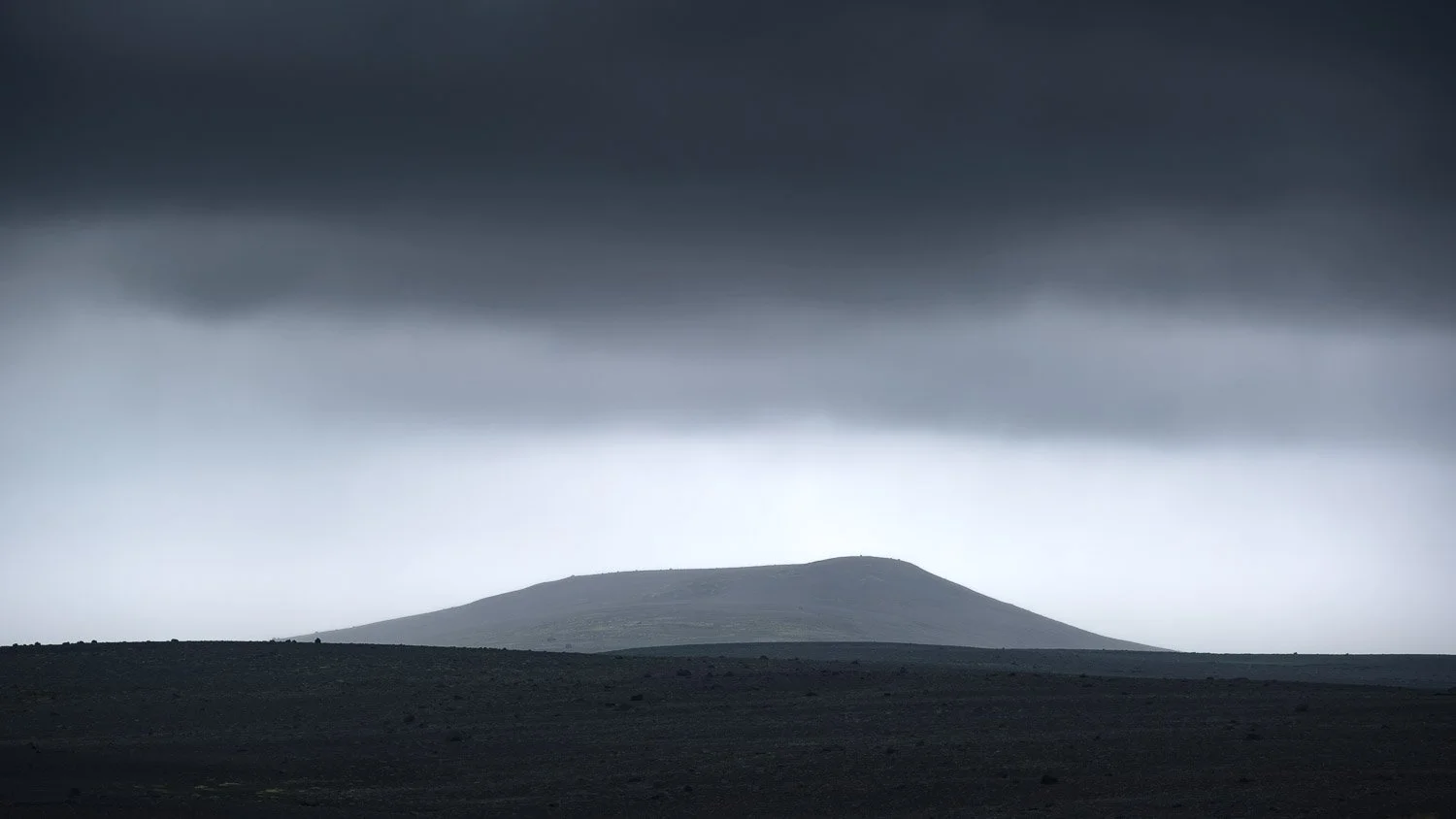
We prepared our equipment and walked toward the valley, only to stop at the first staircase. The landscape would still be there in the morning. We turned back, relaxed in a geothermal pool, reviewed our first images, and reset over dinner. The Highlands had tested the group before the workshop had properly begun.
Kerlingarfjöll: Better Light, Wider Views, Telephoto Details
After breakfast, we tried again.
The wind was still strong, but we could work safely. Low clouds drifted through the mountains while sunlight filtered into them from above. The cloud layer became a huge natural softbox, spreading diffused light across the rhyolite slopes.
The same weather that had stopped us the night before now created the atmosphere we wanted.
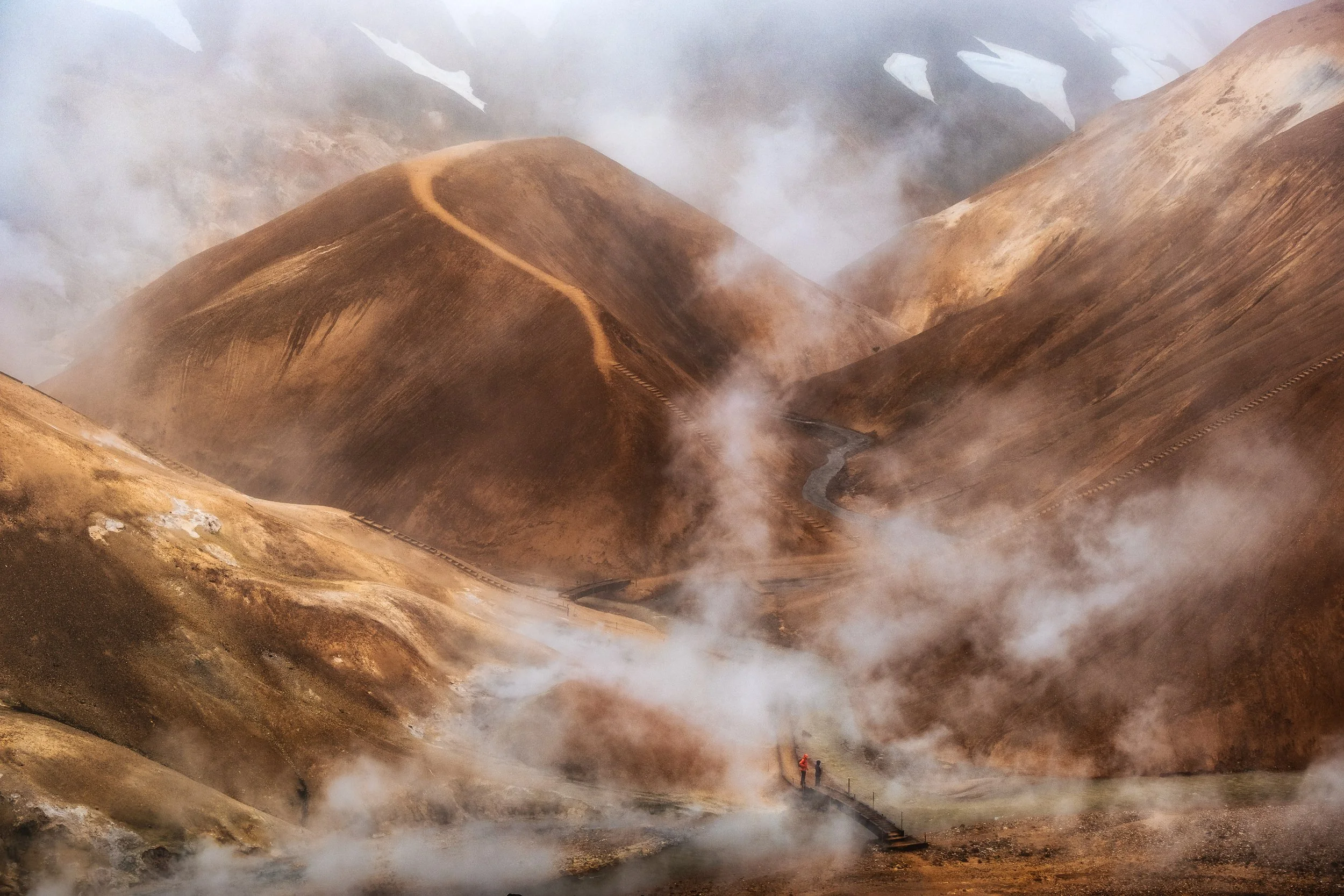
Single shot of the Kerlingarfjöll area, photographed handheld with the Fujinon XF 50–140mm F2.8 on the Fujifilm X-T30.
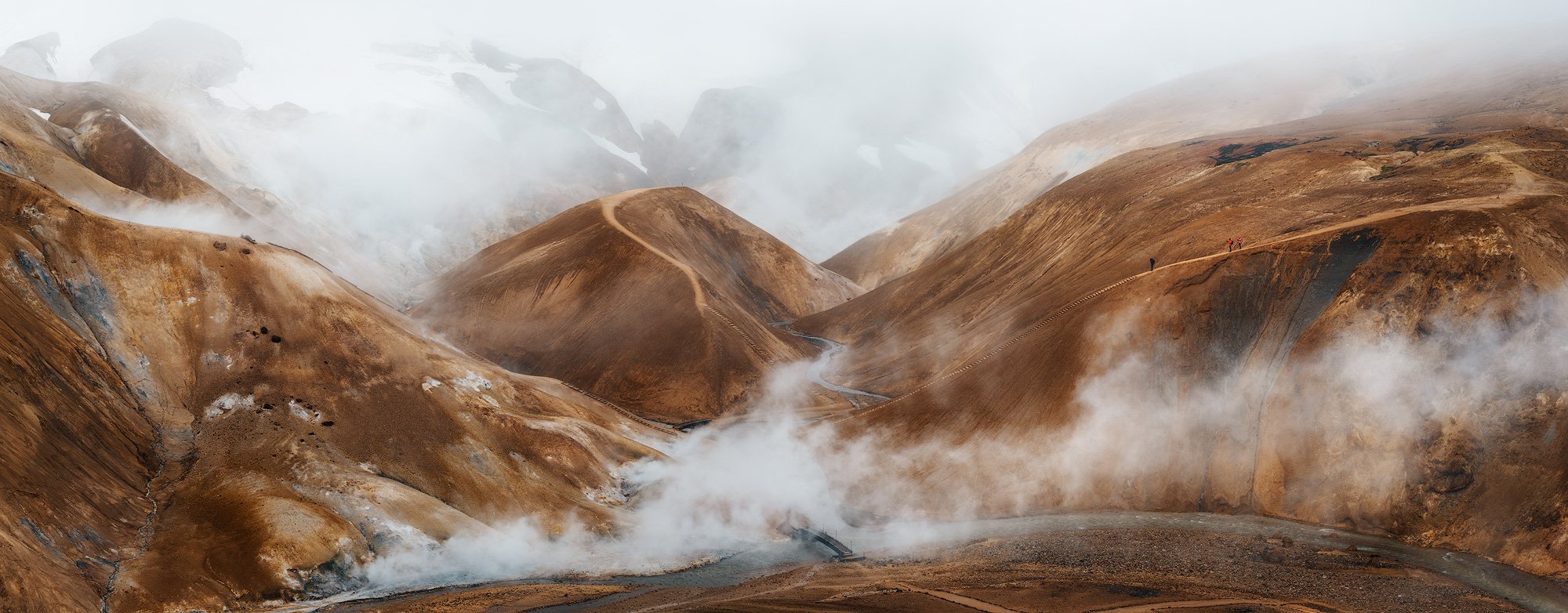
Panorama (10 vertical shots) of the Kerlingarfjöll area, photographed handheld with the Fujinon XF 50–140mm F2.8 on the Fujifilm X-T30.
We worked from about 24mm for wider scenes to 300mm for details. For my main composition, I used a longer focal length and made a panorama from ten vertical frames.
A small practical note: For panoramas with moving cloud or steam, I focus once, switch to manual, and repeat the sequence. That prevents autofocus from chasing the steam and gives me insurance against a soft frame or stitching problem.
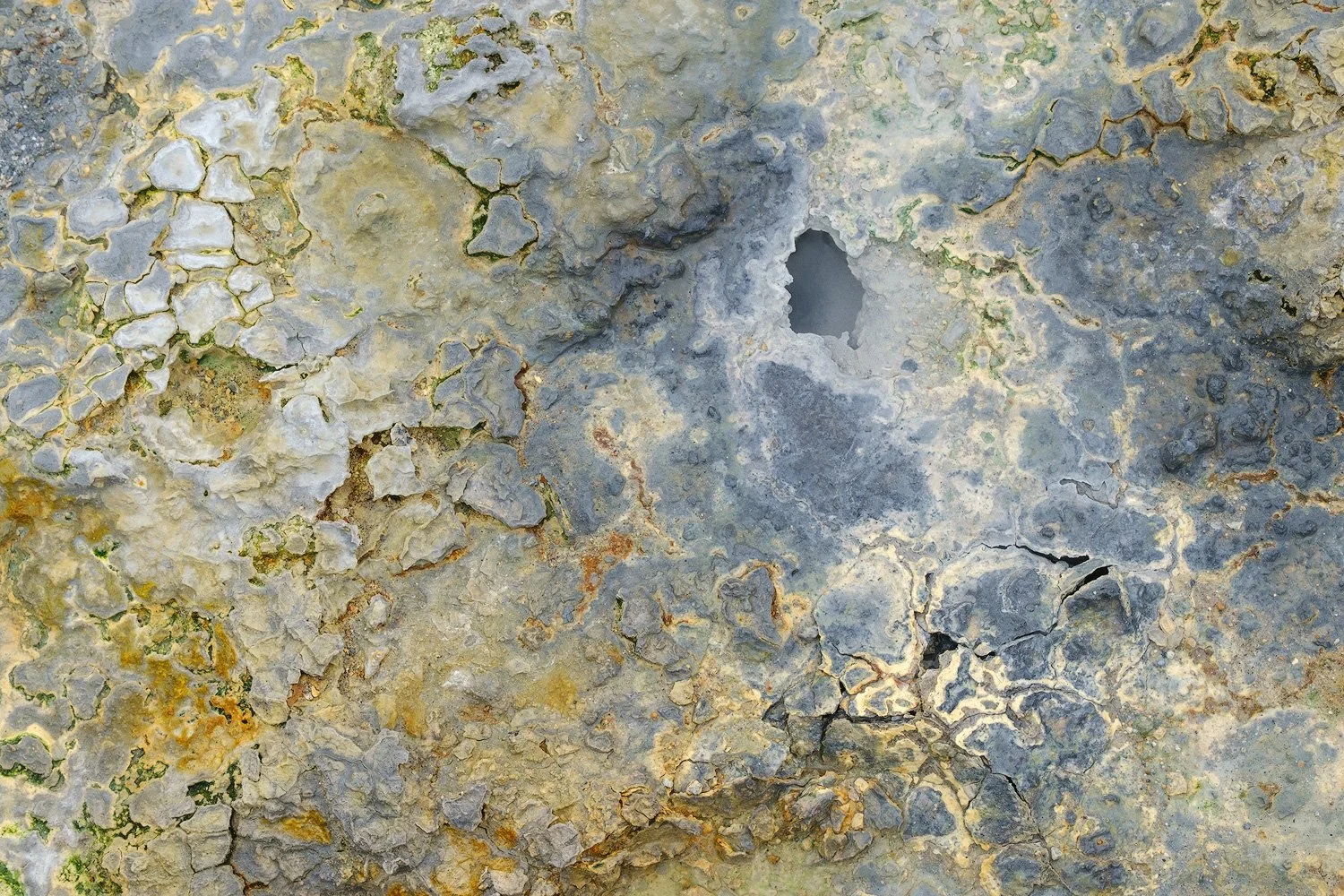
Abstract studies from the Kerlingarfjöll area, photographed handheld with the Sigma 100-400mm on the Fujifilm X-T30.
The morning was productive for everyone, but the photographs did not look alike. One person was drawn to the sweep of the valley; another noticed light separating smaller ridges inside it.
That became the pattern throughout the week. John and Tomas had space to explore independently while Sabrina and I moved between them, answering questions, suggesting a focal length or a small change of position when useful, and then stepping back. The aim was never to bring home four versions of the same photograph, but to help each photographer strengthen their own way of seeing.
From Gjáin to the Sandstorms of Landmannalaugar
The four days we spent deeper in the southern Highlands became the heart of the trip. Wind and sand challenged us almost constantly, yet every day produced so many possibilities that the weather became part of the visual language rather than an obstacle.
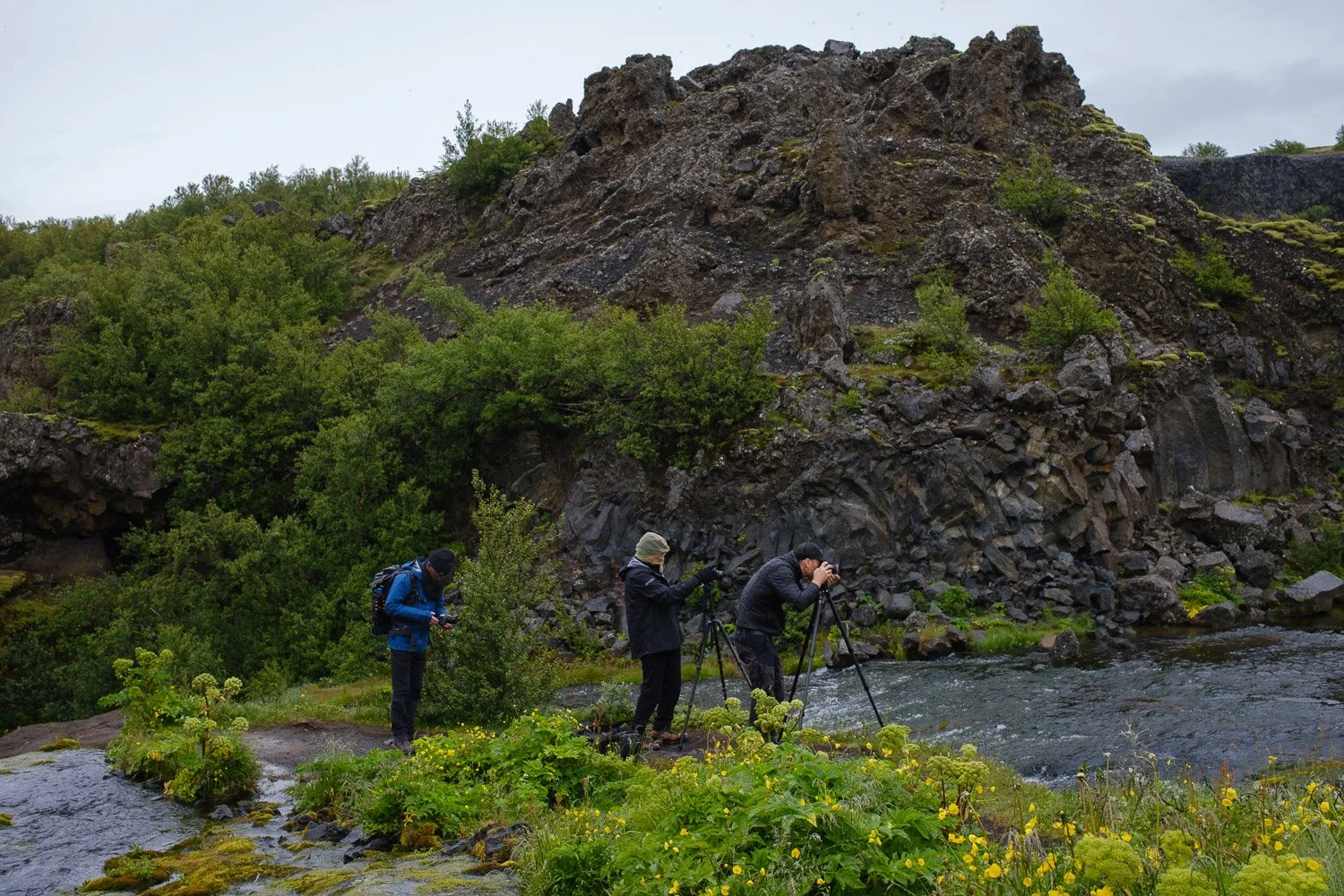
One session began at Gjáin, where streams, waterfalls, and impossibly green vegetation gather inside a compact valley. It also began with midges. Everyone pulled on a head net except me; mine was still in the hotel room. For the next hour, I tried to compose photographs while avoiding a high-protein Icelandic breakfast.
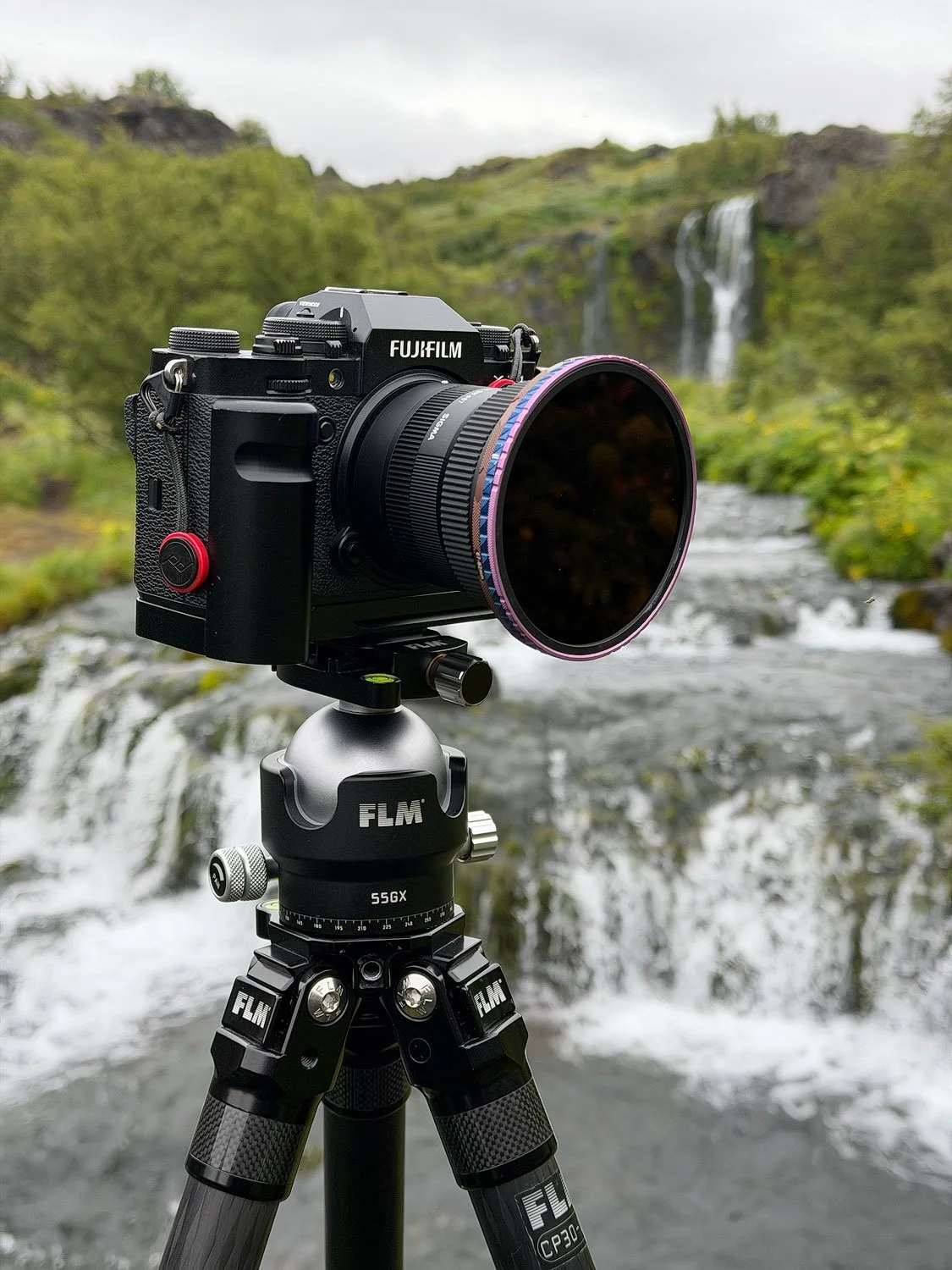
That was my first real test of the Sigma 10-18mm f/2.8. With a Maven’s LPL polarizer and six-stop neutral-density filter, I reduced glare on the wet vegetation and lengthened the exposure enough to soften the water without removing all its texture.
The lens handled the fine detail well, even in a scene filled with overlapping leaves, rock, and moving water.
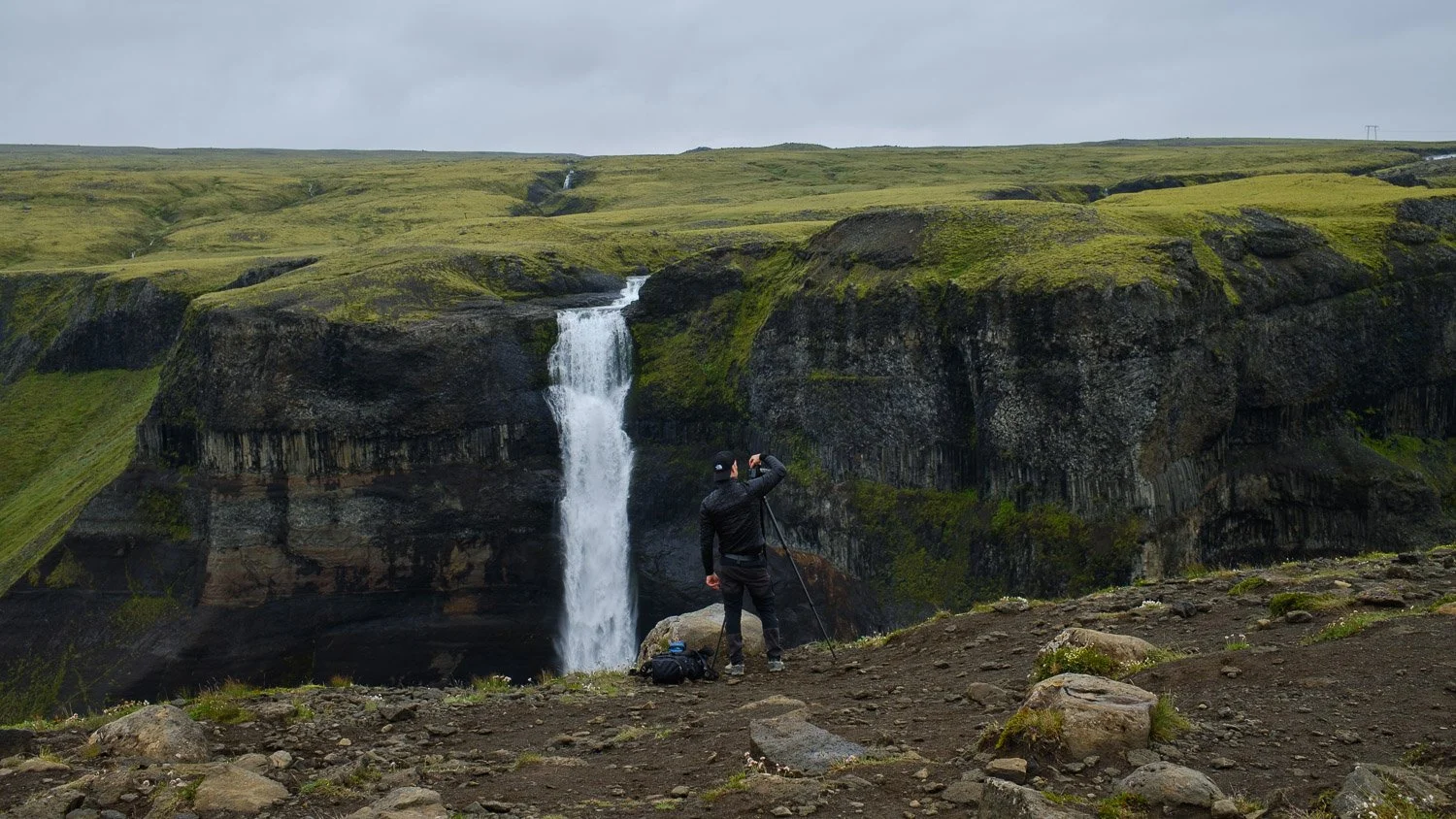
Later, at Háifoss, soft rain and low cloud settled over the vast canyon. We skipped the longer hike toward the base and worked from above, where the waterfall dropped through layers of dark rock and green moss. The previous year, the same viewpoint had given us little more than a white wall of cloud. This time, diffused light separated rock, water, moss, and volcanic sand better than hard sunlight would have done.
Somewhere between sessions, we stopped at Hrauneyjar for what remains my favorite meal in Iceland: the hamburger. The food in the country improves every year, but that burger still wins. Field reports should be honest about the important things.
When we returned to the field, the light was flat and directionless. These are the conditions many photographers dismiss because there are no sunbeams or glowing clouds pointing toward an obvious subject. But flat light is not useless light. It can reveal shape, texture, and color without the distraction of hard contrast.
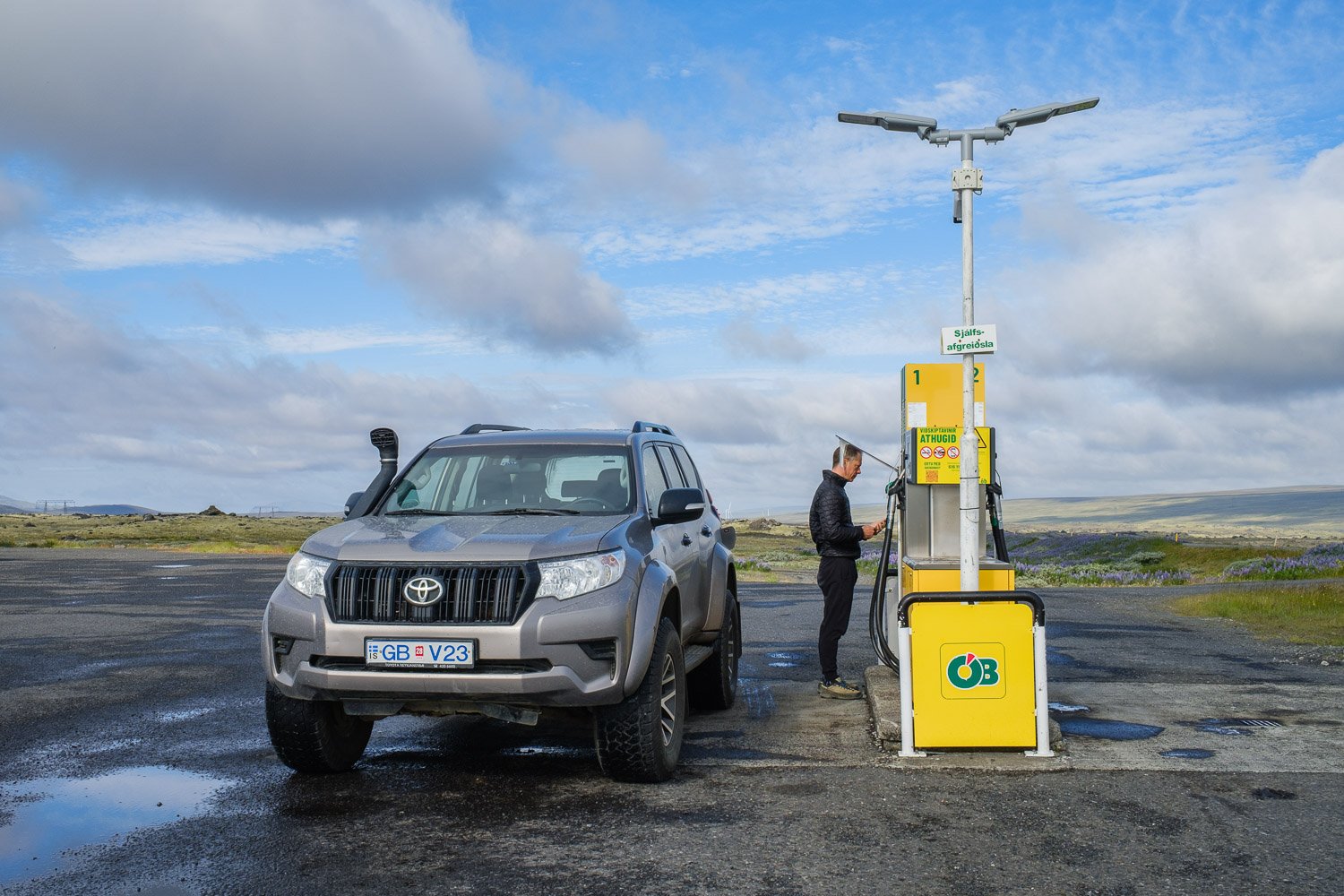
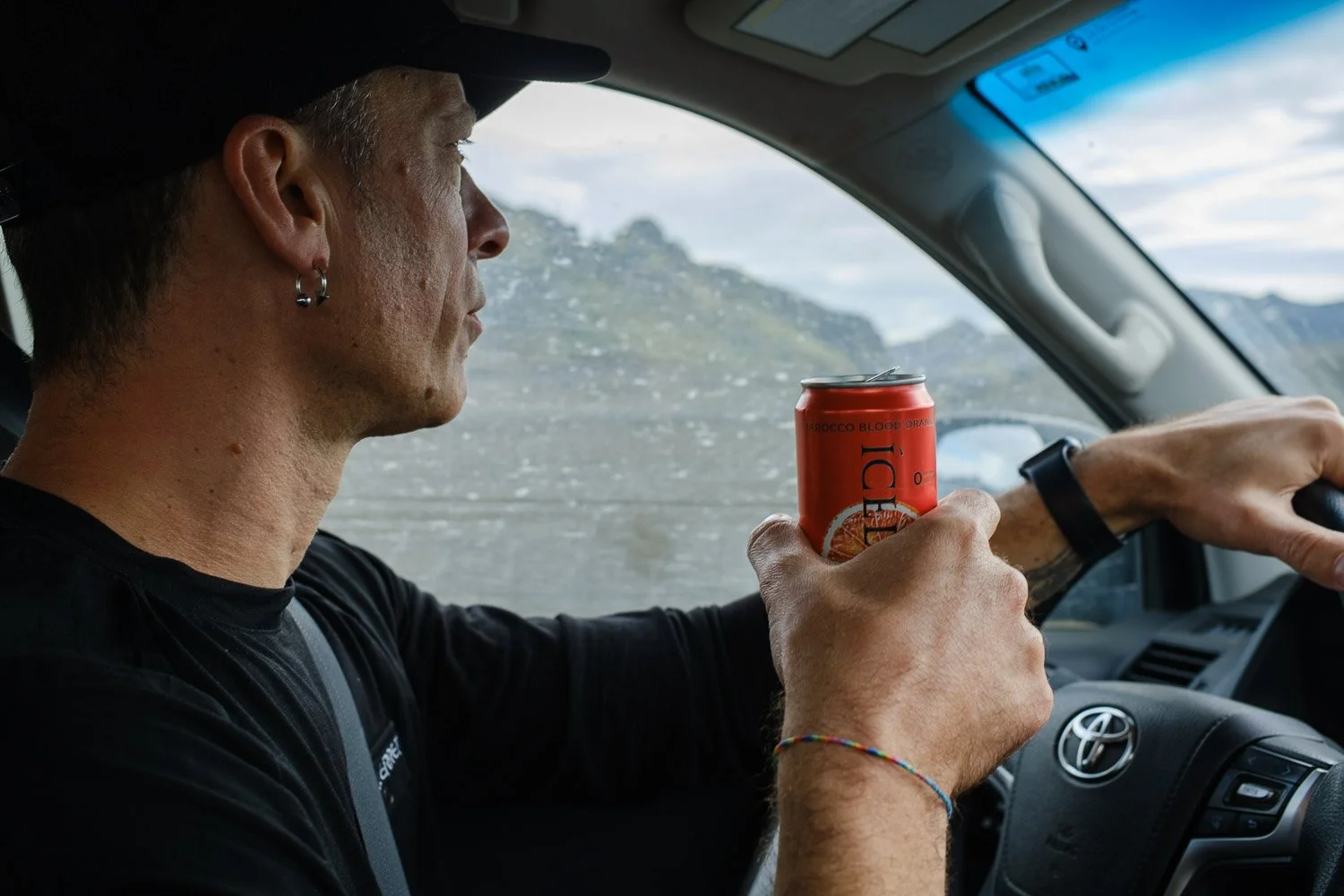
We also moved between landscape and travel photography. The broad views described the Highlands, while photographs of the road, the vehicle, and the group working in the weather described what it felt like to be there. A collection of hero images can show a beautiful place; the frames between them often tell the journey.
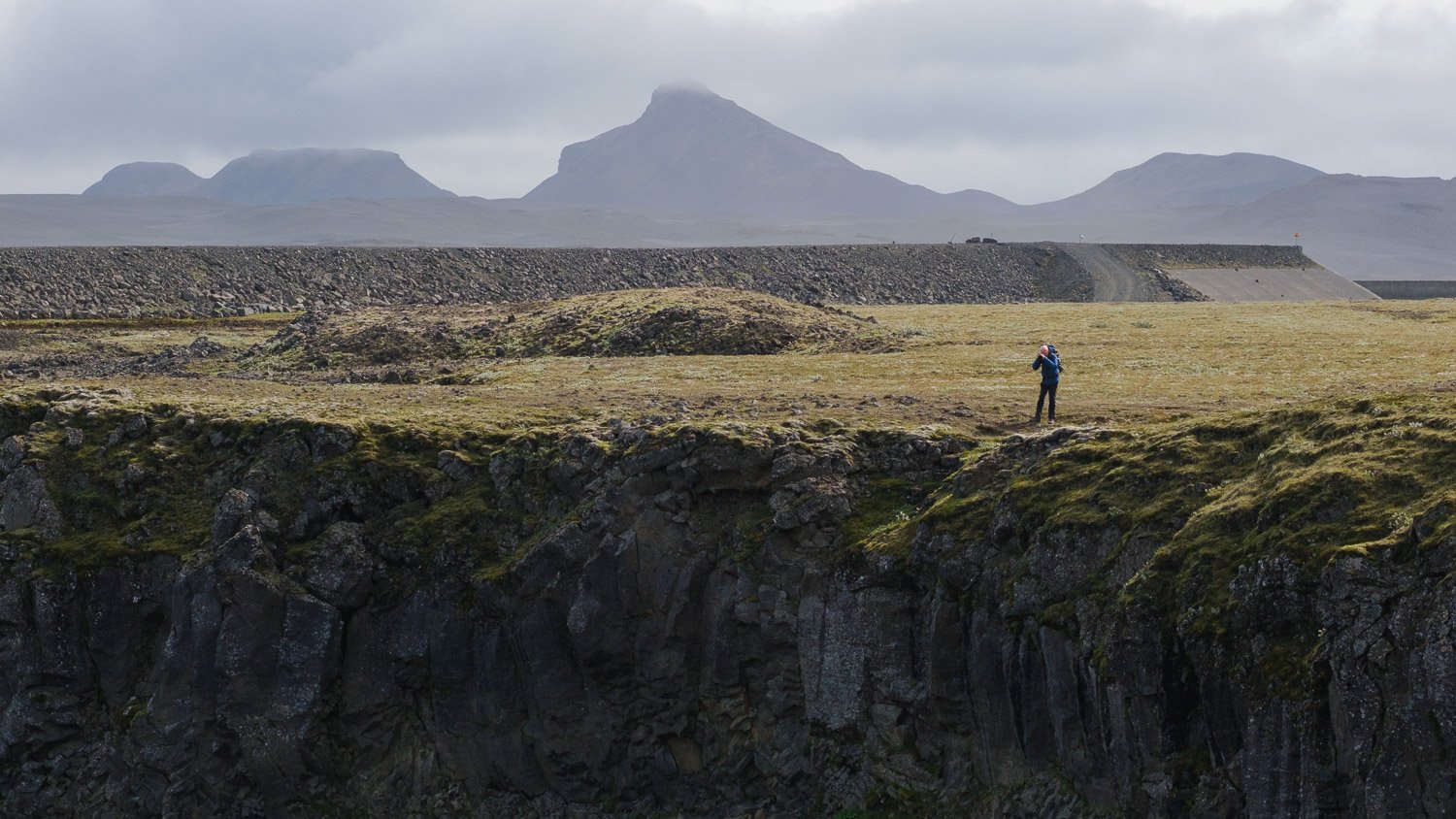
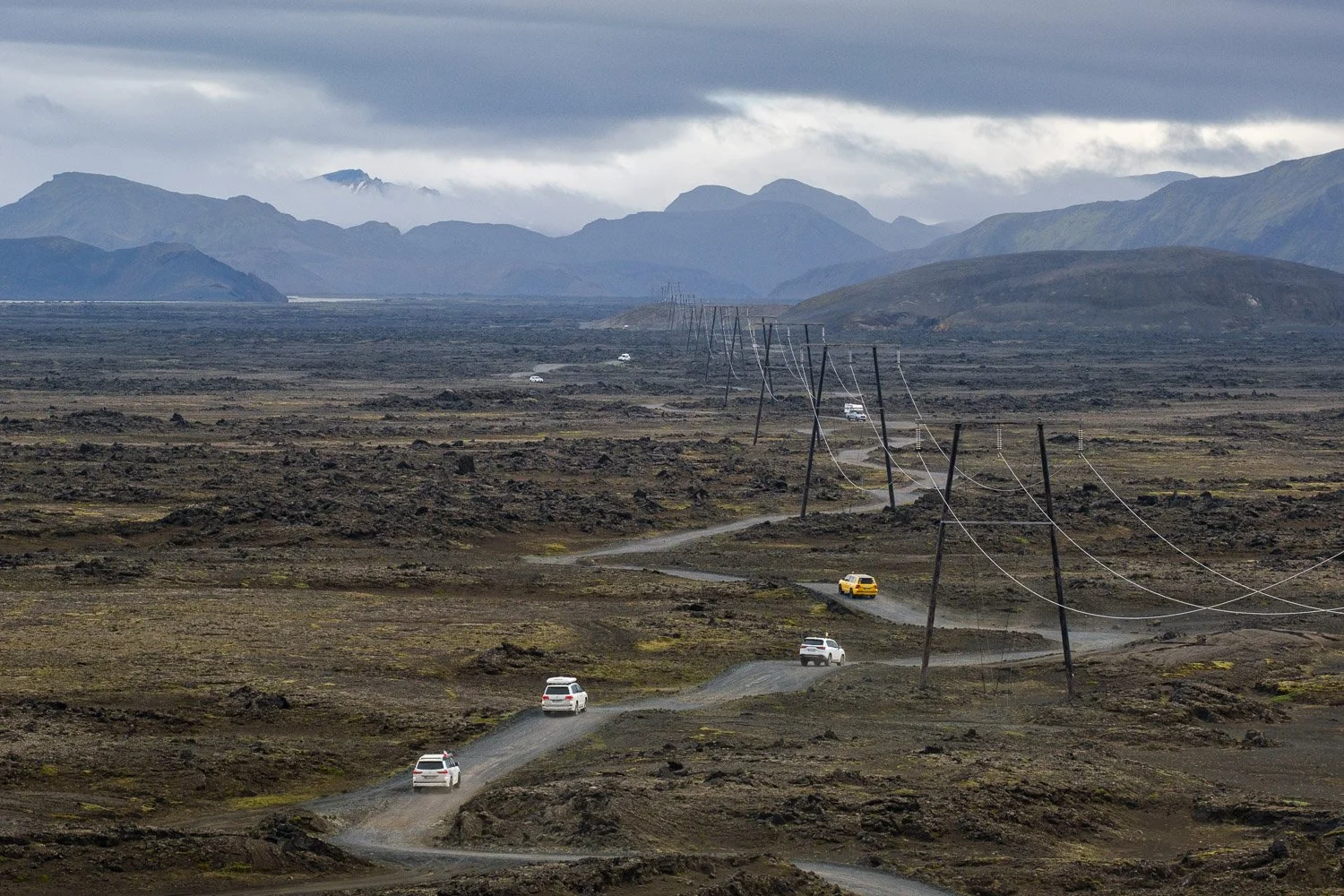
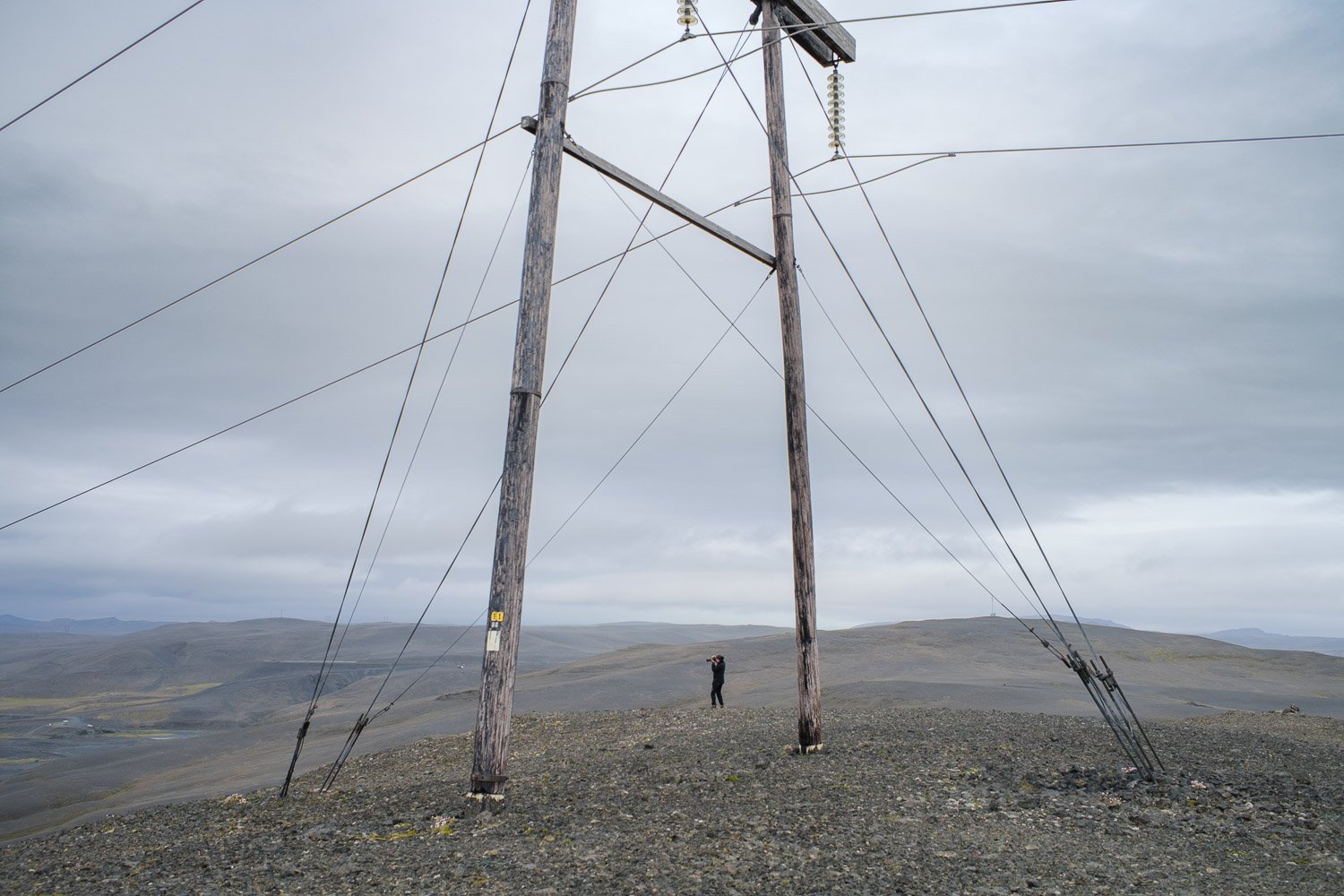
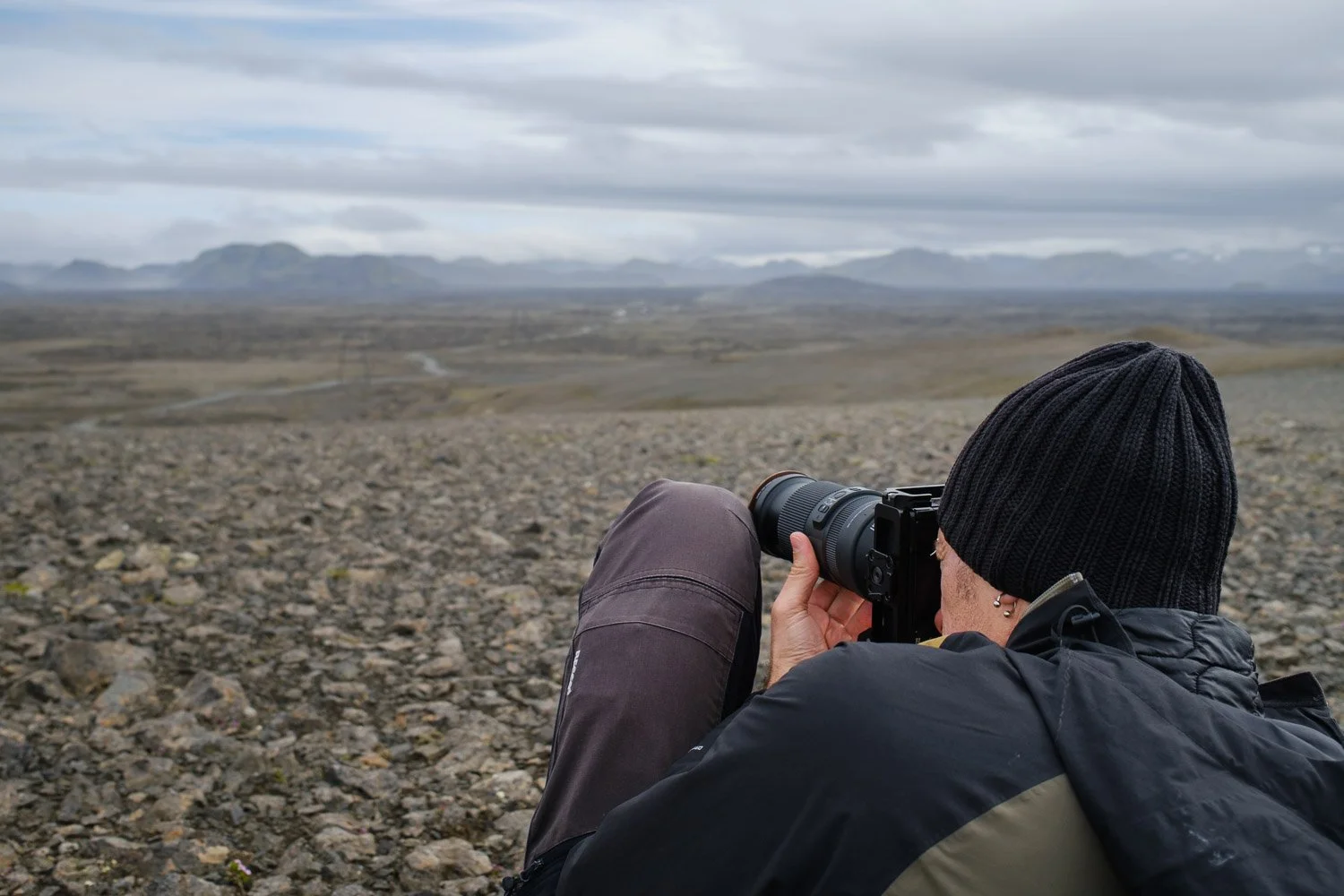
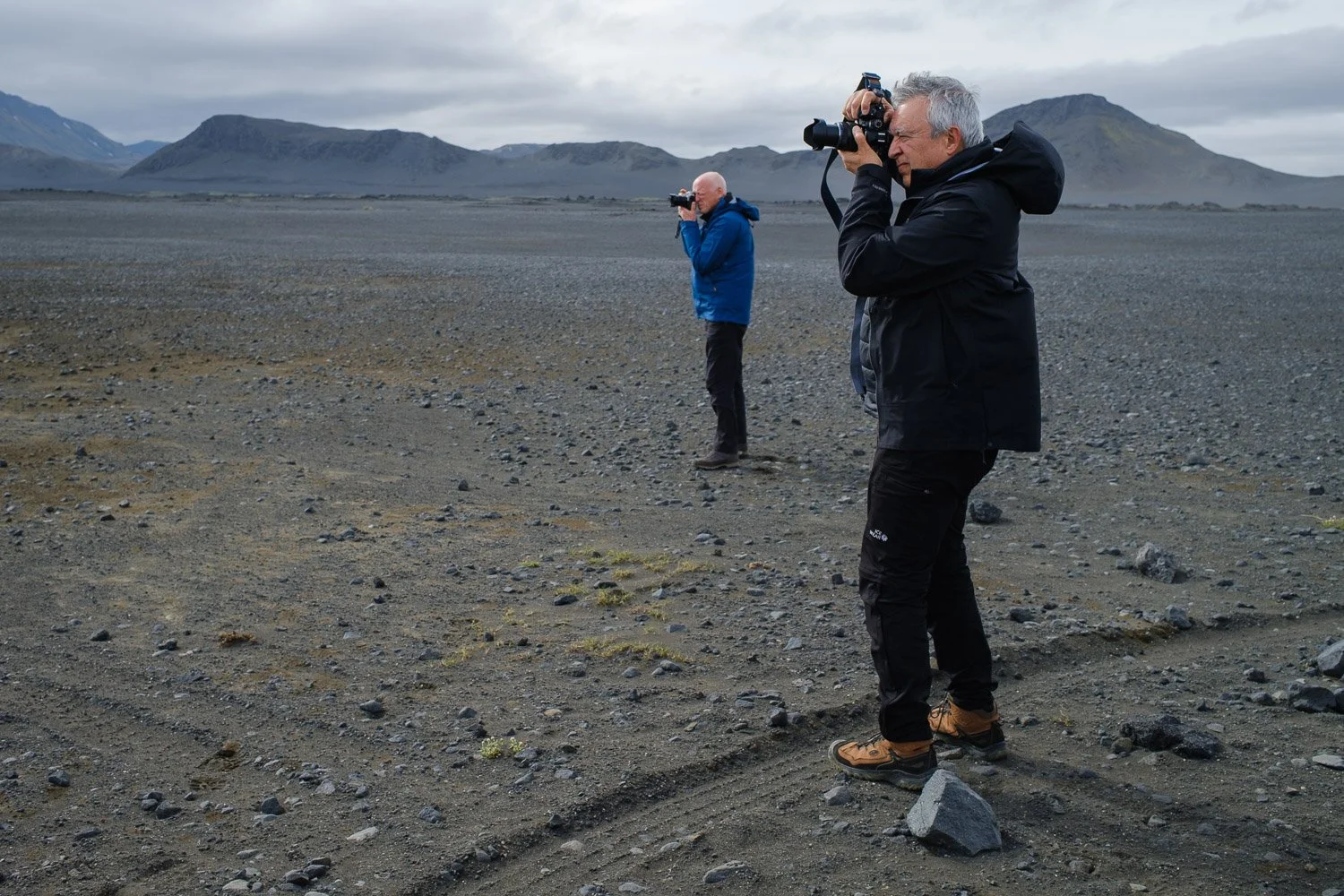
From the first morning, John and Tomas met every uncertain forecast the same way: cameras packed, questions coming, and ready to see what the weather might give us. If the light was flat, they kept looking. If the plan changed, they changed with it.
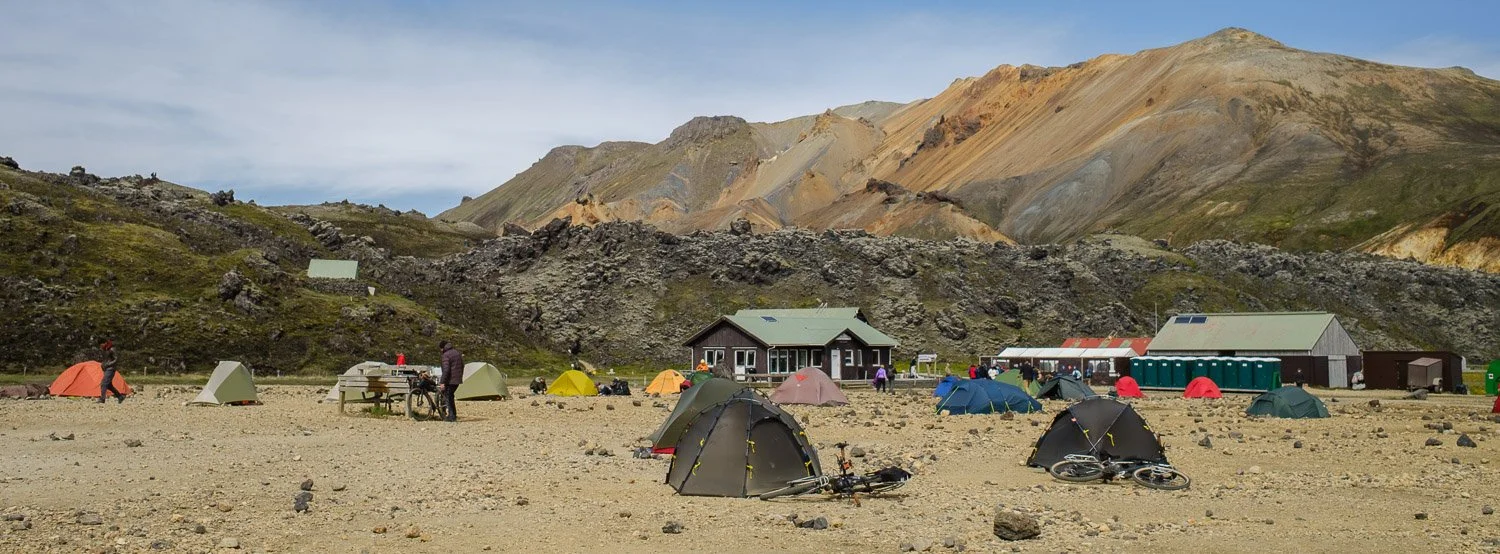
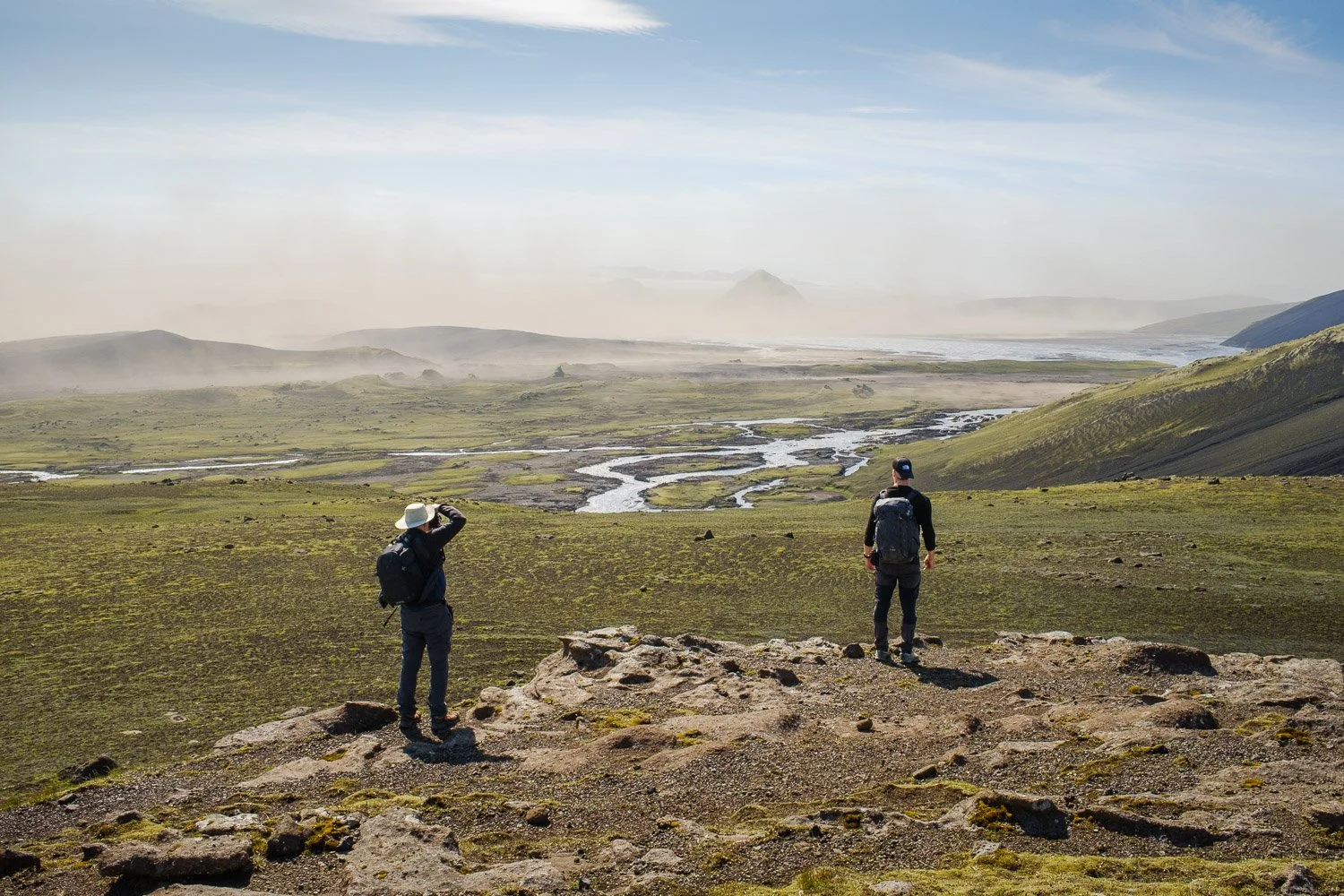
That attitude mattered in Landmannalaugar. We hiked through its lava fields and worked above one of the trip's most colorful valleys as the light shifted from flat to direct and then soft again. On the ridge, the wind rose with surprising speed. The descent took longer than expected because every step required care. Nothing dramatic happened, but it reinforced the rule: this is not about proving how tough anyone is. I adapt each session to the conditions and the group. Returning safely matters more than reaching a location at any cost.
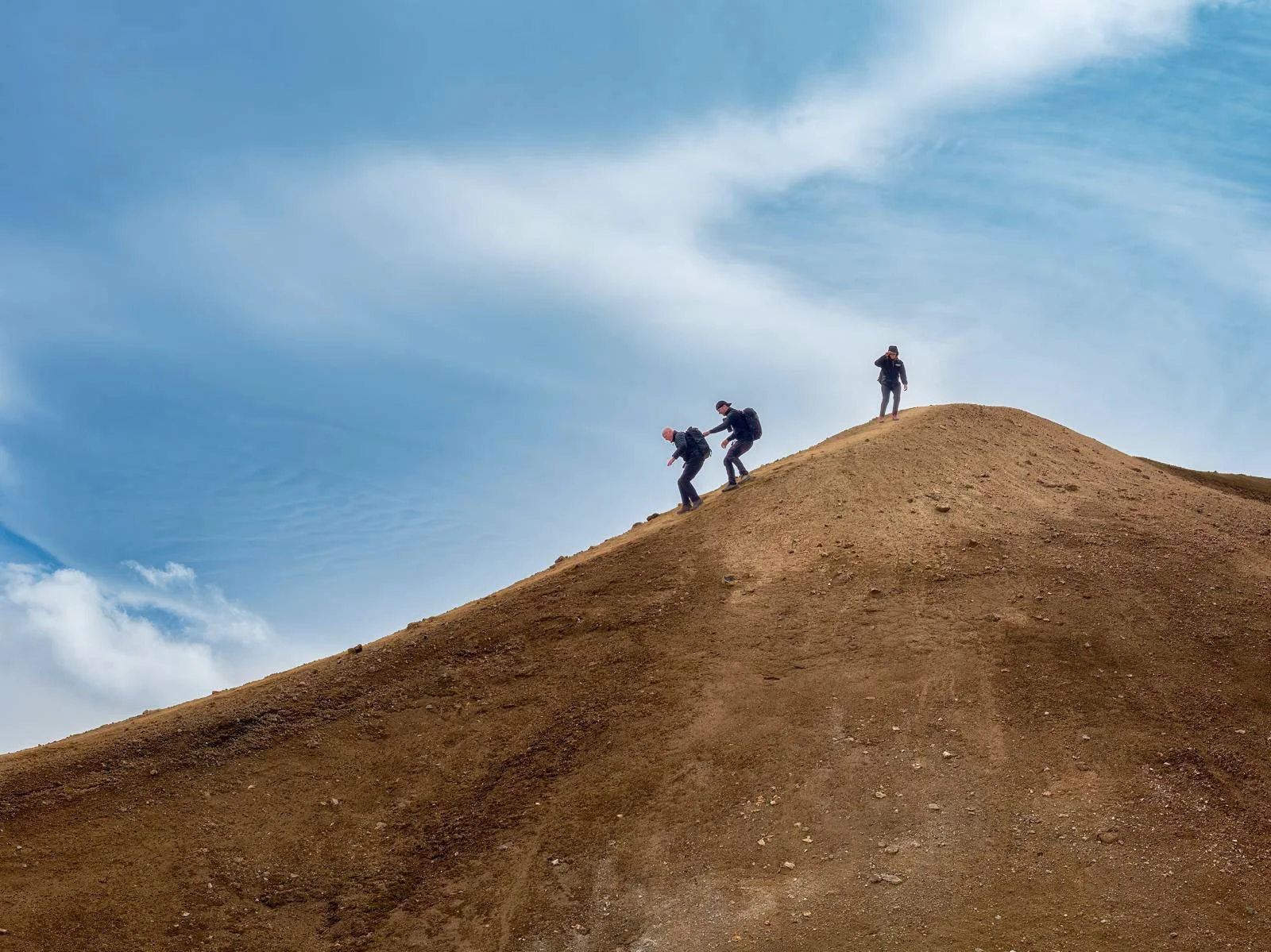
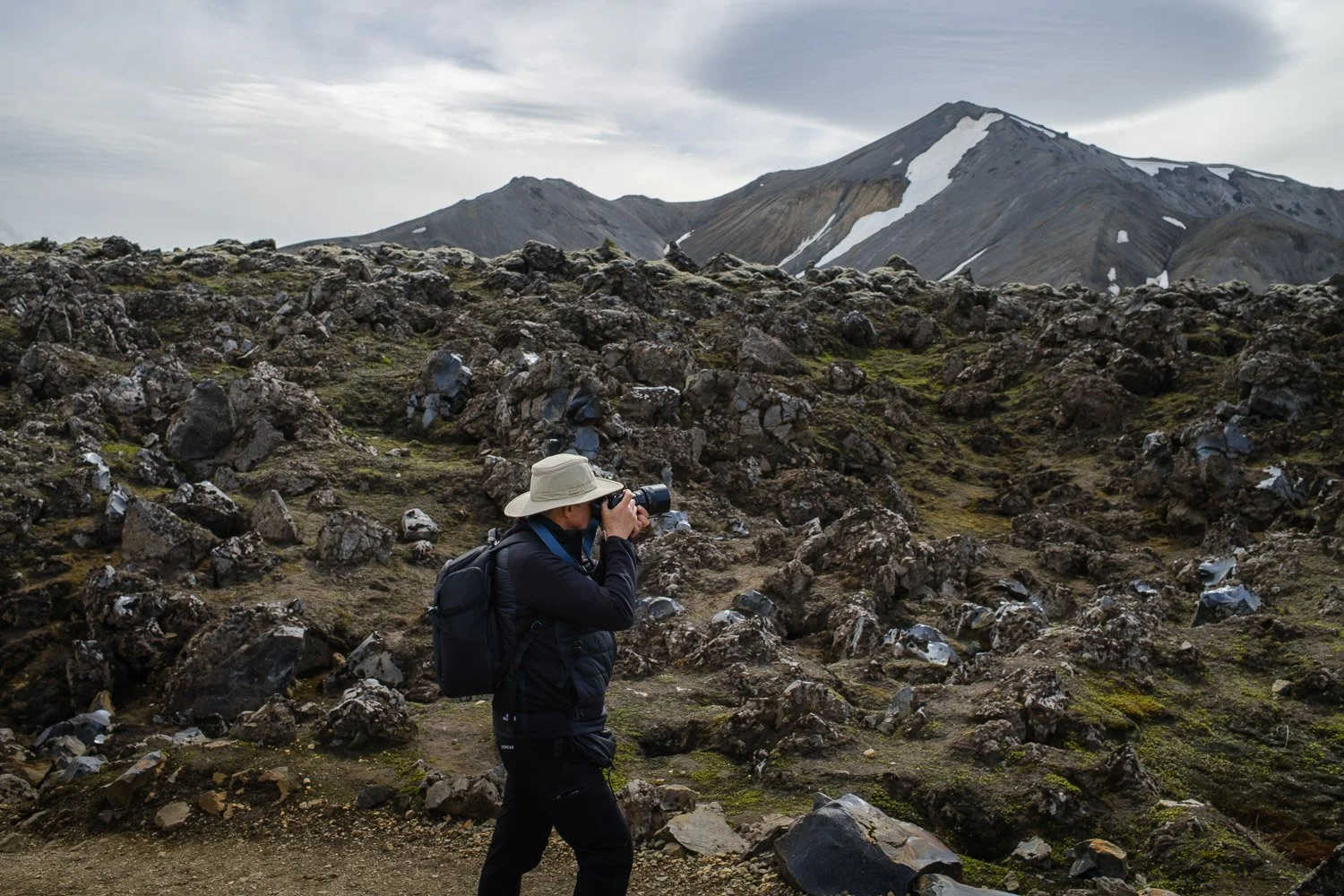
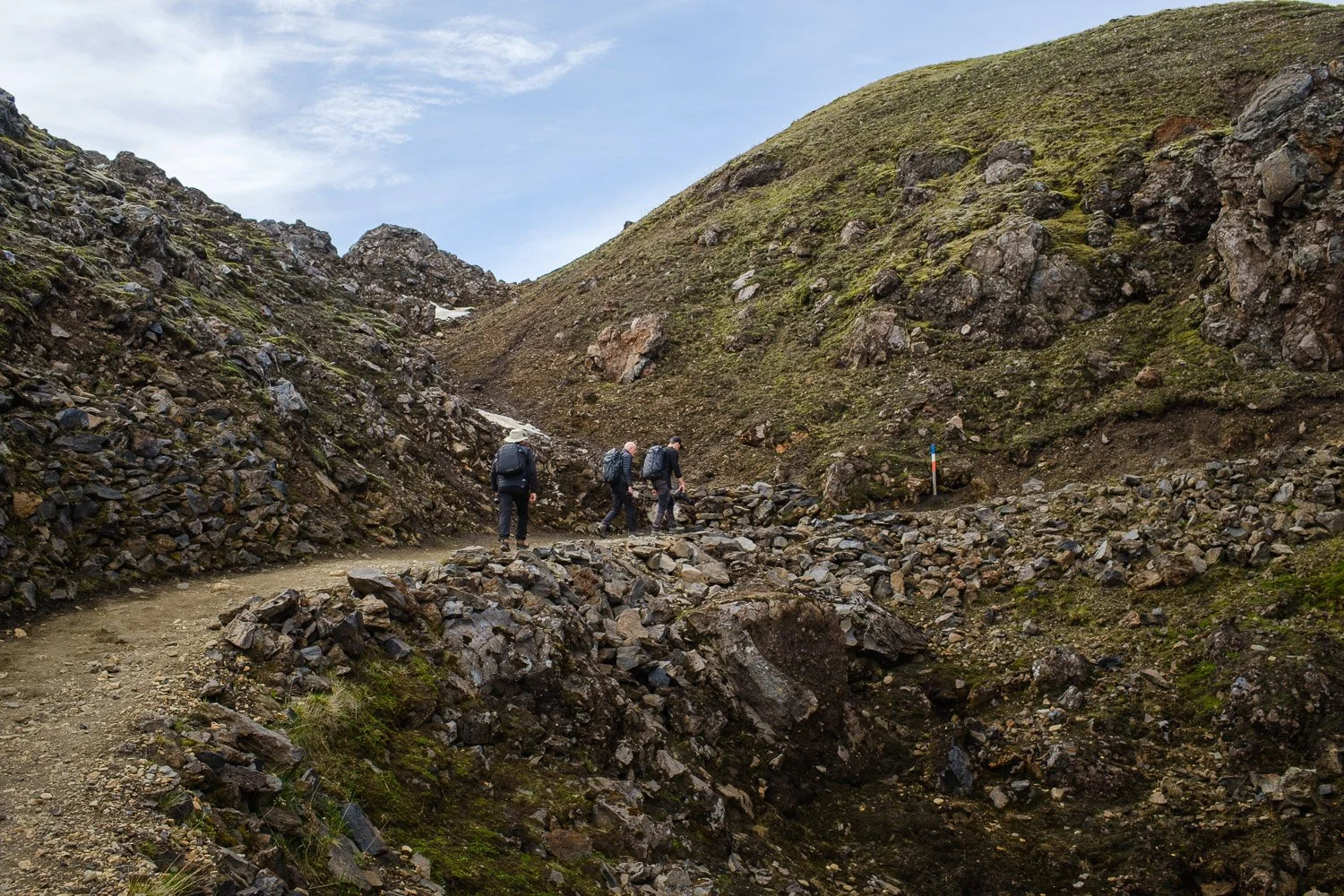
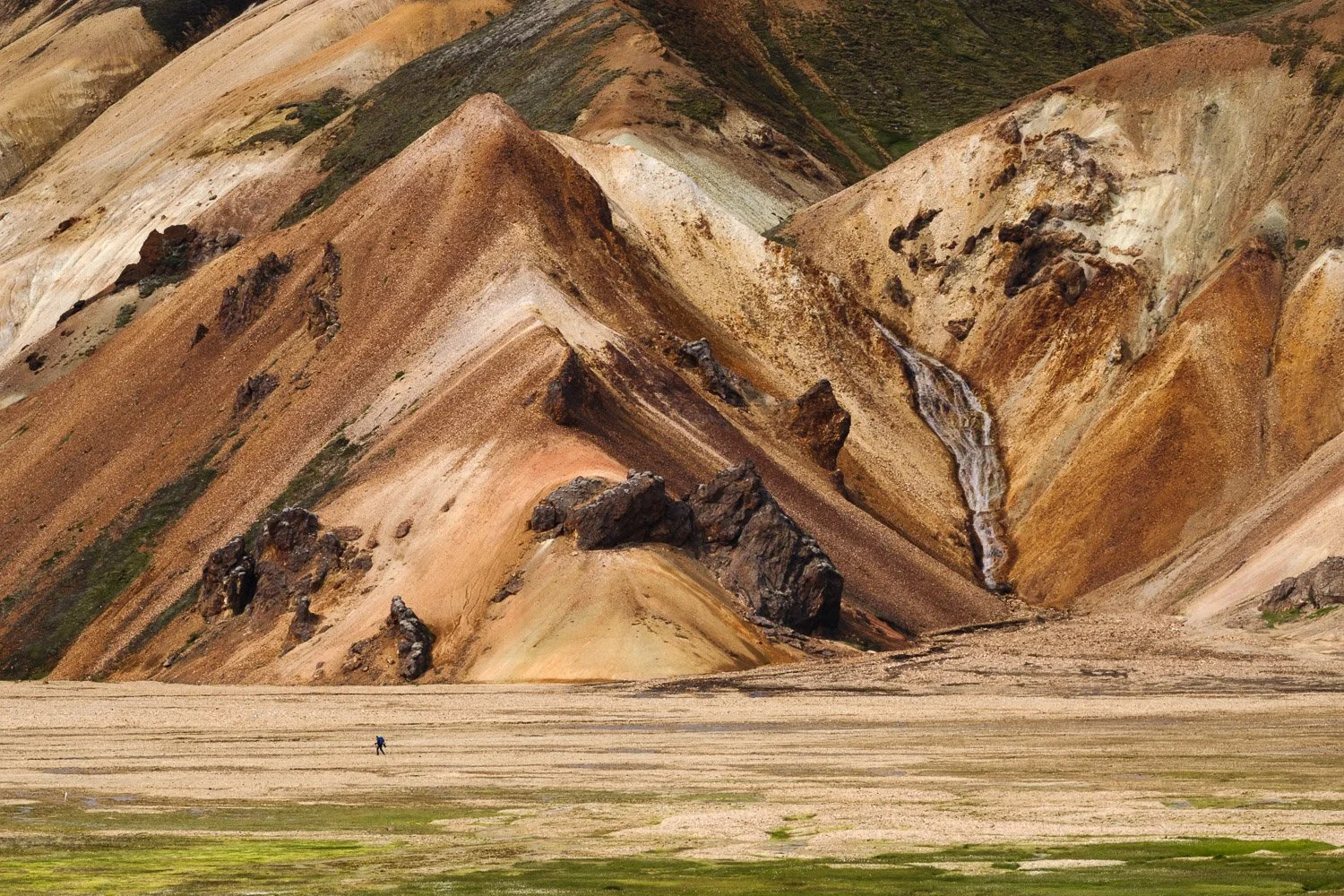
Landmannalaugar area, photographed handheld with the Sigma 100-400mm on the Fujifilm X-T4.
The weather was equally physical behind the camera. Wind pushed us in different directions. Sand brought tears to our eyes and sometimes made framing impossible. Yet in the most desolate places, the silence and scale did something else: they made us feel insignificant and fortunate at the same time.
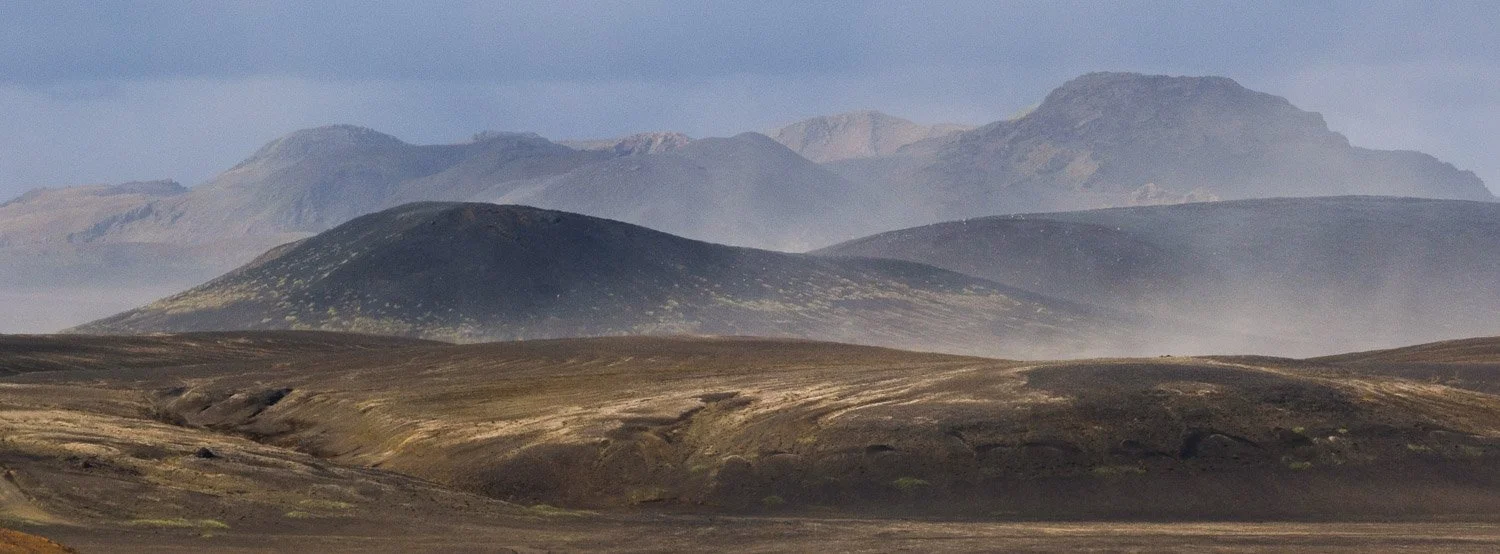
During one session, volcanic sand rose into enormous moving curtains. Visibility changed from minute to minute. Mountains appeared, vanished, and returned as shadows. There was no perfect arrangement to wait for. We changed focal lengths, reframed, and reacted as the landscape transformed in front of us. The scene felt less like a location and more like the middle of a film.
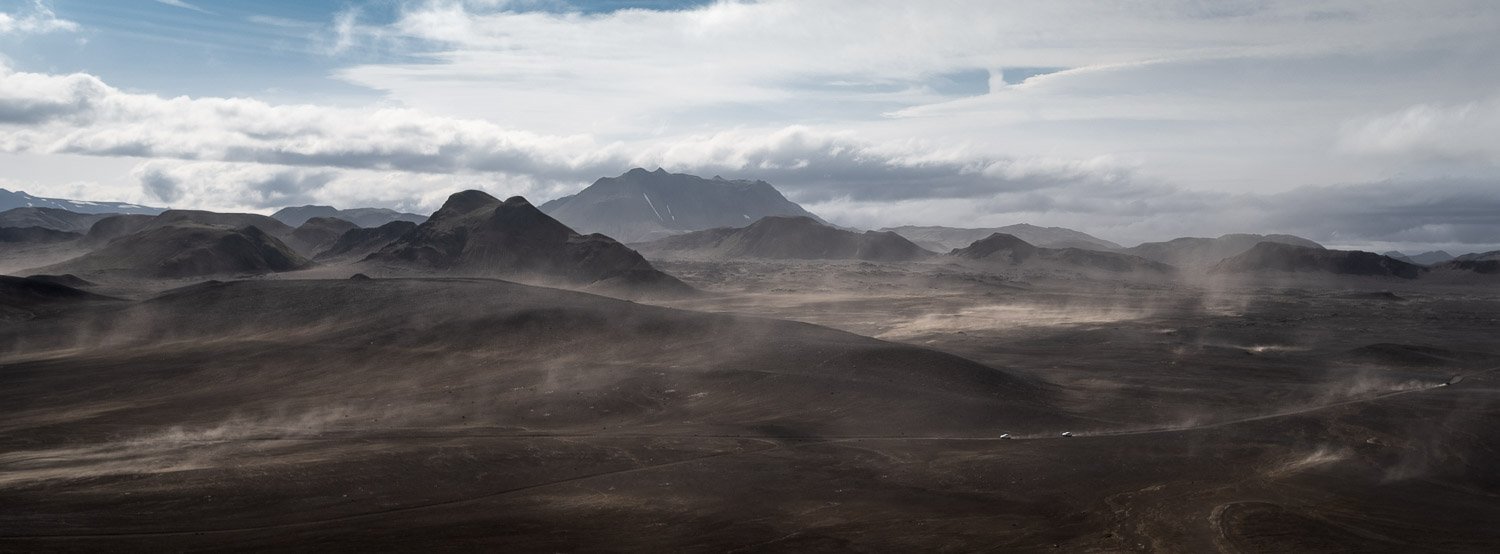
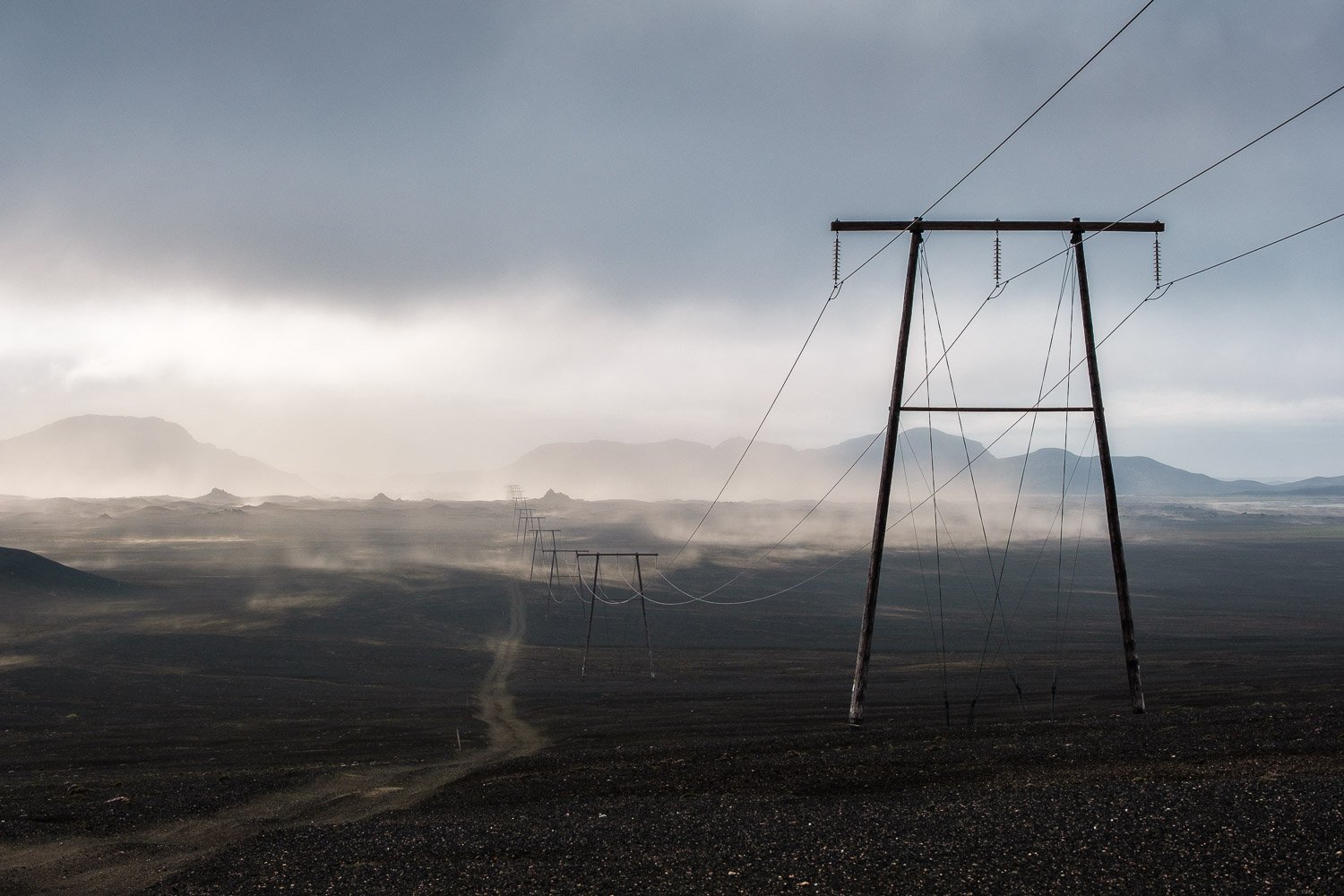
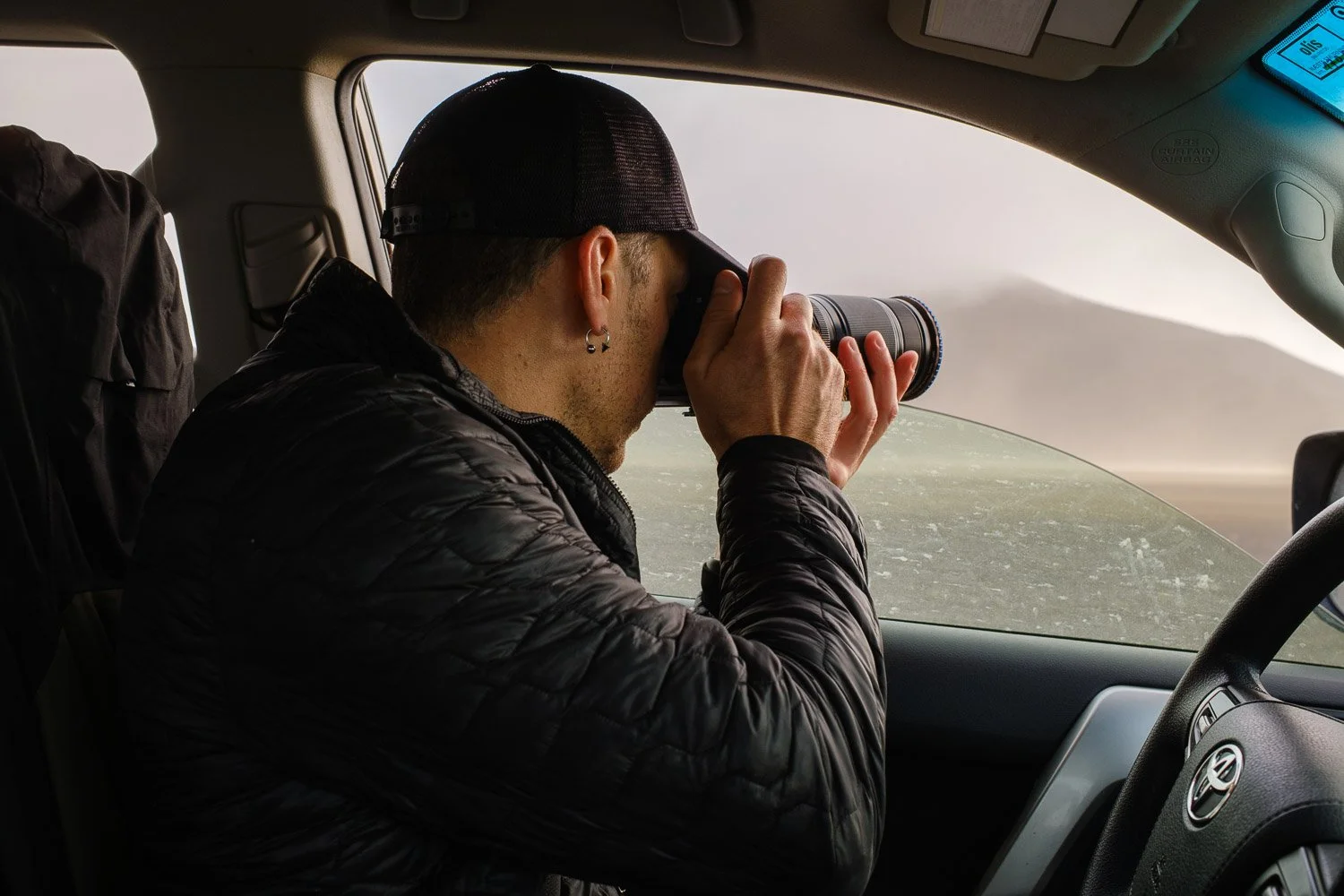
Back inside the 4x4, the conversation moved quickly between the photographs we had seen and the ones we hoped we had captured. One word kept returning: epic.
By the end of those four days, our SD cards were filling with images, but the experience was larger than the files. Every session had become a shared story.
The Long Road to Langisjór
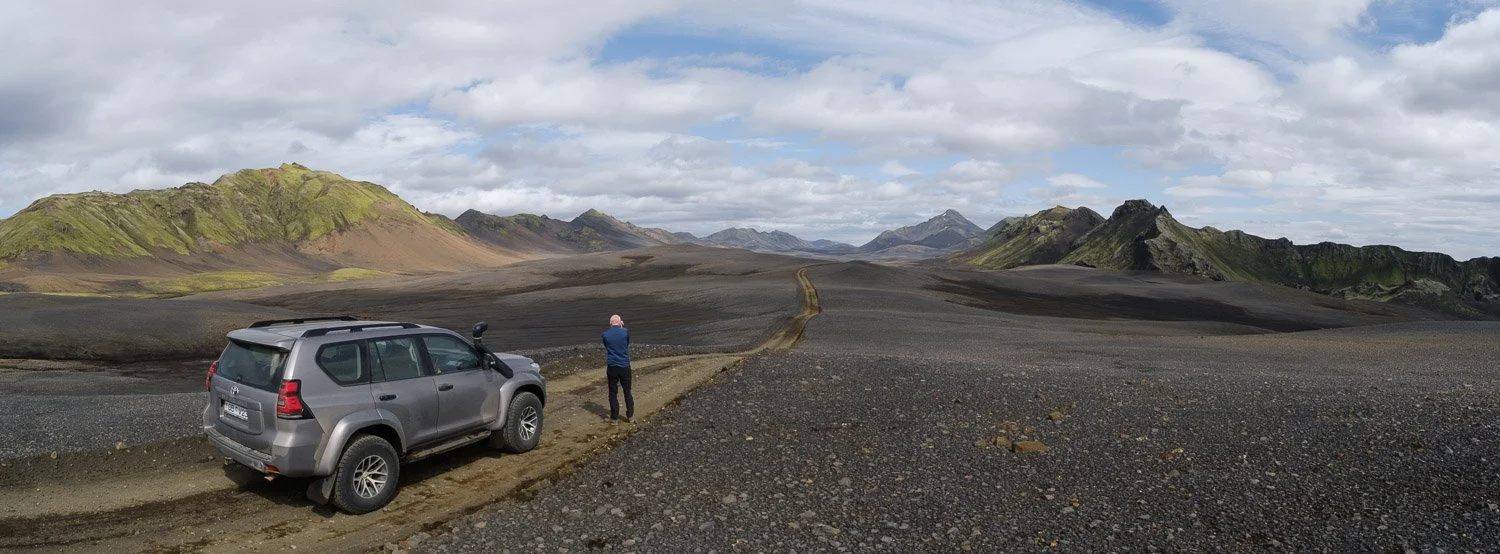
One does not simply drive to Langisjór. The road makes sure of that. Mile by mile, the rough road seems to remove the rest of the world. The stops along the way were not interruptions to the journey. They were the journey: a bend in the road, a ridge briefly separated by light, or a distant layer of color that demanded a closer look.
We encountered so few people that we could have counted them on one hand. There was no traffic and no crowd arriving behind us. Just wind, silence, water, and a scale that made us feel very small and absurdly lucky.
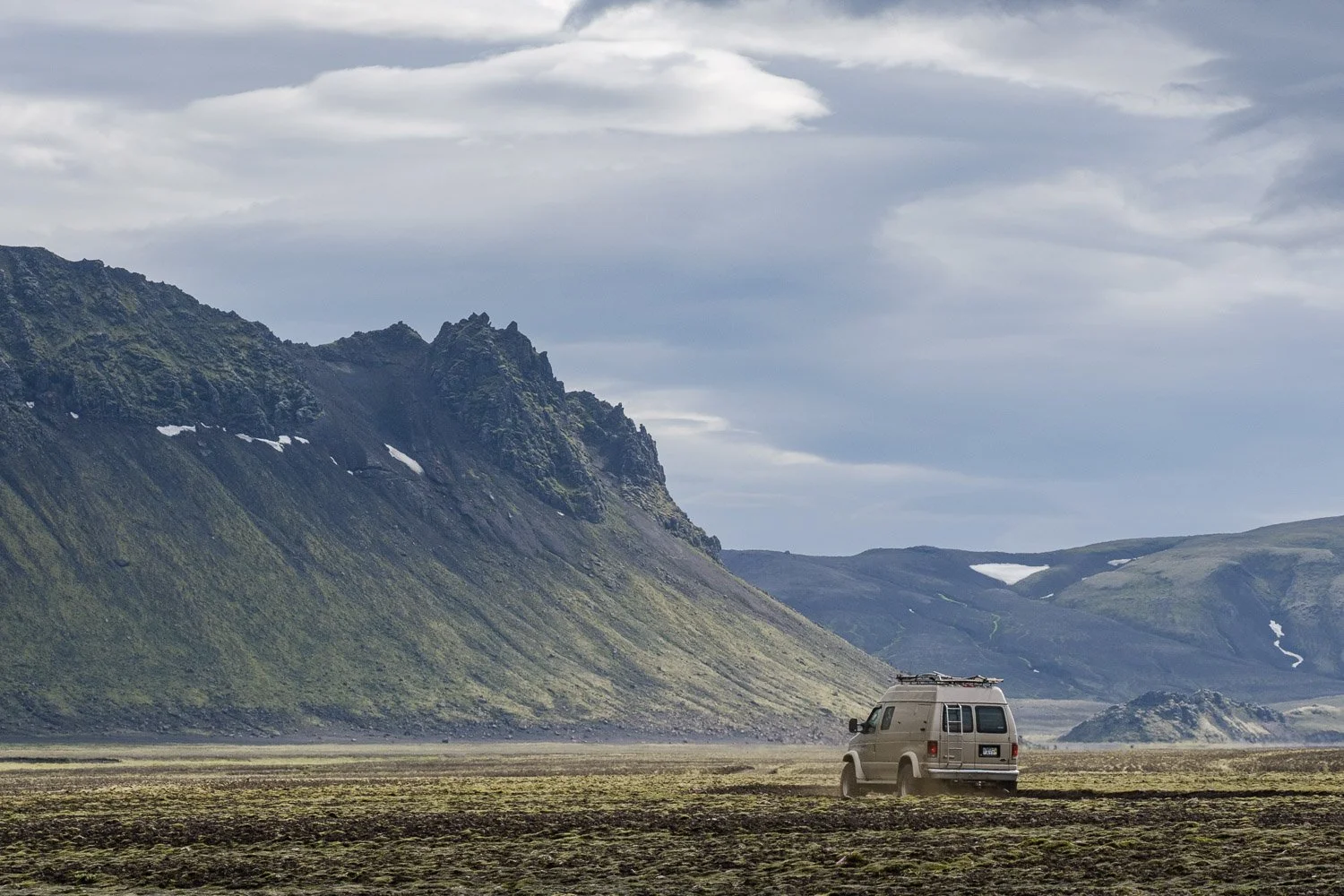
Modified van navigating the Langisjór area, photographed handheld with the Sigma 100-400mm on the Fujifilm X-T4.
The natural temptation was to reach for the widest lens and fit the whole place into one frame. Instead, I kept moving between the Fujinon 50-140mm and the Sigma 100-400mm. I isolated folds in the terrain, compressed distant ridges, and built a collection of spontaneous images unlike anything I had made there before. Langisjór did not need one photograph pretending to explain everything. It needed fragments.
At up to a 600mm-equivalent field of view on my Fujifilm X-T4, I worked around 1/320 to 1/640 second and accepted ISO 320 to 640. In strong wind, a clean file with the wrong shutter speed is just a detailed blurry photograph.
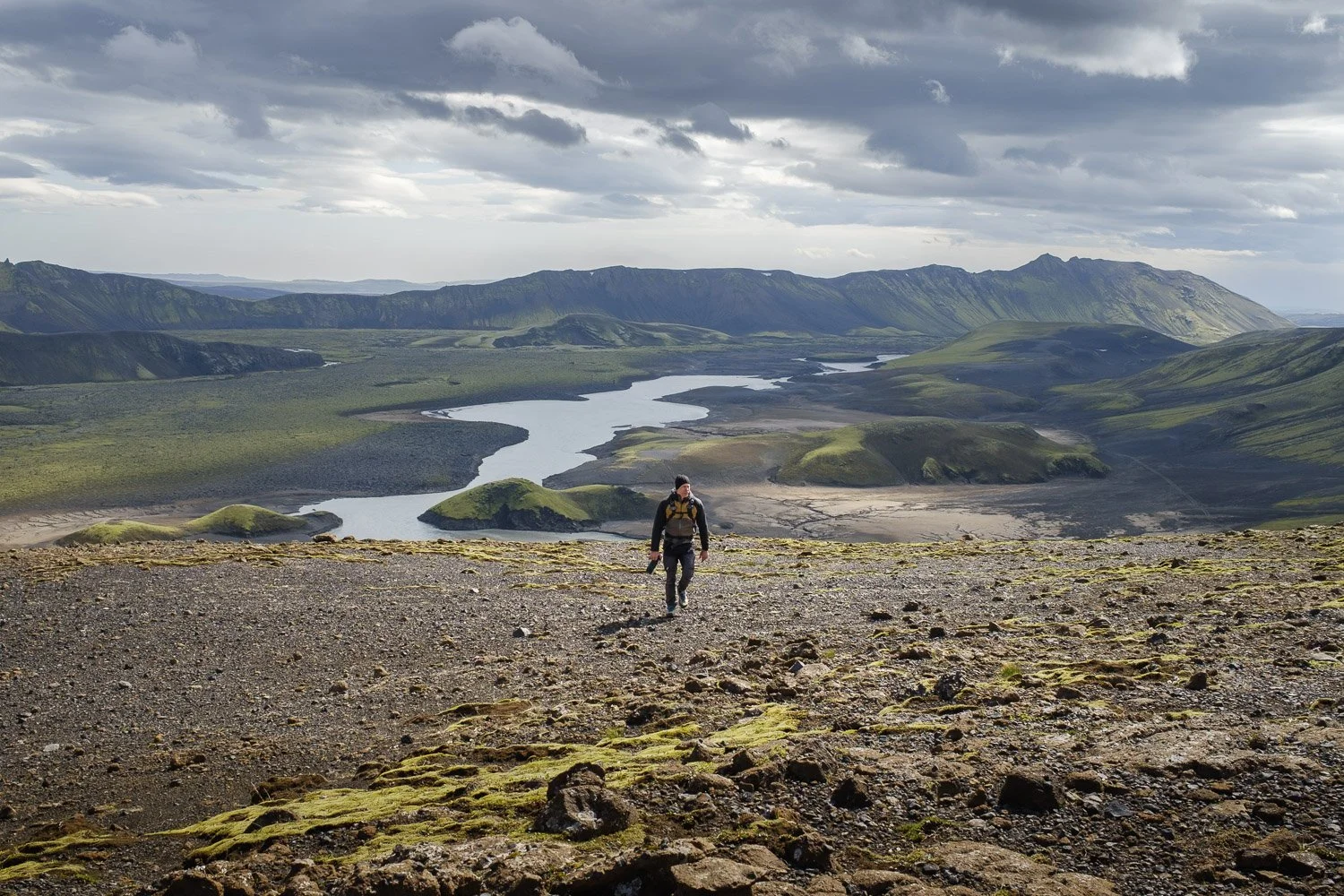
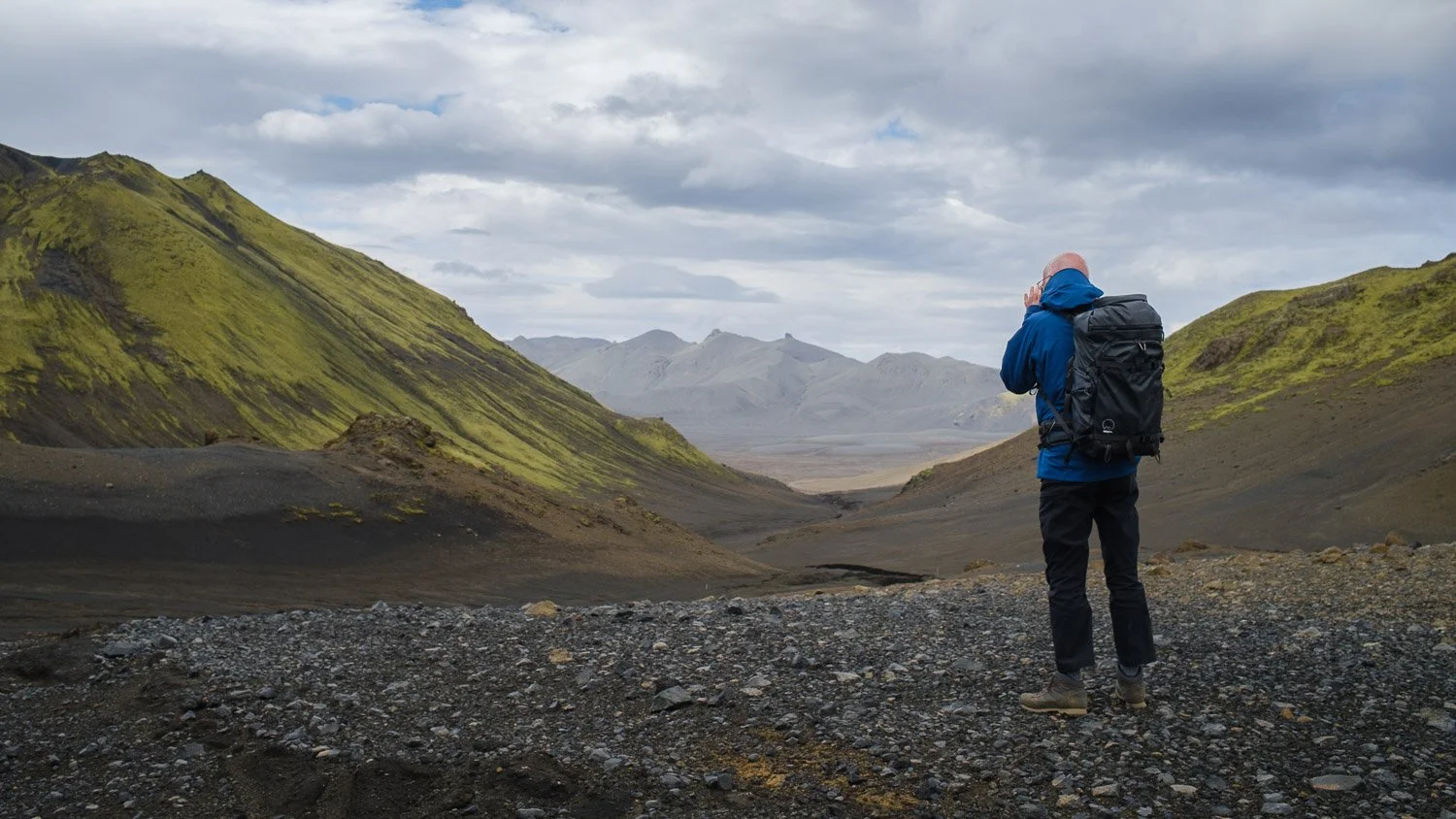
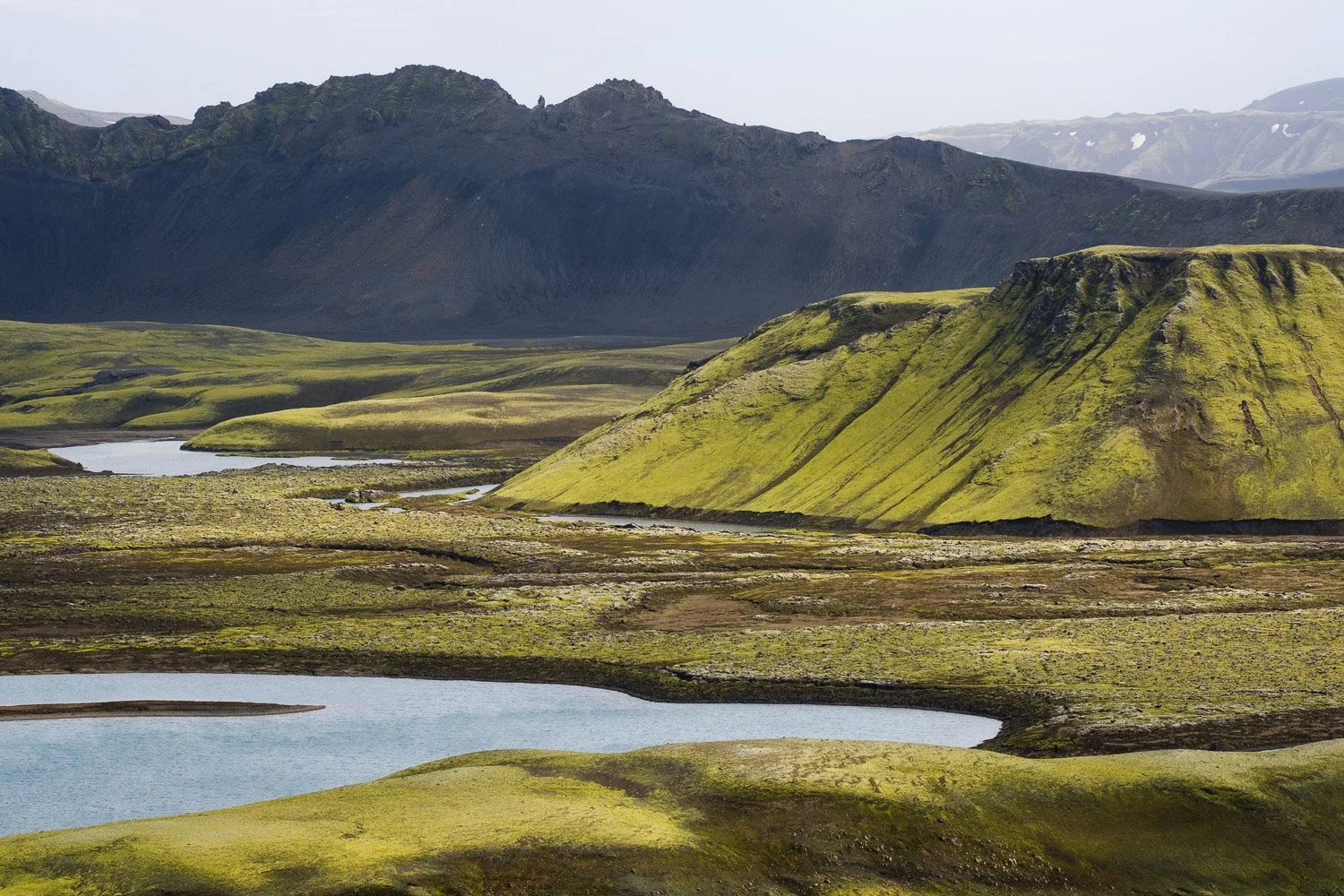
Layers of volcanic terrain near Langisjór, photographed handheld with the Sigma 100-400mm on the Fujifilm X-T4.
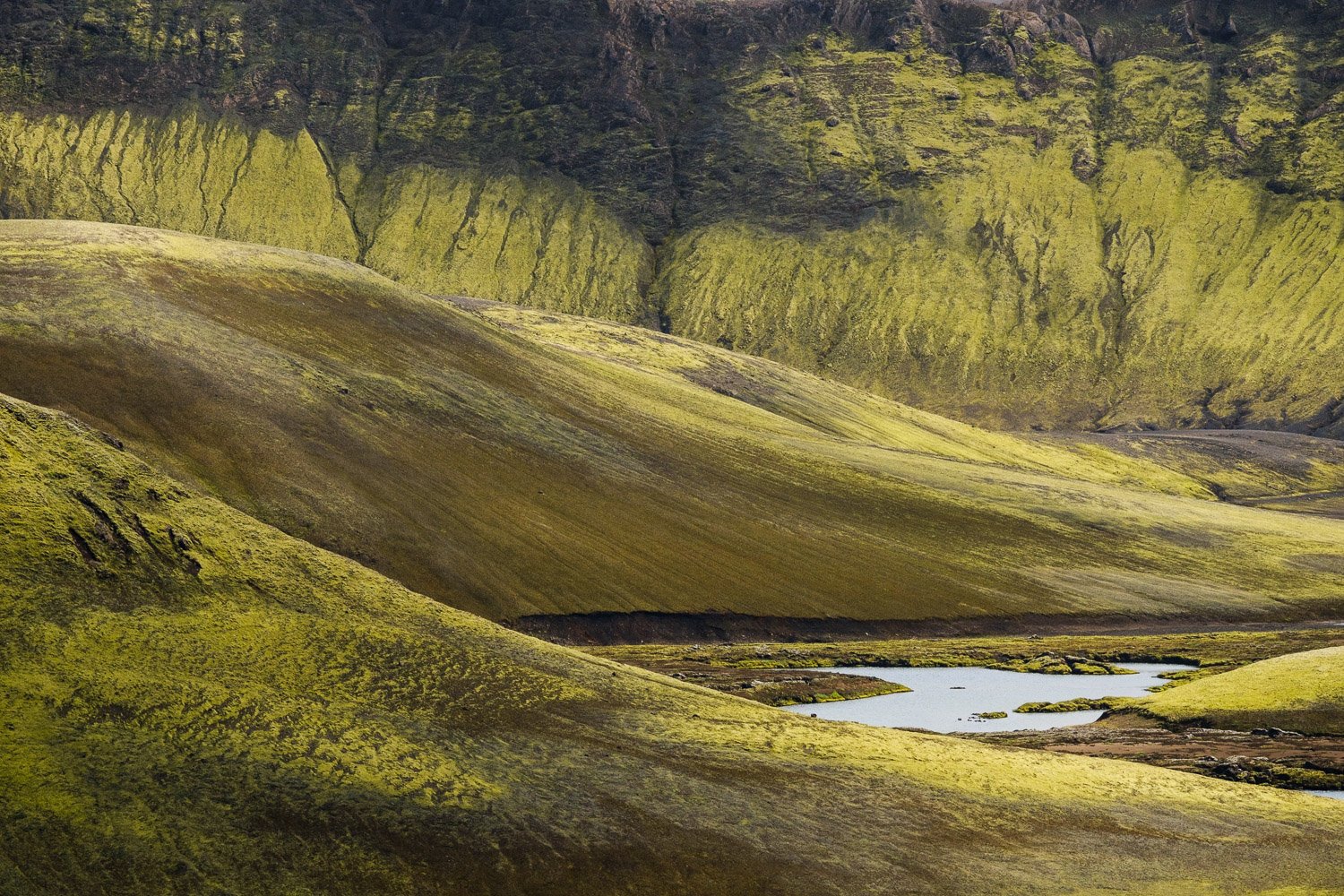
Layers of volcanic terrain near Langisjór, photographed handheld with the Sigma 100-400mm on the Fujifilm X-T4.
Learning to See Less: Telephoto Photography in Iceland with the Sigma 100-400mm
The most common challenge I see after years of running this workshop in Iceland is not a lack of subjects. It is the opposite. The landscape is so vast, layered, and unfamiliar that people try to include everything.
The solution is simplification.
Wide-angle lenses are often treated as the kings of landscape photography, but longer focal lengths were more useful during many of our sessions. I encouraged John and Tomas to use telephoto lenses to isolate a ridge, compress distant layers, or notice a small relationship inside the larger view. Those fragments tell stories that the grand vista cannot. When combined, they create a fuller account of both the landscape and the experience.
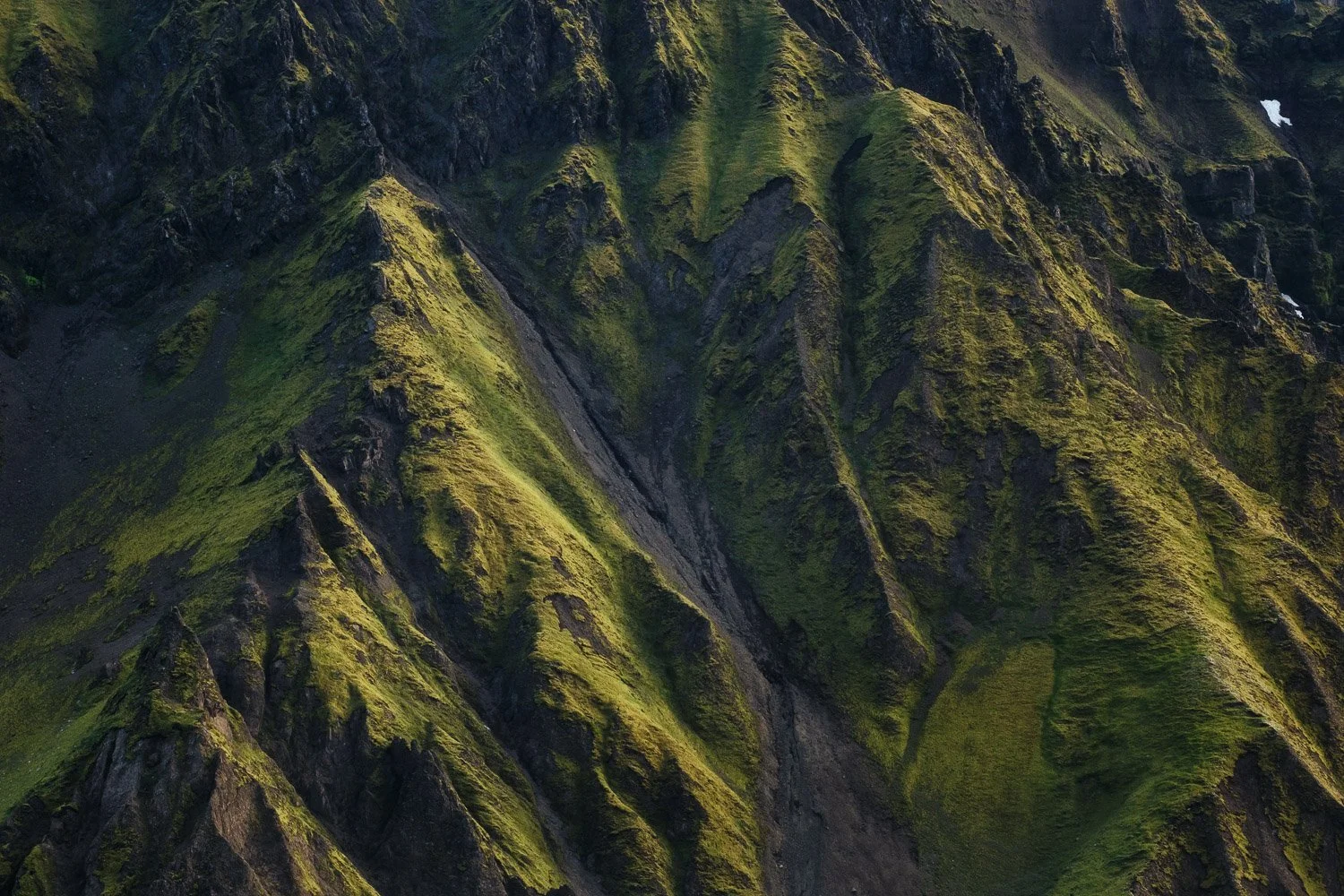
A telephoto study of light and shadow across the moss-covered mountain ridges of Mælifellssandur, photographed with the Sigma 100-400mm.
This camera-first approach also made the edition feel different from the previous year. That workshop had been more drone-centered, partly because of the participants' goals. This time, we spent more energy on intimate compositions and on making decisions from the ground.
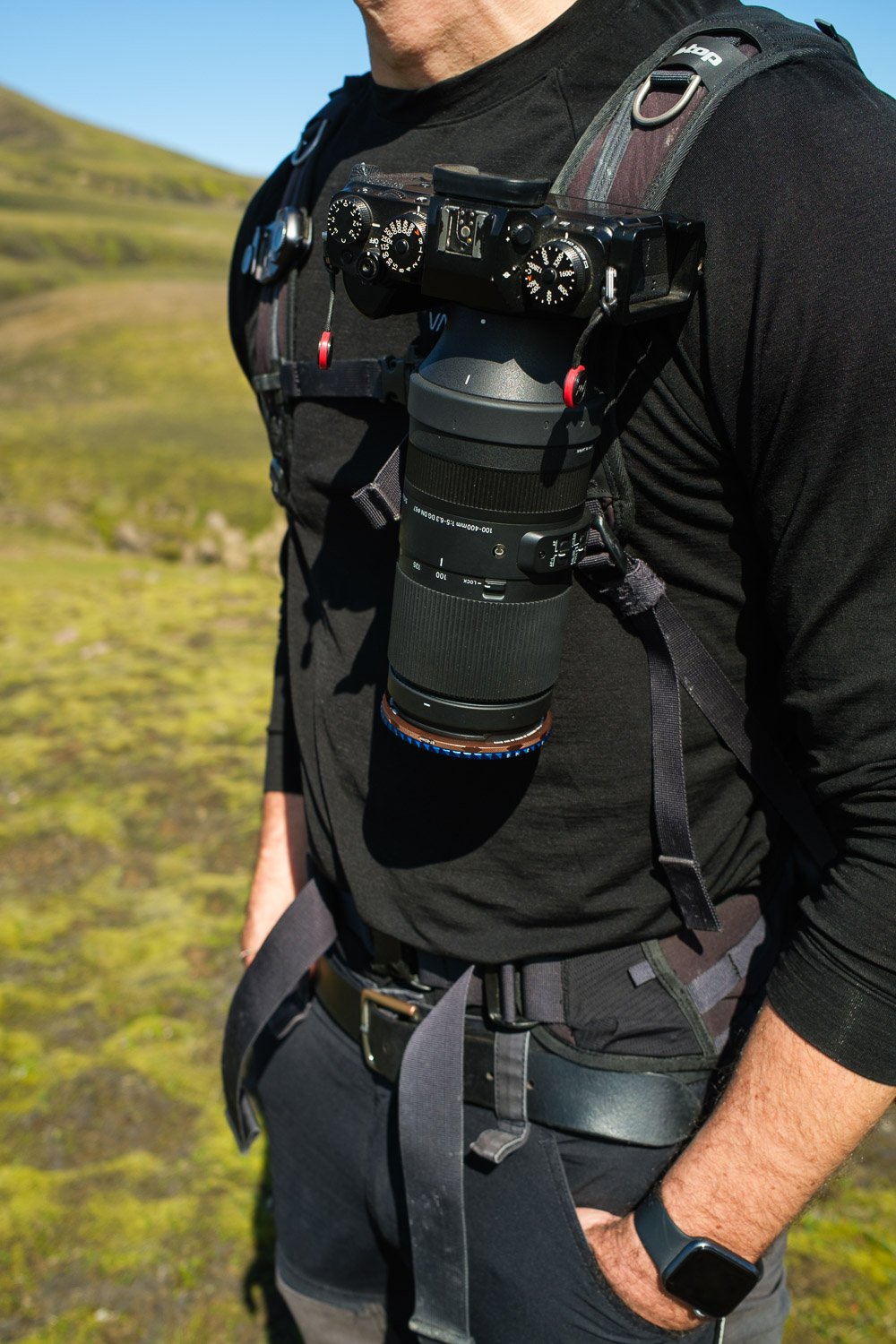
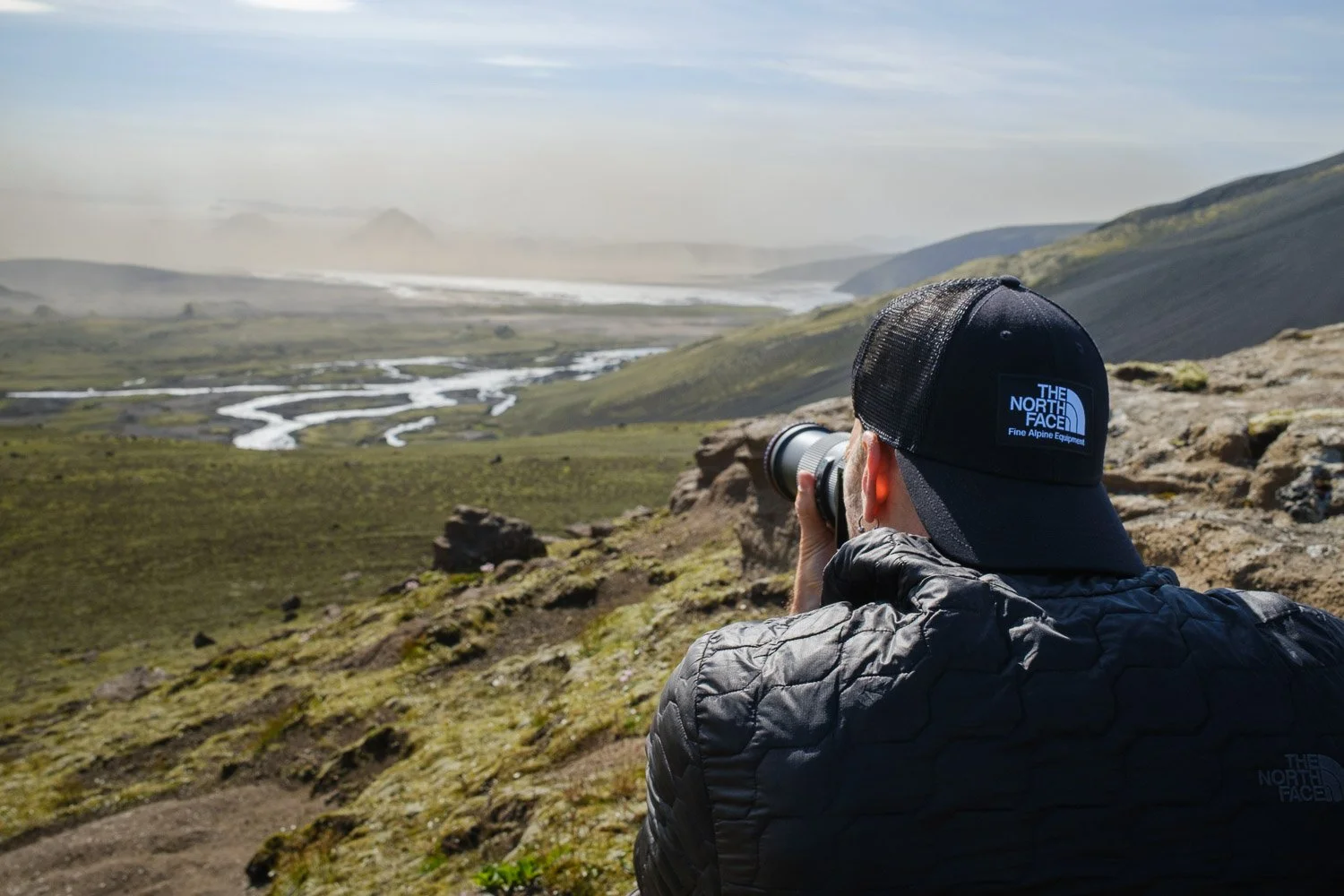
The Sigma 100-400mm pushed that idea even farther. At 400mm (600mm full-frame equivalent), familiar places became unfamiliar again. But using that focal length in strong wind was a genuine technical challenge. A tiny movement could ruin fine detail, and sometimes keeping the subject inside the frame was difficult.
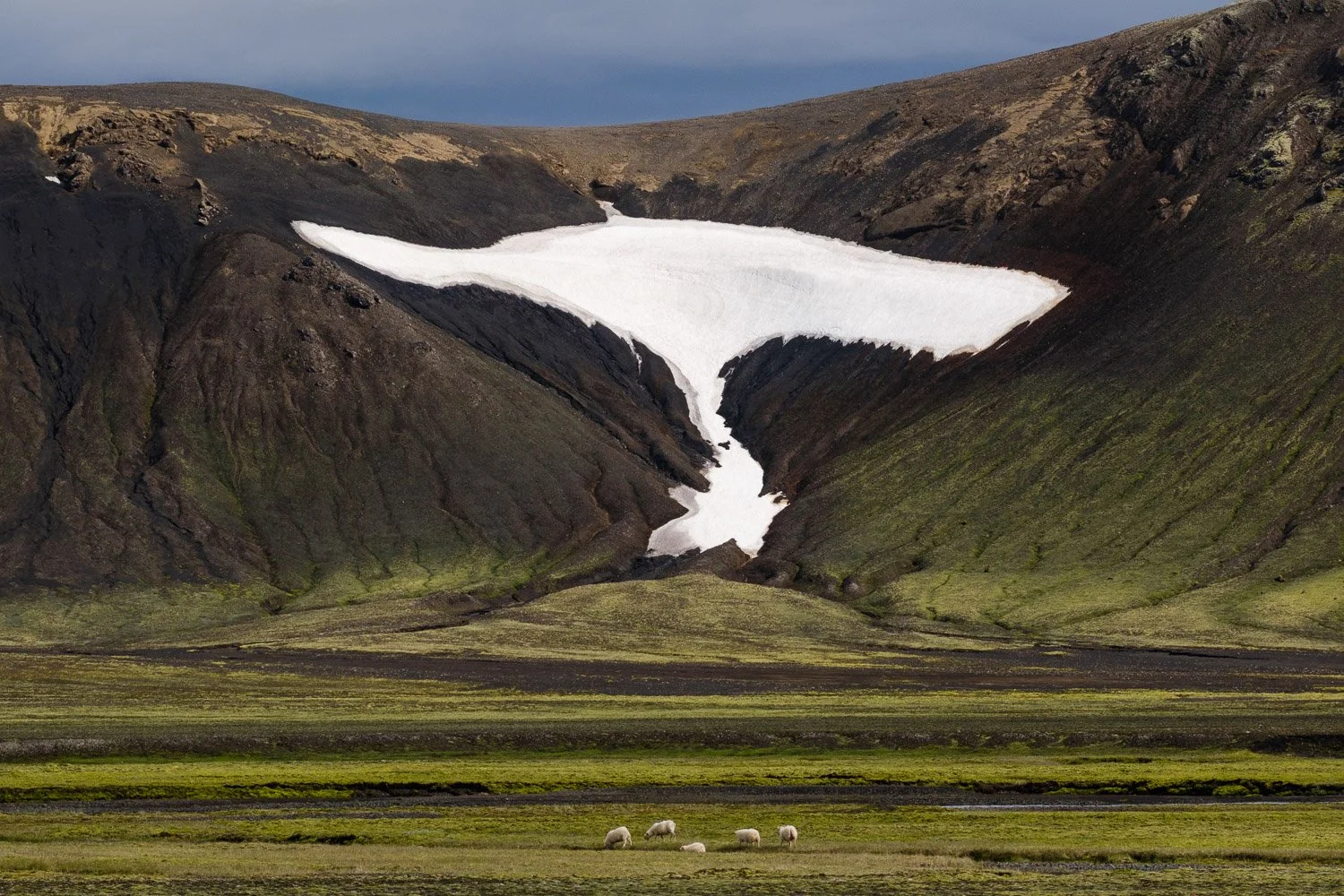
Along the road that took us to Langisjór, photographed handheld with the Sigma 100-400mm on the Fujifilm X-T4.
I raised the ISO enough to maintain a safe shutter speed and often used continuous low-speed burst mode. A short burst adds another layer of protection because one frame may be sharper than the others between gusts. I would rather accept a little noise than lose a photograph to motion blur.
In blowing volcanic sand, I also keep a polarizer filter on the lens. The sand is abrasive and can damage the front-element coating; it is also nasty around moving parts such as barrels and focus or zoom rings.
Protecting the equipment matters when the landscape itself is airborne.
I loved the Sigma 100-400mm F5-6.3 DG DN OS | Contemporary for super-tight compositions, although its range forces a specific approach to framing. The Fujinon 50-140mm is more versatile, but lacks the same reach. My dream Fujifilm lens still does not exist: a 50-250mm with a constant f/4 aperture and a tripod collar, obviously. For my style, that would be the sweet spot.
The trip also confirmed how little I now use a tripod in Iceland. I brought out my FLM CP30-L4 only at Sigöldugljúfur and for two waterfalls; otherwise, I photographed handheld. I adore it, but next time I may carry a lighter model as insurance and trim a few grams. The question is how essential a tripod remains for the way I photograph Iceland today.
Mælifellssandur: Eleven Years, Never the Same
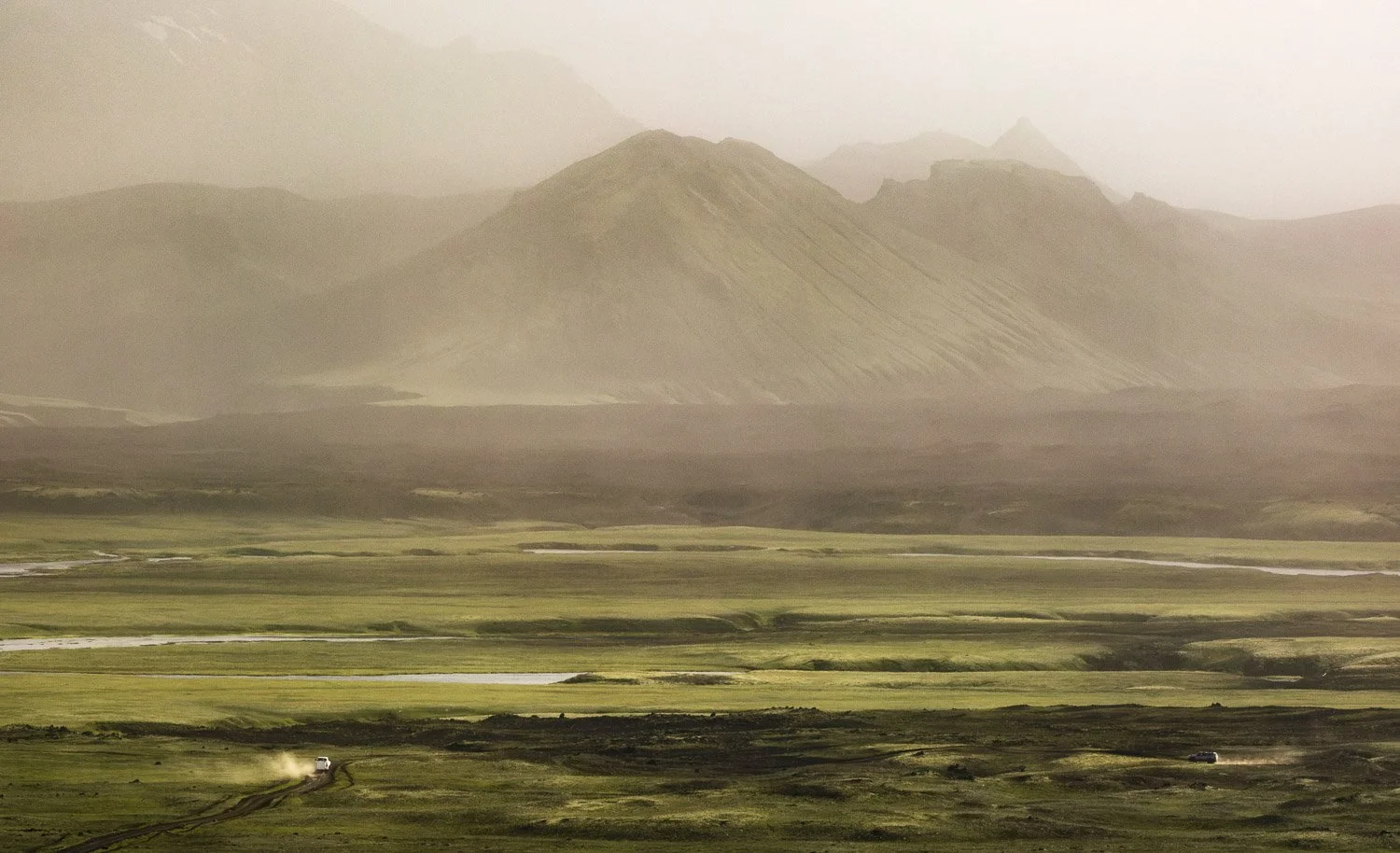
Two 4x4s crossing the vast plains of Mælifellssandur beneath hazy volcanic ridges, photographed with the Sigma 100-400mm.
During another storm on the Mælifellssandur plain, sand crossed the black landscape in huge moving curtains. Mælifell appeared only as a dark silhouette, then vanished again. We made telephoto panoramas to describe the scale and tighter compositions to isolate the atmosphere. Some became my favorite images of the week.
They were not photographs we could have planned. We chose a safe position, watched the weather, and prepared. After that, we had to respond to whatever the Highlands gave us. We kept the 4x4 on permitted roads and ourselves on established trails, treating the fragile ground accordingly. Access is a privilege. No photograph is worth leaving a mark on the landscape.
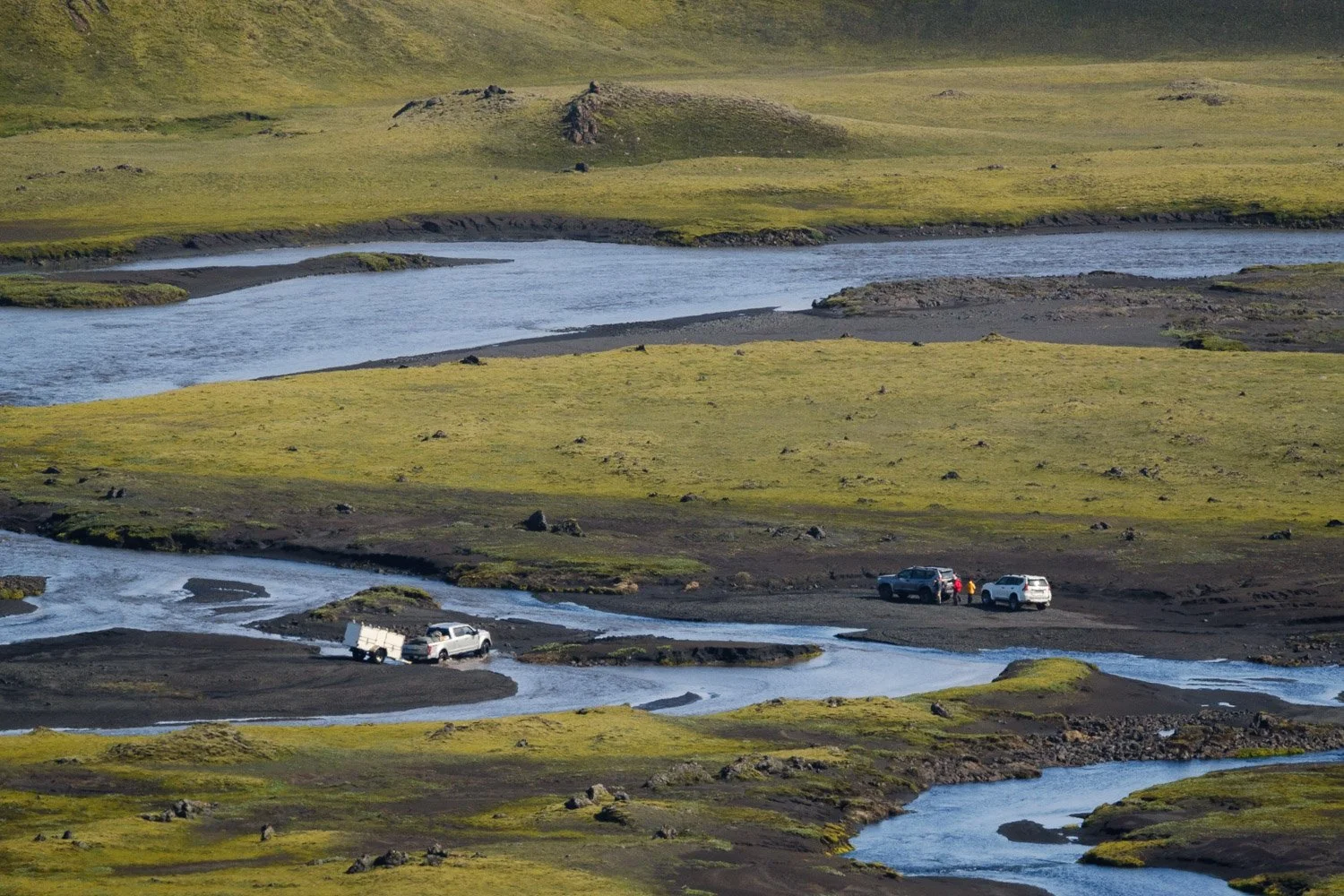
A remote river crossing winding through the moss and black volcanic terrain of Mælifellssandur, photographed with the Sigma 100-400mm.
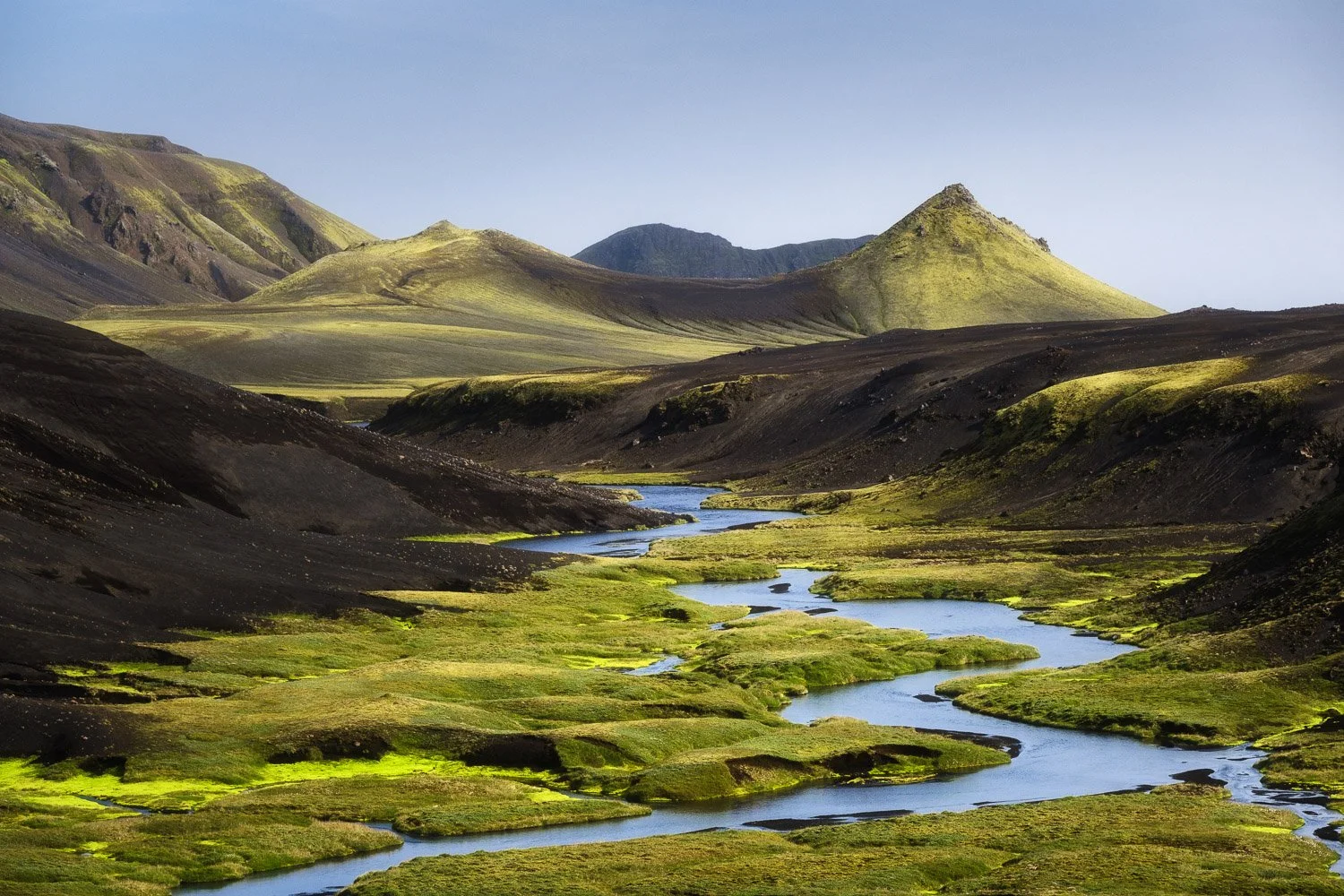
A winding river leads through moss-covered valleys toward the volcanic peaks of Mælifellssandur, photographed with the Fujinon 50-140mm.
After fording the Hólmsá, we continued toward Mælifell until rising water and a soft riverbed stopped us farther ahead. The river had made its position clear: we were not passing. Fishermen approaching from the opposite direction confirmed that the braided crossing had become dangerous. We turned around. There is no photograph worth arguing with a Highland river for.
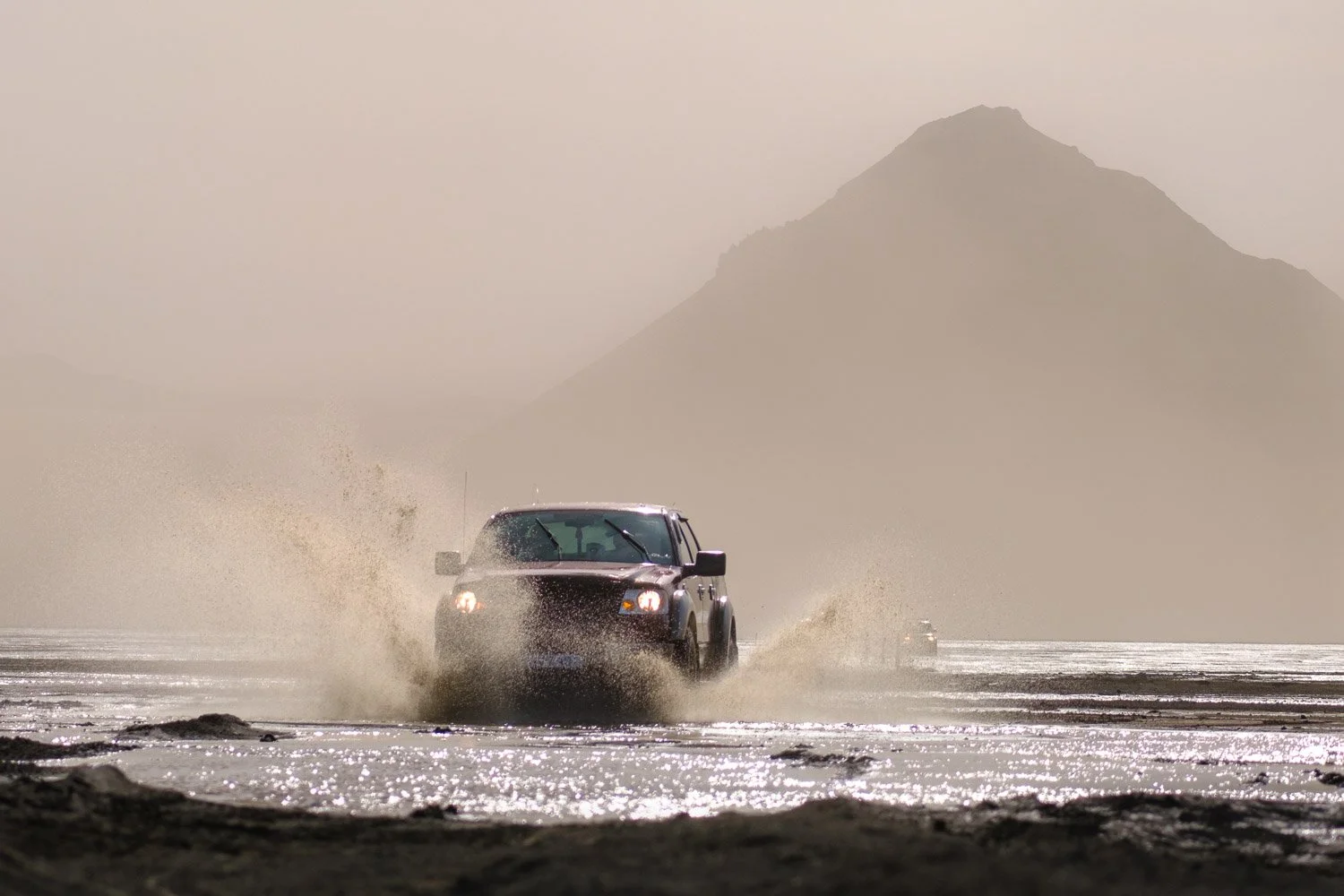
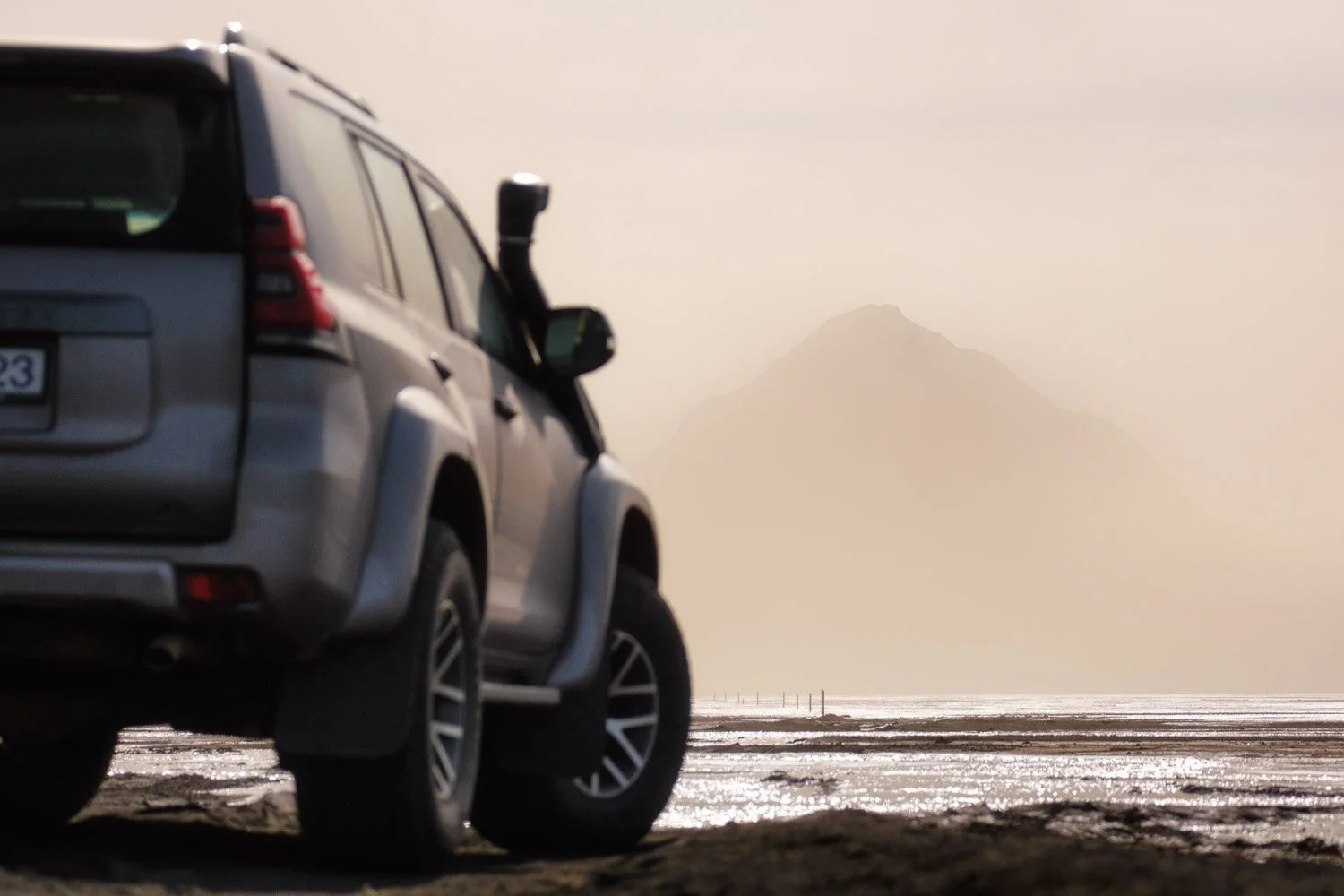
Mælifell emerges through windblown sand beyond our 4x4, photographed with the Sigma 100-400mm.
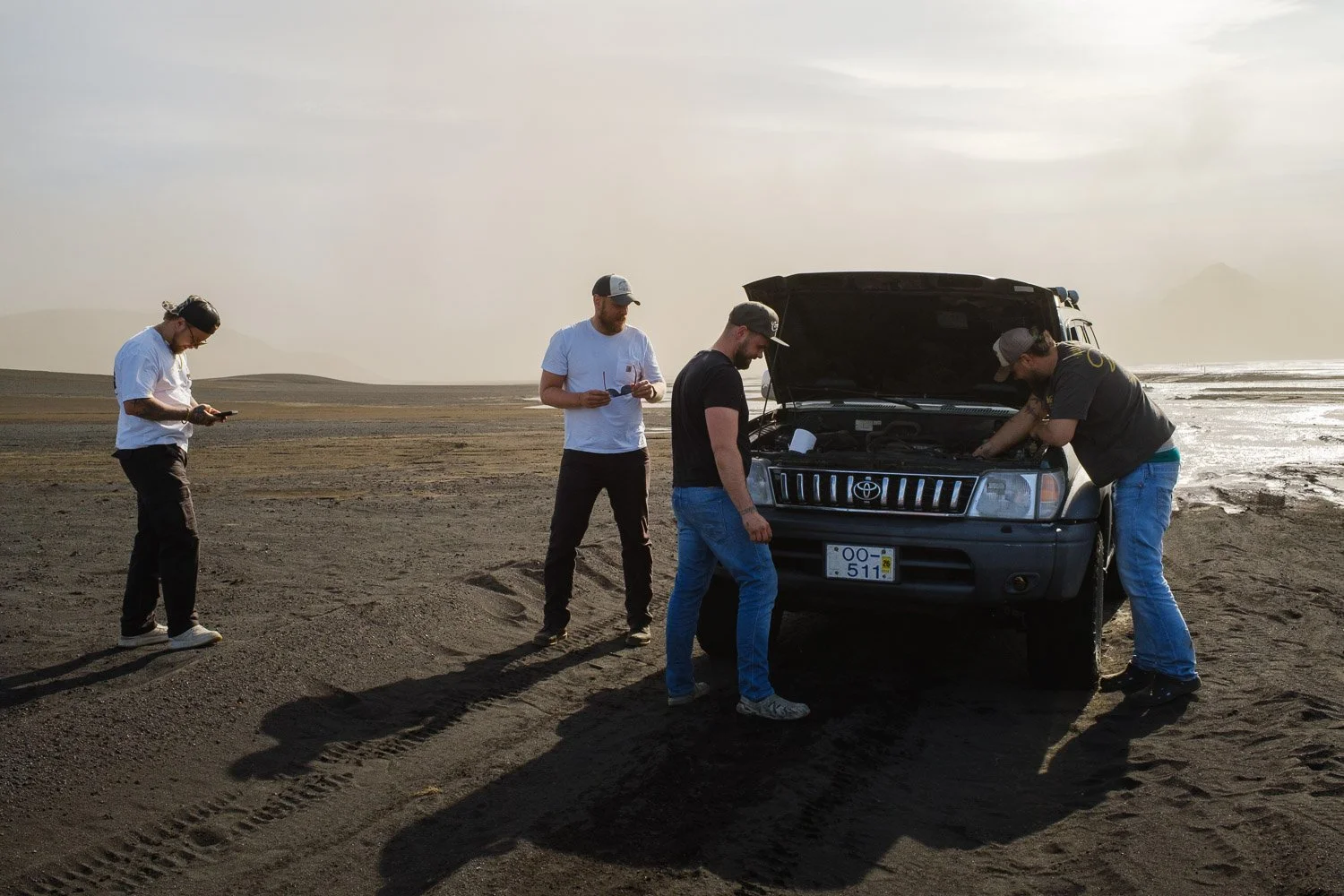
Local Icelandic fishermen inspect their 4x4 after returning across the swollen river braids near Mælifell.
John asked me whether returning to this part of Iceland was still exciting after eleven years.
"Absolutely," I told him.
It was the shortest honest answer I could give. Iceland has never been the same twice. New challenges arrive without warning, and the landscape offers an almost unlimited range of photographs. That unpredictability is why I return. Sharing it with photographers who are willing to explore, work hard, and step outside their comfort zones makes it even more rewarding.
From my experience, the photographs we have to work for are often the ones we remember most. Sabrina and I want people to leave with strong images, of course, but our larger goal is to give them an experience that stays with them.
What We Brought Home from Iceland
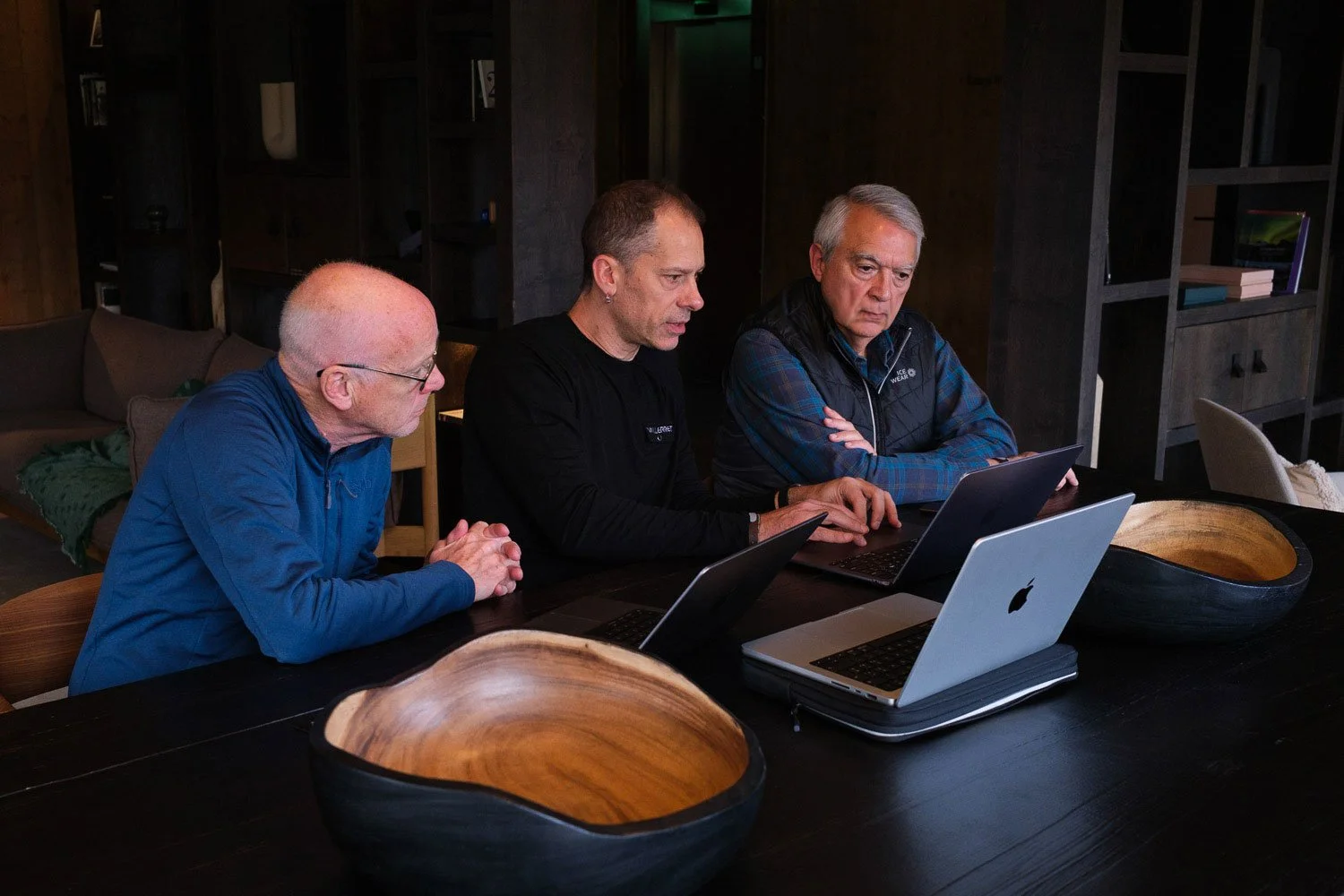
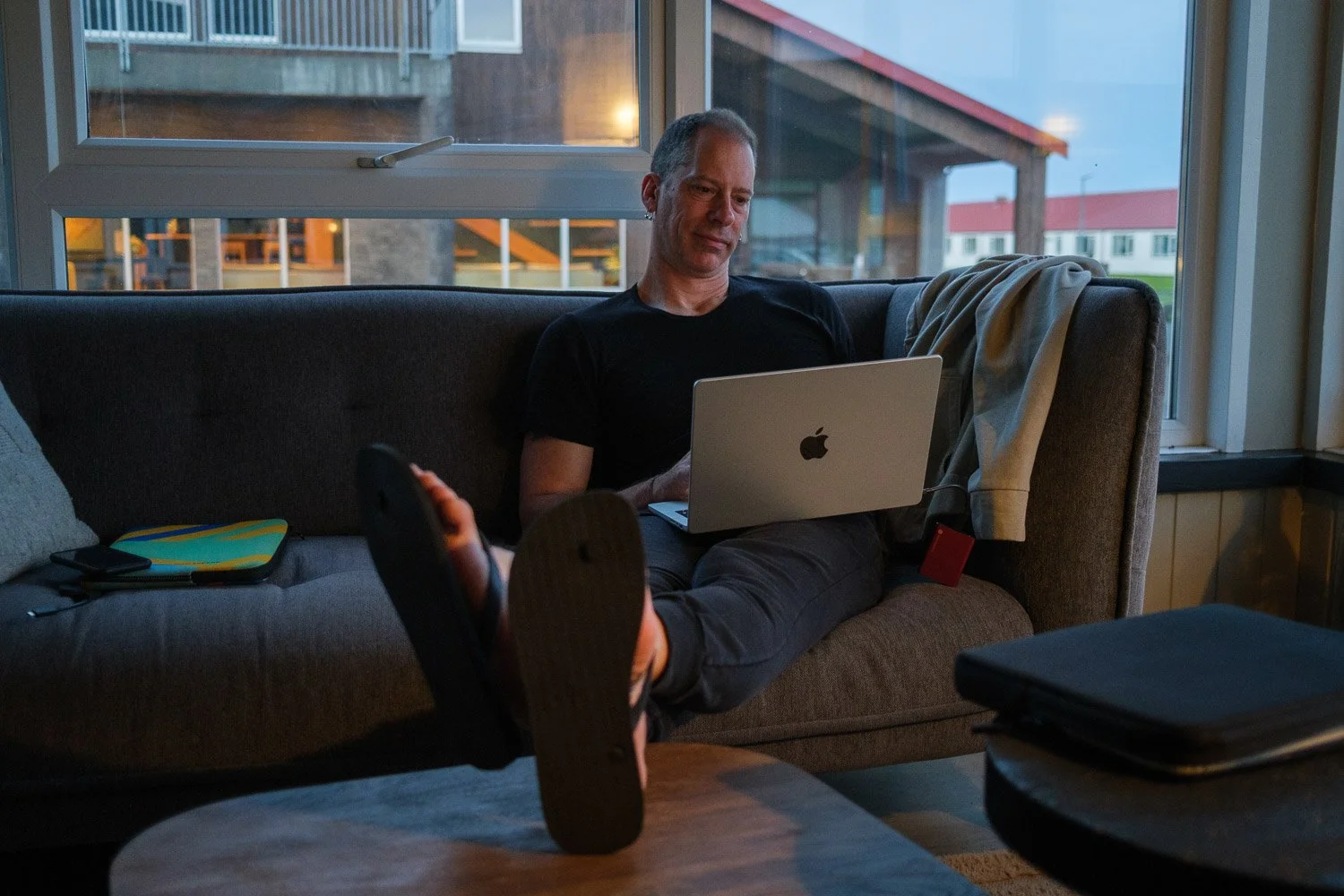
On our final morning, cappuccinos cooled beside the laptops while we reviewed the week's work. Four people could stand a few feet apart and return with completely different photographs. One noticed light on a distant ridge. Another found texture. Someone waited for a figure to turn a landscape into a travel story.
We discussed how to choose the strongest frame from a sequence, when a small edit strengthens compositional balance, and when two similar photographs are actually telling different stories. The review was not about choosing who had found the best composition. It showed how many honest photographs can exist inside the same scene.
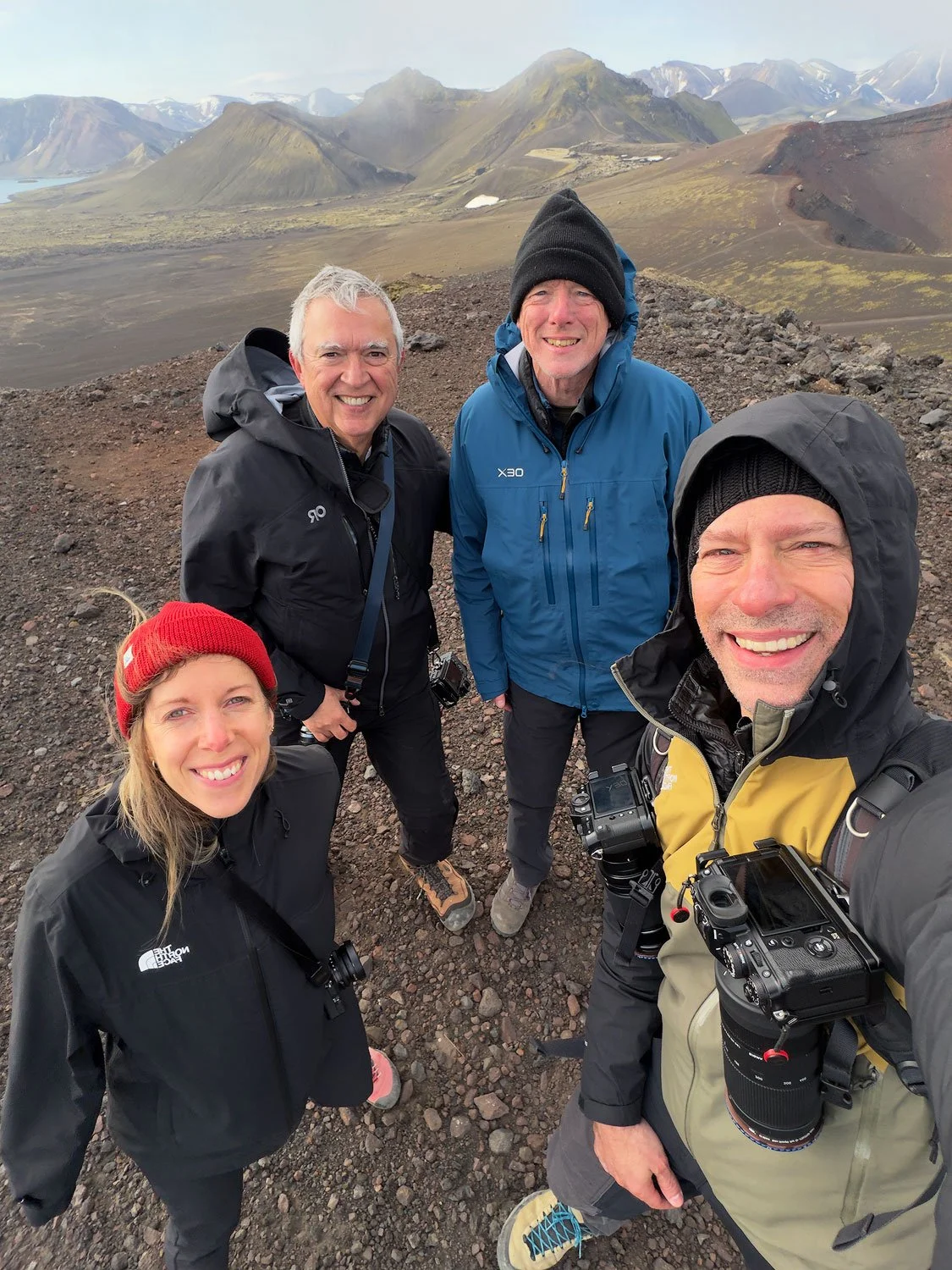
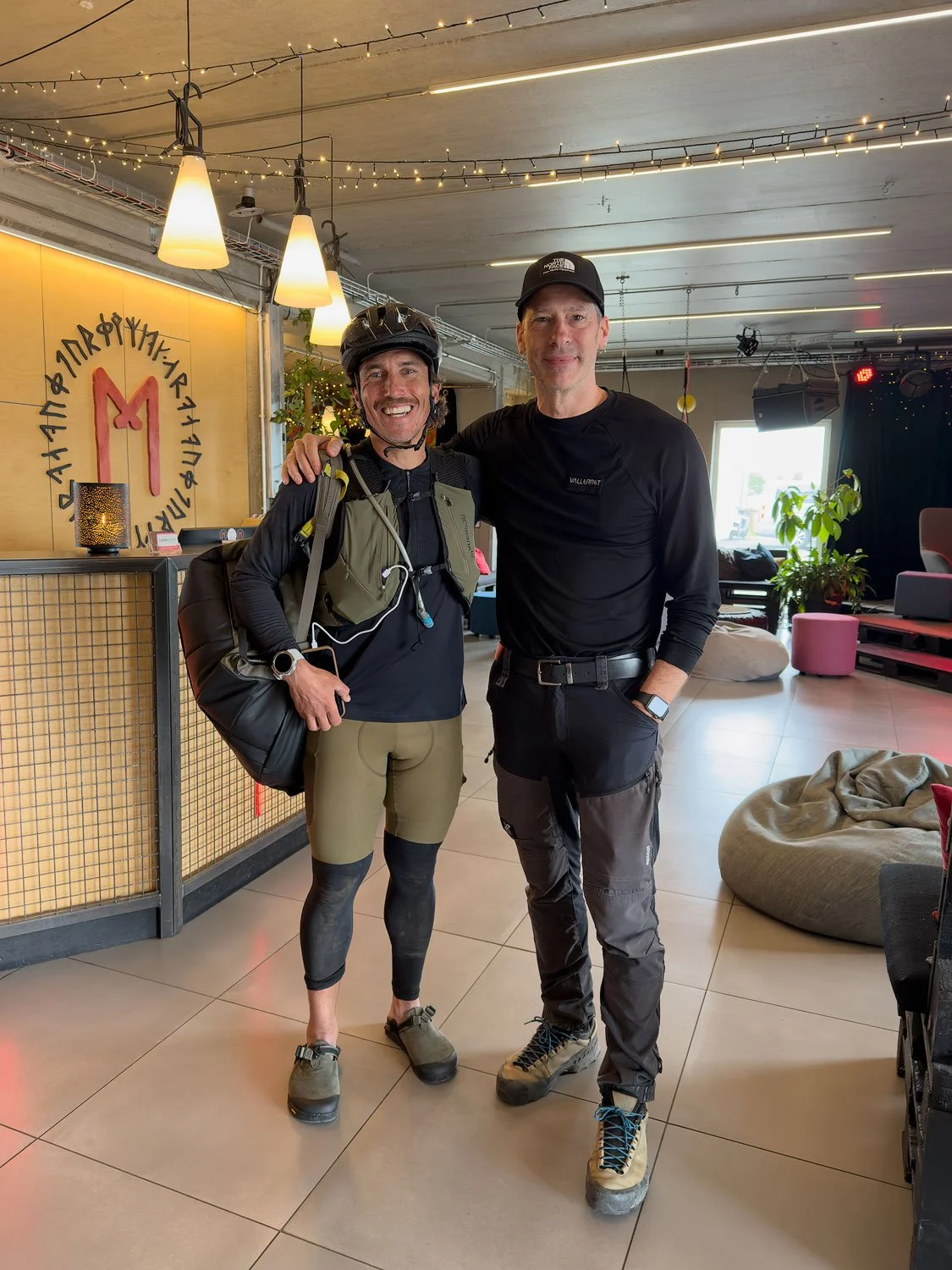
We checked out and drove toward Reykjavík, stopping at Vík's black-sand beach and Midgard, one of our favorite places in Iceland.
The journey back brought one final surprise: meeting Chris Burkard for the first time and chatting briefly with someone whose work I have admired for years. He came across as genuinely friendly, relaxed, and down-to-earth, which made the encounter even more memorable.
It was a special way to end the trip before heavy rain followed us almost all the way to Reykjavík.
Tomas had already visited Iceland three times before joining us. After returning home, he shared this:
“We visited a wealth of locations I didn’t know existed, and places I had seen before revealed an entirely new side of themselves. The experience gave me a different perspective on Iceland’s landscapes, light, and atmosphere.
The workshop was exceptionally well organized, with a thoughtful balance of structure and flexibility. Andrea is a gifted photographer and teacher, and his composition and post-processing tips were invaluable. Sabrina’s planning skills were instrumental to the trip’s success. Together, they created an experience that felt seamless, informative, and deeply rewarding.”
John wrote that the experience was still "slow-cooking" in his mind. He called Tomas an inspiration and said the week made him want to step outside his comfort zone more often.
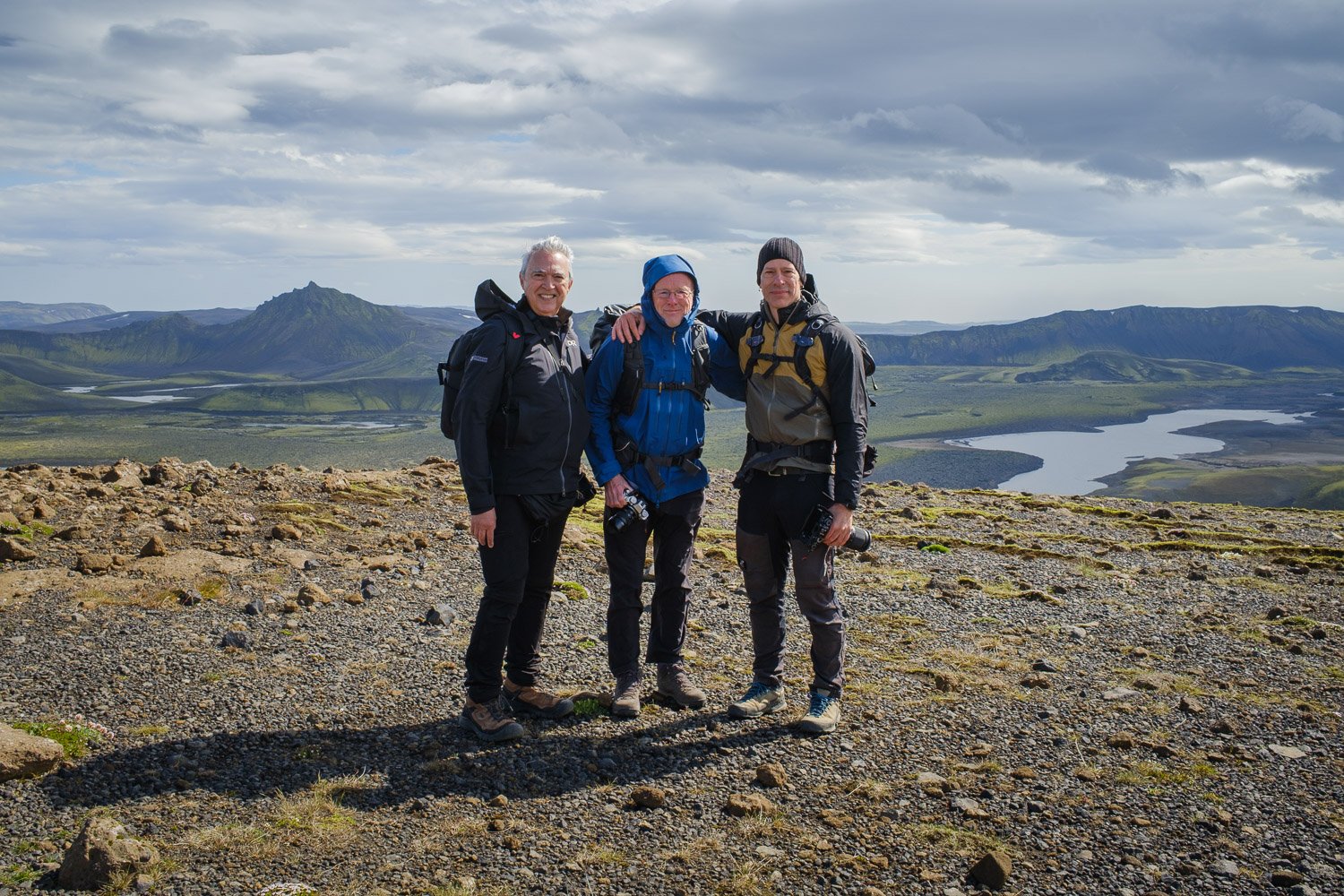
Reading their messages brought back the wind, the sand, the laughter inside the 4x4, and the four of us leaning over laptops on the final morning.
The Highlands gave us hundreds of photographs, but the locations were only the stage. The deeper value was learning when to wait, when to return, how to find order inside a complex landscape, and how to stay open when the plan fell apart.
We began the week as four photographers with a flexible route. We finished it knowing we had shared an extraordinary stretch of Icelandic wilderness-wind, sand, laughter, difficult decisions, and all.
Join the 2028 Iceland Priority List
The next planned edition is 2028. If you'd like to be among the first to hear when the dates and details are available, you can explore the workshop and join the priority list below.
In this Tuscany landscape photography masterclass, I take you through a complete sunrise session in Val d'Orcia, showing you how to read changing light in real time and make better creative decisions in the field.