
The Part of Photography You Shouldn't Make Easier
Efficiency has a seductive logic: if something can be done faster, easier, with less effort, why resist?
Most of the time, there is no reason to.
We build better tools, refine our workflows, eliminate unnecessary steps. Progress, after all, has always been partly about reducing friction.
But there are certain activities where friction is not the enemy.
It is the mechanism.
The Easier It Gets, the Less You Learn
Imagine you need to move a pile of heavy boxes from one side of a building to another. If that's your job, you'd be crazy not to use a trolley, a forklift, or whatever makes the task faster and easier. The objective is to move the boxes.
But imagine you're at the gym. Suddenly, making the weight easier to lift defeats the purpose. You're not lifting it because the weight desperately needs to move from A to B. You're doing it because the resistance is what makes you stronger.
Remove the resistance and you haven't improved the exercise. You've removed it.
I think we often confuse these two things in photography.
Sometimes photography really is work. If I have hundreds of images to process after an assignment, I'm quite happy to use every tool available to make repetitive tasks faster. Automatic masks, synchronization, presets, AI tools... whatever helps me get through the mechanical parts of the process efficiently. I don't need to prove anything by manually masking the same sky forty times.
If I already know what I want, speed is useful. The decision has been made. The tool simply helps me execute it.
But there's another side of photography where efficiency can quietly work against us.
Because sometimes we're not at work.
We're at the gym.
When someone is learning photography, it's incredibly tempting to look for formulas. Use the rule of thirds. Find a leading line. Photograph during golden hour. Apply these Lightroom settings. Use this preset. Copy this processing technique.
There is nothing inherently wrong with any of this. We all need references, particularly when we're learning. I've talked before about how composition rules can be useful starting points, but limiting when they become formulas. Even replicating an existing photograph can be useful. It can teach you about focal length, positioning, timing, light, and how another photographer constructed an image.
But replication and repetition aren't quite the same thing.
When you replicate, you already know where you're trying to arrive. Real experimentation begins when you don't.
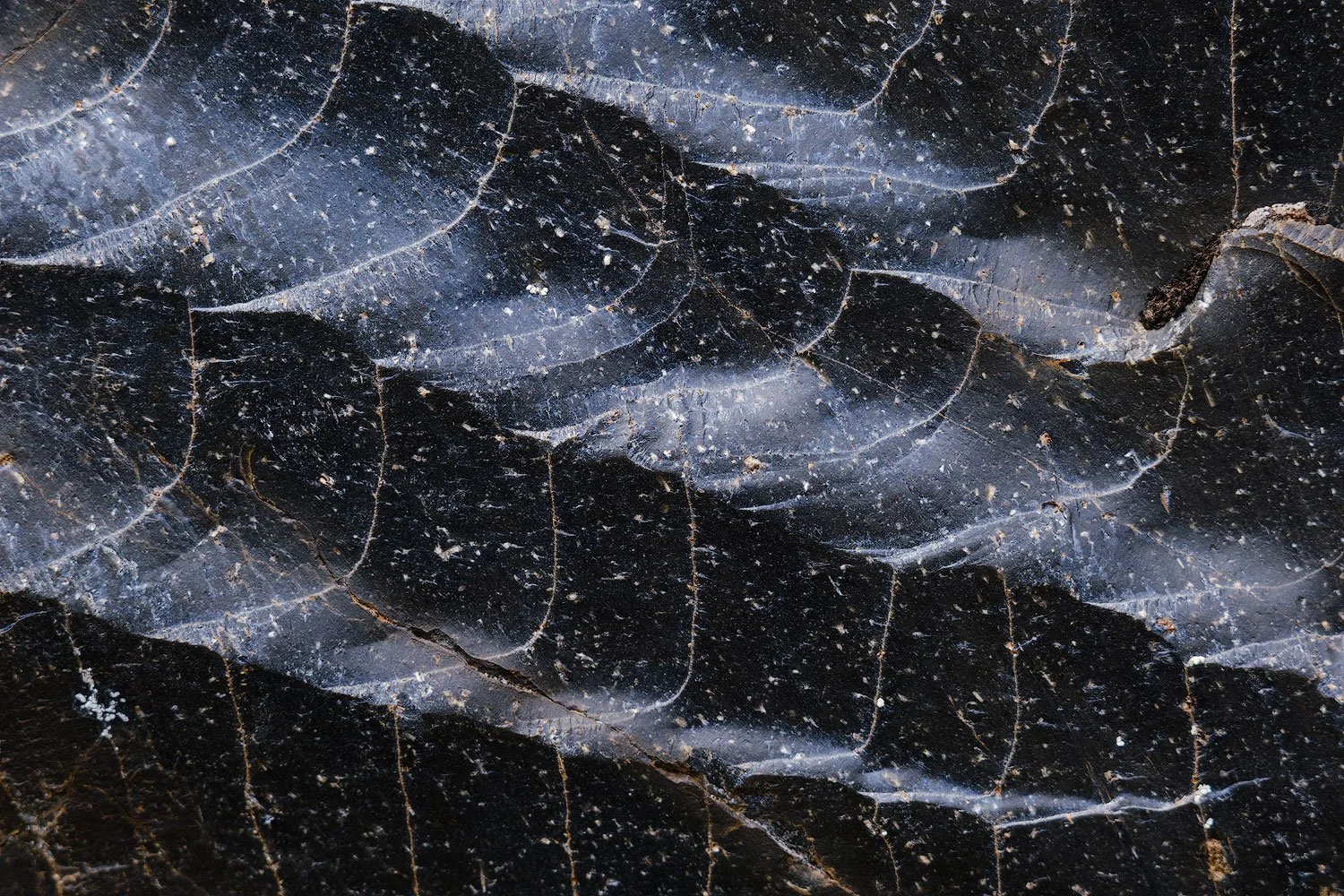
Landmannalaugar, Iceland 2026. Instead of photographing the grand landscape around me, I used the Sigma 100–400mm lens to isolate patterns in a piece of obsidian. There was no formula behind it. I simply followed what interested me.
You may have an idea, perhaps only a rough one, but the photograph isn't already waiting for you at the end of a known process. You have to work your way toward it.
The danger begins when the formula stops being a reference and becomes the answer. If every time we face a difficult scene we immediately reach for something that tells us what to do, we may get to an acceptable photograph faster, but we may also be skipping the exact struggle that would have helped us grow.
I think about this often because I receive emails from brands several times every month asking me to try new AI tools for photographers. The promise is usually some variation of the same thing: a few clicks and, almost magically, your photograph becomes a piece of art.
I understand the attraction. We are naturally drawn toward anything that promises a shorter route between where we are and where we want to be.
But shortcuts have an interesting side effect. They don't only shorten the journey. Sometimes they remove the part of the journey that was teaching you something.
Editing is probably one of the clearest examples.
I'm not against AI, presets or automation. I use some of these tools myself, and they can be incredibly useful.
The important distinction is this:
Are you using the tool to execute a decision you've already made, or are you asking the tool to make the decision for you?
Those two things may look almost identical on the screen, but from the photographer's point of view they are completely different.
If you already know why you want the mountain darker, why the foreground needs less contrast, or why one area of the frame needs less attention, then having software perform the repetitive work is simply efficient.
You're moving the boxes.
But if you're still trying to understand what the image needs, that uncertainty isn't necessarily something to get rid of as quickly as possible.
That uncertainty may be the exercise.
This is something I often encourage photographers I work with to explore when they're unsure about the direction of an image. Try something. Push it further than you normally would. Pull it back. Make a version you dislike. Return to where you started.
Then ask yourself why one version feels better than another.
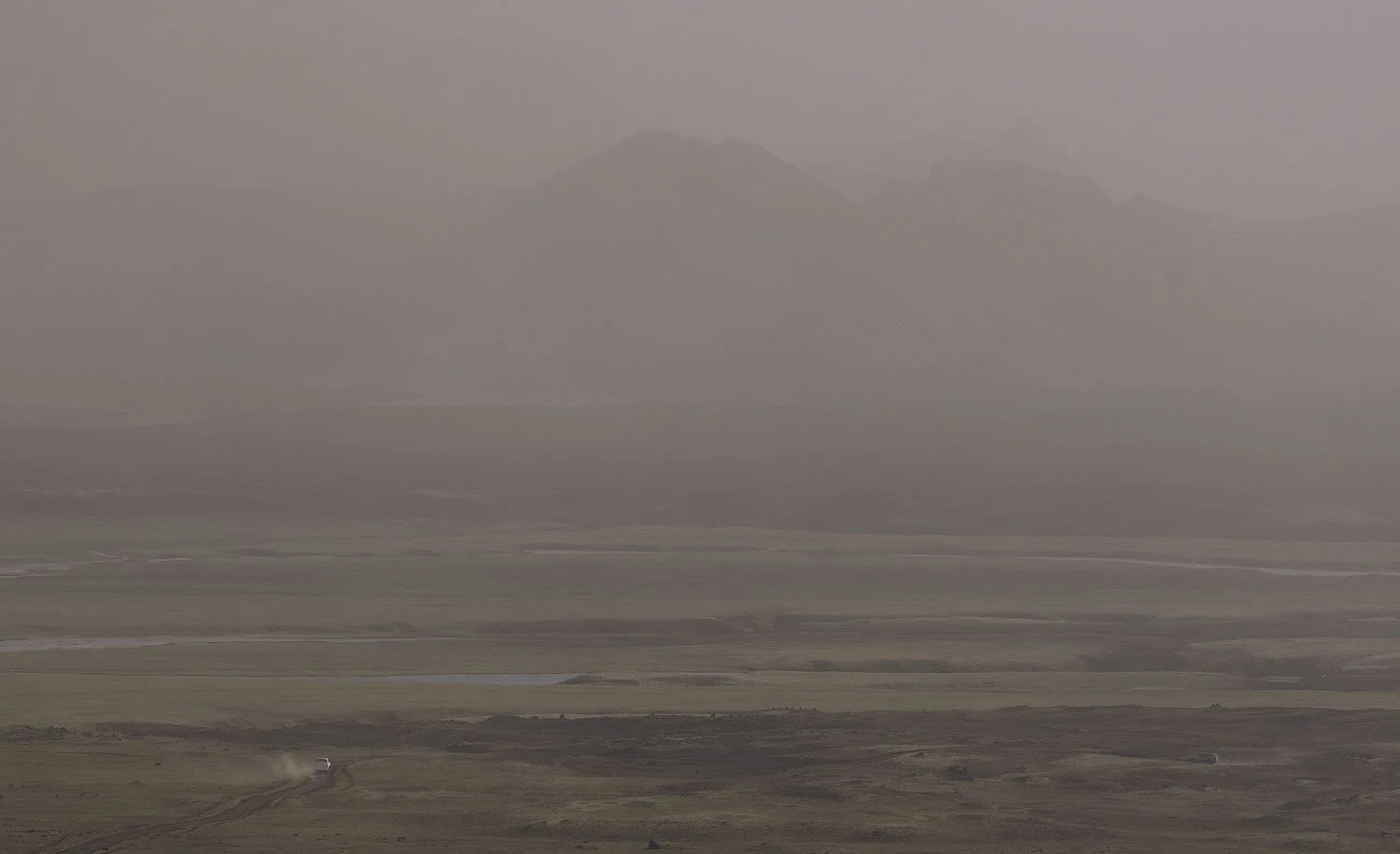
Unedited RAW
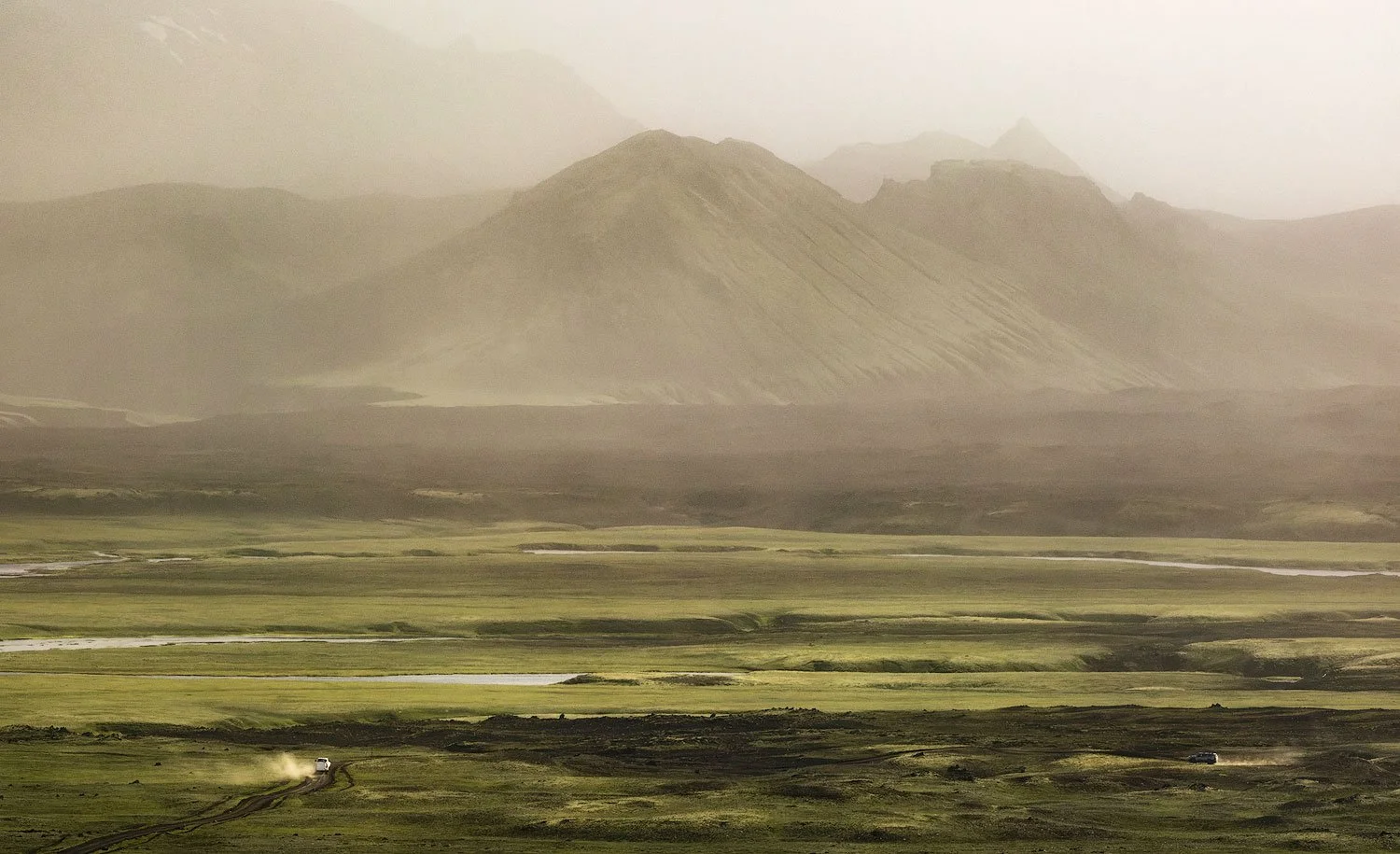
Final interpretation: the difference isn't simply processing. It's a series of decisions about what the photograph should communicate.
Recently in Iceland, I was looking at some photographs with John, one of the participants on our recent Iceland Highlands workshop. We were working on an image from one particular location, and the important question wasn't which slider to move.
It was what he wanted the photograph to communicate.
Once that became clearer, the editing decisions began to have a purpose. We tried different directions and went through several iterations before the image started moving toward the feeling he actually wanted to convey.
That process mattered far more than finding the right combination of Lightroom settings. It's something I've written about before when discussing the role of vision in photo editing.
He wasn't simply deciding what to do.
He was learning why he was doing it.
With another image, something even more useful happened. We spent around ten minutes experimenting with different editing directions, but nothing quite worked.
Eventually we realized why.
The photograph had a compositional problem.
No amount of contrast, colour, masking or clever processing was going to solve it.
Those ten minutes weren't wasted. They revealed where the real problem was. Learning to recognize what editing cannot fix is every bit as important as learning what editing can do.
Those ten minutes were repetitions.
If You Already Know the Shot, You’re Not Exploring
The same principle applies in the field.
You arrive at a famous location and you may already know the photograph you're supposed to make. You've seen it online hundreds of times. You know where people stand, which focal length they use and what the scene is supposed to look like when everything comes together.
There is value in making that photograph. Replication can teach you how a successful composition works.
But eventually you need to leave the known photograph behind.
You need to stop reproducing someone else's conclusion and begin forming your own.
That's when you start paying closer attention to relationships between shapes, distance, scale, light, rhythm and small parts of the landscape that may not immediately resemble photographs you've already seen.
Many of those attempts won't work. Most will never make your portfolio.
That's okay.
The purpose of every photograph you make does not have to be producing another photograph worth showing. Sometimes the purpose is simply to exercise your ability to see.
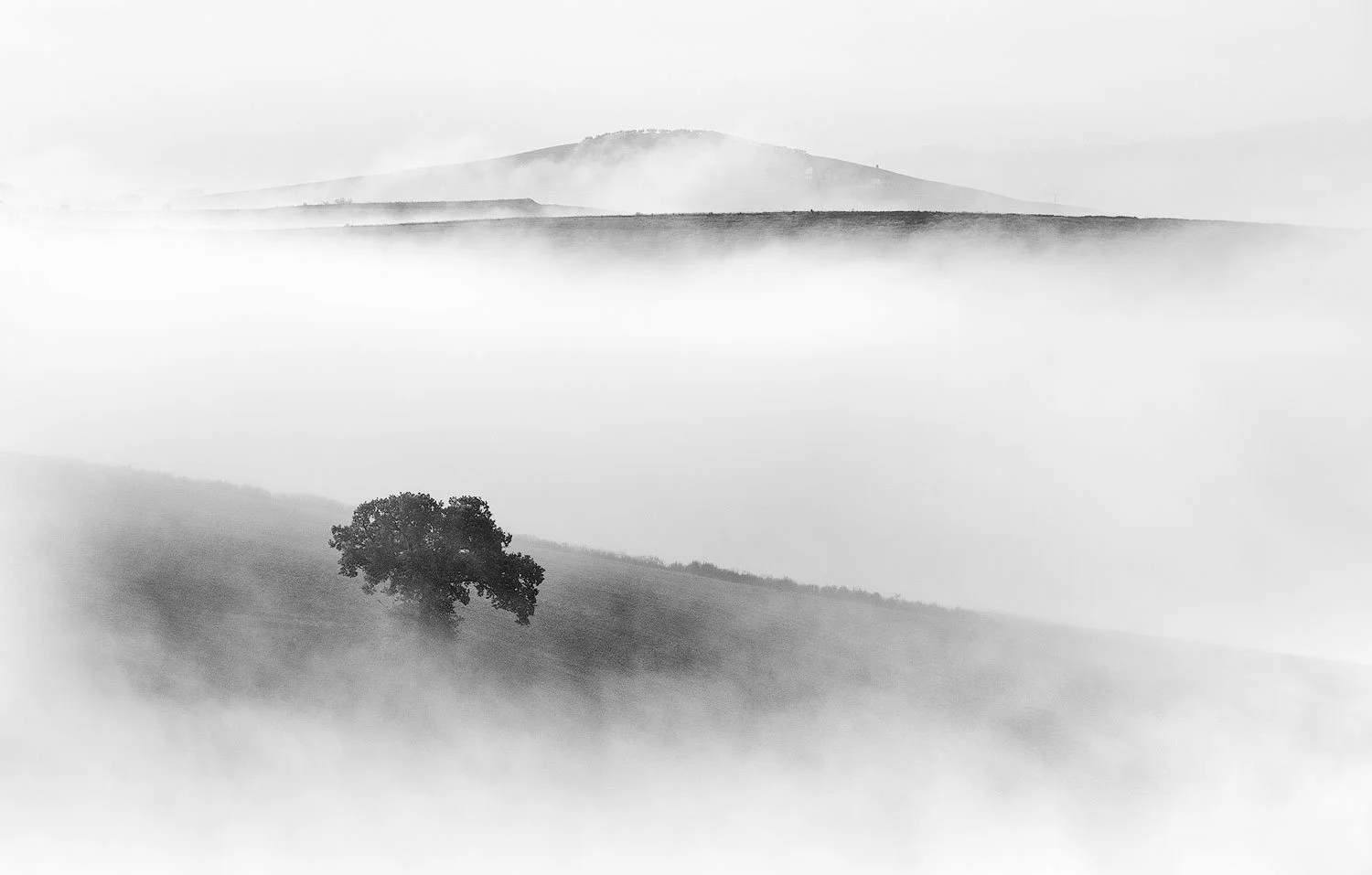
Tuscany, spring 2026. I don’t use black and white very often, and that’s exactly why this image was a useful experiment. Instead of asking what I normally do, I asked what this particular photograph needed. The monochrome treatment simply felt closer to the soul of the scene.
Learning to see isn't only about photography.
I don't believe personal style comes from deciding one morning that you're going to develop a style. And I certainly don't think it comes from finding the right preset.
Style grows from taste, slowly, through thousands of small preferences accumulated over years.
The photographs you admire are part of it, of course, but so are the films you watch, the music you listen to, books, paintings, architecture, places you've travelled, people around you, and countless things that have nothing obvious to do with photography.
Everything we consume gradually becomes part of our visual vocabulary.
Sabrina and I were talking about this only a few days ago. It has always fascinated me how differently the two of us photograph when we're travelling together or working on the same assignment.
We can stand in exactly the same place, photograph the same things, use similar cameras and lenses, and still come home with very different photographs.
The difference isn't the equipment, and it isn't that one of us knows some composition rule the other doesn't.
We've simply spent our lives feeding our brains with different things. Different music, films, images, experiences, places and interests.
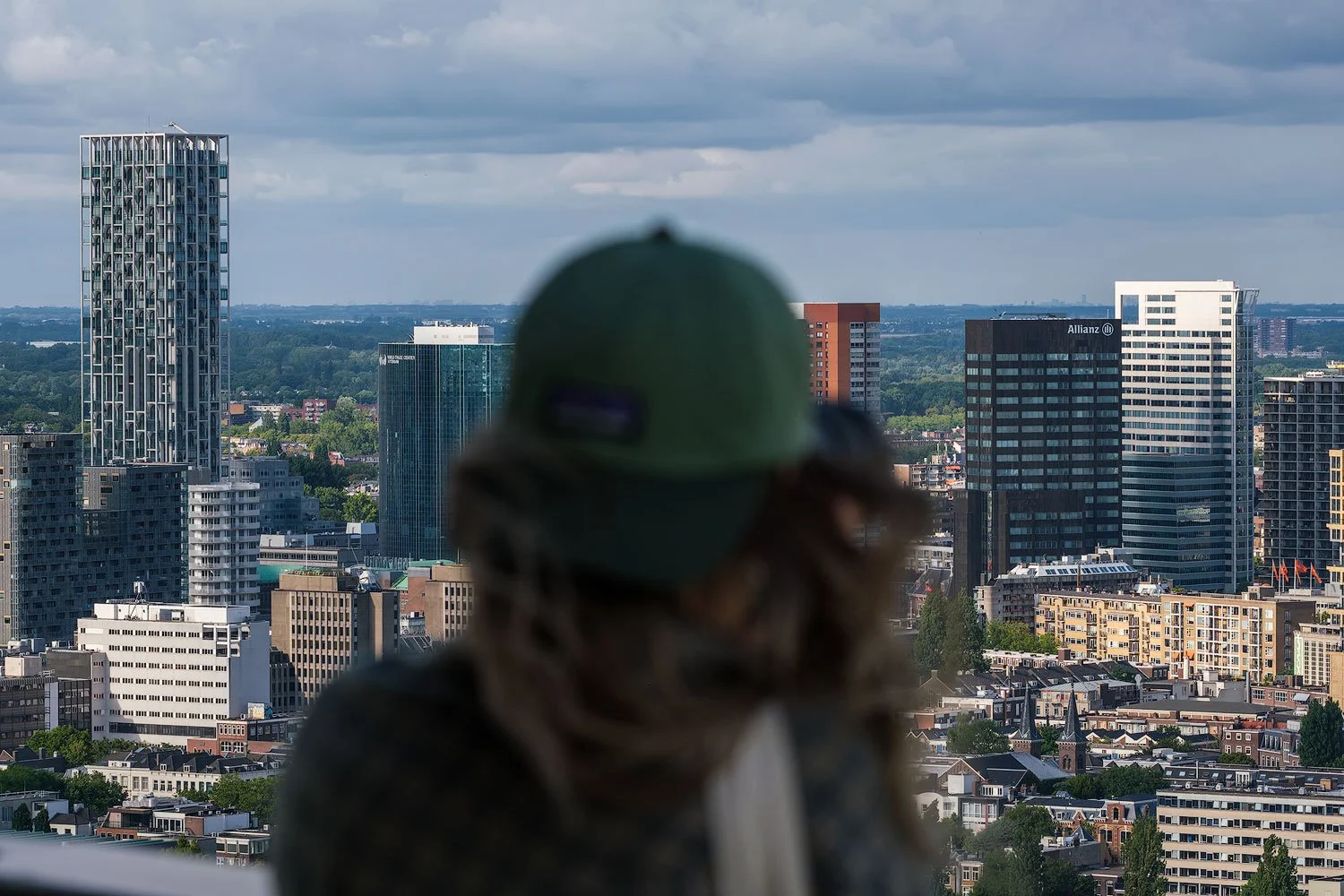
Of course we see differently. Just as any of us would.
And that may be one of the most valuable things we have as photographers.
It's also something surprisingly easy to dilute.
If every difficult compositional decision is solved by a formula, every editing decision by a preset and every uncertainty by a tool that promises the answer, something subtle begins to happen.
You become more efficient.
But you may also become less involved.
The photograph can improve while the photographer remains exactly where they were.
That is the trap.
The goal isn't to reject technology or make photography deliberately difficult. It isn't about doing everything the slow way simply because we can.
It's about understanding what kind of task we're doing.
If the decision has already been made, use every advantage available to execute it efficiently.
But when you're still learning what you like, how you see and what you want to say, don't be too quick to remove the resistance.
Experiment. Make mistakes. Follow directions that lead nowhere. Copy a photograph to understand how it works, then leave it behind and try to build something from your own instincts.
And perhaps ask yourself more often:
Why do I like this?
Not whether it follows a rule. Not whether someone else would approve. Not whether it's what you're supposed to do.
Why does it feel right to you?
That's a much harder question.
Which is probably why it's so useful.
Tools are wonderful. Shortcuts are wonderful. I'll continue using both.
But I don't want them lifting every weight for me.
Some parts of photography are supposed to be difficult. Some photographs are supposed to fail. Sometimes ten minutes of editing teaches you that the problem began before you ever opened Lightroom. Sometimes you spend hours in the landscape and come home without a single photograph you'd show anyone.
That doesn't necessarily mean the session was unsuccessful.
Maybe you weren't at work that day.
Maybe you were at the gym.
And if you ever feel like spending some time in the photography gym with a personal trainer nearby, that's essentially a big part of what I try to do during my workshops.
I'm not there to tell you where to put the tripod or give you a formula to repeat. I'm there to help you question what you're seeing, understand why something works or doesn't, experiment with different directions, and eventually make decisions that feel more like your own.
You still have to lift the weights, though. I can't help you with that part.
If you'd enjoy doing some of those repetitions together, you can explore my upcoming photography workshops here.
How to create visual balance in your landscape photos learning how to arrange attractions and distractions when composing a shot.